
[[{“value”:”
SRAM has just announced its recent acquisition of chainring manufacturer OChain, which is seemingly the brand’s next stab at obtaining drivetrain and suspension dominance.
Eagle-eyed viewers of World Cup Downhill and Enduro will be rather familiar with the product. Flow’s own Mick Ross has had one bolted up to his Ibis HD6 for a little while now. For those who’ve never heard of an OChain, or aren’t entirely sure what they do, let’s run through a quick recap as to what the OChain is.
And for now, there aren’t any new product announcements. But the acquisition has sparked internal brainstorming here at FlowHQ as we hypothesise what the future may hold.
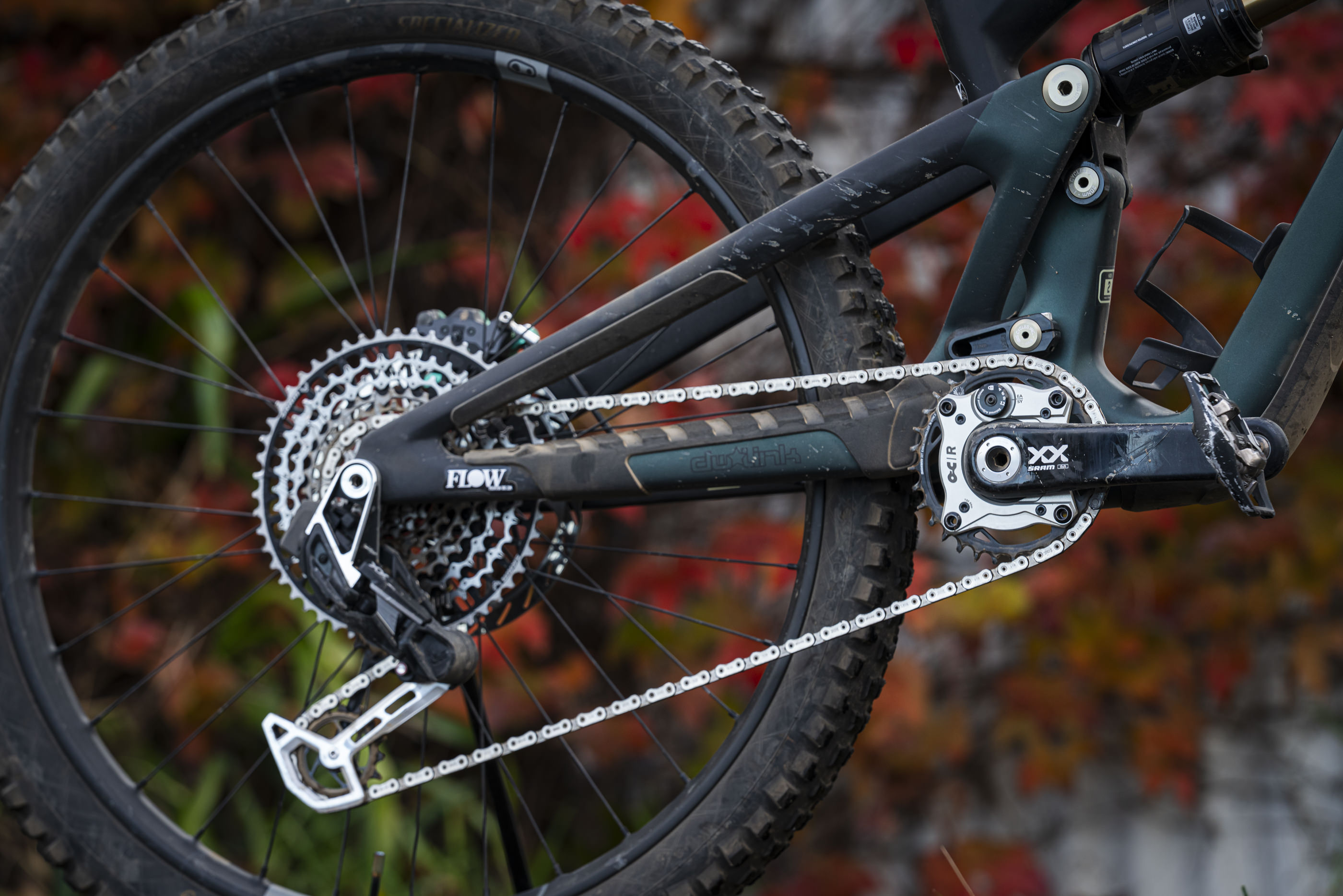
OChain Active Spider
The OChain was the first floating spider chainring on the market, and it aims to replicate the feeling of a chain-less bike by decoupling suspension movement from the drivetrain. Whenever anyone talks about chain-less downhill race runs, Aaron Gwin’s legendary lap at Leogang in 2015 gets thrown around. If you’ve never watched it, do it, here’s the link. That was a decade ago, but we still see this happening today. Just a few weeks ago, at the Val Di Sole World Cup in Italy, Thibaut Dapréla snapped his chain in the second corner and rode the rest of the track chain-less, claiming the hot seat and finishing up in third place. In the era of insanely tight margins, this is stupidly impressive.
There’s a little bit of psychology going on here; you can’t pedal, so you subconsciously brake less and carry more momentum. But there’s more at play; with no chain, the bike is quieter, with fewer slaps and rattles over rough terrain. And more importantly, the rider no longer received pedal-kickback, a phenomenon caused by chain tension as the suspension moves throughout the travel. With no pedal-kickback, the suspension provides more sensitivity and traction. The amount of pedal kickback a given bike will have depends on several factors – we won’t go into the details here, but head over to our review of the Rimpact Chain Damper, where we took a bit of a deep dive.
What’s unique about the latest iteration of the OChain is the ability to adjust the float, ranging from 4°, 6°, 9°, or 12°. The unit can also be locked out, providing 0° of float, essentially replicating a traditional chainring. This is all externally adjustable in the form of a dial, but it isn’t something you’d likely adjust between laps.
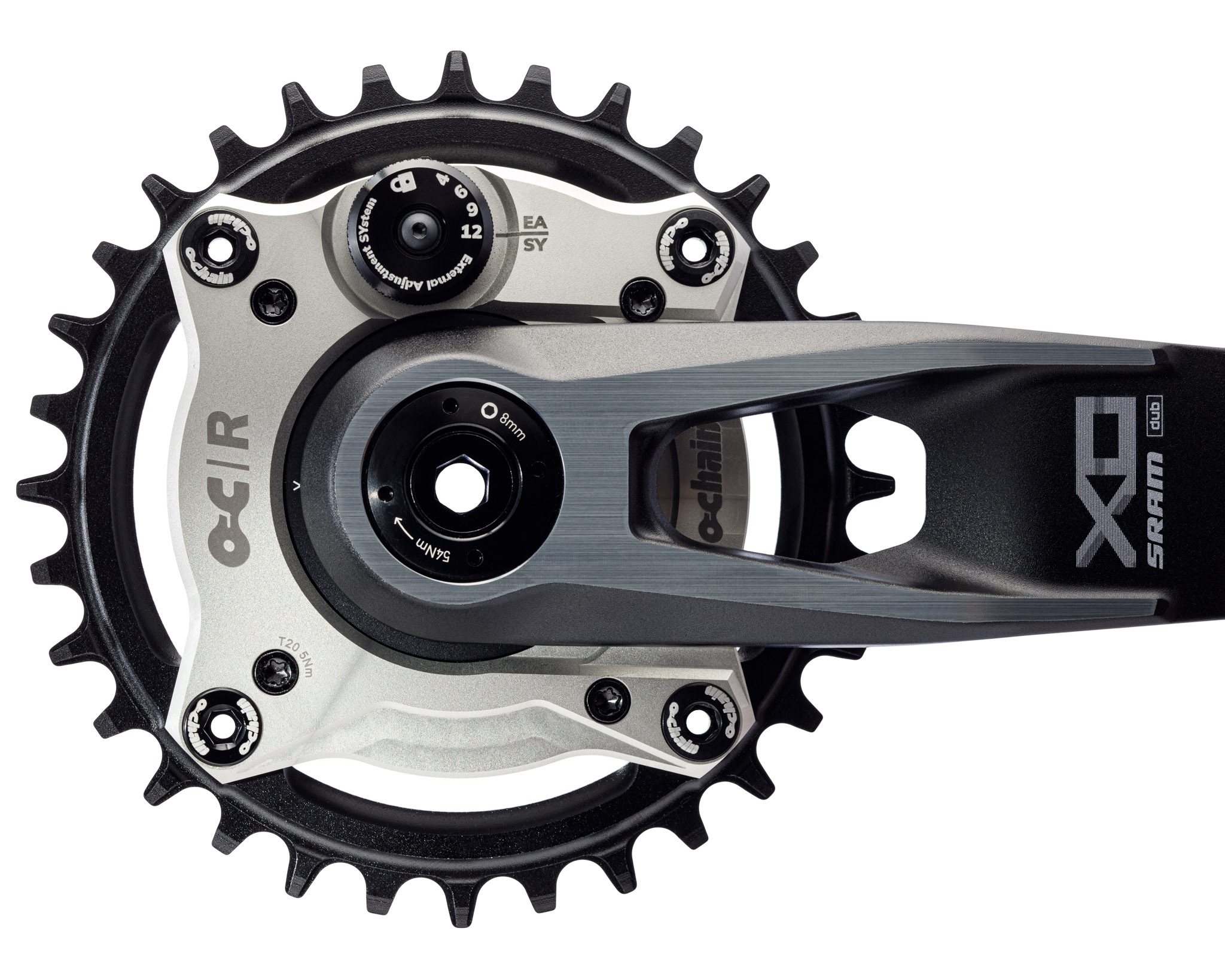
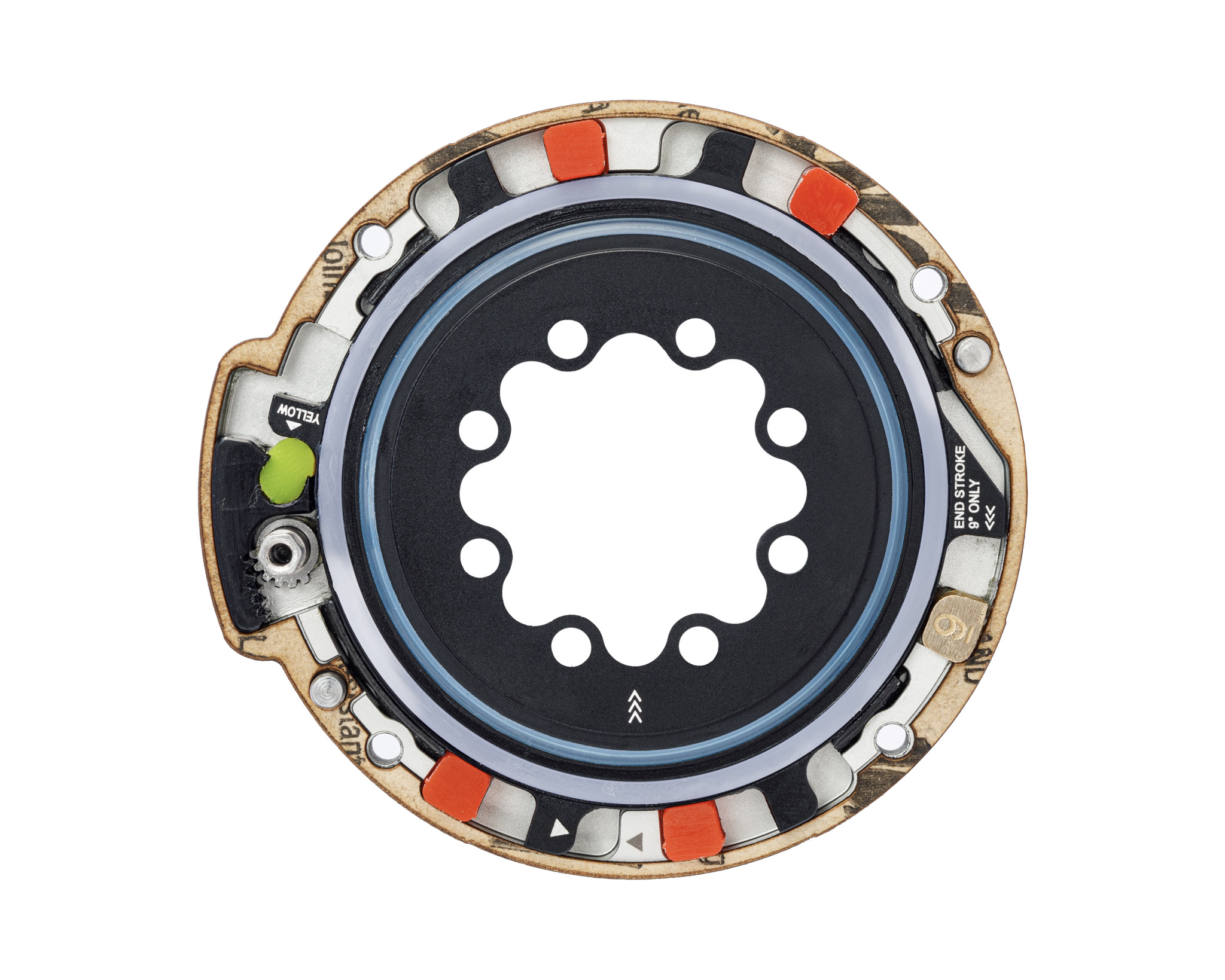
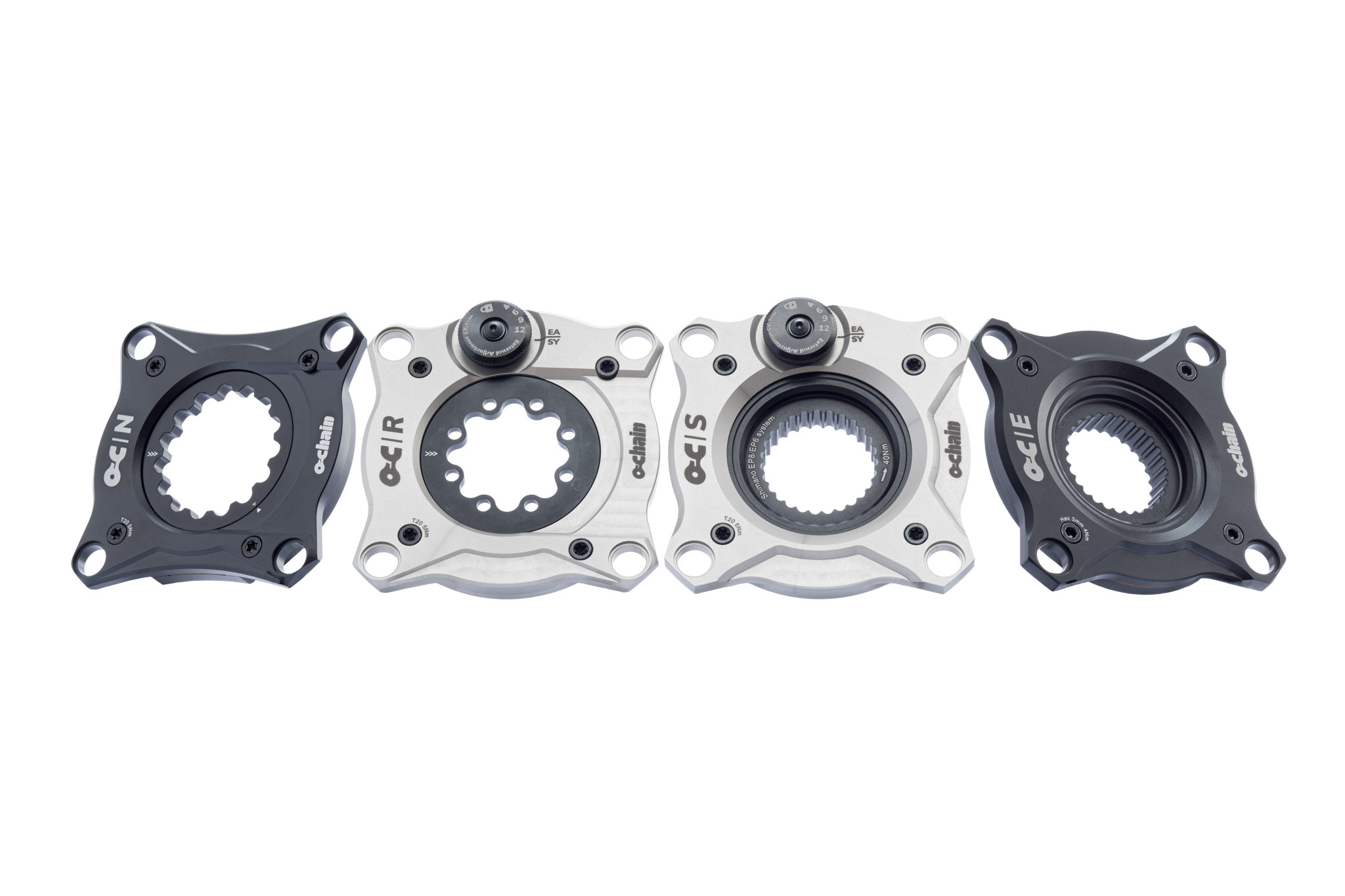
Why now, and what does this all mean?
SRAM was on the hunt to enhance suspension performance through drivetrain design. A team from the company rigged up a bike with over 20 sensors, in an effort to capture data and improve the overall ride experience. They tested various concepts, mechanisms and products on the market that aimed to achieve what they were looking for. Ultimately, they found the chainring solution provided the results they were looking for. Specifically, the OChain had the characteristics they wanted.
The OChain was first launched in 2019, and units were hard to get your hands on in Australia. With them now being under the SRAM umbrella, this will most definitely make them more accessible, and we expect to see a lot more of them on bikes moving forward. There are no major changes in the distribution at this point in time, but we’d expect SRAM to begin supporting these in Australia as time goes on.
They are also not cheap; and currently sit around the $700 AUD price mark when purchased directly from OChain, depending on the exchange rate. Will the price come down? No word on this yet.
From a compatibility standpoint, the current units are available in various mounting patterns. This includes a pattern suited to SRAM’s biggest competitor, Shimano, along with RaceFace and E-Thirteen cranks. Compatibility extends to the e-MTB market, with mounts to suit the Shimano EP8, Fazua, Bosch and Brose/Specialized motors. SRAM has said the plan is to continue supporting all standards moving forward, rather than making it an exclusive SRAM product only.
SRAM also has a strong hold in the OEM space, from RockShox suspension to SRAM drivetrains and brakes. No word from SRAM here yet, but we think there’s potential we’ll be seeing Ochains fitted to complete bikes in the coming years.

All aboard the speculation train
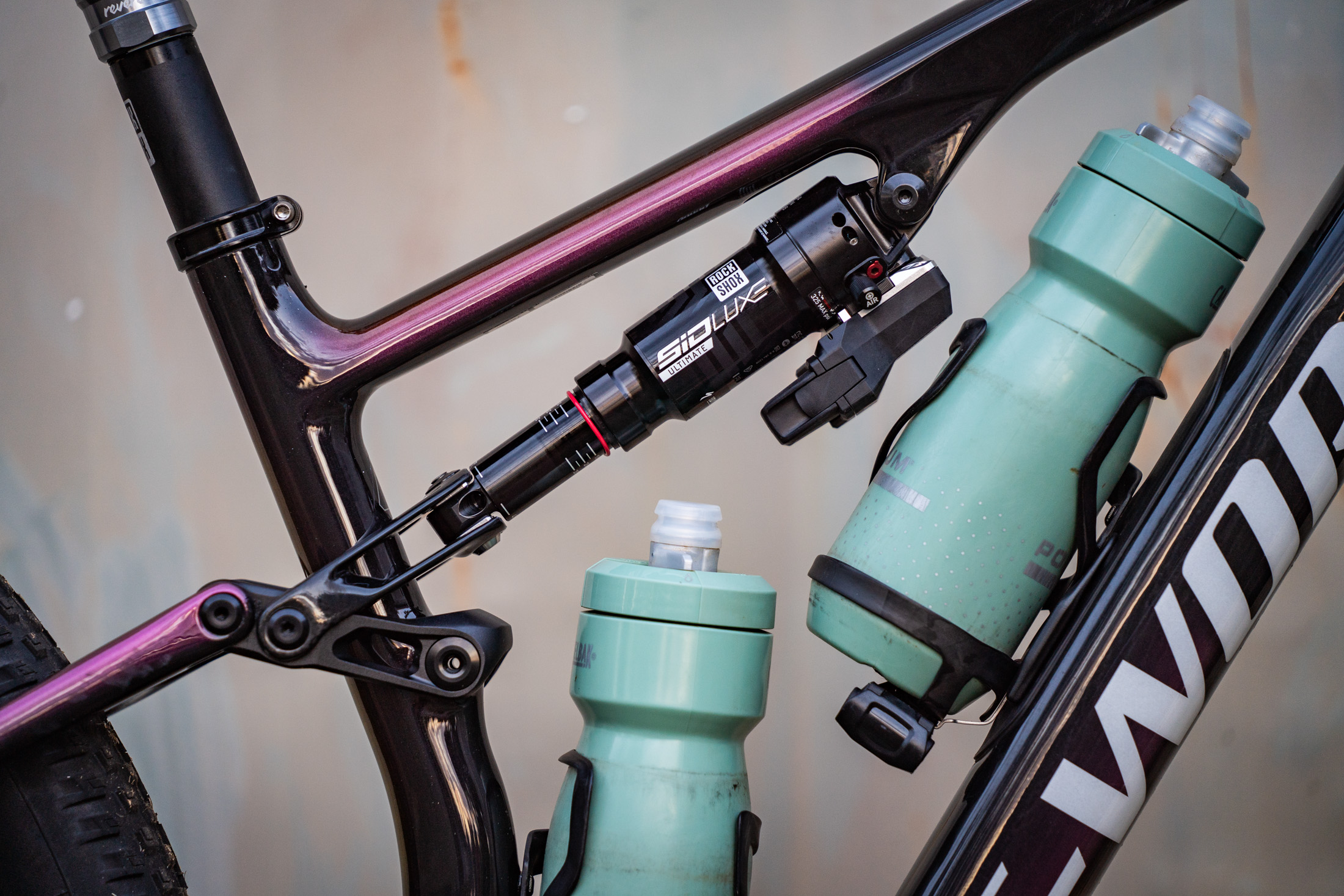
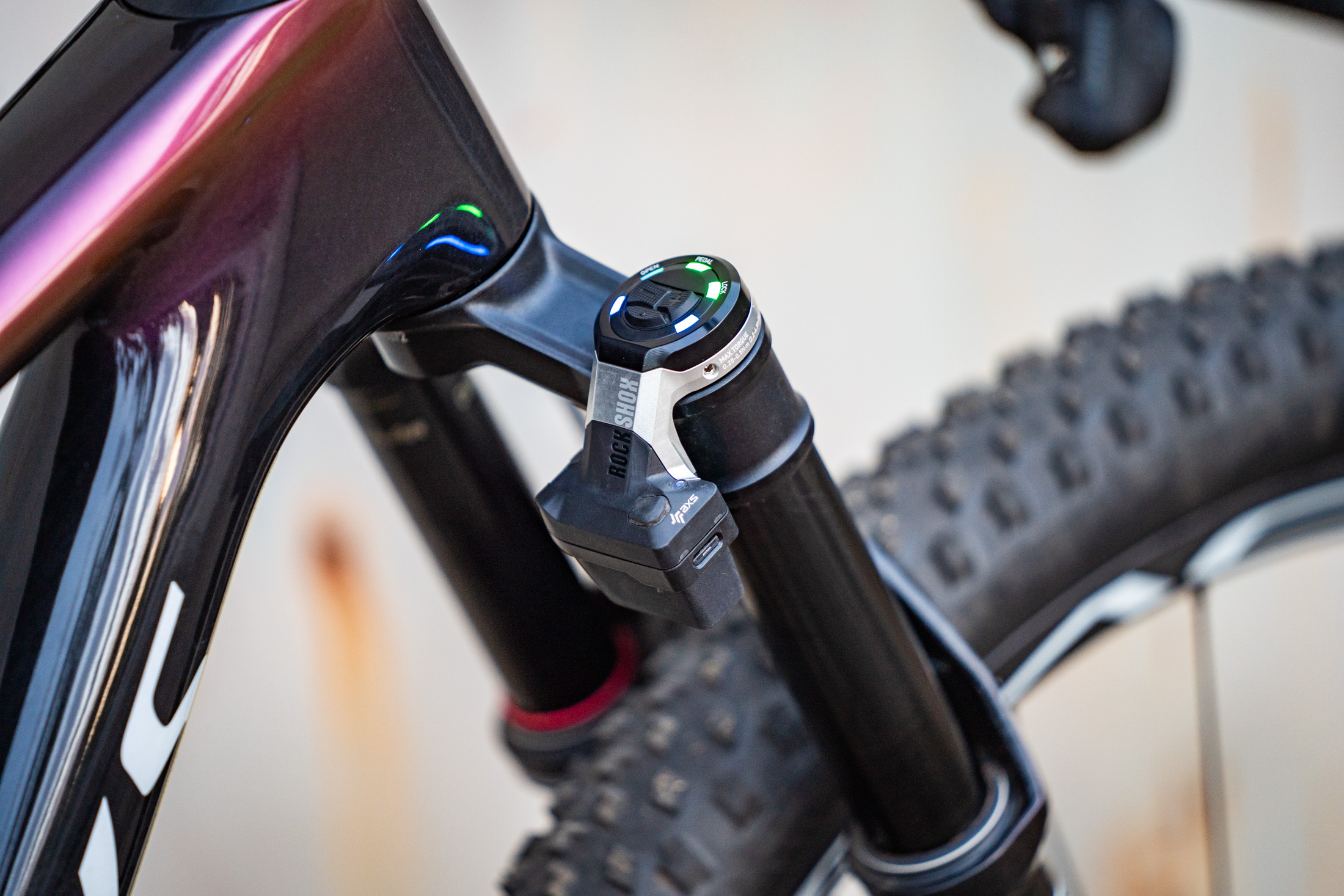
SRAM has been pushing hard in recent years, developing electronically actuated suspension, dubbed Flight Attendant. It automatically controls the compression-damping characteristics depending on the terrain. Wil has spent a fair bit of time aboard the ‘beep boop’ suspension, with the latest being aboard a Specialized Epic 8. It’s not just for whippet XC bikes, however, it first debuted on longer travel trail bikes, which we’ve tested, and has recently been updated to include a coil shock option too.
Long story short, it’s seriously impressive stuff. It’s locked out when you climb, open when you descend, and you don’t have to push a button. Or if you like pushing buttons, it’s all controllable from the SRAM AXS shifter pods and configurable in the SRAM app.
Imagine this; a SRAM/Rockshox Flight Attendant actuated OChain. For clarity, we have absolutely no evidence to support this, just a wild prediction.
It could automatically lock when climbing, open when descending, or be controlled by a button on the handlebars. This would remove the one and only major downfall of the floating chainring design; the float when pedalling. It’s a particularly weird sensation; you do get used to it, but a fixed chainring feels better any day of the week.
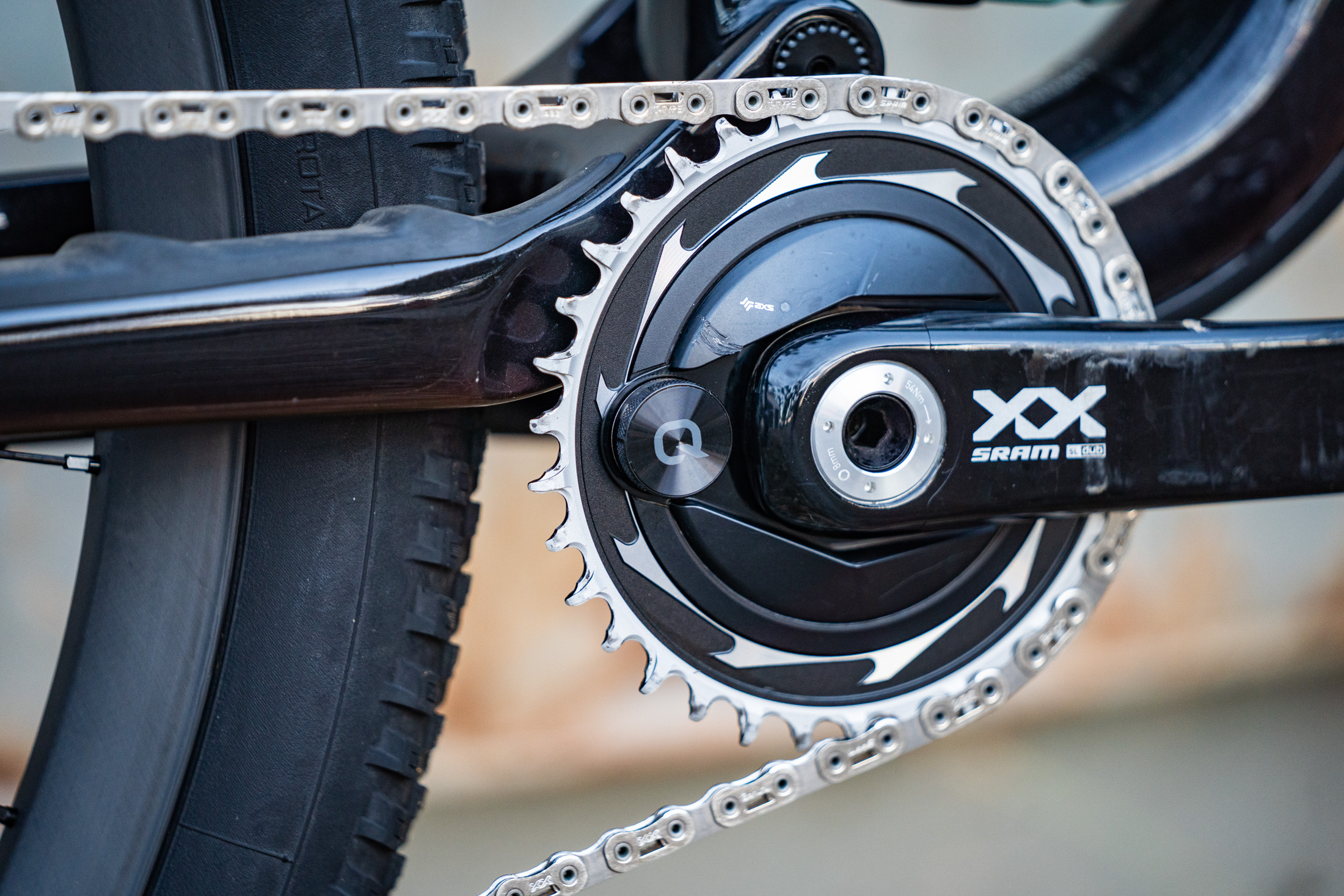
SRAM already has a powermeter which forms a part of the Flight Attendant ensemble, monitoring the power output, which subsequently aids the selection of suspension settings. Could a floating chainring design be incorporated into this somehow? Only time will tell.
The post SRAM acquires OChain in a bid to improve suspension performance through drivetrain design appeared first on Flow Mountain Bike.
“}]]
[[{“value”:”SRAM has just announced its recent acquisition of chainring manufacturer OChain, which is seemingly the brand’s next stab at obtaining drivetrain and suspension dominance. Eagle-eyed viewers of World Cup Downhill and Enduro will be rather familiar with the product. Flow’s own Mick Ross has had one bolted up to his Ibis HD6 for a little
The post SRAM acquires OChain in a bid to improve suspension performance through drivetrain design appeared first on Flow Mountain Bike.”}]] Read More Flow Mountain Bike
#flowmtb #mtb