
[[{“value”:”
DJI Osmo Pocket 4: One-minute review
I’ve been around the content creator’s block enough times to say that the DJI Osmo Pocket 3 is easily the most popular vlogging camera for creators on the go. I’ve seen the tiny, gimbal-stabilized 4K camera in the hands of so many people, and with good reason — it’s a fabulously discreet and powerful pocket video camera.
Ahead of what could be a stampede of new rivals, not least of which could be the rumored Insta360 Luna, DJI now looks to build on the success of its two-and-a-bit-year-old vlogging camera with a new and improved successor, the Osmo Pocket 4.
Considering the time between the two cameras, and how swift DJI has been in bringing genuine improvements to its camera gear in recent years, especially its drones such as the Mini 5 Pro, I expected a little more from the Pocket 4. That being said, there are a few notable upgrades worth knowing about — I’ve unpacked those in more detail in this Pocket 4 vs Pocket 3 article.
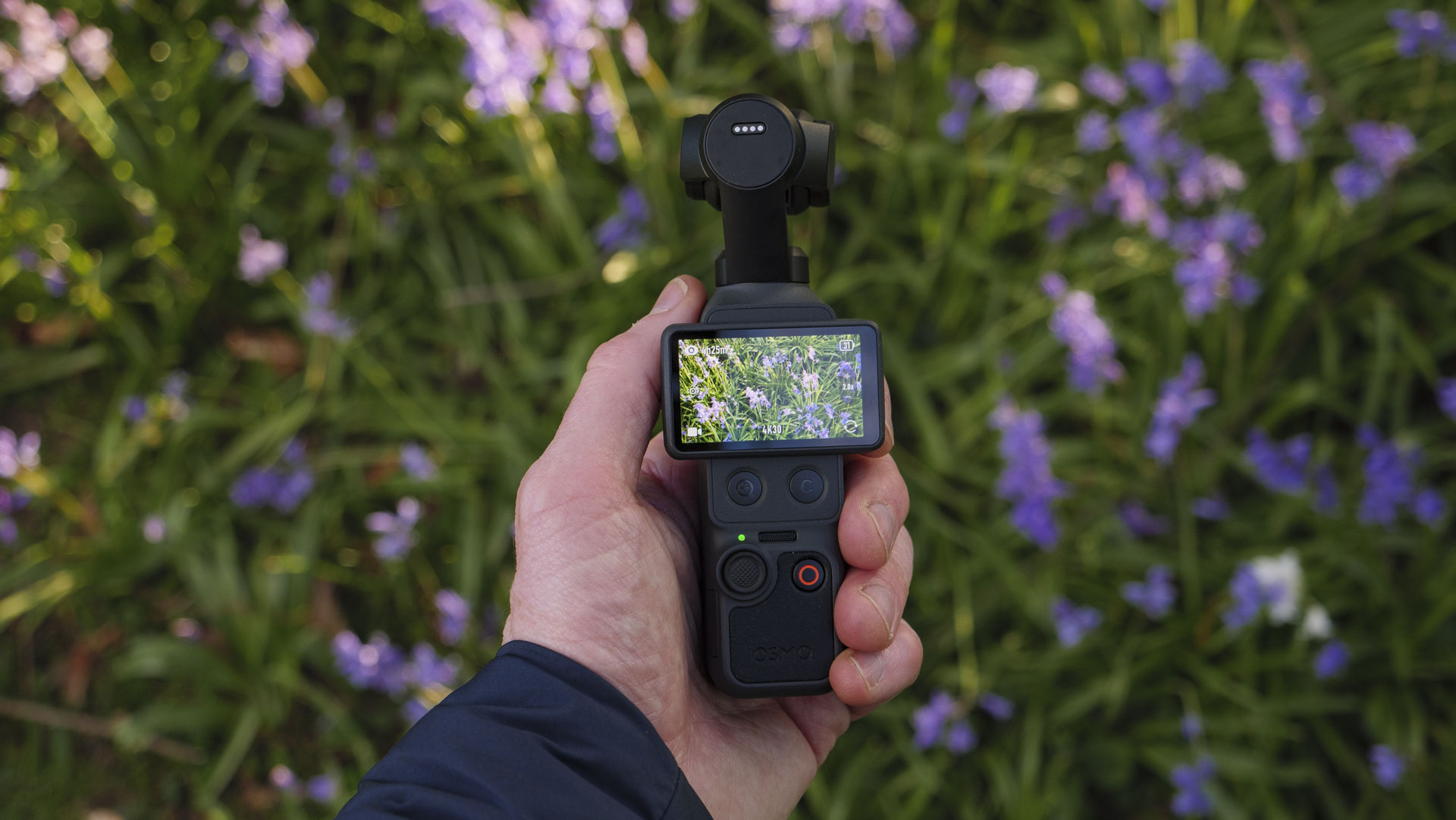
All the bits I appreciate about the Pocket 3 remain — the compact design, stellar video stabilization performance, crisp 4K video, the easy switch between vertical and horizontal video, and direct connection with wireless mics.
What DJI has done in the Pocket 4 is add some welcome polish. The new features might not leap out on a spec sheet, but in real use they combine for a slicker user experience.
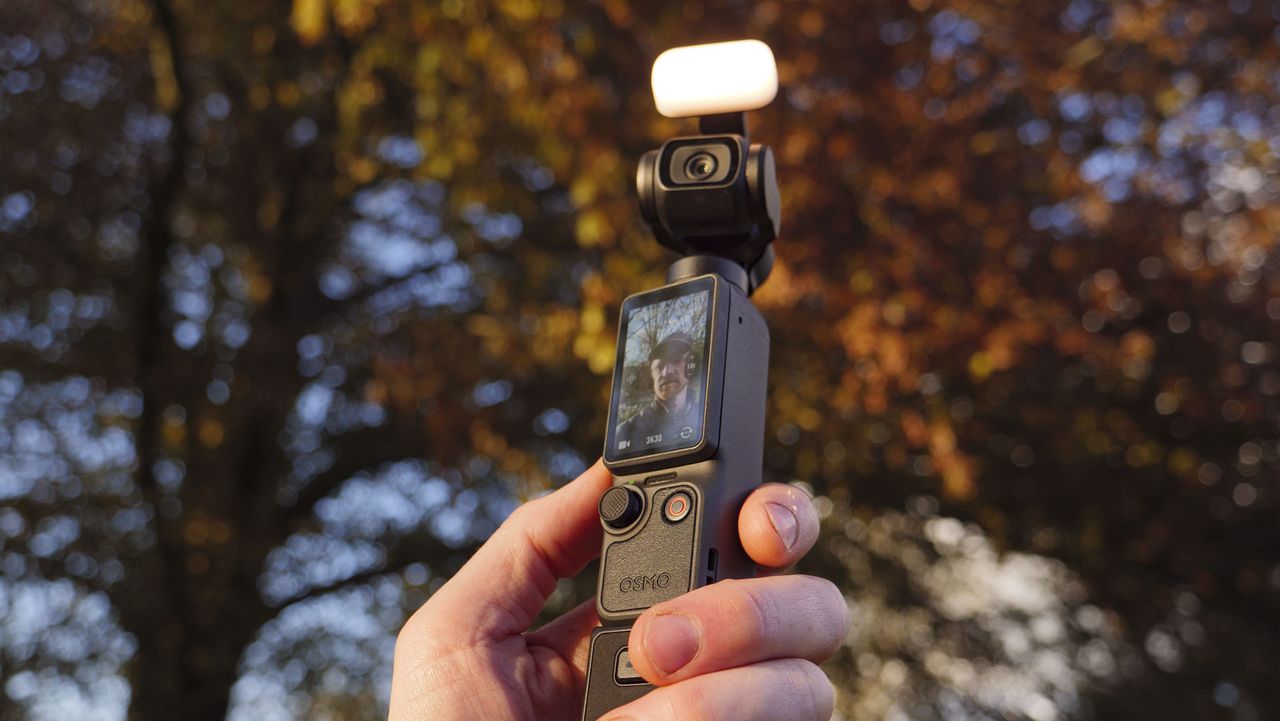
Top upgrades include better slow-motion recording, now up to 240fps in 4K, better-quality 4K video with 10-bit color depth and wider dynamic range now up to 14 stops, slicker subject tracking which is available in more modes, better battery life, 107GB of internal memory, and refined controls, such as a new magnetic gimbal arm which accepts accessories such as a fill light (see the hero image).
It’s not a big upgrade per se, but it’s enough of an improvement that I would recommend Pocket 3 owners take a look, and it’s an easy recommendation for first-time buyers looking for a powerful and small vlogging camera besides their smartphone.
DJI has tightened its stranglehold on this pocket video camera market, but for how long? When Insta360 enters the stage, it might just wrestle the spotlight away from this playing-it-safe Pocket 4 upgrade.
DJI Osmo Pocket 4: price and release date
- Announced on April 16 2026
- Available in Essential, Standard and Creator Combo kits
- Prices start at £429 / AU$749, with US availability and pricing TBC
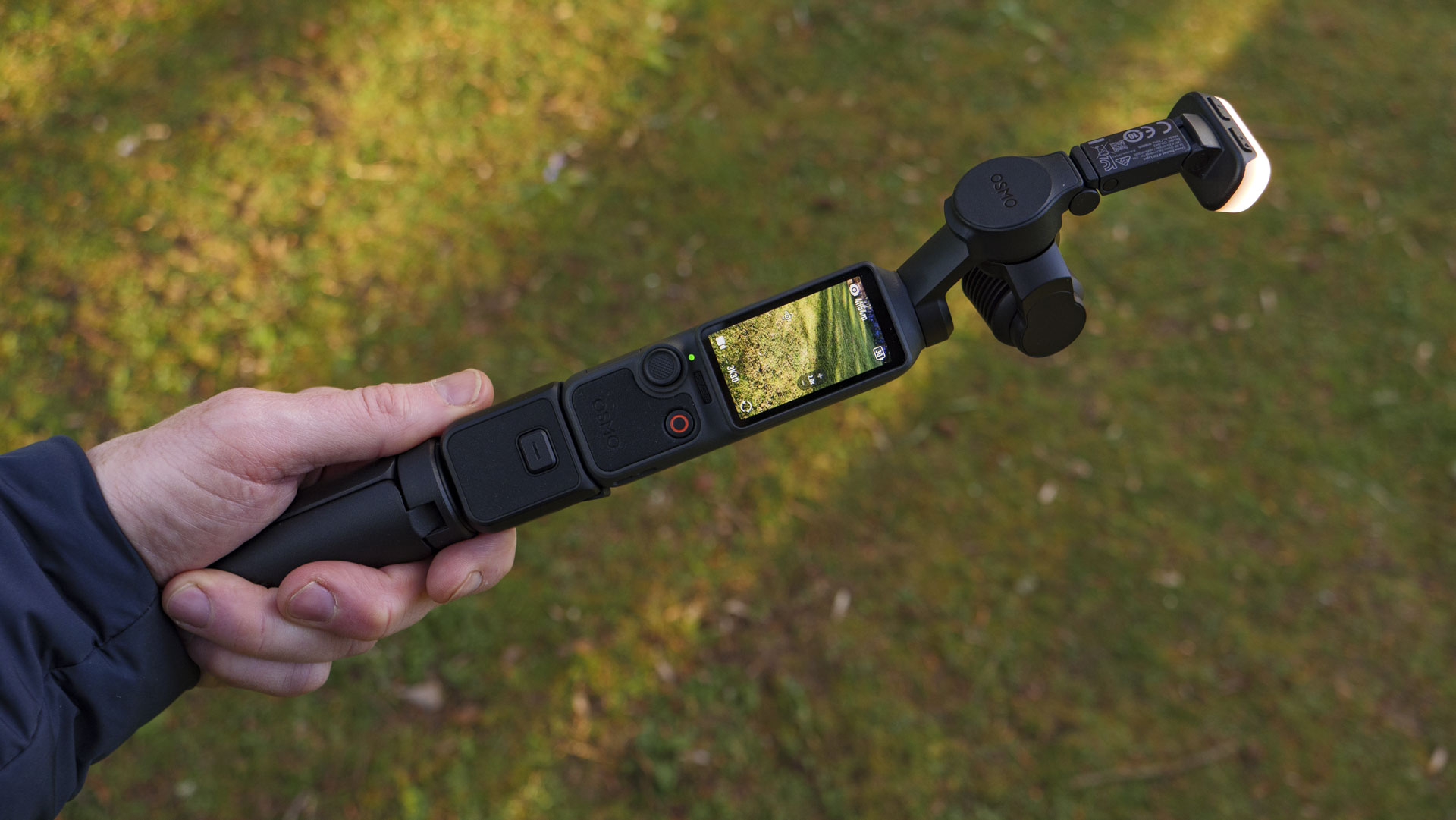
The DJI Osmo Pocket 4 was unveiled on April 16 2026 in Essential, Standard and Creator Combo packages. The Essential Combo costs £429 / AU$749, the Standard Combo is £445 / AU$769 and comes with the gimbal clamp and tripod handle, while the Creator Combo, which adds Mic 3 transmitter, wide-angle lens, magnetic fill light, mini tripod, and carry bag accessories, costs £549 / AU$959, and is better value for DJI newcomers.
There’s no US pricing or availability at launch through official DJI channels, given DJI’s ongoing issues in the US. Like most DJI products, the Osmo Pocket 4 is excellent value considering what it’s capable of, and it’ll be a tough ask for future rivals to beat it.
- Price score: 4.5/5
DJI Osmo Pocket 4: specs
|
Video: |
4K and 1080p up to 60fps, plus slow motion up to 240fps |
|
Photo: |
Up to 9.4MP in RAW & JPEG, up to 37MP in SuperPhoto mode |
|
Storage: |
107GB internal, microSD card slot |
|
Battery: |
1,545mAh, up to 4 hours Full HD record time |
|
Charger type: |
USB-C / optional fast PD charger |
|
Weight: |
6.72oz / 190.5 g |
|
Dimensions: |
144.2 x 44.4 x 33.5mm (L x W x H) |
DJI Osmo Pocket 4: Design
- Similar pocket-size dimensions to the Pocket 3, with rotating screen and gimbal-mounted camera
- USB-C fast charging and a handy 107GB of internal storage in addition to micro SD
- New controls added, and smarter joystick response
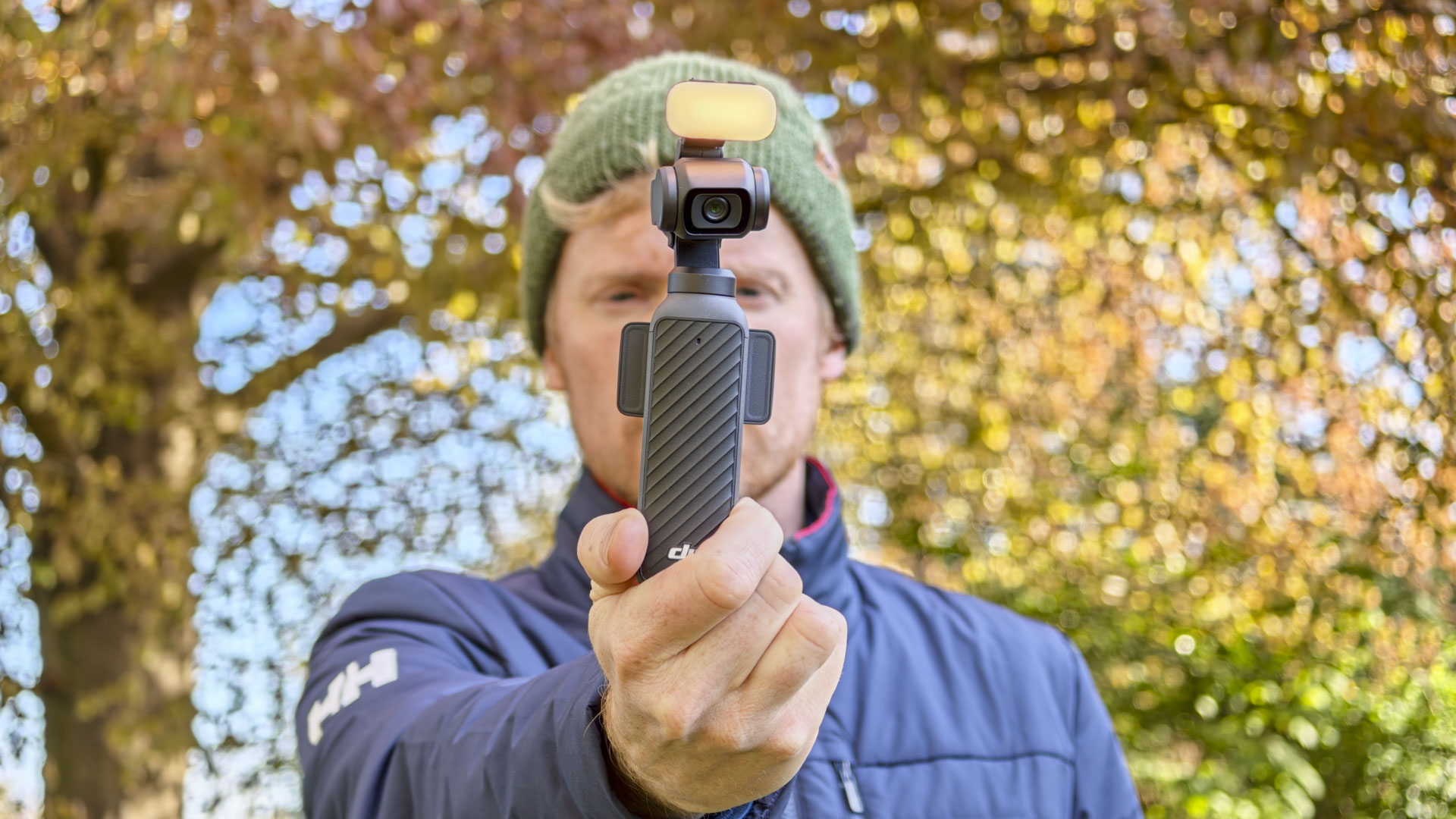
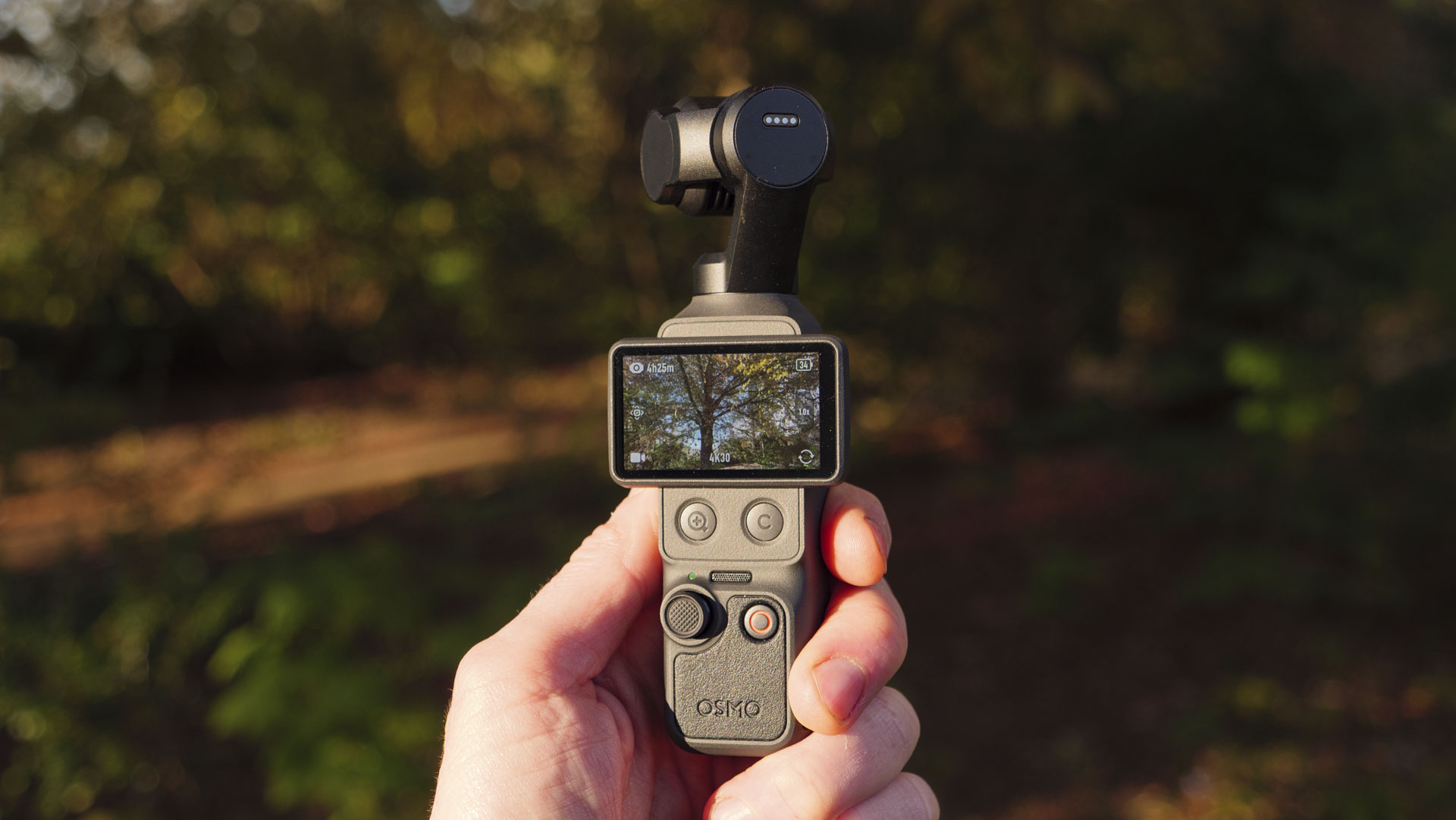
The Pocket 4 has a familiar look about it, because it keeps a similar Pocket 3 form factor that has won many admirers, even if it is a tiny bit taller.
I can’t stress enough how important its compact dimensions are for vlogging on the go. The Pocket 4 is even more discreet for video than a phone, and in my experience I’ve never had anyone take issue with me filming in public with an Osmo Pocket. Put simply, you can film freely with one of these.
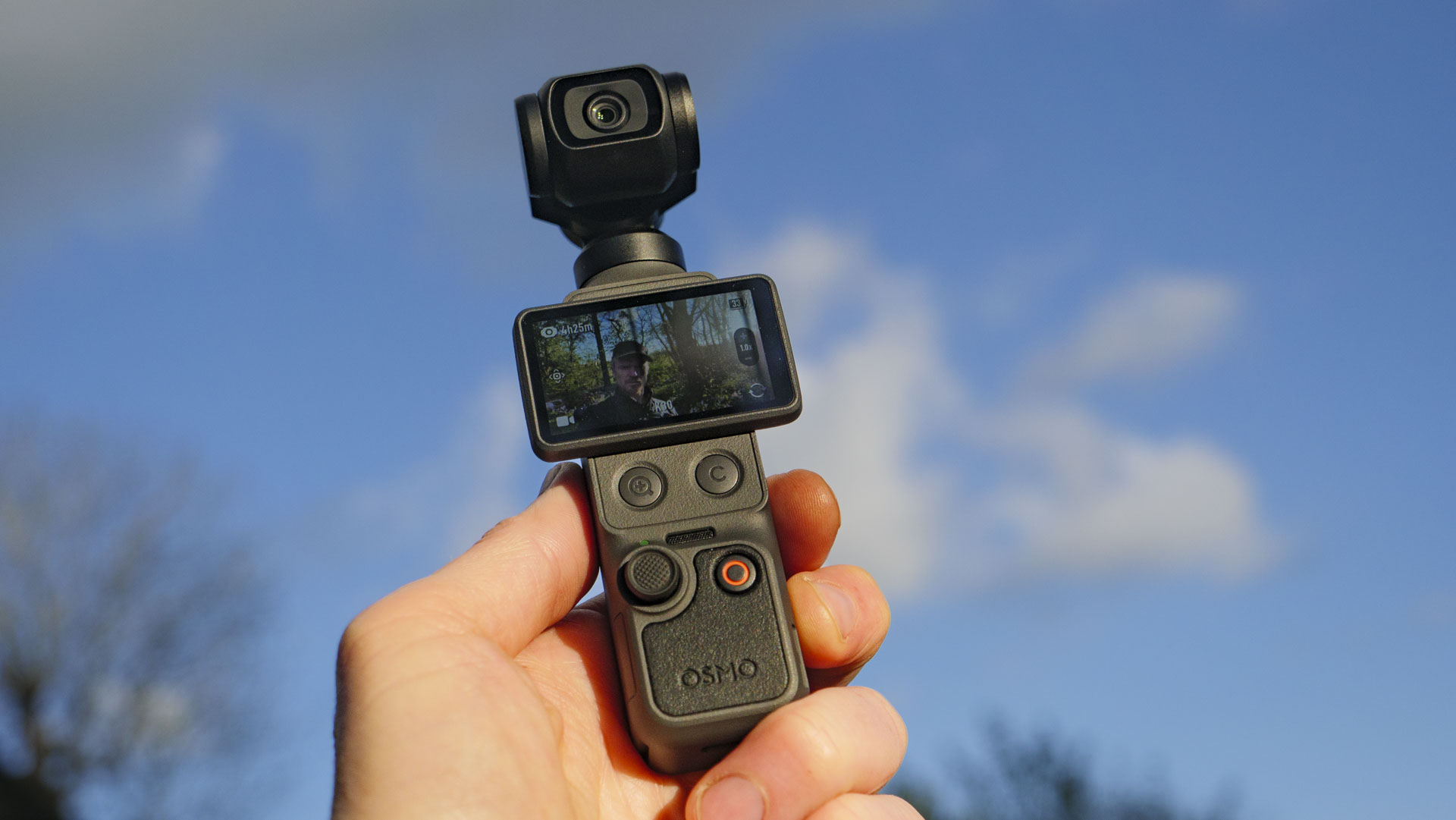
At first glance you might think there’s nothing new in this latest model, but there are in fact some helpful design tweaks. For instance, the speed of the gimbal’s movement responds to how firmly you push the joystick, making quick or more precise adjustments possible — whereas before the movement was a single speed.
DJI has also added two new buttons under the screen, which are only visible when the display is flipped horizontal, but which provide shortcuts to useful regularly used controls, including the 2x lossless zoom.
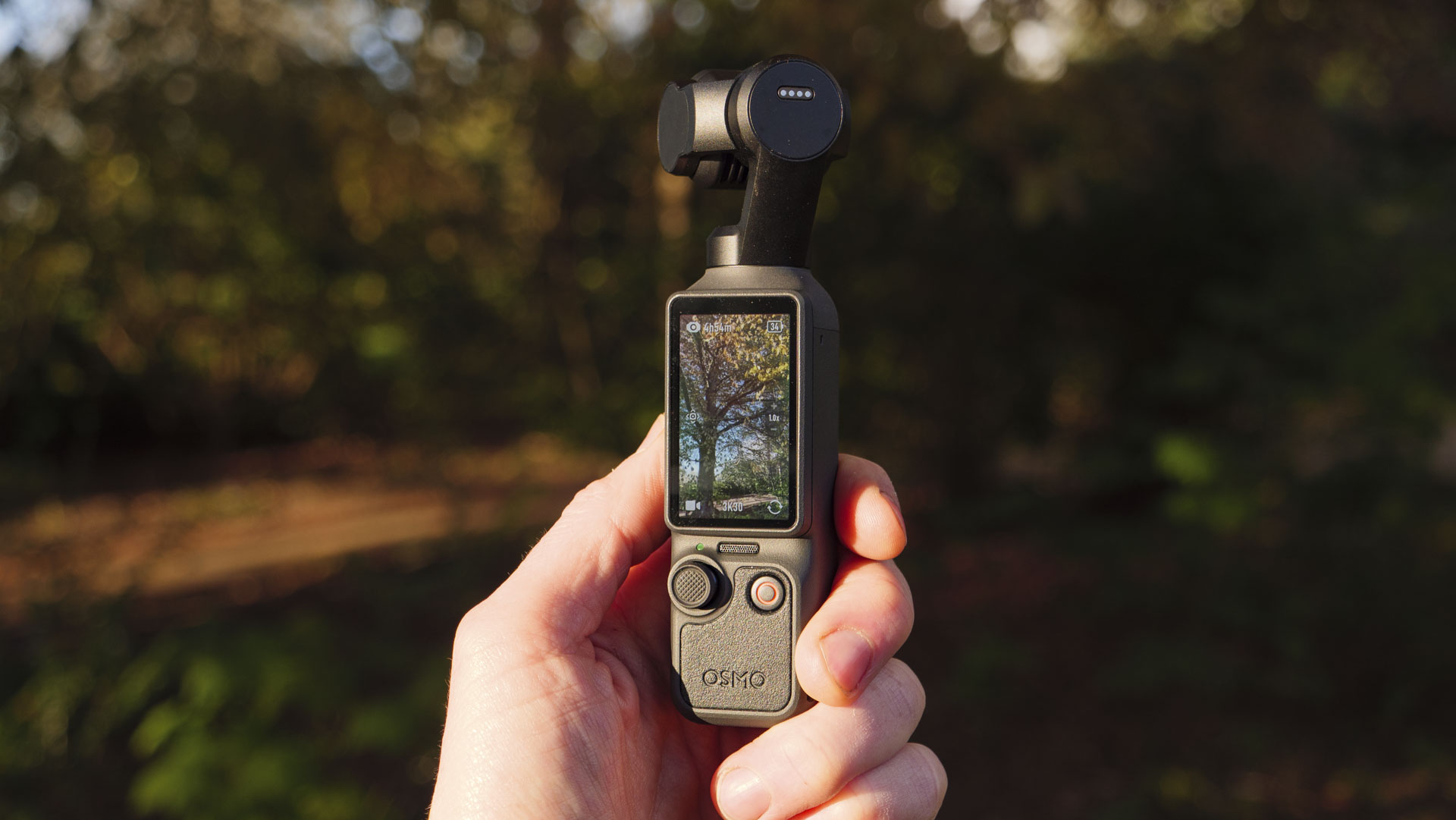
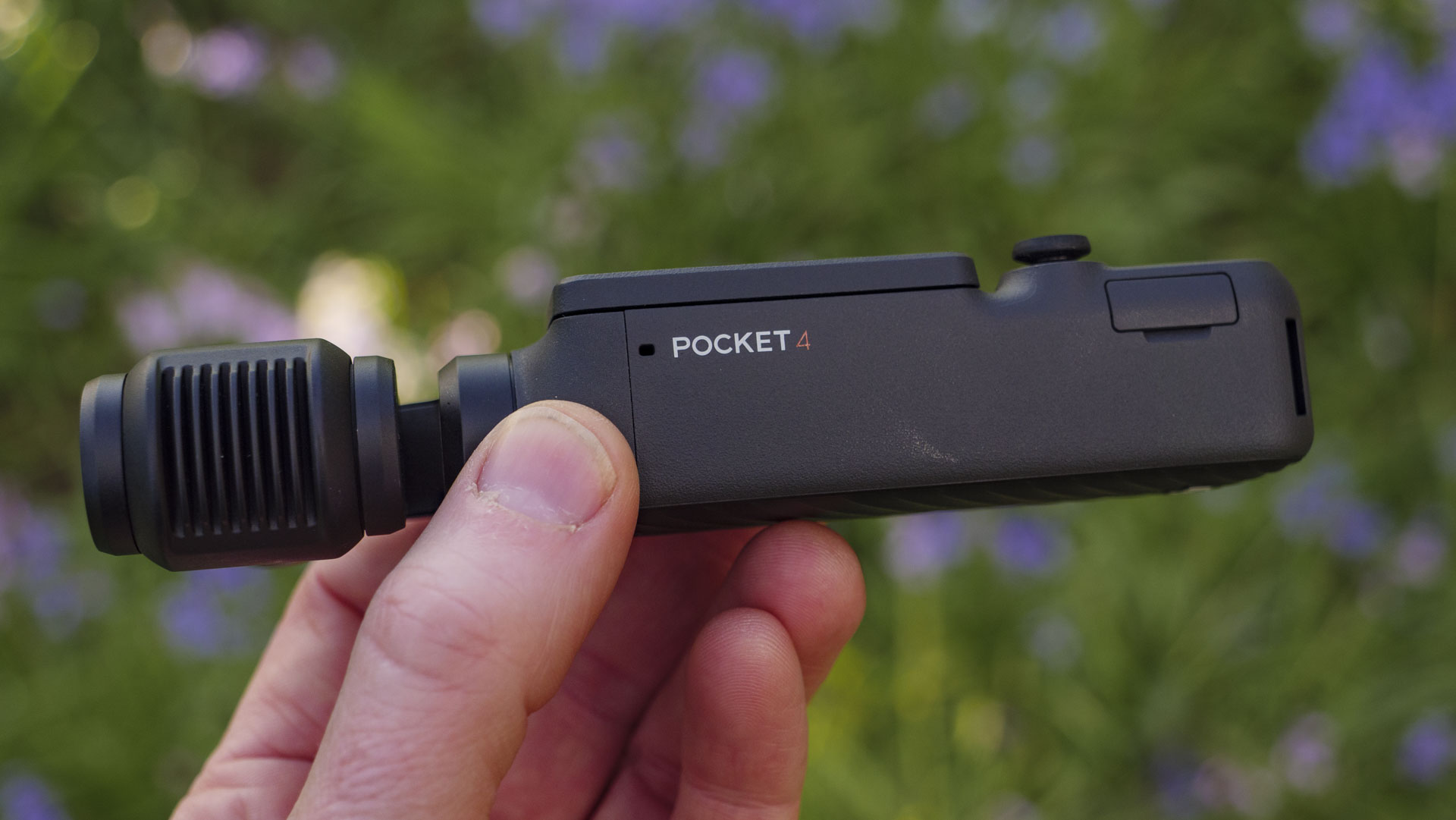
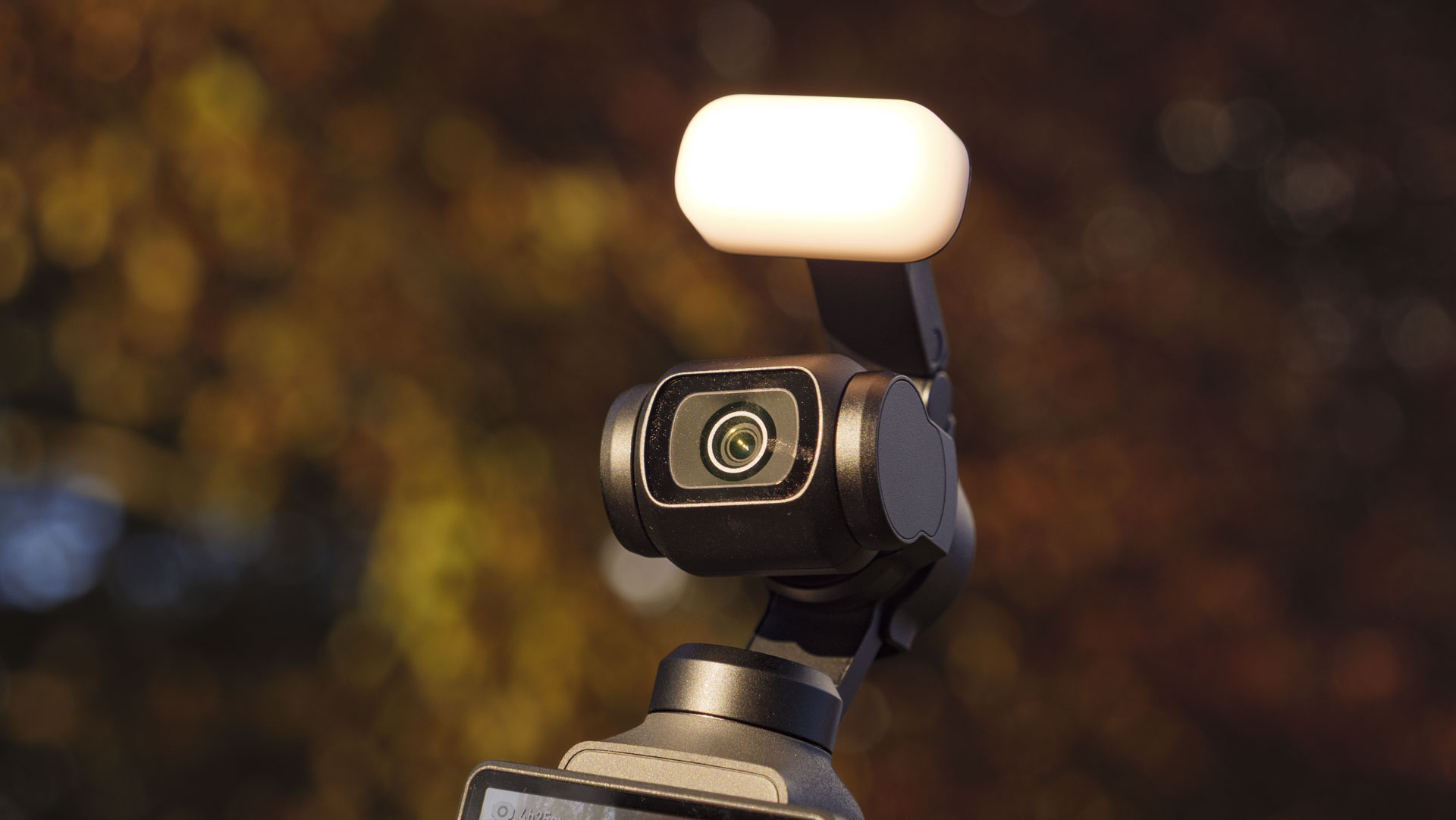
The gimbal arm has been fitted with a magnetic surface and electronic contacts, which can be used to pair accessories, such as the new magnetic fill light included in the Creator Combo kit (see below).
On connection, the light automatically fires up because it’s powered by the camera. Its output is minimal, and of no real help in bright daylight, but it’s certainly useful in dimly lit spaces or at night.
Otherwise, the design is mostly as you were. The gimbal is supremely effective for smooth video on the move, the rear screen still rotates 90 degrees to switch between horizontal and vertical recording, and there’s still a micro SD card slot (now with a protective cover) and USB-C charging.
There are other additions regarding memory and power, which I’ll get onto next.
- Design score: 4.5/5
DJI Osmo Pocket 4: Performance
- Improved subject tracking
- 107GB of built-in memory added
- Higher-capacity battery extends record times
Despite it effectively being the same size as the Pocket 3 (just a fraction taller), there’s a higher-capacity 1,545mAh battery squeezed into the Pocket 4 — that’s 20% more power compared to the older 1,300mAh unit.
This new battery provides up to four hours shooting time, but the small print stipulates that this for recording 1080p video at 24fps, and with wireless connections and the screen turned off. If you’re recording 4K video, expect shooting times to be significantly less.
Still, that’s quite the feat for such a tiny camera, plus charge times have been reduced, so you can be ready to shoot again quicker. From flat, the Pocket 4’s battery can get to 100% charge in 32 minutes, or an 80% charge in just 18 minutes. Again, the small print says those numbers are for using DJI’s 65W PD charger (sold separately, or included in the Creator Combo kit). I don’t have the numbers for regular USB-C charging.
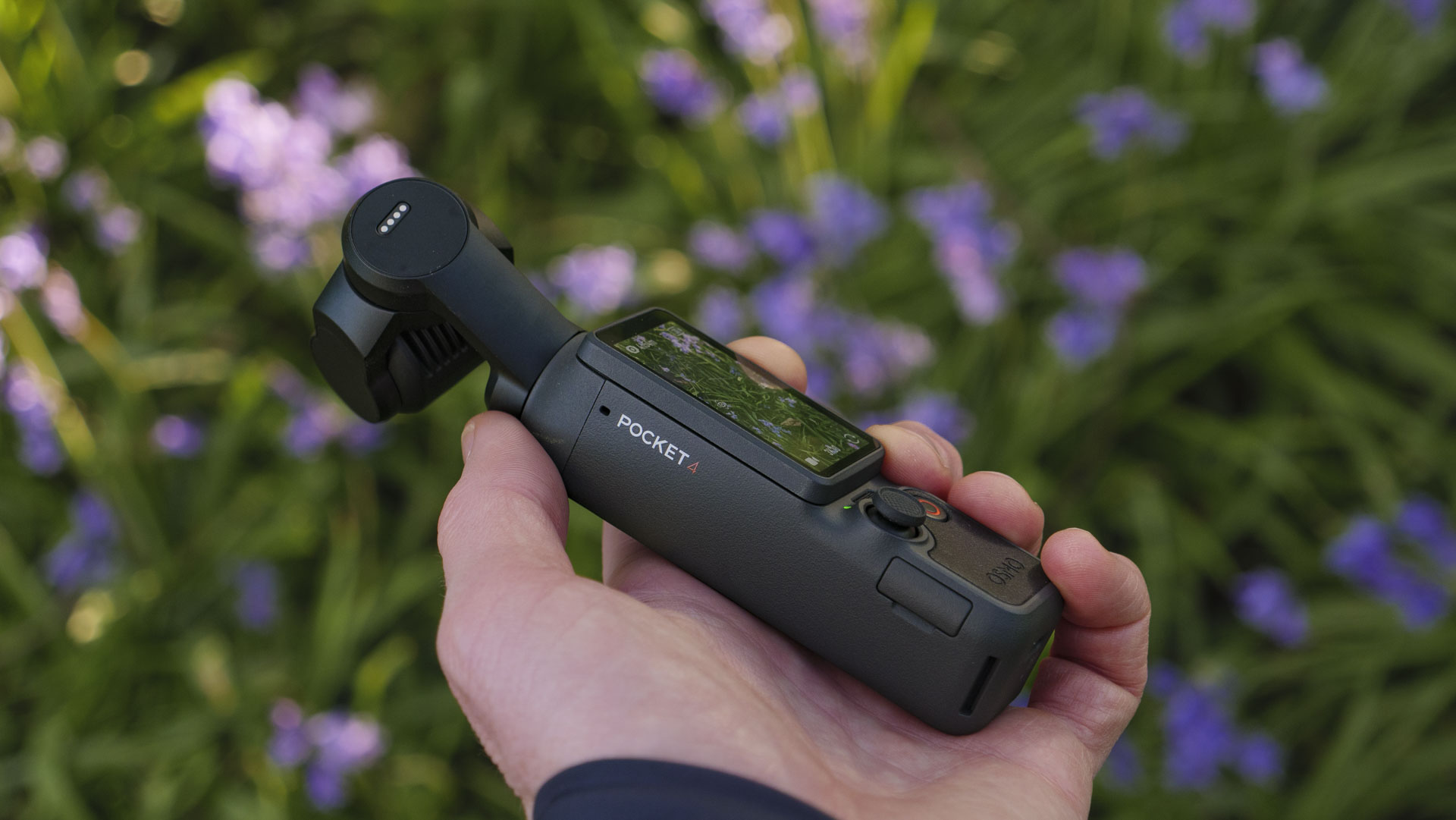
In addition to microSD card memory (compatible with cards up to 1TB), DJI has fitted the Pocket 4 with 107GB of built-in storage. which is sufficient for many hours of 4K video files, while the Pocket 3 has none. Both can record onto microSD.
There’s next-gen Wi-Fi 6 and USB 3.1 support in the Pocket 4 too, plus faster wired transfer speeds, making for a speedier workflow on the move.
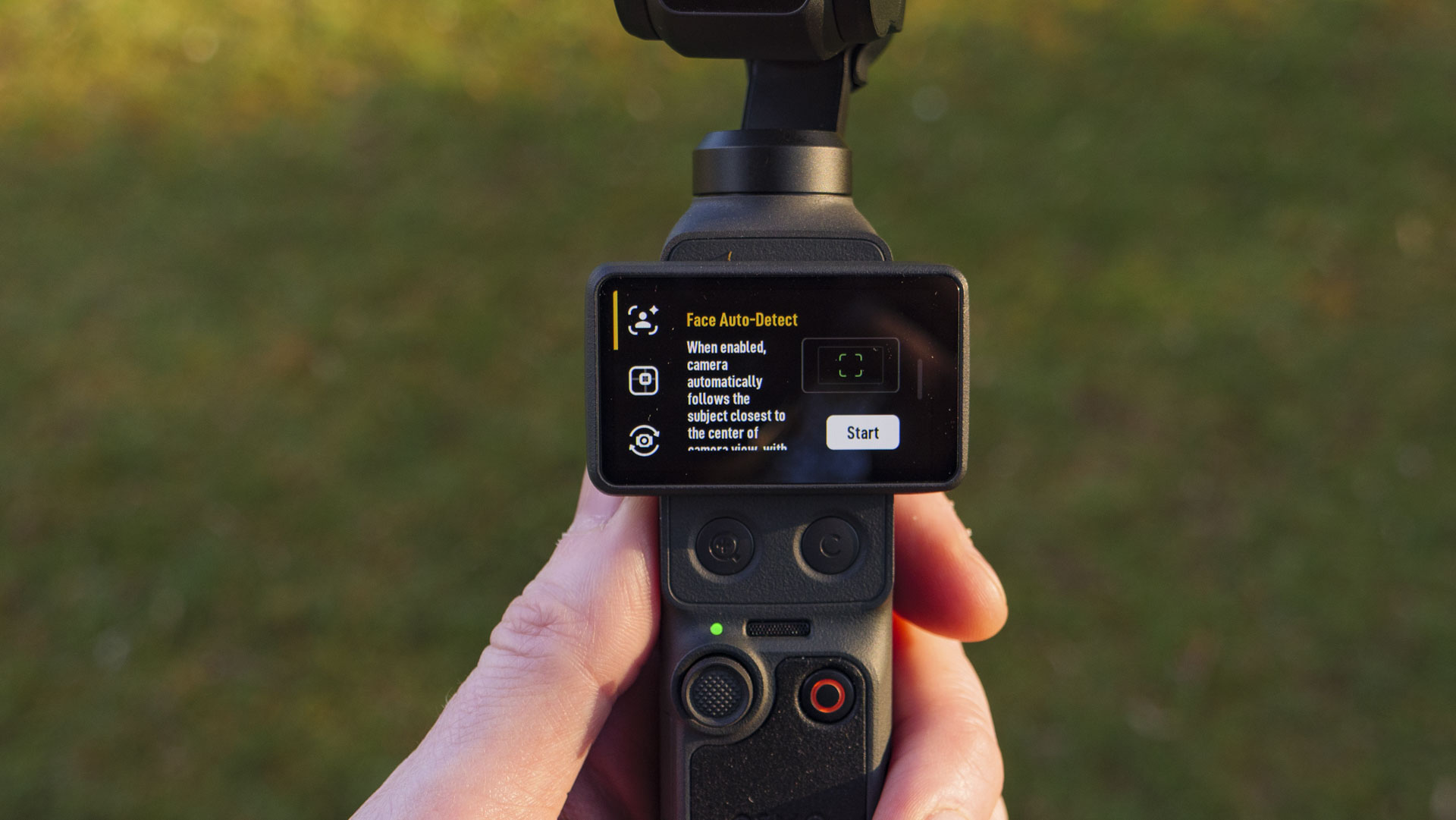
Subject tracking has seen a boost in performance, with an upgrade to DJI’s latest Active Track 7.0 (the Pocket 3 uses Active Track 6.0). A double tap on your subject in the frame initiates tracking, with the ability to track people, animals, vehicles and more.
DJI has let subject tracking loose in that it’s available in more shooting modes. It’s one of many instances where the Pocket 4 feels like a more polished all-rounder than the Pocket 3, which has many similar features but is hampered by what feel like unnecessary restrictions on which shooting modes you can use them in.
One drawback that does remain, however, is that the Pocket 4 can get a little warm when using its more power-hungry features. I’ve not had any overheating issues, but you’re aware of the camera warming up when you’re holding it.
- Performance score: 5/5
DJI Osmo Pocket 4: Image and video quality
- 1-inch sensor and single camera with 4K video up to 240fps
- New color profiles added, including D-Log and filmic looks
- Low-light further boosts the improved 14 stops dynamic range
For most people, the outright image quality of the Pocket 4, while impressive for pro vloggers, won’t be enough reason to upgrade from the Pocket 3, which was already impressive in this regard. Both cameras are fitted with a 1-inch sensor, but DJI says the Pocket 4’s 4K video output is optimized with 14 stops of dynamic range and 10-bit color depth.
One factor contributing to improved tones is the addition of a D Log color profile, which is available in the Pro setting. It’s DJI’s best flat color profile (also found in the pricey Mavic 4 Pro drone) which gives greater editing scope for color graders. The Pocket 3 offers D Log-M, which is a bit like a light version of D Log.
DJI says that the Low Light mode further boosts dynamic range and overall image quality from its previous Pocket. I haven’t directly compared the two, but from the recordings I’ve made with the Pocket 4, detail in dark scenes looks a little cleaner than I remember.
There are also six new film tones to choose from for stylized baked-in looks, handy for users who would rather not mess around with Log and color grading. I’ve happily used a couple of these profiles regularly – ‘Movie’ is nice and punchy.
Slow-motion recording receives a boost, in that the Pocket 4 can shoot up to 240fps — that’s 8x slow-mo — in 4K and 1080p. The Pocket 3 is limited to 120fps for 4K, but can also shoot at 240fps in 1080p.
For stills photography, a SuperPhoto mode ups resolution from 9.4 megapixels to 37 megapixels, for more detailed snaps. That’s for 1:1 aspect ratio pics, the resolution drops to 33 megapixels when switching to 16:9.
Even in stills mode, the Pocket 4 is clearly a video-focused camera, in that it doesn’t offer 3:2 and 4:3 aspect ratio stills common among photographers.
The 2x lossless zoom is easily selected by pressing the left of the two new buttons under the Pocket 4’s display, and again DJI has loosened previous restrictions for this feature — it can now be used in photo mode and when subject tracking is active.
Yes, image quality upgrades are minor in the Pocket 4, but for professional users there’s just about enough to merit swapping out their Pocket 3.
- Image and video quality score: 4.5/5
DJI Osmo Pocket 4: testing scorecard
|
Attributes |
Notes |
Rating |
|---|---|---|
|
Price |
Bang for buck, the Pocket 4 is excellent value, and has no real rival |
4.5/5 |
|
Design |
Welcome design tweaks improve the overall user experience, but it is a fraction bigger than the Pocket 3 |
4.5/5 |
|
Performance |
Stellar stabilization, subject tracking and improved battery life |
5/5 |
|
Image and video quality |
Still a single-lens 4K camera, but the quality has been upped through better low-light performance and color profiles |
4.5/5 |
Should I buy the DJI Osmo Pocket 4?
Buy it if…
You want a discreet and powerful video camera
No other vlogging camera this small produces such crisp, stabilized 4K video, complete with reliable subject tracking.
You need the polish it brings over the Pocket 3
Sure, the headline features such as 4K up to 240fps, D-Log color, built-in memory and exclusive accessories are welcome, but it’s just how much more polished the Pocket 4 feels that stands out day to day. There are less restrictions on how you can use many of its features.
Don’t buy it if…
You’re happy vlogging with your phone
The latest smartphones, especially flagship models from China, can for the most part match the Pocket 4’s quality, if not its discreetness
You’re happy with your Pocket 3
The Pocket 4 is a reasonable upgrade when all it’s improvements are considered, but the core features are largely the same as the Pocket 3’s.
DJI Osmo Pocket 4: also consider
DJI Osmo Pocket 3
In the immediate future, I expect the Pocket 3 to remain on sale, and it can be had for less than the Pocket 4. It’s slightly smaller and features all of the same core features, but you’ll miss out on 4K 240fps, built-in memory and new accessories, including the fill light. Check out my Pocket 4 vs Pocket 3 deep dive.
Read our in-depth Pocket 3 review
How I tested the DJI Osmo Pocket 4
- DJI loaned me the Creator Combo kit a few weeks before the product’s launch
- I regularly used the Pocket 4 and all of its accessories
- I’ve tested its new features, including 240fps slow-mo recording
DJI loaned me an Osmo Pocket 4 Creator Combo kit, which comprises the camera, gimbal guard, magnetic fill light, grip handle, battery handle, mini tripod and DJI Mic 3 transmitter. I used all of these accessories throughout my review period ahead of the product launch, which spanned the best part of a month.
I briefly compared how the Pocket 4 differs to the Pocket 3 by holding both products side by side, though I haven’t shot like-for-like videos with the two cameras to compare quality.
I’ve shot video in all resolutions and frame rates — that’s 4K and 1080p up to 240fps — utilized subject tracking, and shot comparison clips using the various color profiles, including D-Log and the six presets, and used the SuperPhoto and regular photo modes in RAW and JPEG format.
I’ve recorded onto the camera’s internal memory, and run the camera battery down and checked recharge times using a standard USB-C cable.
- First reviewed: April 2026
- Read more about how we test
“}]]
 DJI’s latest compact vlogging camera improves on its already capable predecessor with better battery life, built-in memory, new accessories, professional color profiles and 4K video now up to 240fps. Read More Latest from TechRadar US in Reviews