
[[{“value”:”
reMarkable Paper Pure: Two-minute review
reMarkable’s new Paper Pure is the company’s cheapest and most accessible black-and-white handwriting tablet. Comparisons to the now-discontinued reMarkable 2 are inevitable. The Paper Pure is the reMarkable 3 — or perhaps the reMarkable 2.5 — in all but name.
Now, I absolutely adore my five-year-old reMarkable 2. I use it pretty much daily for work and play. So, I was a little dubious about this thrusting young upstart muscling in. A budget reMarkable with no frontlight, the same old 226ppi, and a plastic shell? In 2026? That’s something absolutely nobody was asking for. Unboxing the tablet, I prepared myself for disappointment.
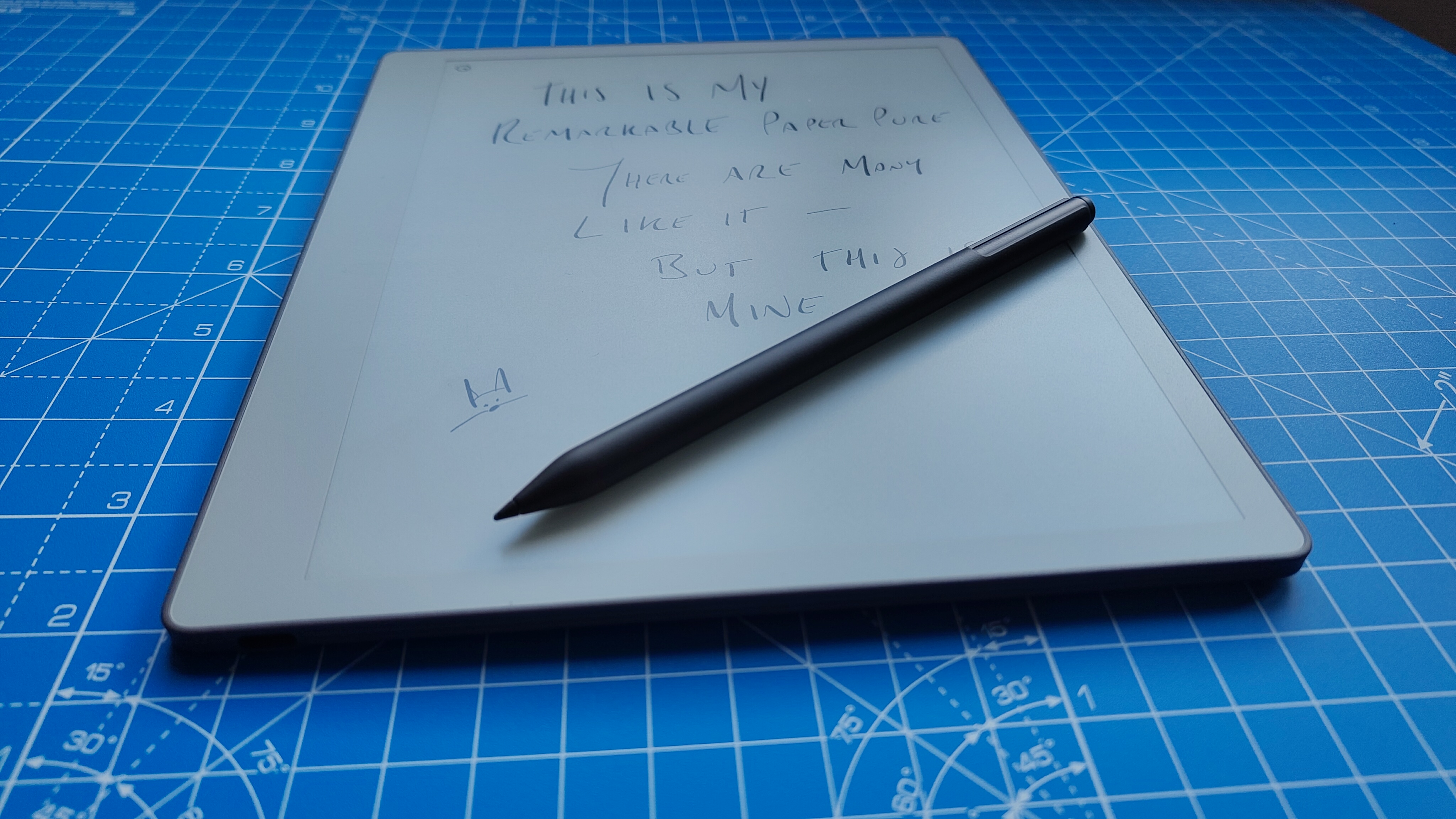
Happily, I was wrong. The Paper Pure is a surprisingly good device, delivering a faultless writing and sketching experience that’s as close to using a pad and pen as you can get at this price point.
All reMarkable devices focus on stripping out any and all distractions. So, like its predecessors, the Paper Pure has no notifications, no apps, and no ads. Even the AI is restricted to converting handwriting into text. At a time when every other device you own is desperately trying to sway your attention, this is pure, beautiful minimalism.
It’s by no means the best digital notebook on the market. But it effortlessly lives up to the company’s distraction-free ethos. The monochrome display is easy on the eyes, and I found it lightweight and very comfortable to hold for extended periods.
The low latency means your writing appears almost instantly on the screen, as if ink really is dripping from the nib of the exceptional Marker Plus stylus. That’s especially true when using no-nonsense pen types like the fineliner and ballpoint pen, but even the stylish calligraphy pen only has a minor lag. Like its black-and-white predecessor, the battery also lasts for weeks on a single charge.
Where it stumbles on the hardware front is the lack of those two core features that fans really wanted from this latest model: a frontlight and a 300ppi pixel density for improving the ereader experience. Bafflingly, both are absent here.
That probably won’t put off most new users from getting the Paper Pure — and it really shouldn’t, because beyond those omissions, the tablet’s handwriting experience is superb. But the inclusion of one or the other might’ve sweetened the deal a little more.
As ever with reMarkable, though, the mostly excellent hardware is let down by the mixed bag on the software side. The handwriting-to-text conversion is still not perfect, requiring adjustments to your writing style to make it work. And locking key features and even templates behind a subscription paywall stings, considering the cost of the device.
If you already own a reMarkable 2, I can’t recommend the upgrade just yet. Sure, the Paper Pure is faster, with a better processor and double the memory (here you’re spoiled with a whole 2GB RAM). However, it’s otherwise largely the same experience. And for what it’s worth, I still prefer the softer writing of the older device compared to the firmer but smoother one found on the Paper Pro and Paper Pure series.
However, if the Paper Pure is your first foray into distraction-free note-taking, the price alone makes this the best place to start.
reMarkable Paper Pure: Price and availability
- The cheapest reMarkable yet — but not a budget device
- Connect subscription is essential for business users, an unnecessary nice-to-have for everyone else
The Paper Pure is pitched as the most affordable of the reMarkable range, coming in at $359 / £359 / AU$629 for the tablet and standard Marker stylus.
You can also upgrade to the Paper Pure bundle for $399 / £399 / AU$699, which includes the tablet, colored sleeve, and the upgraded Marker Plus.
For what it’s worth, I’d always opt for the Marker Plus, which features an eraser at one end. It retains that pad-and-pencil feel, and being able to delete handwritten notes without tapping into the menu, selecting the Erase option, then manually lassoing the writing you want to remove is far better for flow.
Some notable corners have been cut to keep costs down. The Paper Pure isn’t as thin as the reMarkable 2; it’s got a plastic chassis rather than an aluminum one, a monochrome display unlike the color Paper Pro, and, disappointingly, there’s no frontlight here.
The upshot, however, is that this is one of the cheapest 10.3-inch handwriting tablets around. At under $400, it’s more or less in line with the Boox Go and Amazon’s base model Kindle Scribe (2024), although both of those tablets boast app support and 300ppi displays.
On top of the hardware costs, there’s the Connect subscription, which comes in at $3.99 / £3.99 / AU$6.99 a month. This unlocks a range of extras that some — particularly business users — will want, such as Slack and calendar integration, and AI summaries. You can see the full breakdown of Connect features by clicking here.
Without a Connect subscription, you can still convert handwriting to text, connect to third-party cloud storage services, and share your screen. So, for general users, I wouldn’t call it essential, especially if you’re ultra-focused on distraction-free writing and sketching. But you will be missing out on a lot of features.
While that subscription may sting considering the price of the Paper Pure, it’s still relatively cheap, and I can’t fault the hardware design at this price point. For my money, reMarkable still comes closest to reproducing that paper-like feel compared to competitors.
|
reMarkable Paper Pure |
reMarkable Paper Pro Move |
reMarkable Paper Pro |
|
|
With Marker |
$359 / £359 / AU$629 |
$449 / £399 / AU$779 |
$629 / £559 / AU$929 |
|
With Marker Plus |
$399 / £399 / AU$699 |
$499 / £439 / AU$849 |
$679 / £599 / AU$999 |
|
reMarkable Connect |
$3.99 / £3.99 / AU$6.99 |
- Value score: 4 / 5
reMarkable Paper Pure: specs
The reMarkable Paper Pure uses the same dual-core processor found in the Paper Pro Move with 32GB LPDDR4 RAM, which makes overall performance feel snappy.
At 6mm thick, the Paper Pure is thicker than both the Paper Pro (5.1mm) and the ultra-thin reMarkable 2 (4.7mm). However, it weighs just 360g, making it far lighter — and noticeably so — than the reMarkable 2 (403.5g) and the weighty Paper Pro (525g).
|
Starting price: |
$359 / £359 / AU$629 |
|
Operating system (as tested): |
reMarkable OS (Linux-based) |
|
Chipset |
1.7 GHz dual core Cortex-A55 |
|
Memory: |
2GB LPDDR4 RAM |
|
Storage: |
32GB |
|
Display: |
10.3-inch monochrome Canvas, based on E Ink Carta 1300 |
|
Size: |
228.1 x 187.1 x 6.0mm |
|
Weight: |
360g |
|
Battery: |
3,820mAh (rechargeable /replaceable) |
|
Supported file formats: |
PDF, EPUB (importing) PDF, PNG, SVG (exporting) |
|
Supported cloud services: |
reMarkable, Google Drive, Microsoft Onedrive, Dropbox, Slack |
reMarkable Paper Pure: display
- Perfect paper feel for writing and sketching
- Black-and-white screen with no frontlight
The Paper Pure uses an E Ink display — it’s a really clever technology used by a lot of handwriting tablets and ereaders. Beneath the glass, there are millions of microcapsules that can turn black or white depending on whether they’re positively or negatively charged.
When you move the stylus — in my case, reMarkable’s Marker Plus — over the screen, the device tracks its position and sends a positive charge to those exact coordinates, pulling the negative black particles to the surface.
It’s the same principle that applies when you turn the page of an Amazon Kindle, with the system telling each microscopic ball whether to display in black or white. These microcapsules stay in that state until told otherwise, which is why the battery can last so long on these devices.
But we’re getting sidetracked here.
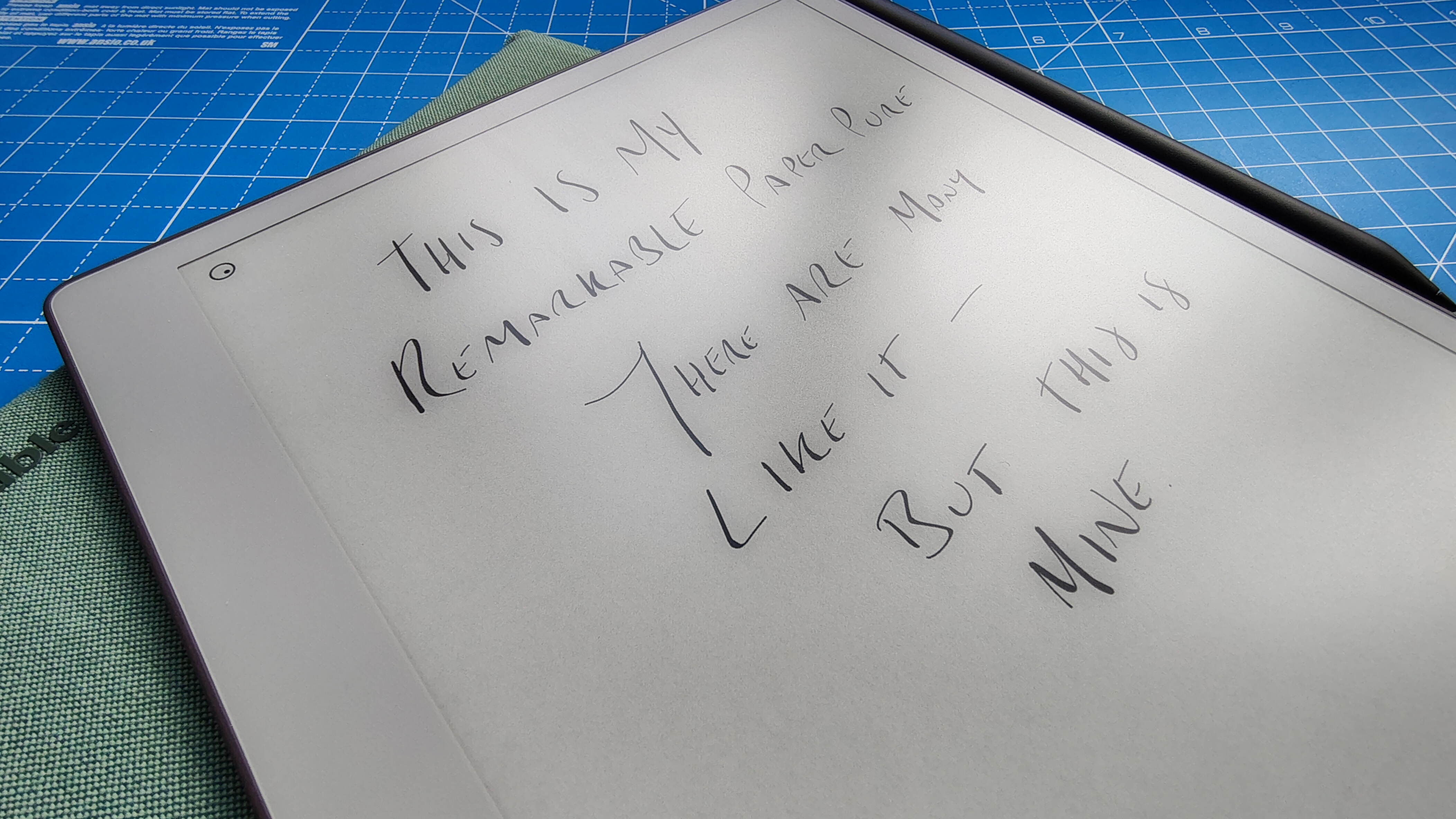
The result is a seamless writing experience. reMarkable says the latency between the stroke of the stylus and the words appearing on-screen is around 21 milliseconds. And while I’m not Superman and my eyes don’t operate at that speed, it feels about right.
To me, it feels pretty much instantaneous when using standard pen types like the ballpoint pen or fineliner. It’s about as close to using a pad and pen as you can get in digital form. When switching to a more stylized writing tool, such as the calligraphy pen or the pencil, I saw only a minor lag.
In terms of the feel of writing, there’s a clear distinction between the Paper Pure and its 10-inch predecessor.
Using the reMarkable 2 felt very soft, like using a thick pencil or felt tip on the first page of a new Moleskine notebook. The Paper Pro Move felt firmer but smoother, as if writing with a biro on the last few pages of a well-worn legal pad. And since the Paper Pure uses the same active stylus and textured glass cover lens display as the Pro and Pro Move, reMarkable’s newest tablet falls into the latter camp.
Personally, I loved the tactile feedback of the reMarkable 2 — it’s still the best digital writing experience I’ve ever had — but after 10 minutes with the Paper Pure, I found myself enjoying this new writing style.
Saying that, there are three issues here. I wouldn’t call them deal-breakers, but it’s worth highlighting them.
There’s a clear tapping each time you lift and then lower the stylus to make your next mark on the page. It’s not especially loud — it won’t drive colleagues, friends, or the other customers at the cafe to distraction — but it is present.
And there were two big fan requests for the follow-up to the reMarkable 2: 300ppi, which is a better resolution for reading eBooks and PDF documents, and a frontlight. The reMarkable Paper Pure delivers on neither of these.
Now, for writing, I didn’t find the 226ppi to be an issue at all. Handwriting still looks sharp, the display is easy on the eyes, and the writing tools perfectly recreate the ink-on-paper style. But for reading documents, you will see a slight pixel blurring around the edges of words that’s noticeable if you’re coming from something like the Kindle Scribe.
For me, the lack of a frontlight is the biggest misstep. I can live with a lower pixel density, and I can accept the demise of the EMR stylus, but I think a frontlight is an absolute must these days. I get it — it’s all about keeping costs low — but the addition of lighting for day and night use would’ve made the Paper Pure a much more attractive proposition.
- Display score: 4 / 5
reMarkable Paper Pure: Design & build
- The plastic case feels surprisingly durable
- It’s lightweight and feels good in the hand
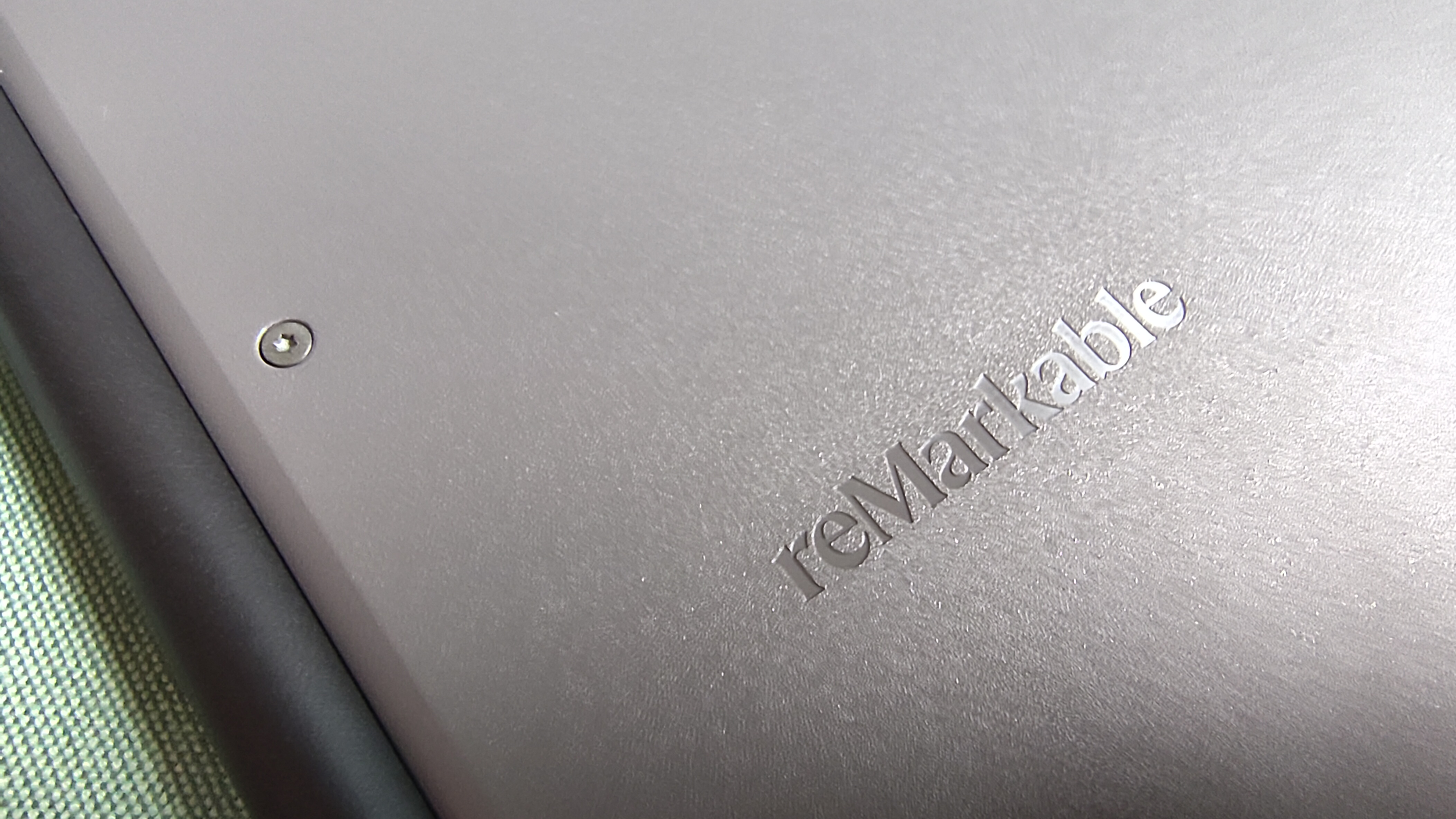
Perhaps the Paper Pure’s most significant shift from its predecessor and the Paper Pro line is the switch from a metal to a plastic casing. Having grown used to the hardy aluminum frame of the reMarkable 2, I was seriously skeptical about this change. But it really works.
The rear side of the Paper Pure is oh-so-lightly textured for better grip, and the tablet as a whole is more lightweight and portable, clocking in at a svelte 360g. Overall, it feels delightfully comfortable to hold with one hand or rest on your knee as you sketch and write.
Because of the switch to plastic, the Paper Pure also feels a lot more durable than its predecessor, which I tended to handle with kid gloves while on the move.
I mean, I wouldn’t drop it off the side of a ten-story apartment block and expect it to survive. It’s not a rugged tablet by any stretch of the imagination; it’s not even waterproof. But the Paper Pure certainly feels like it could take a few knocks in your rucksack or survive a violent commute — especially when slipped inside the reinforced sleeve.
Design-wise, you’re looking at a 10.3-inch tablet that’s identical in width to, but slightly shorter than, the reMarkable 2. The thick white bezel on the left is reminiscent of the original reMarkable 1.
Flipping over the Paper Pure, I found something very interesting: ten screws allowing access to the internals. Now, whether this is just a sop to EU regulations that mandate a right to repair or whether the reMarkable intends to provide replacement batteries in the future, I don’t know. But it might make the reMarkable Paper Pure a more viable investment for IT managers maintaining a fleet of devices if nothing else.
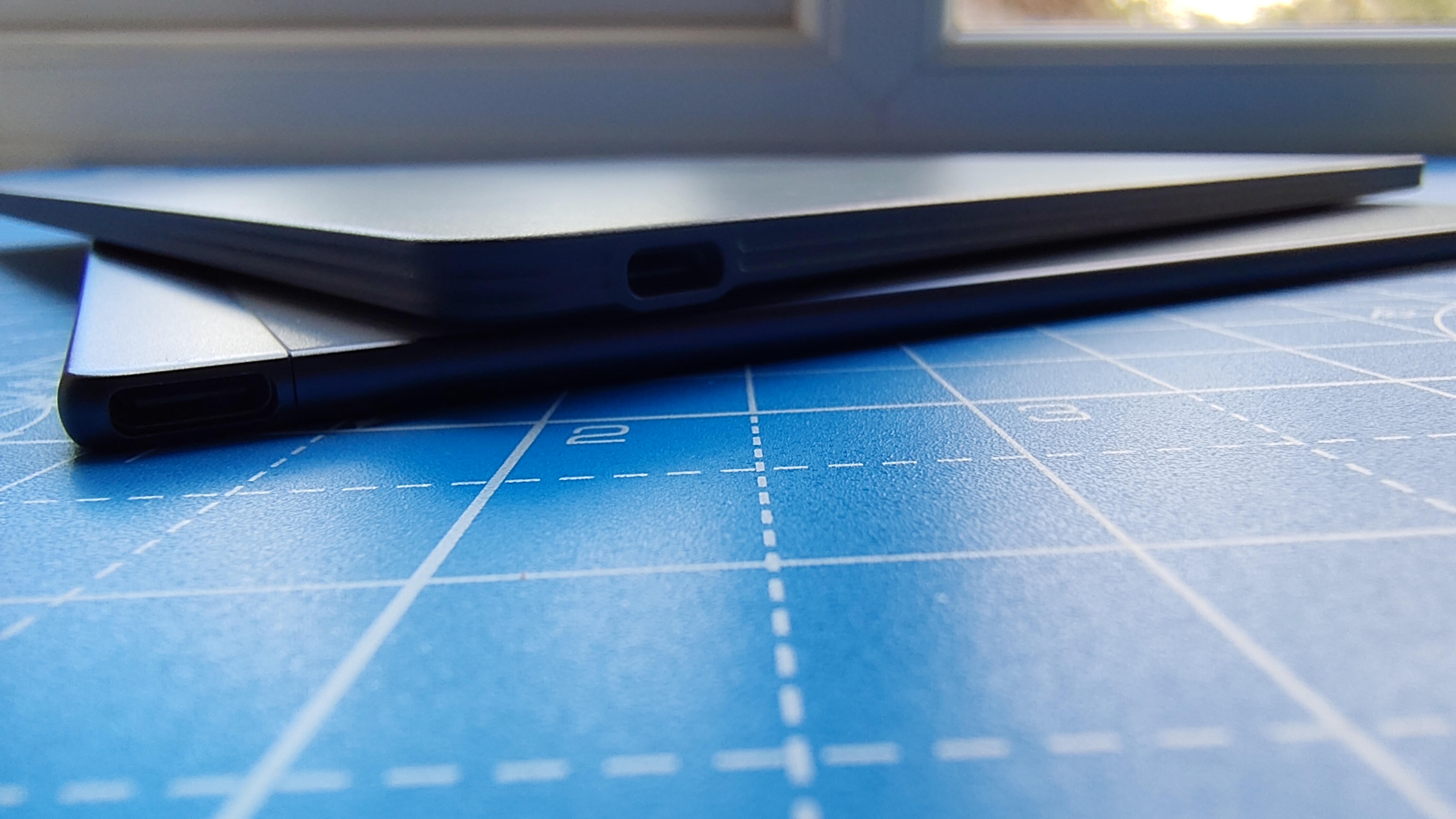
At the top of the device, there’s the power button, and at the bottom, a USB-C port for charging. And that’s your lot. Talk about distraction-free. The Paper Pure has everything it needs and nothing it doesn’t.
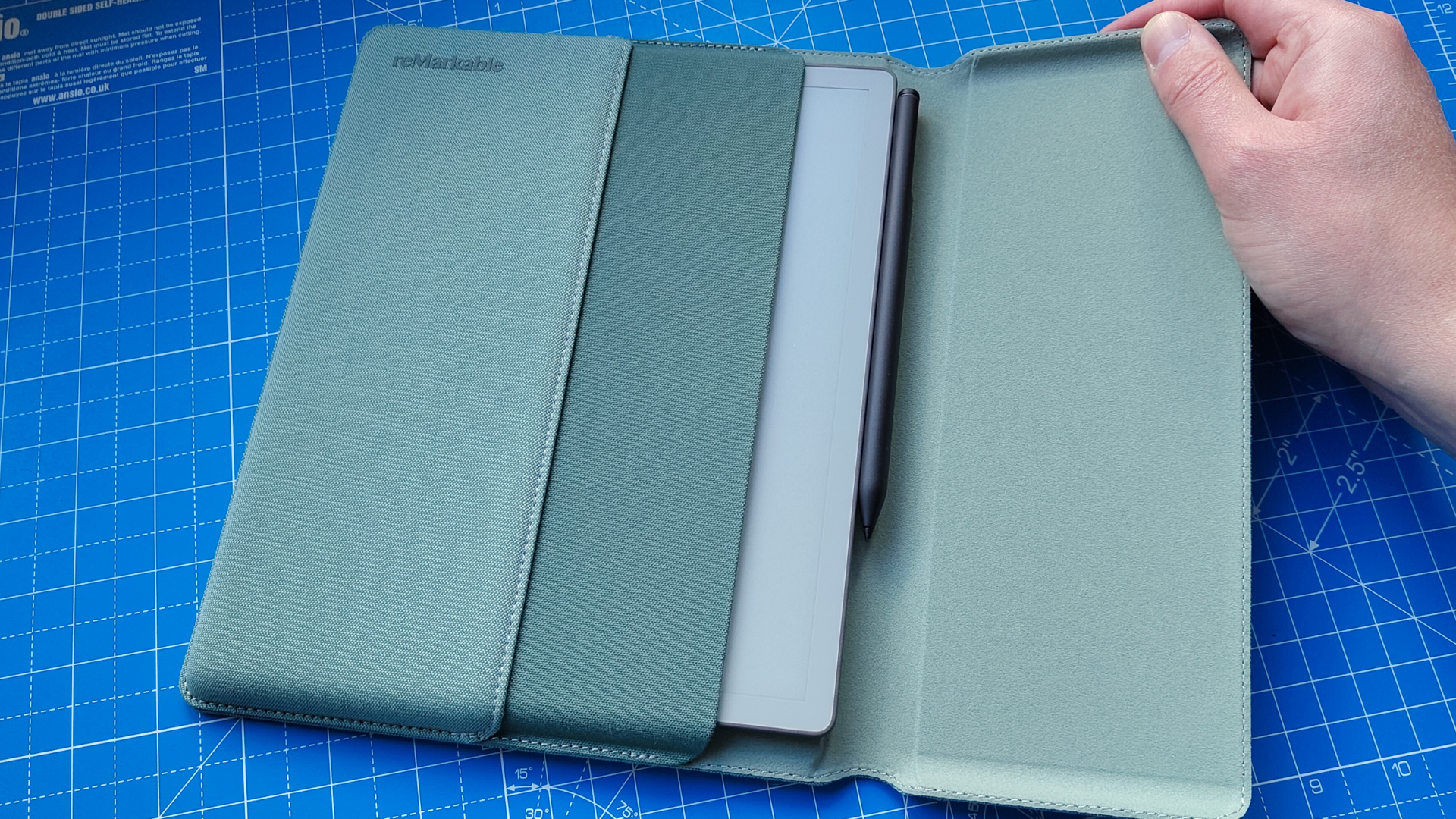
The Marker magnetically attaches to the right side of the tablet, where it’s charged. It feels good in the hand, and it’s not too heavy for prolonged writing sessions.
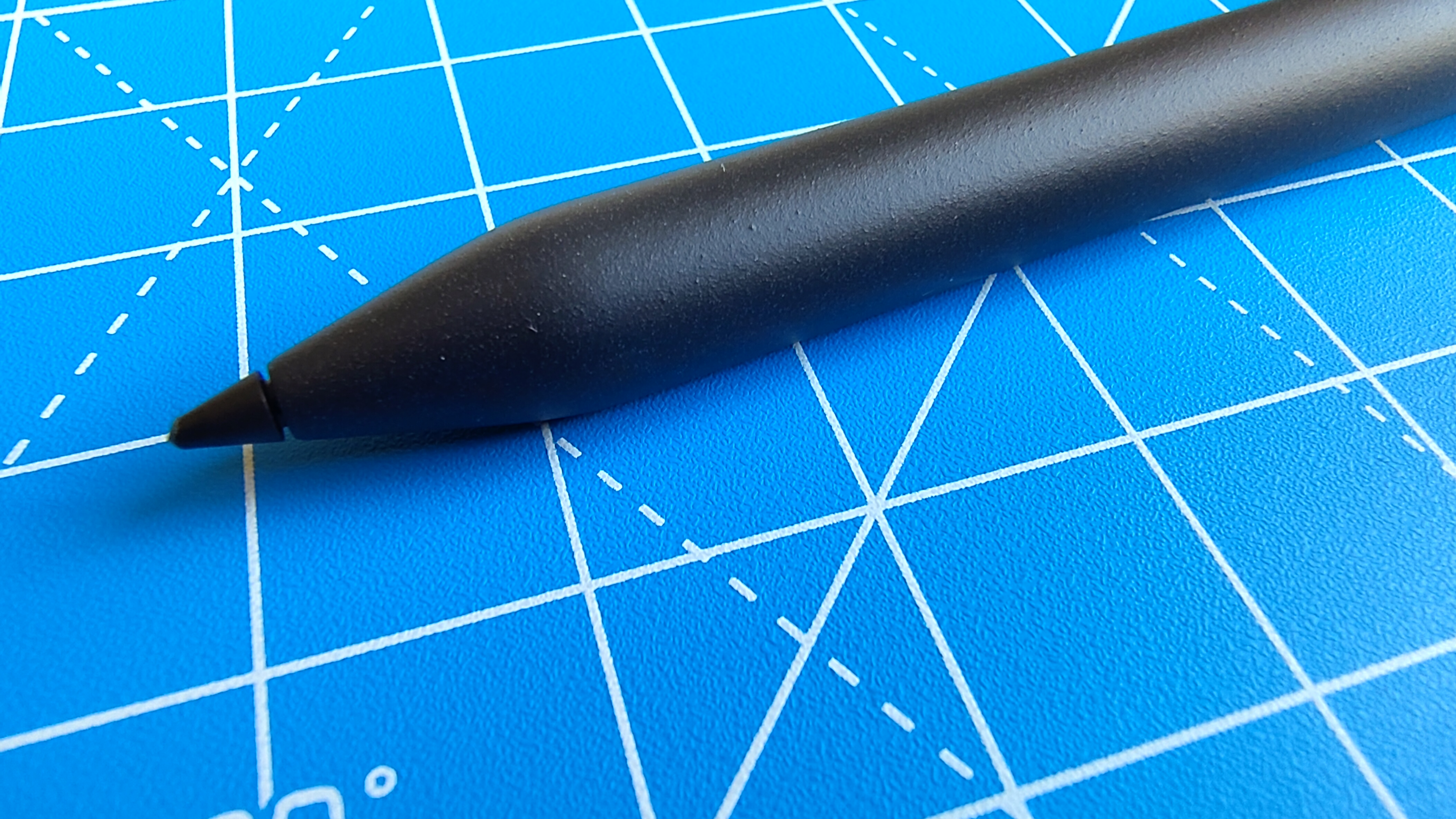
The replaceable nibs are estimated to last about a month or two if you don’t press down too hard, and that feels about right. For what it’s worth, the one on my reMarkable Paper Pro Move lasts about that long, and they very visibly wear down at a slower rate than the reMarkable 2 pen tips.
As I’ve mentioned before, the Marker and Marker Plus are the same active styluses used by the Paper Pro range. These are proprietary tech, so don’t lose them, because they’re a lot more expensive to replace than the cheaper third-party EMR stylus that worked with the reMarkable 2.
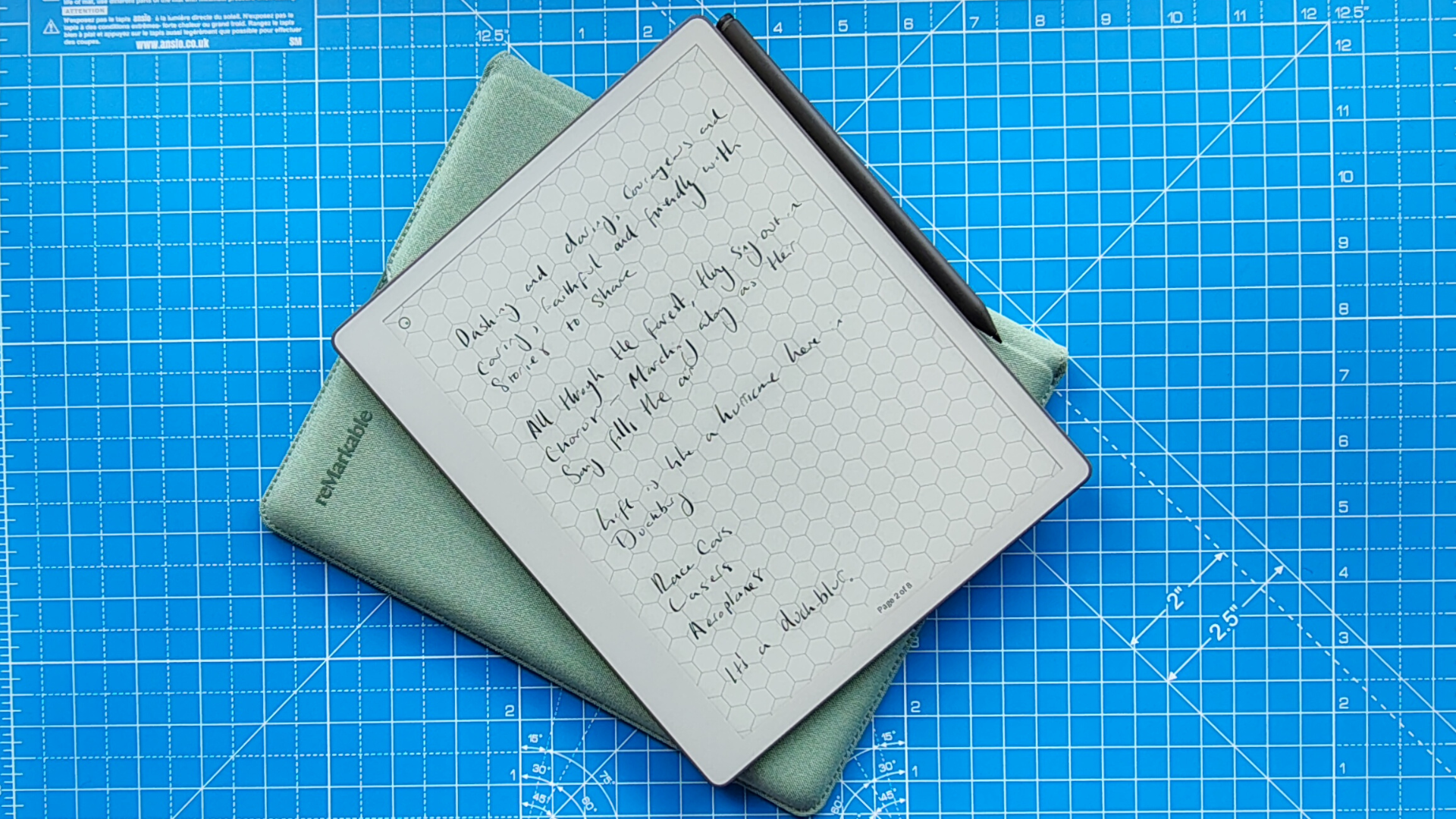
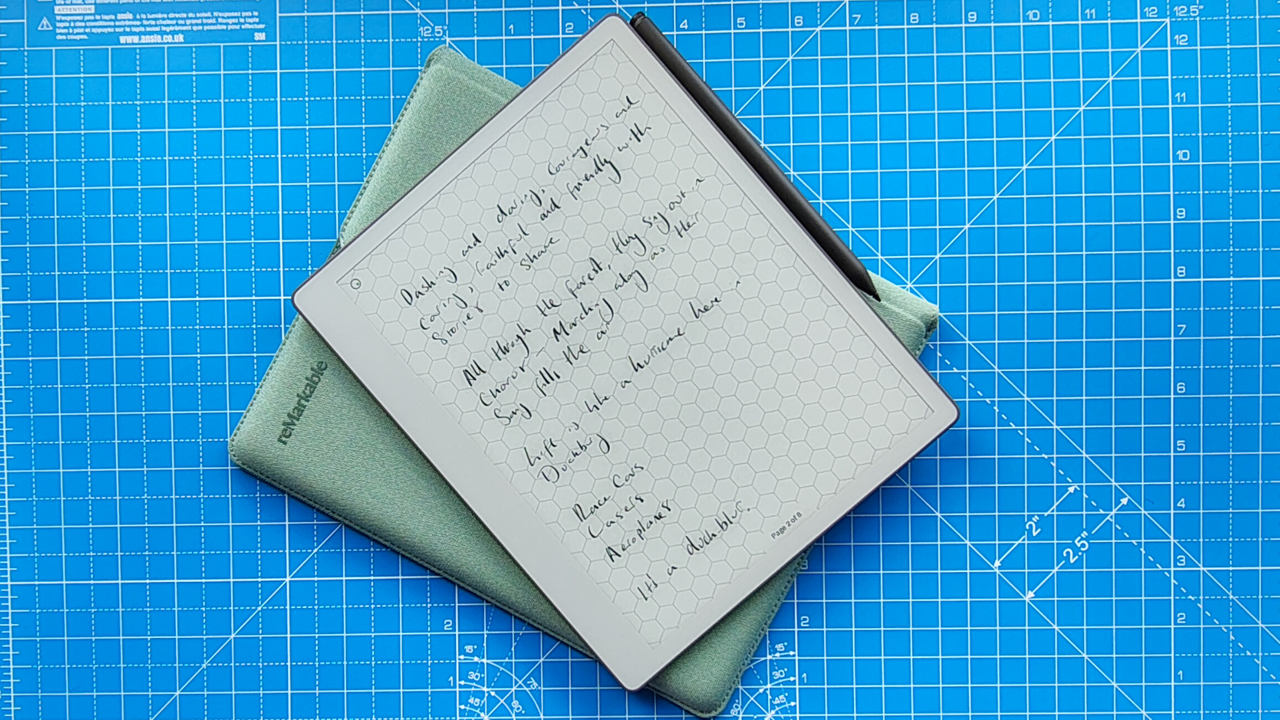
On that note, I liked the Paper Pure’s new polymerweave sleeve folio — there are three available, in mist green, desert pink, and ocean blue. This flips open on one side and is vastly superior to the original reMarkable book folio, since it actually protects both tablet and stylus. Slot the device inside, and it’ll automatically go to sleep, which is a nice touch for conserving battery.
- Design score: 5 / 5
reMarkable Paper Pure: Software
- Distraction-free but not feature-free
- The AI optical character recognition can be hit-and-miss
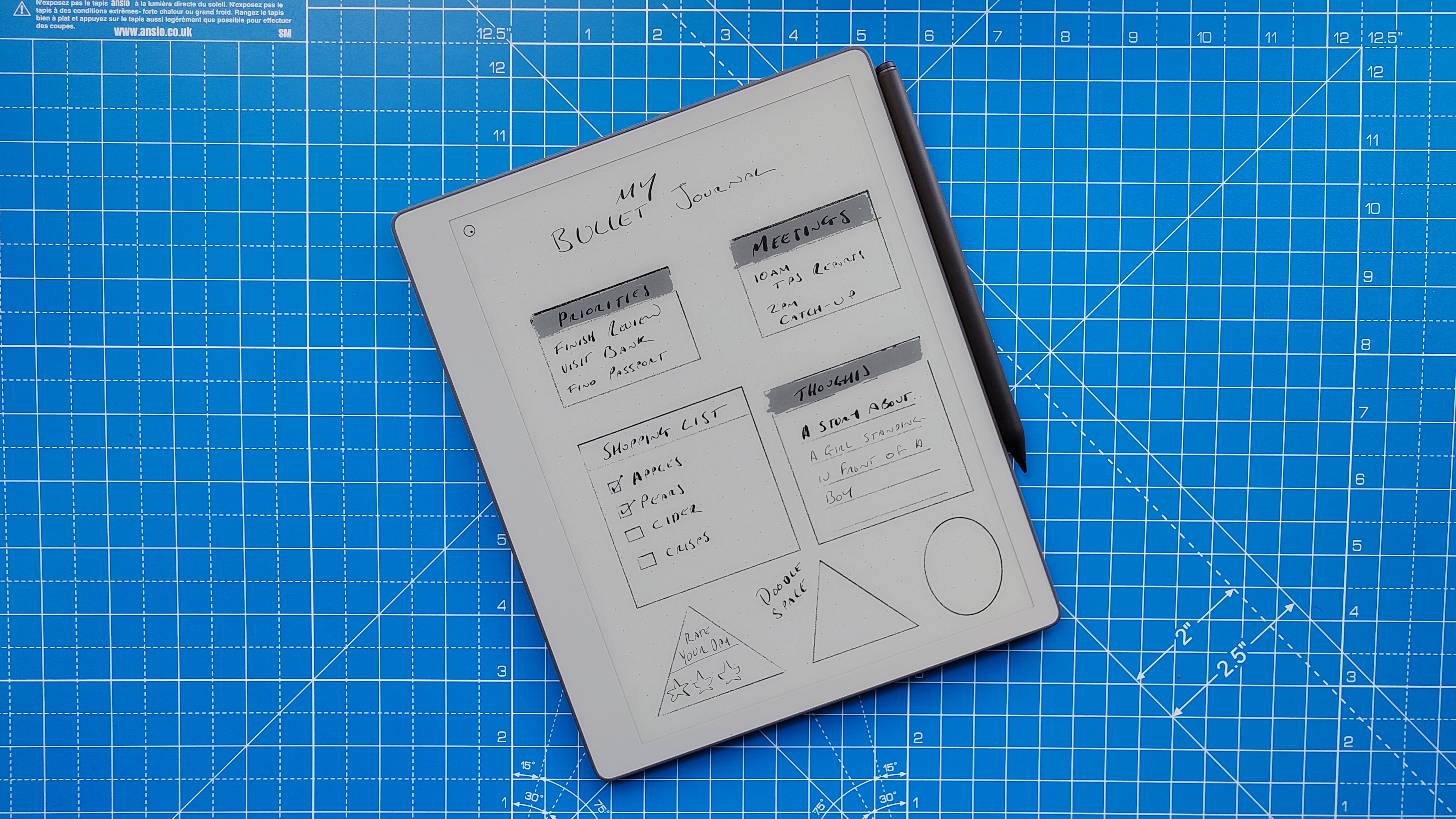
You can tell a lot of love has gone into the Paper Pure’s hardware. I’m not sure the same can be said for its software. Sure, it’s functional, and it does more than you might think, but it’s nothing to (digitally) write home about.
reMarkable has always been a bit spotty when it comes to the software side of things. We tend to get marginal updates, tinkering here and there, the inclusion of this or that integration, but nothing ground-breaking. And maybe that’s fine. Maybe we just expect too much.
Still, the brand is getting better every time, adding extras like a very useful handwriting search function, the ability to draw freehand shapes, and the ability to add text blocks to notebooks, typed via the on-screen keyboard (sadly, there’s no support for an external keyboard right now). I especially enjoyed using the screen share feature, which I found works very well, letting you present or write on pages pretty much in real-time.
For absolute basics, you’re looking at a broad selection of templates like ruled paper, gridlines, and even music sheets, with more available to Connect subscribers via reMarkable Methods. I’m still not convinced templates like daily planners and calendars need to be locked behind a subscription — especially considering the price of the device — but there you go. Put up or shut up.
You can also integrate the tablet with Slack, Microsoft’s OneDrive and Outlook, Google Calendar and Google Drive, and Dropbox. While you can integrate with all the cloud services, you can only add a single calendar integration.
As I use a restrictive work account on Slack, I couldn’t test that particular feature. However, OneDrive and Google Drive both synced quickly, importing and exporting files to and from the tablet as PDFs without delay.
While the Paper Pure’s display may be monochrome, I chose different colored highlighters for annotating the PDF documents. And I was pleased to see they all rendered clearly and correctly when I picked up the file from Google Drive.
One point of interest is that reMarkable requires access to see, edit, create, and delete all of your Google Drive files, rather than at a folder level. This, I really hate, and I recommend doing what I’ve done: create a reMarkable-only Gmail account instead of using your main one. It’s probably fine, but why take the risk?
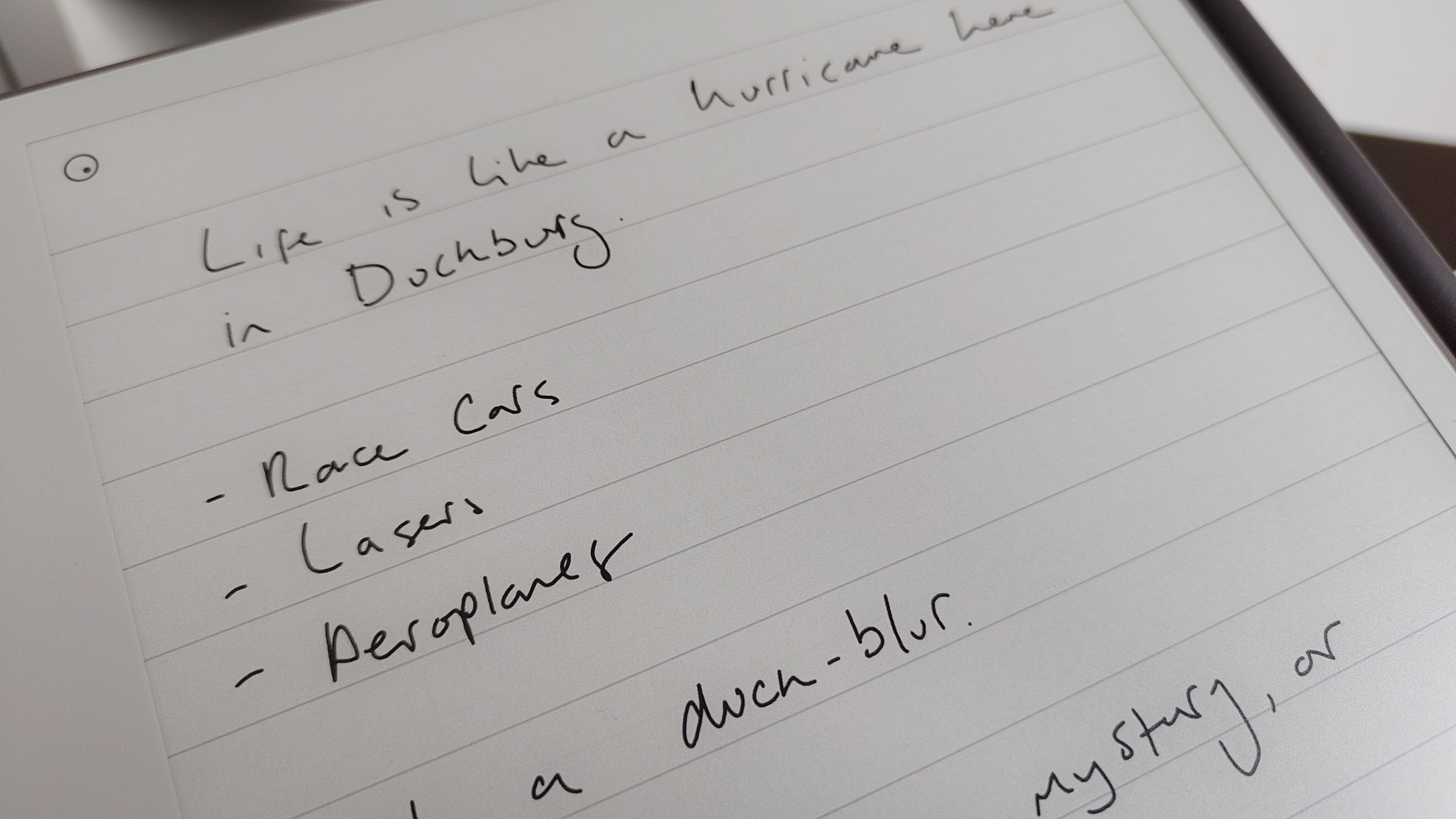
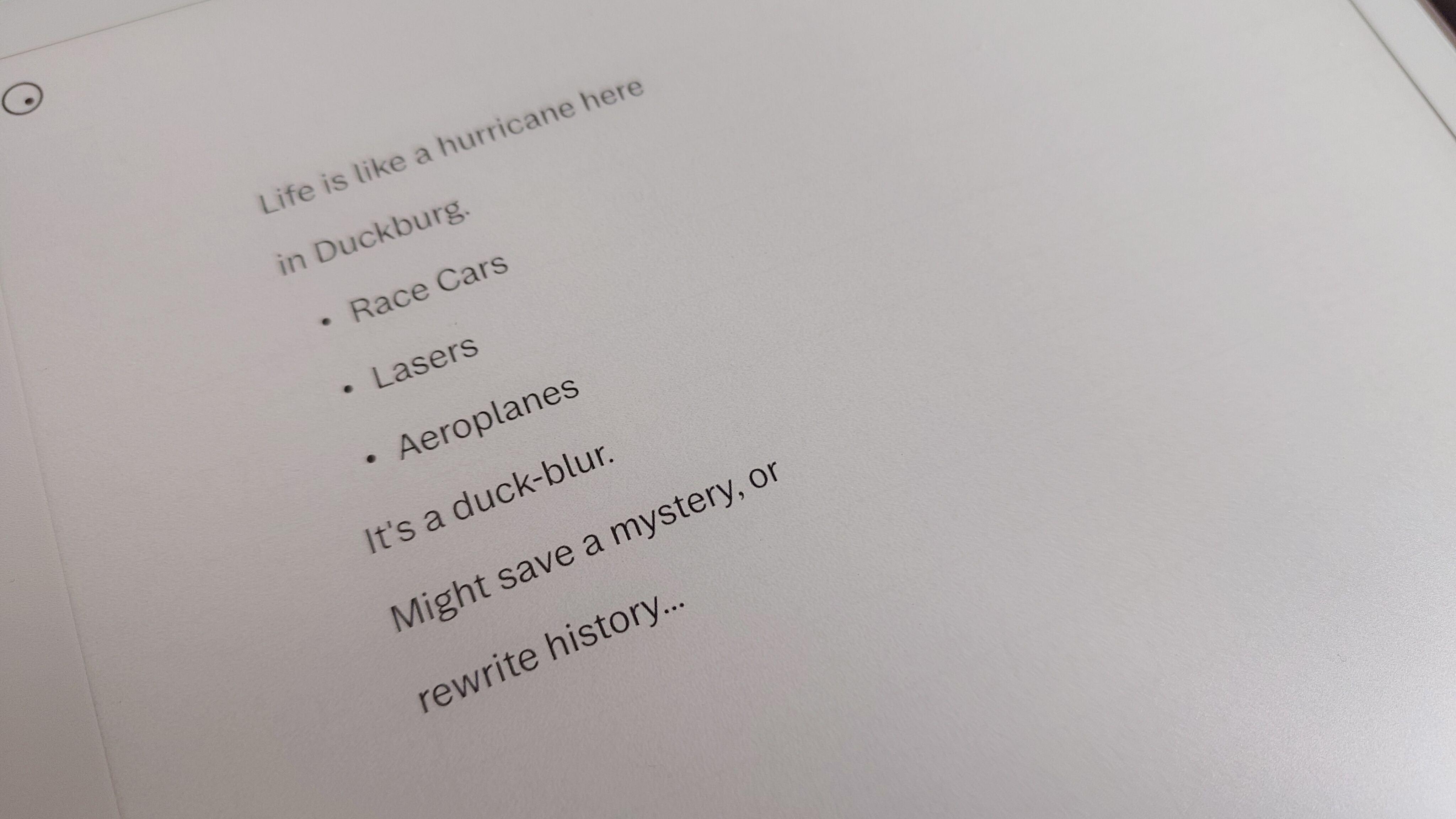
Handwriting conversion is probably the big software highlight, transforming handwritten notes into usable text you can paste into a word processor. This is, effectively, optical character recognition in the cloud. And it’s one of the main reasons I originally bought a reMarkable. The results are… ok. With some caveats.
Firstly, you can’t just write any old squiggles that only you understand and pray the AI knows what you’re getting at (as I learned with my own spidery, illegible scrawl). If you’re anything like me, when I’m in the writing flow and my brain is working faster than my hand, you’re going to run into problems.
Secondly, I found the best results came when using the fineliner or ballpoint pen. Here, the translation was flawless, albeit oddly formatted. When I switched to the calligraphy pen, the Optical Character Recognition (OCR) struggled to make sense of the words even when I wrote ultra-neatly in all-caps.
Finally, if you’re making a list, you’ll absolutely need to add a dash before the word, otherwise the tool just lumps it all into a single line.
It’s a so-so experience that does the job if you take the time to work with the OCR tool, but it could be so much better.
- Software score: 3 / 5
reMarkable Paper Pure: Performance
- A faultless writing experience
- Faster and smoother than the reMarkable 2
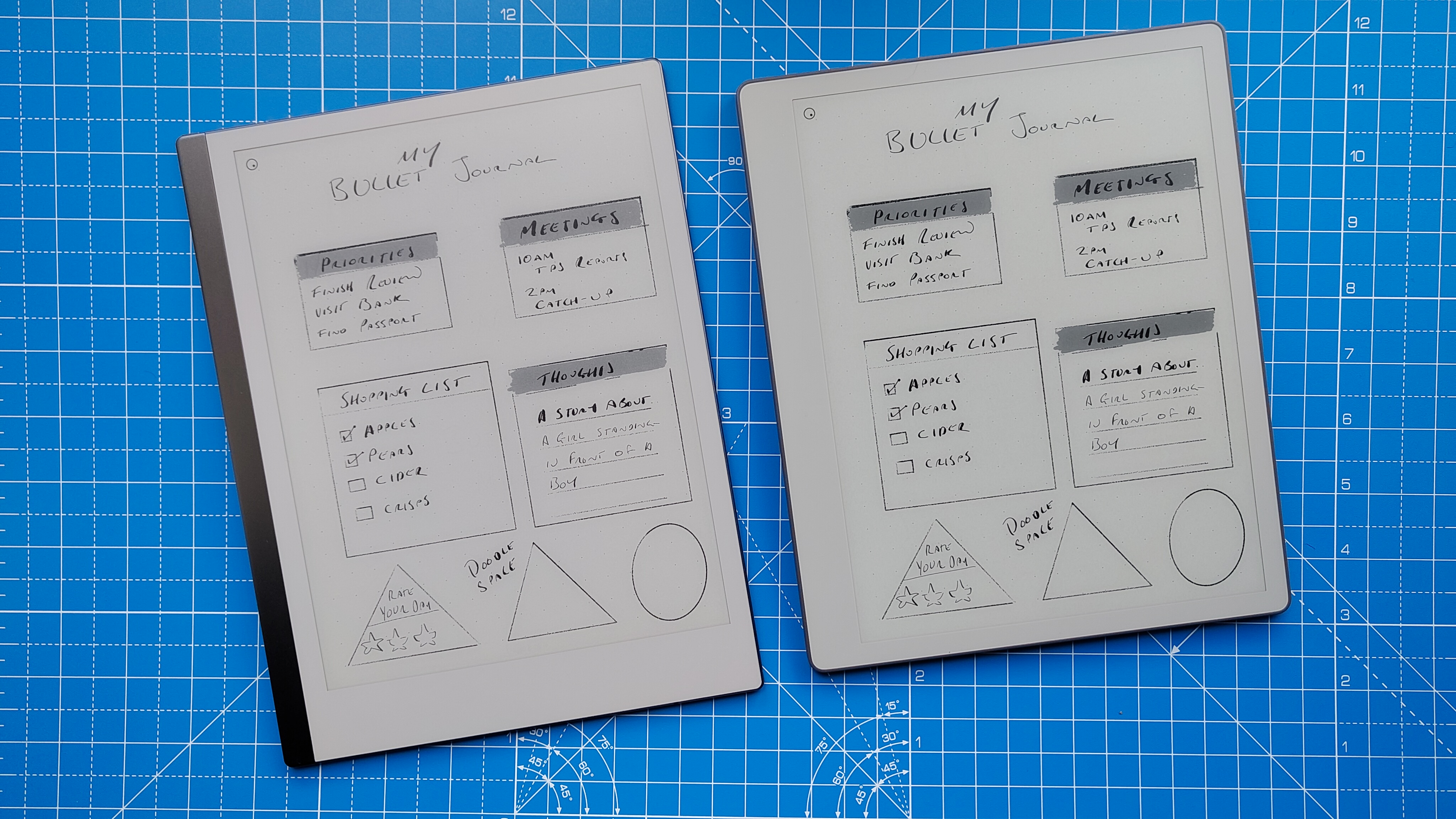
Responsive is how I’d describe the reMarkable Paper Pure. Starting the device from sleep, opening notebooks, scrolling menus, pinching and zooming, swiping through documents — it all feels fast and smooth. There’s none of the lag that dogged the older reMarkable 2.
There’s also no delay when writing on the screen, which is the real high point. There’s a genuine fluidity to the Paper Pure that I appreciated, making the experience practically faultless on that score.
There’s a welcome snappiness to using this tablet. I know speed isn’t the main priority with a device like this — it’s all about how well it digitizes handwritten notes. But, for me, the performance of the Paper Pure is the killer reason anyone would want to upgrade from the reMarkable 2.
To help you visualize the difference between the two models, I compared the scrolling speed of the reMarkable Paper Pure (right) and the reMarkable 2 (left) in the video below.
- Performance score: 5 / 5
reMarkable Paper Pure: Battery
- 3,820mAh battery is an upgrade over the reMarkable 2
- Lasts for weeks on a single charge
The reMarkable Paper Pure has a built-in 3,820mAh battery. The company says it lasts up to three weeks, depending on your use. Based on my testing, that seems accurate.
I’ve been using the Paper Pure daily for hours at a time over the last couple of weeks without needing a recharge. The only reason I plugged it in during that time was out of caution, not necessity.
For comparison, the reMarkable 2 boasted a 3,000mAh battery, and I typically squeeze about three weeks out of that device already. The Paper Pro has a 5,030mAh battery but uses color E Ink and a frontlight, which drains faster than the black-and-white tablets, lasting about two weeks.
Likewise, the battery inside the Marker Plus lasts a long time. Charging is quick — you do so by attaching it to the side of the tablet — but I don’t recall it ever dropping below half during my entire review process, and you’ll see a battery meter briefly pop up each time you clip it to the side.
- Battery score: 5 / 5
Should I buy the reMarkable Paper Pure?
|
Attribute |
Notes |
Score |
|---|---|---|
|
Value |
The cheapest reMarkable yet. It may lack a frontlight, but for the price, it’s a top entry-level handwriting tablet. |
★★★★☆ |
|
Display |
The monochrome display is perfectly sized and textured to recreate the feel of writing with a pad and pen. I found it very easy on the eyes when used indoors and outdoors. |
★★★★☆ |
|
Design |
The lightweight tablet is delightfully comfortable to hold for extended periods of time. It feels like it has a surprising amount of durability, too. |
★★★★★ |
|
Software |
It’s simple, has plenty of integrations and features (some subscriber-only). But what should be the highlight — converting handwriting to text — needs work to get accurate results. |
★★★☆☆ |
|
Performance |
Superb performance that’s fast and fluid, whether navigating menus or writing on the screen. There’s no discernible lag. |
★★★★★ |
|
Battery |
The tablet has exceptional battery life — expect it to last weeks on a single charge. The same can be said for the stylus, which rapidly charges when attached to the device. |
★★★★★ |
Buy it if…
You’re a born writer or sketcher
The Paper Pure is a pitch-perfect portable device for authors, architects, UI designers, and anyone else who needs to sketch or write at work. It perfectly recreates that pad-and-pen feel.
You’re a student
For the price, the Paper Pure is arguably the best handwriting tablet around. It feels durable enough to survive days on campus, and lets you focus on your work without being distracted by apps.
Don’t buy it if…
You actually like distractions, thank you very much
If you want a standard tablet with all the bells, whistles, and essential apps with the added bonus of writing or drawing with a stylus, you’re better off with an Apple or Samsung device.
You’re an avid ebook reader
While I didn’t have any problems using the Paper Pure to read documents, the pixel density is lower than I’d recommend for a true ereader, and it doesn’t support buying Kindle books anyway.
Also consider
reMarkable Paper Pro
It’s got a larger screen, a bigger battery, and displays in color. If the Paper Pure feels too basic for your needs, this is the true upgrade device from the same stock.
Read our full reMarkable Paper Pro review
Kindle Scribe (2024)
You could go for the newer 2025 model, which excels as an ereader. But if you’re focused on writing, I find the 2024 edition of the Kindle Scribe has a superior feel and is similarly priced to the Paper Pure.
Read our full Kindle Scribe (2024) review
|
reMarkable Paper Pure |
reMarkable Paper Pro |
Amazon Kindle Scribe (2024) |
|
|
Price: |
$359 / £359 / AU$629 |
$629 / £559 / AU$929 |
$399.99 / £379.99 / AU$649 |
|
Price for premium edition: |
$399 / £399 / AU$699 (Marker Plus) |
$449 / £429 / AU$749 (Marker Plus) |
$449.99 / $429.99 / AU$729 (64GB, Premium Pen) |
|
Display: |
10.3-inch, monochrome Canvas display, based on E Ink Carta 1300 |
11.8-inch Canvas Color, based on E Ink Gallery 3 |
10.2-inch E Ink Carta 1200 |
|
Supported files: |
PDF, EPUB (importing) | PDF, PNG, SVG (exporting) |
PDF, ePub |
PDF, unprotected MOBI, PRC natively; PDF, DOCX, DOC, HTML, EPUB, TXT, RTF, AAX (Audible audio format) |
|
Storage: |
32GB |
64GB |
16GB |
How I tested the reMarkable Paper Pure
☑️ 100s of tablets and e-readers reviewed
☑️ 15 years of product testing
☑️ Over 16,000 products reviewed in total
☑️ Nearly 200,000 hours testing tech
I tested the reMarkable Paper Pure for two full weeks, using it daily to make notes for work, then in the evenings, I was doodling and writing that novel I always promise myself I’ll definitely finish.
Basically, I replaced my beloved reMarkable 2 and Paper Pro Move solely with the Paper Pure during this review period.
Once I connected the device to my existing reMarkable account, I could check how quickly documents synced between the different tablets, as well as the cloud integrations. I spent time loading various PDFs onto the Paper Pure, annotating and highlighting them before importing and exporting the files across supported services.
Next, I tested the writing experience using all available pen types — officially called Writing Tools — to explore the latency differences between them. After this, I began examining other software features, such as different templates. More time than I’d like to admit was spent with the AI handwriting conversion tool here, with me attempting to see how to get the best results.
Finally, I compared the speeds of the three reMarkable tablets to gauge overall performance, from navigating menus to writing on-screen, with a stylus in each hand.
Throughout the review process, the Paper Pure was slipped inside the misty green sleeve folio for protection when not in use.
Read more about how we test
- First reviewed: May 2026
“}]]
 I tested the reMarkable Paper Pure, and it’s the reMarkable 3 in all but name. Read More Latest from TechRadar US in Reviews