
[[{“value”:”
Cherry XTRFY K63W Pro Compact Ultra-Wideband: One-minute review
The Cherry XTRFY K63W Pro Compact Ultra-Wideband is a small gaming keyboard with a few surprises in store.
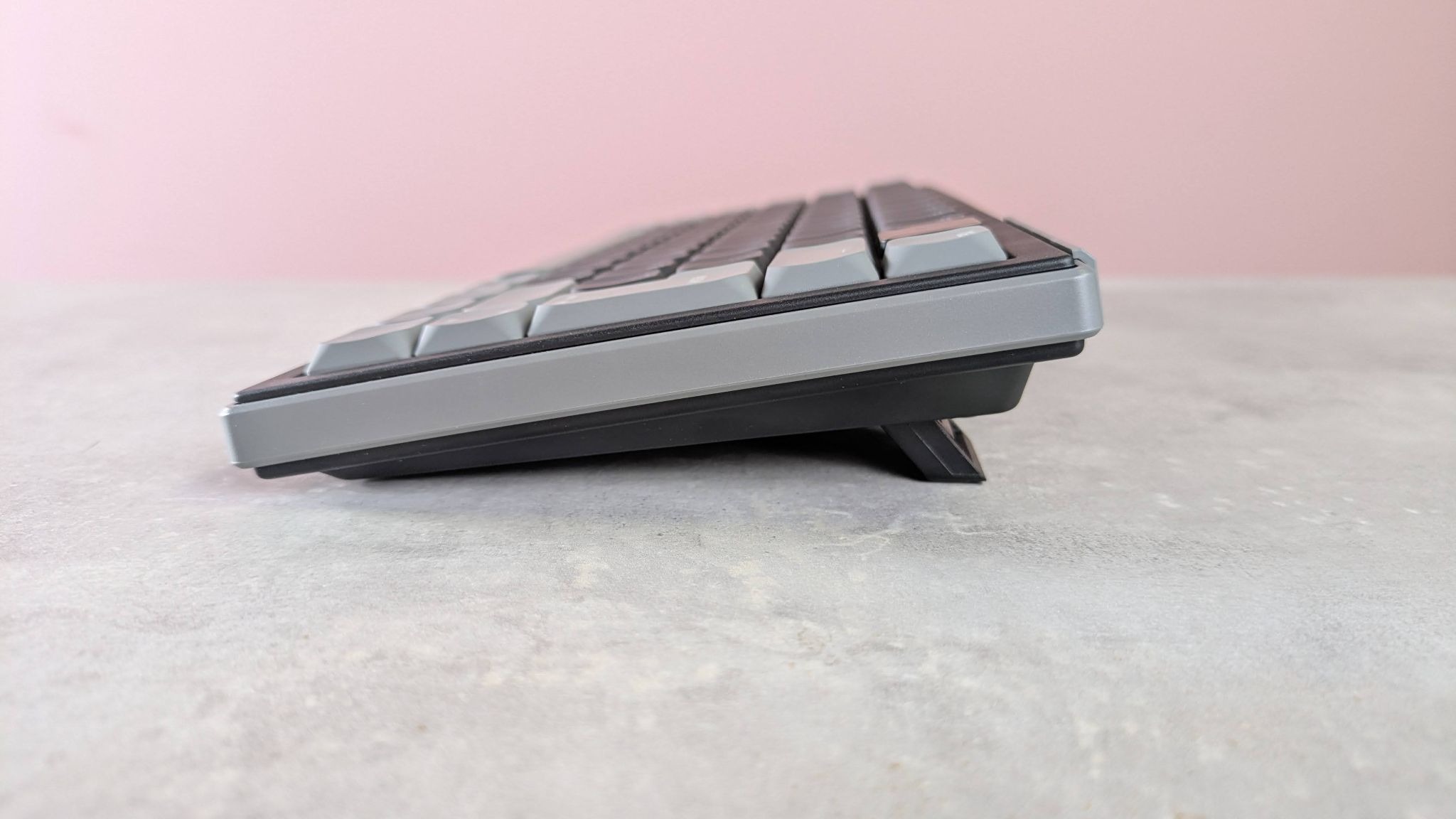
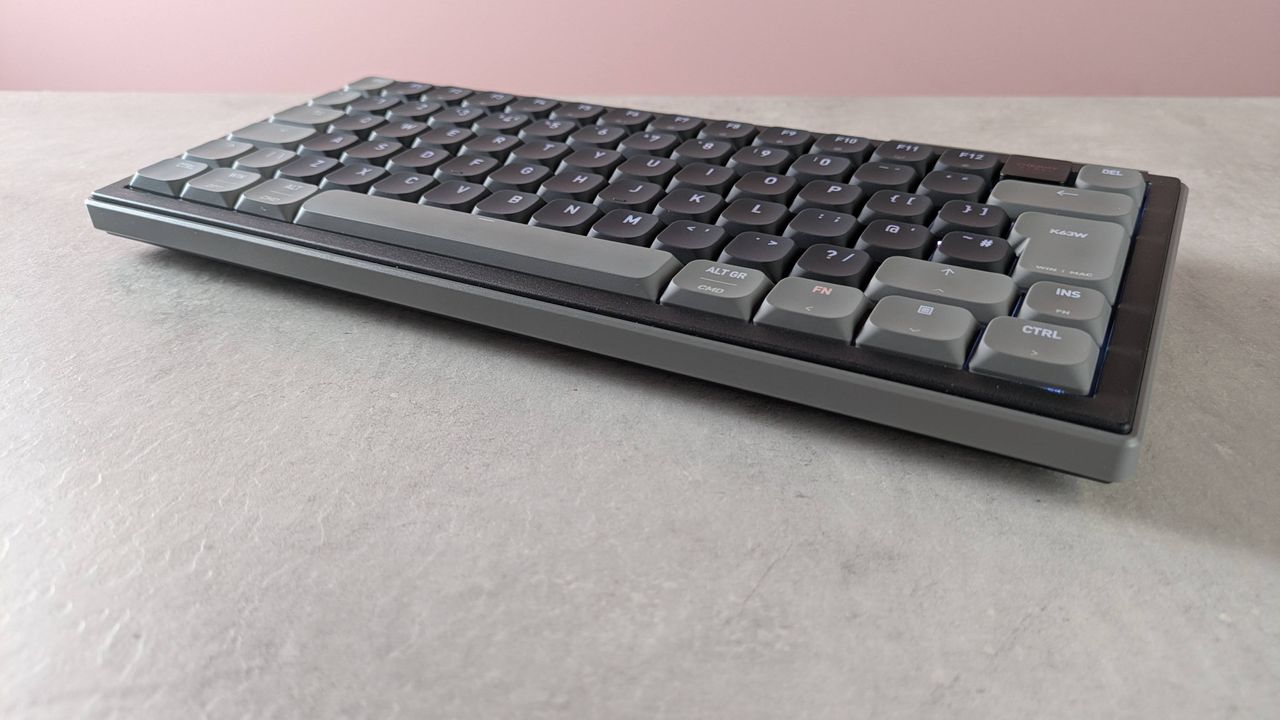
True to its name, it certainly doesn’t take up much room on your desk. It’s also pleasingly light, which means it’s easy to move around. Despite this and the plastic construction, the build quality seems high.
There are some unique features to the design of the K63W Pro. One is the prominent springiness of the gasket-mounted layout, which is a little strange at first, but ultimately it’s not an issue and the keys still feel just as solid as those in the best gaming keyboards.
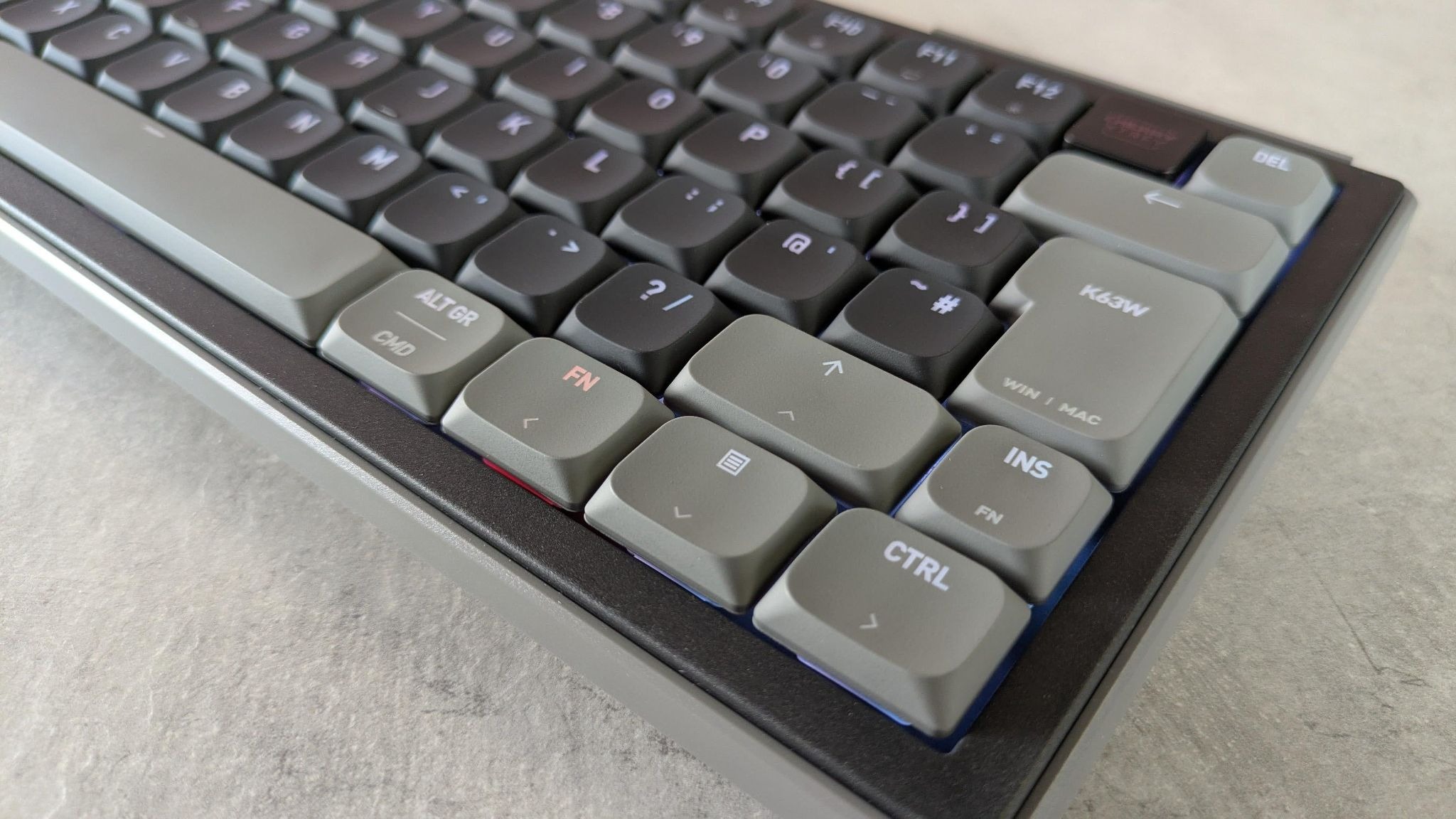
Another is the arrow keys. Not only are they much larger than most, but each of the four directions has a second binding to include right control, right shift, menu, and Fn inputs. There’s a shortcut for toggling between the two sets of bindings, as well as activating both at the same time, with the input triggered determined by whether a key is pressed or held.
There’s also an option to select these modes in Cherry’s companion software. This software has other customizations, but not many. The remapping options are especially disappointing, thanks to their very awkward setup and limited options. There’s barely any performance tweaks here, either.
Thankfully, the K63W Pro is a capable performer as it is. The keys travel further than you might expect given their low profile, but they’re still just about snappy enough for fast gaming and typing. The ergonomic slant of the keycaps, as well as the generous spacing between them, make them easy to use, while the aforementioned thinness of the chassis makes for a comfortable experience, even without a wrist rest.
Cherry makes much of the K63W Pro’s Ultra-Wideband (UWB) wireless technology, which is designed to prevent potential interference. However, I can’t say I noticed an improvement over other wireless keyboards, and the tech isn’t worth the impracticality that comes with the incongruously large wireless puck. It’s also a shame there’s no Bluetooth support.
The K63W Pro is reasonably expensive for a compact keyboard, although the quality and interesting layout help its case in this regard. The performance is good and it’s comfortable to use, but I’m not sure every gamer is going to get along with its unique features.
Cherry XTRFY K63W Pro Compact Ultra-Wideband review: Price and availability
- $169.99 (about £150 / AU$240)
- Available now
- Expensive for a small board
The Cherry XTRFY K63W Pro Compact Ultra-Wideband costs $169.99 (about £150 / AU$240) and is available now. It comes with a USB cable and the UWB USB receiver.
This is a reasonably high price for a 70% keyboard, especially one that lacks Bluetooth support and input customizations. However, there are certainly more expensive mechanical boards out there, such as the Razer BlackWidow V4 Pro 75. I loved the performance of that board when I reviewed it, and it has a much better selection of input customizations than the K63W Pro.
If you want something more budget-friendly, consider the Monsgeek FUN60 Ultra. This keyboard has analog switches with a heap of performance-related features and tweaks at their disposal. They also feel just as good as mechanical switches in my view.
- Value score: 3.5
Cherry XTRFY K63W Pro Compact Ultra-Wideband review: Specs
|
Layout |
70% |
|
Switch |
Mechanical (Cherry MX Low Profile 2.0) |
|
Programmable keys |
Yes |
|
Dimensions |
12.1 x 5.3 x 1.2 inches (307 x 135 x 30 mm) |
|
RGB or backlighting |
Yes (customizable) |
Cherry XTRFY K63W Pro Compact Ultra-Wideband review: Design and features
- Thin and light
- Springboard-like
- Limited input customizations
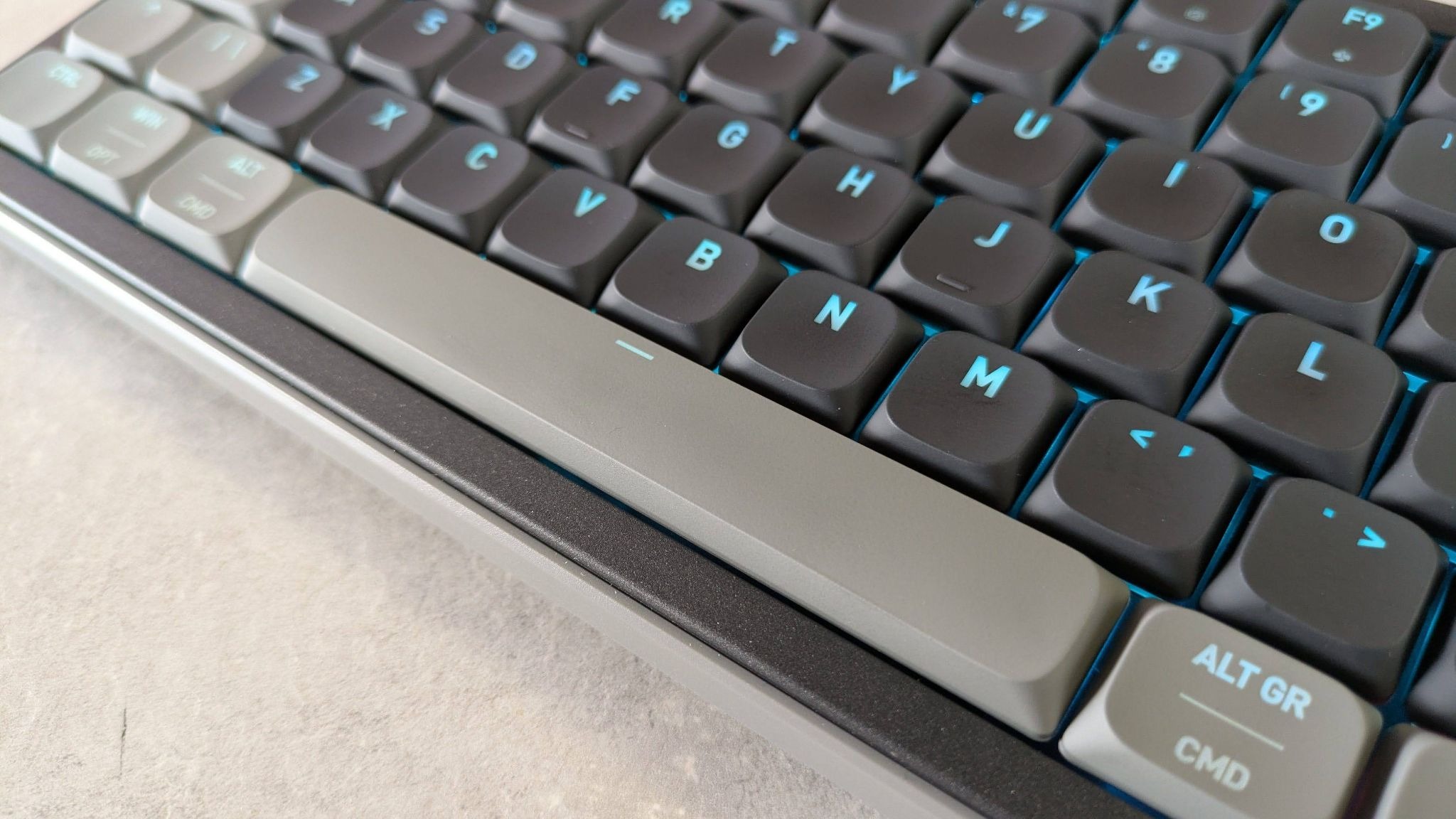
There’s nothing particularly exciting about the way the K63W Pro looks. It keeps things basic, although the rounded edges are a nice touch, helping to relieve its austerity a little.
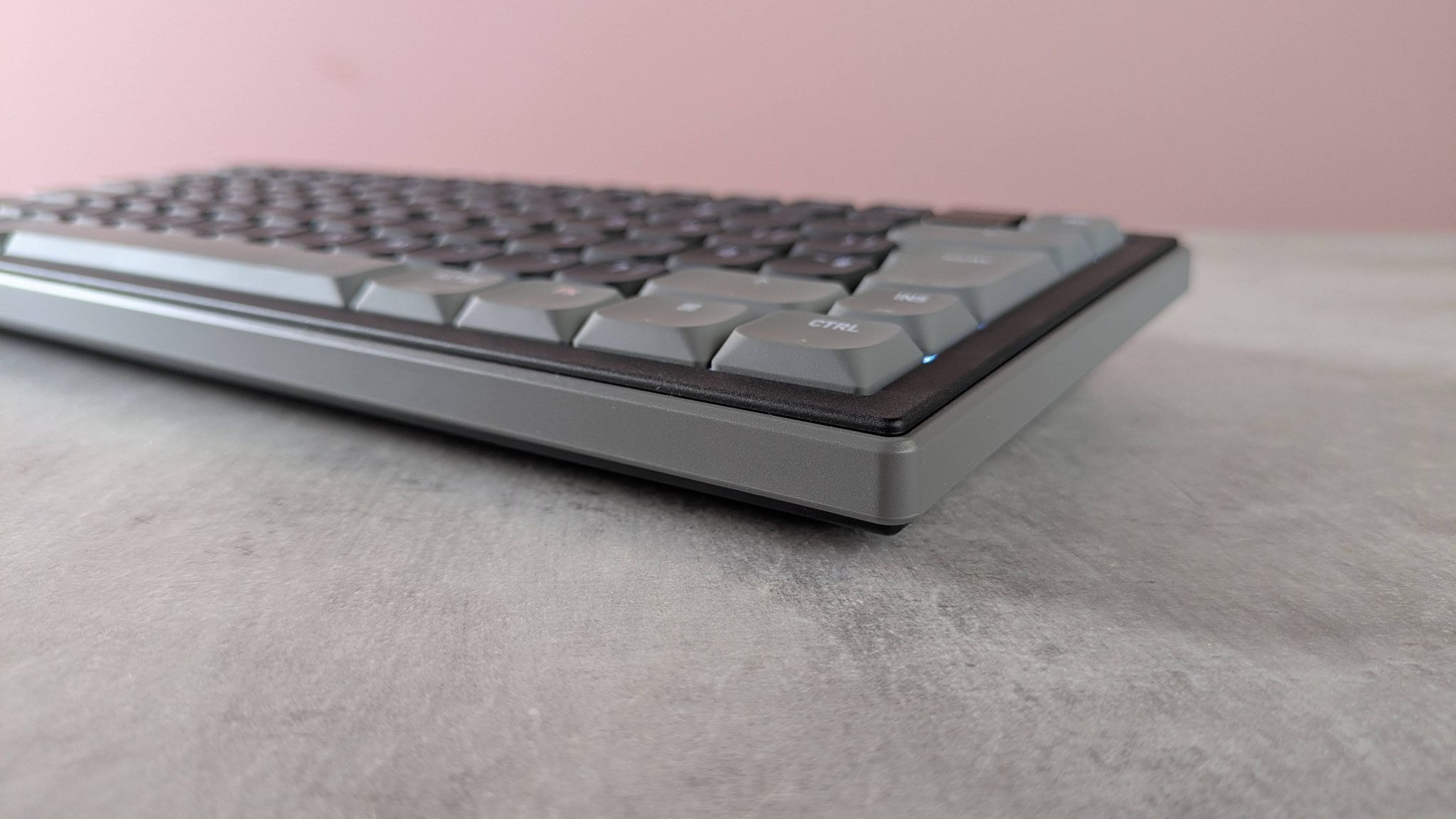
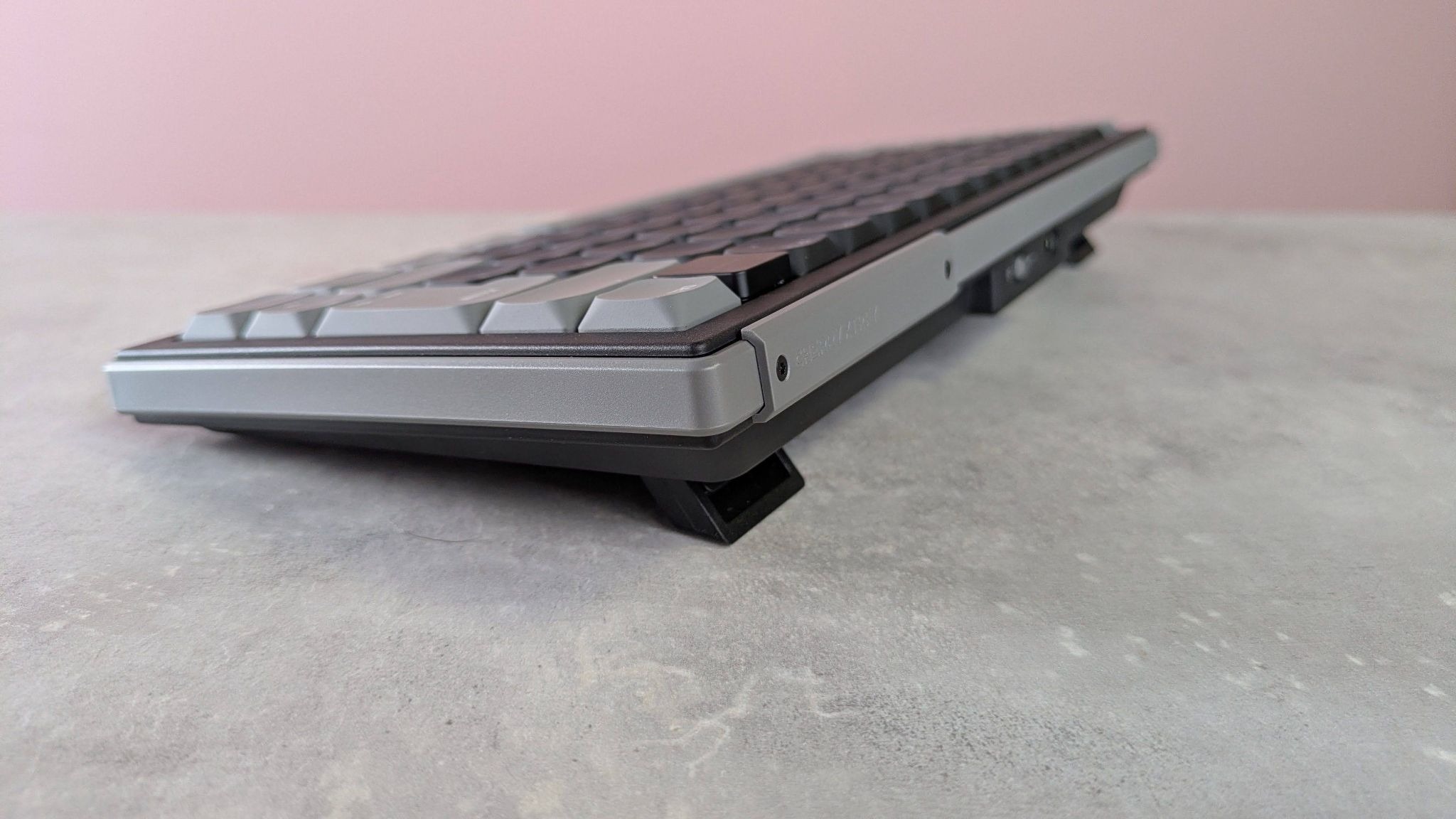
True to its name, the K63W Pro is indeed compact. In addition to its truncated width, it’s also quite thin, making it comfortable to use even without a wrist rest — which is just as well, since it doesn’t come with one.
Despite its plastic construction, the K63W Pro feels sturdy and built to a high standard. Rather unique is the prominent flex of the keyboard plate. This can be pushed down quite a way when pressing a key, which is a little disconcerting at first, but it still feels perfectly stable and it rebounds fully. I wasn’t concerned about its durability, either.
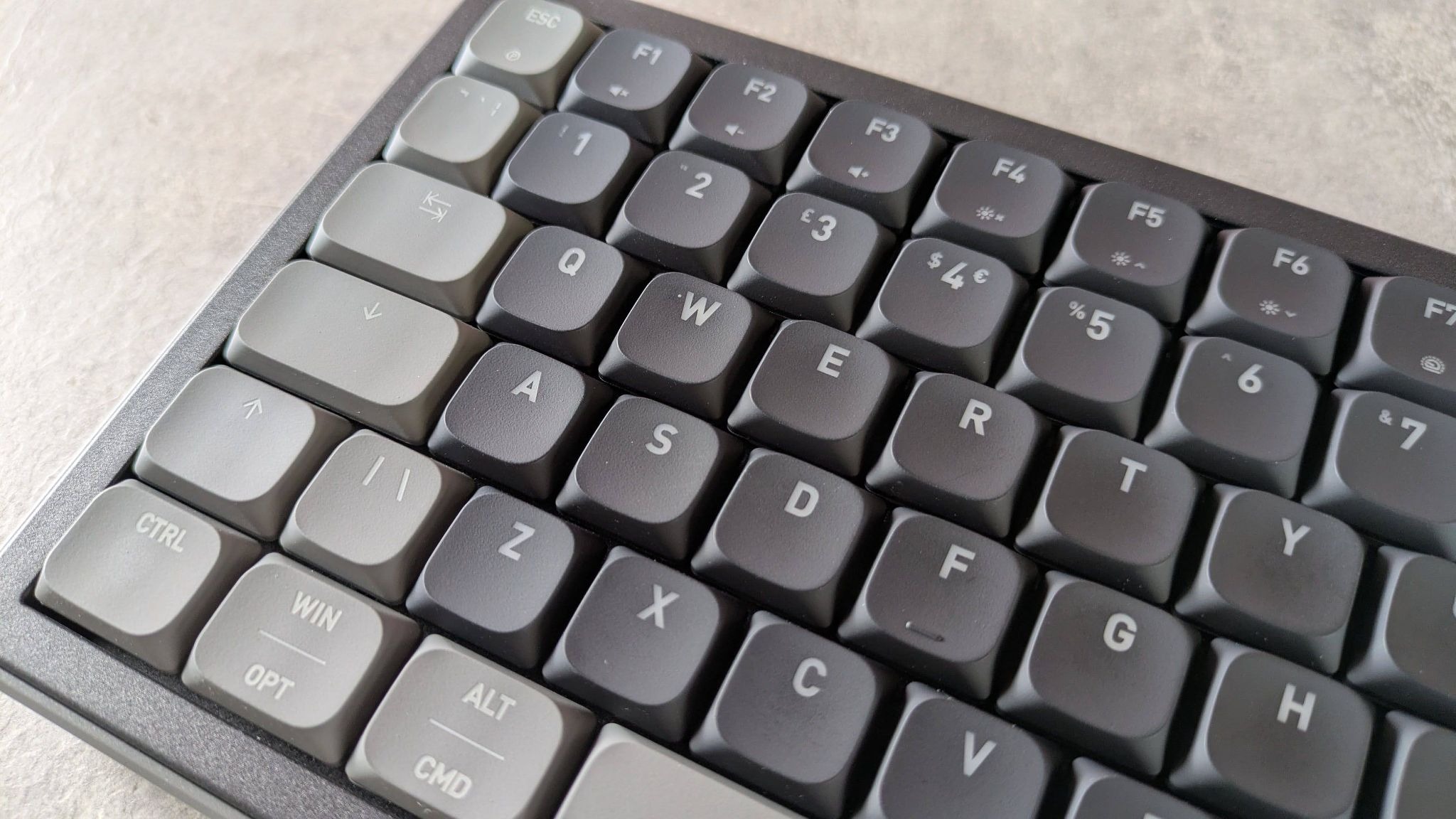
The keycaps feel premium, too. They’re pleasingly textured and solid with little play. On top of this, the bright RGB backlighting shines through them very well, and the main legends are large and clear, although those for the Fn shortcuts on the function keys are a little too small.
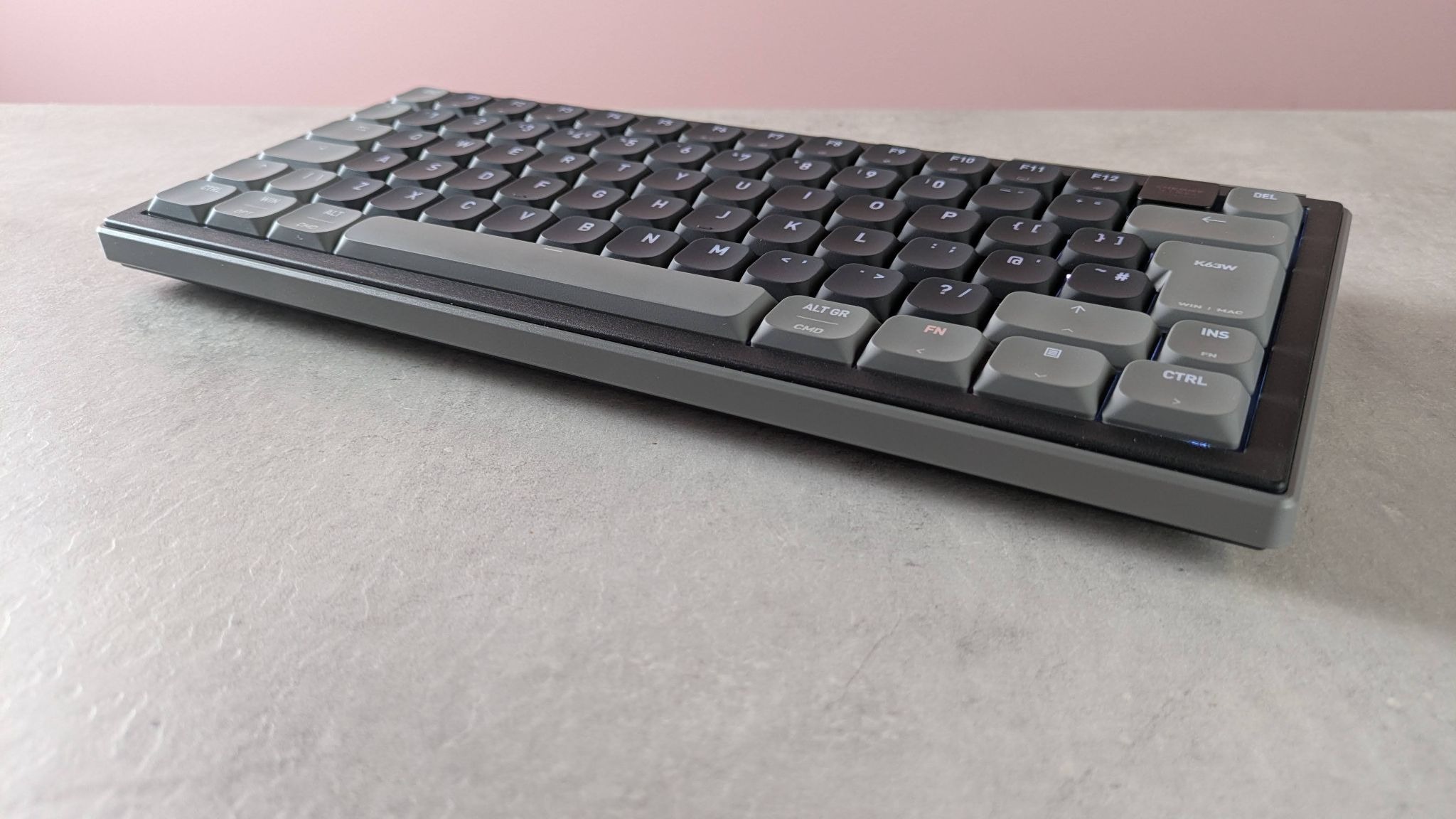
You get more keys on the K63W Pro than you might think, including some navigation ones such as delete and insert. However, it’s odd there’s a blank key in the top-right corner; a missed opportunity to squeeze in another, perhaps, such as a Home key.
There are quite a few useful Fn shortcuts on the function row, including those for adjusting volume and one for opening your default browser, which are all welcome. However, a few remained a mystery to me. Two look like they adjust some sort of performance-related parameter, but I didn’t notice any action when I pressed them. There’s also one on F9 with Cherry’s logo on it that opens the Windows Run box and enters some kind of address, but again nothing happened when I pressed it. The text was too long and disappeared too quickly for me to read it, but my only guess is that it’s supposed to open some kind of Cherry software.
The most interesting aspect of the K63W Pro’s layout is the Mod Tap arrow keys. These are larger than your typical set since they have secondary bindings, with control, shift, menu, and Fn inputs mapped to each direction. Pressing Fn+M (there’s another Fn key mapped to the insert key) will cycle between three different modes: one enables the usual arrow key inputs, one enables the secondary bindings, and one enables both sets at the same time, with taps triggering arrow directions and holds triggering the secondary functions. The M key lights up a different color depending on which mode is active.
You can also switch between these modes using the Cherry Utility. This desktop app also features other customizations, although their dearth is disappointing. It has perhaps the worst rebinding mode I’ve ever seen in peripheral software, requiring you to click a ‘create’ button for every key you want to rebind, in order to bring up the option to rebind it. The layout graph doesn’t display your remapped bindings, which is another baffling oversight, and you can’t alter the Fn layer of shortcuts. There aren’t many performance-related settings here, either; you can adjust the polling rate for both wired and wireless modes, and there’s a SOCD mode with three basic settings, but that’s all you get.
Rather than your typical USB dongle, the K63W Pro comes with a block-shaped puck that requires a USB cable (also included) to connect to your device. This is what facilitates the UWB connectivity, which Cherry claims reduces interference compared to standard wireless connections. It looks sleek, but it’s quite large and takes up more space than I’m happy with, especially when you factor in the trailing cable.
- Design & features score: 3.5 / 5
Cherry XTRFY K63W Pro Compact Ultra-Wideband review: Performance
- Relatively heavy keys
- Great space bar
- Unnecessary Ultra-Wideband connectivity
I mostly enjoyed my time using the K63W Pro. The keys feel well lubed and reasonably damped, although it still verges on the side of clicky than thocky, which, depending on your preferences, is either a good thing or a bad thing. Personally, I liked the feedback they provided.
I was also fond of the low-profile keycaps, which seem to slant slightly towards the user. This helped me hit keys flush, making up for the somewhat limiting tilt angle of the board, even with the two-stage feet out. This was especially noticeable with the space bar, a key I often hit on its edge but not here. It also feels slightly more damped than the other keys, while still being easy to press, a combination that makes it very satisfying to hammer away at.
The switches themselves are also low profile (specifically, they’re Cherry’s MX Low Profile 2.0). However, they have surprisingly deep travel, which makes them more satisfying than they otherwise would be. Despite this, their actuation point is relatively shallow, which meant I could still type with a reasonably light touch. They strike just the right balance between being snappy and forgiving of minor mispresses.
Tying accuracy is also aided by the large size of the keycaps, as well as their wide spacing. While this made reaching certain keys a little difficult when touch typing, it made gaming in the WASD position quite comfortable and secure. I could also reach the peripheral keys easily from here, including the space bar, thanks to its aforementioned slant and low profile.
In my experience, the Mod Tap feature works reasonably well, achieving Cherry’s aim of reducing side bulk without sacrificing inputs. However, you have to hold an arrow key for a long time to activate its secondary binding. I found this particularly frustrating when typing, as I required quick and regular access to the right shift key, but I often didn’t hold the Up arrow key long enough to access it. It’s also disappointing that you can’t alter the hold time.
Although Cherry makes bold claims about the UWB wireless connectivity, I can’t say I noticed any performance gains over other wireless keyboards I’ve tested. Such models have greatly improved in recent years, to the point where regular-sized USB dongles perform pretty much flawlessly. And if you are an elite player concerned about lags and dropouts, you’ll probably opt for a wired connection anyway. All this is to say that the UWB tech and the outsized puck are ultimately overkill for many. What’s more, the K63W Pro doesn’t have Bluetooth support, as lots of other premium wireless keyboards feature.
- Performance score: 4 / 5
Should I buy the Cherry XTRFY K63W Pro Compact Ultra-Wideband?
Scorecard
|
Attributes |
Notes |
Rating |
|
Value |
Expensive for a compact board, but the quality and spec is there at least. |
3.5 / 5 |
|
Design and features |
Thin and light, with a solid build and a unique layout. The software is disappointing, though. |
3.5 / 5 |
|
Performance |
The K63W Pro is comfortable for gaming and typing for the most part, but the Mod Tap feature will take some getting used to. |
4 / 5 |
|
Overall |
The K63W Pro is a solid mechanical keyboard that does a few things differently, but not entirely successfully. Still, it’s a reliable and comfortable unit for most gamers. |
3.5 / 5 |
Buy it if…
You want a compact board
The K63W Pro cleverly includes keys usually omitted from such a small layout, although it does take some getting used to.
You want a comfortable board
The thin chassis and ergonomic keycaps makes the K63W Pro a board you can use all day long, although touch typing will test your dexterity at times.
Don’t buy it if…
You want the snappiest experience
Despite the low profile keycaps, they have a greater travel than you might expect, which might deter those after lighting-quick taps.
You want the best input customizations
The companion software’s rebinding functionality is quite woeful; there are barely any performance-related tweaks.
Cherry XTRFY K63W Pro Compact Ultra-Wideband review: Also consider
Razer BlackWidow V4 Pro 75
If it’s superb mechanical performance you’re after, you can’t do much better than the Razer BlackWidow. I love how tactile and satisfying key presses are, and the number of customizations on offer via Razer’s Synapse software is impressive for a mechanical keyboard, greatly eclipsing the K63W Pro on this front. However, the BlackWidow is an incredibly expensive board, so those wanting to save money should look elsewhere. Read our full Razer BlackWidow V4 Pro 75 review.
Monsgeek FUN60 Ultra
For something decidedly more budget-friendly, the FUN60 Ultra offers all the thrills of a great gaming keyboard without the expense. Its analog switches almost feel as good as mechanical ones, and there are plenty of adjustments you can make to alter their performance. Its construction is surprisingly solid for the price, too. Read our full Monsgeek FUN60 Ultra review.
How I tested the Cherry XTRFY K63W Pro Compact Ultra-Wideband
- Tested for a few days
- Used for a variety of tasks
- Plentiful gaming keyboard experience
I used the K63W Pro for a few days, during which time I used it for working, general browsing, and of course, gaming. I used it in both wired and wireless modes.
I played games such as 007 First Light and Counter-Strike 2, which are good tests for the speed and accuracy of key inputs.
I’ve been PC gaming for over a decade, and have used numerous keyboards in that time. I’ve also reviewed a large number of them, ranging widely in their form factors, switches types, feature sets, and price points.
- First reviewed: July 2026
- Read more about how we test
“}]]
 The K63W Pro tries to do things a little differently — but are its departures a success? Read More Latest from TechRadar US in Reviews