
[[{“value”:”
Razer Blade 16 (2026) two-minute review
Razer’s latest Blade 16, is by far, one of the best gaming laptops I’ve ever tested. The spec on this thing is off the charts. It’s got an Nvidia RTX 5090, with 175W of juice behind it, an Intel Core Ultra 9 386H, and no less than 32GB of LPDDR5X RAM running along at an outstandingly zippy 9,600 MT/s.
Razer’s crammed all of that performance into a form factor that puts Dell’s thin and light XPS line to the sword, and it still manages to keep thermals in check, and ensures power delivery is on point as well.
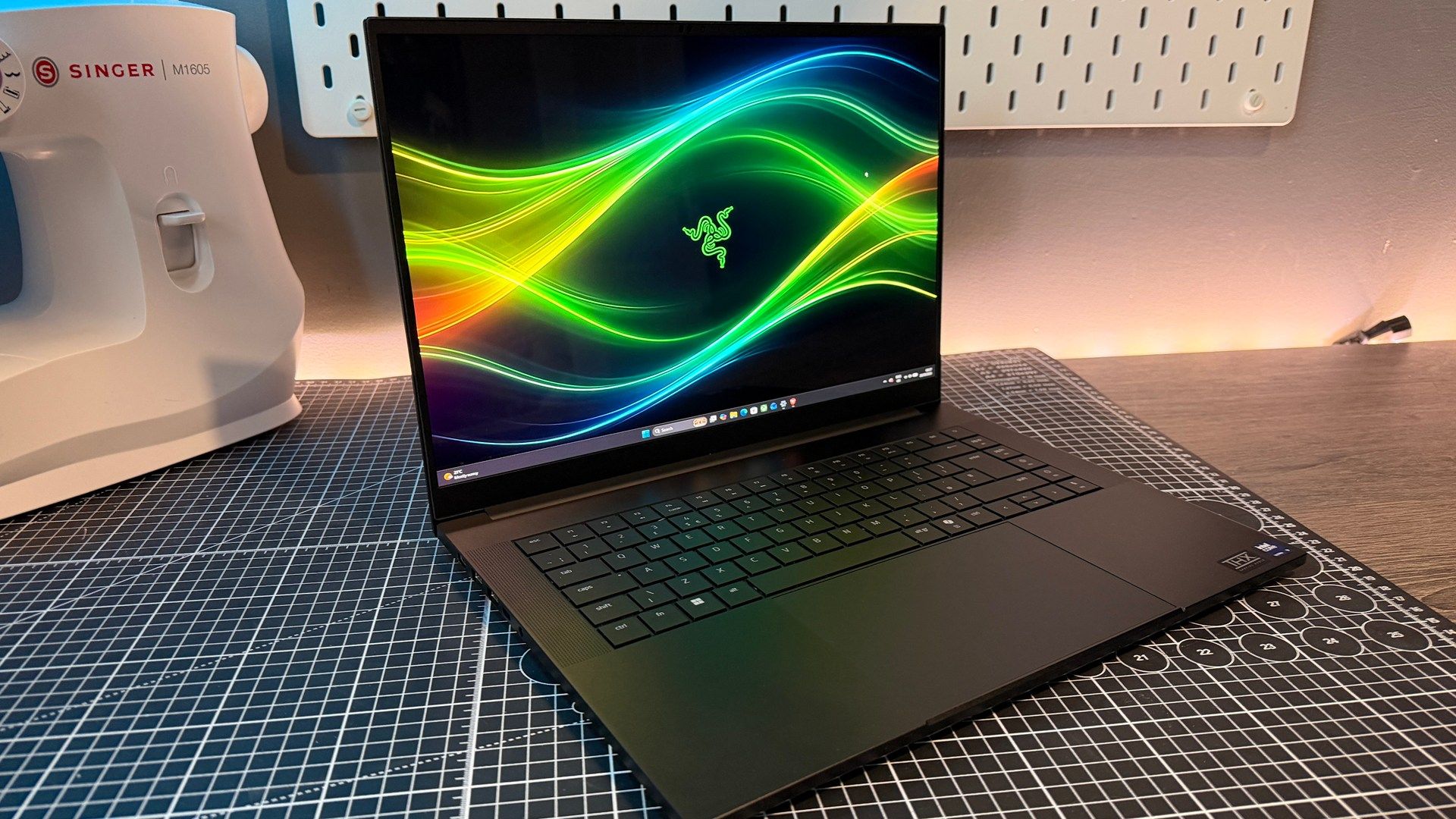
Speaking of design, this thing is stunningly clean. Razer’s taken the humble laptop form factor and made it its own. It’s simple, elegant, and sleek in almost every area.
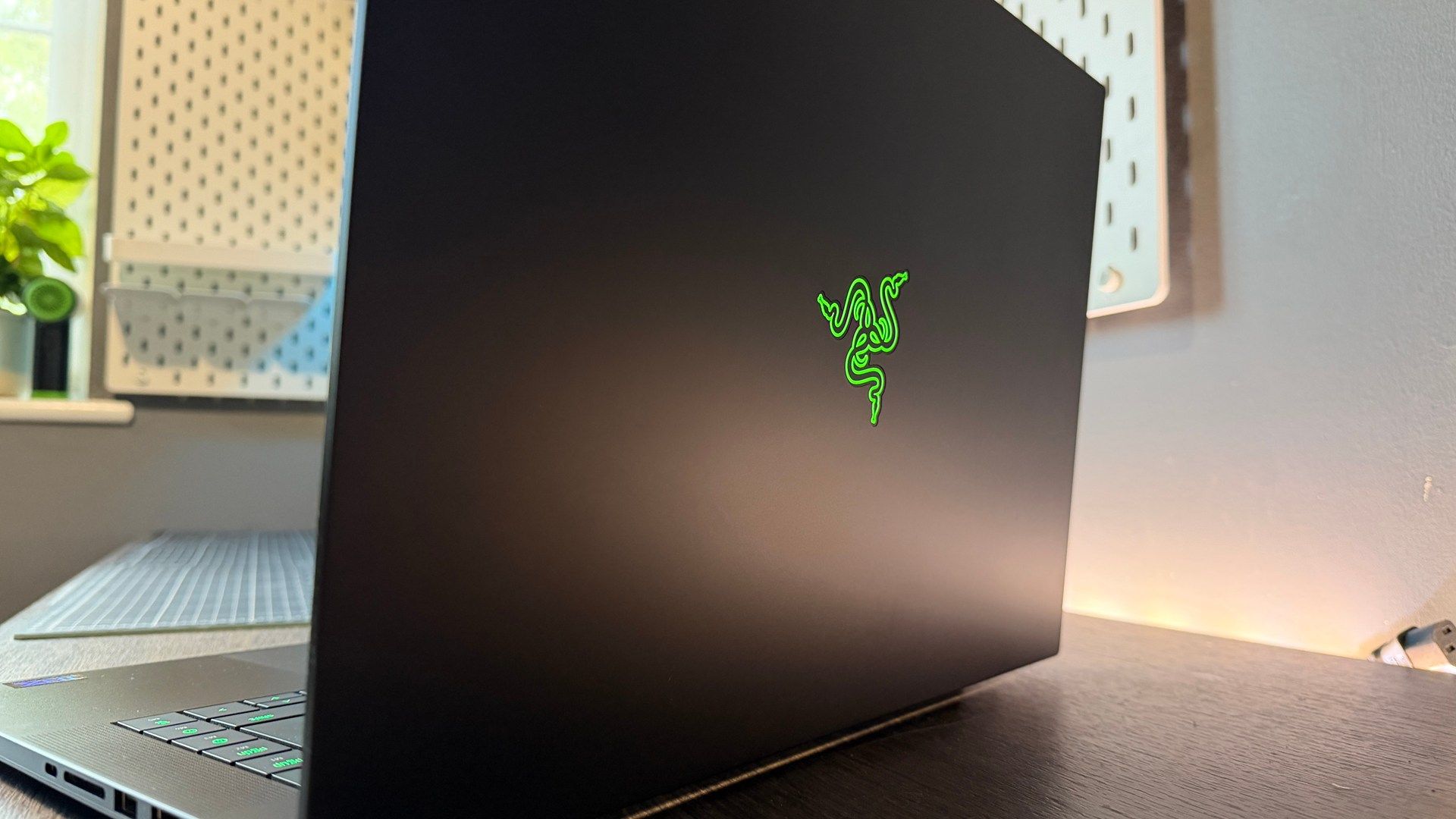
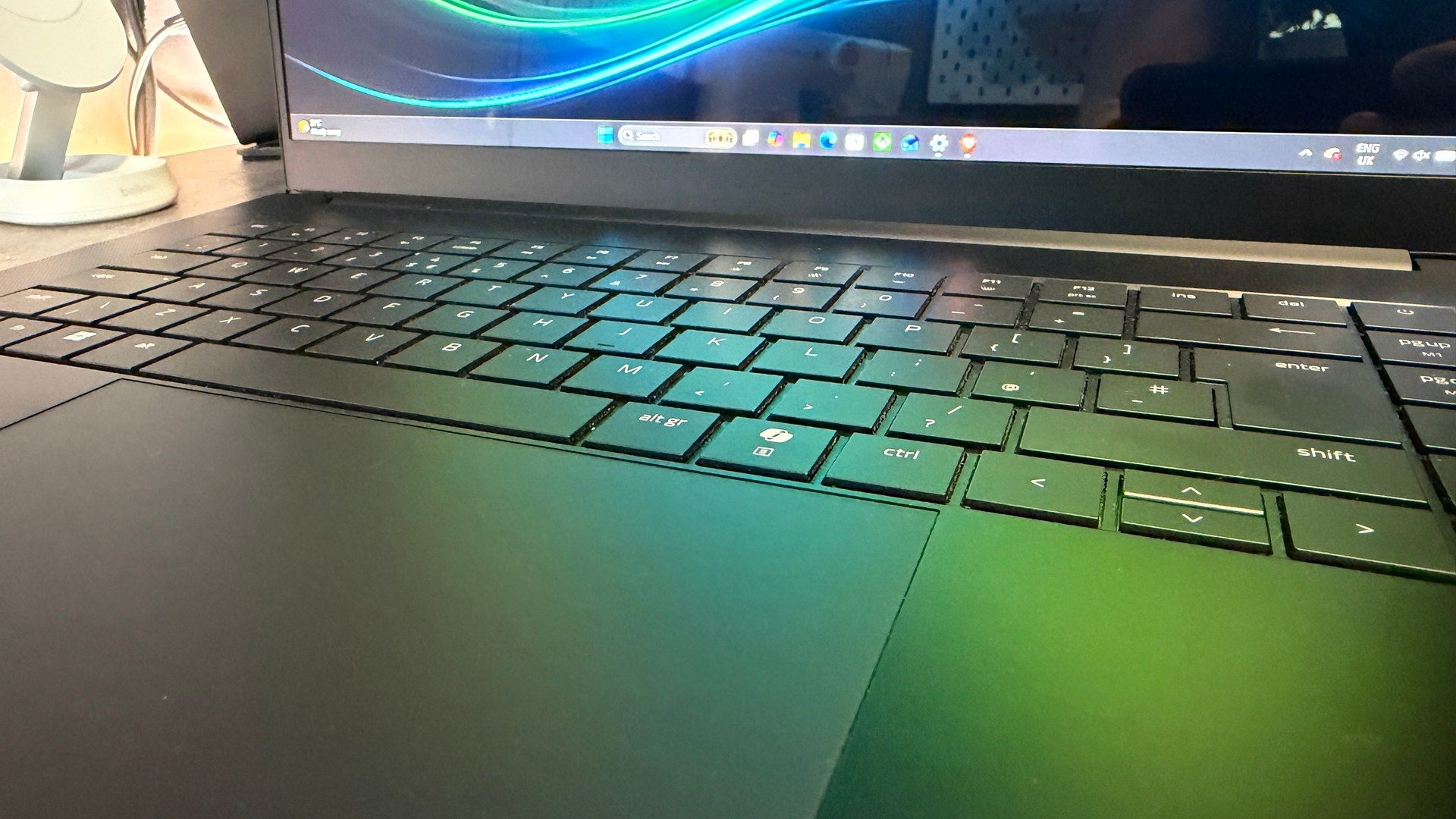
From the keyboard to the trackpad, to the ports, it just oozes premium. It’s got an RGB keyboard, of course, and (surprisingly) that green Razer logo etched and illuminated on the back (perhaps the only thing that’s a little underwhelming), but aside from that, there’s little here to indicate that it’s a gaming laptop.
The screen lives up to the rest of the spec; it’s a gorgeous 2560 x 1600 OLED offering, spitting out a staggering 240 Hz too, with inky deep blacks. It’s hard to fault, and paired with that GPU, there are few games here that don’t hold up in their ultra presets. Cyberpunk 2077 and Total War: Warhammer 3 both pulled framerates well into the hundreds.
The only two negatives are the lack of an Ethernet port and the fact it has a price tag so large that you could almost use it as a down payment on a house.
Razer Blade 16 (2026) review: Price and availability
- Available globally now
- Insane price tag for the spec, paying for design
- Soldered RAM so choose memory up front
You can pick up your very own Blade 16 right now, no matter where you are on the planet. Prices start at $3,499 US, £3,499 and AU$5,999 for the base spec.
That stock model isn’t entirely different from our review unit either (genuinely a nice thing to see), the only downgrades come in the form of the SSD, dropping from a 2TB unit, to a 1TB model, and the GPU choice, with the base version featuring an RTX 5070 Ti, instead of our juiced up 5090.
You can also upgrade to an RTX 5080 if you so desire, and there’s an option to bump up to 64GB of RAM as well if your bank account can stretch that far in the AI age.
It’s also worth noting, demand is quite high (or supply low), so depending where you are in the world, you might see a lot of these units on pre-order, or out of stock (amazingly given the price tag).
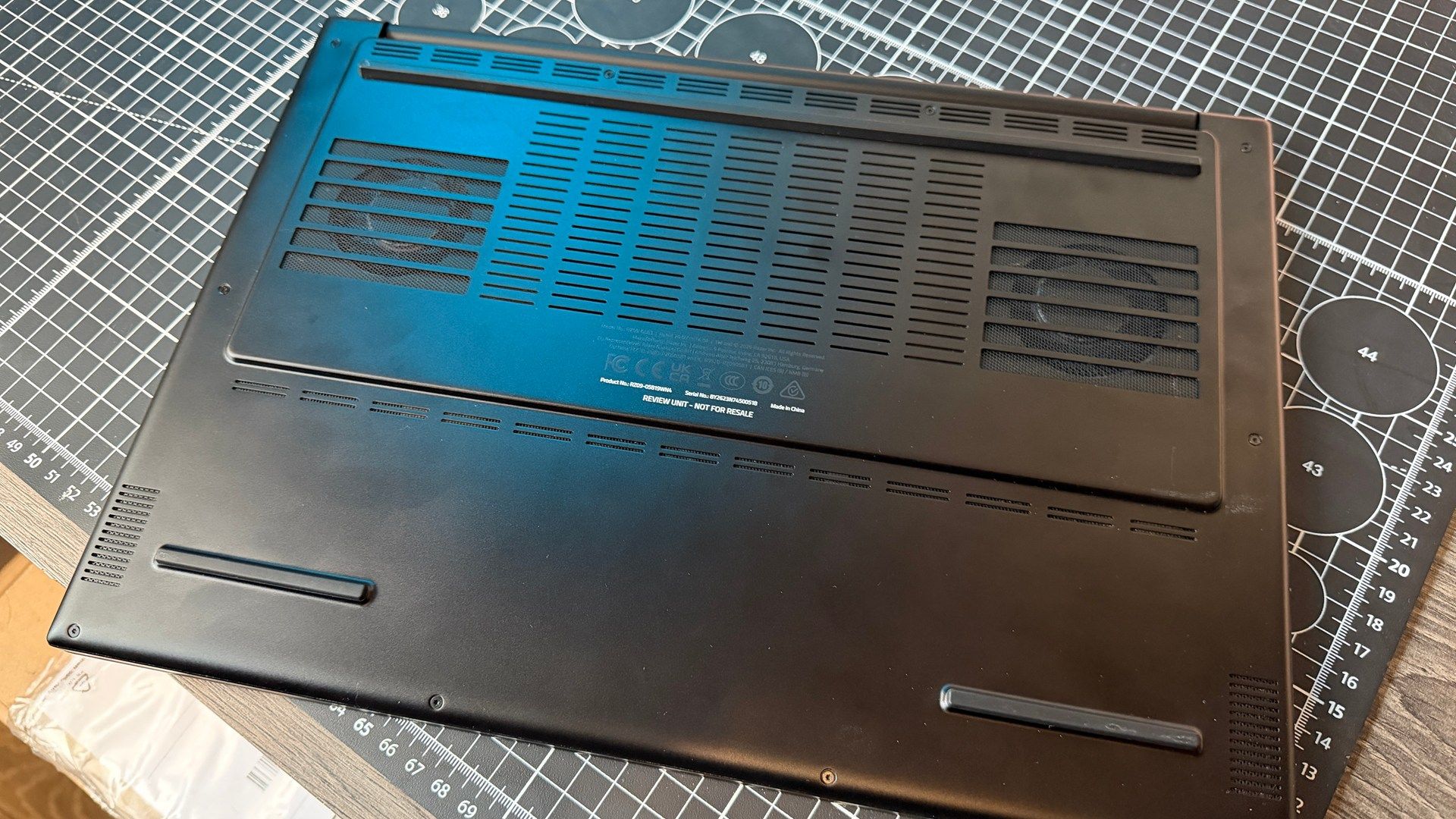
It’s worth noting you can swap the SSD out, if you’re handy with a torx screwdriver.
Razer Blade 16 (2026) review: Specs
|
Base |
Review |
|
|---|---|---|
|
Price |
$3,499.99 / £3,499.99 / AU$5,999.95 |
$4,899.99 / £4,799.99 / AU$8,399.95 |
|
CPU |
Intel Core Ultra 9 386H (4.9 GHz, 16 Cores) |
Intel Core Ultra 9 386H (4.9 GHz, 16 Cores) |
|
GPU |
Nvidia GeForce RTX 5070 Ti |
Nvidia GeForce RTX 5090 |
|
RAM |
32GB LPDDR5X |
32GB LPDDR5X |
|
Storage |
1TB M.2 NVMe PCIe 4.0 SSD |
2TB M.2 NVMe PCIe 4.0 SSD |
|
Display |
16-inch OLED (2560 x 1600), 16:10, 240Hz |
16-inch OLED (2560 x 1600), 16:10, 240Hz |
|
Ports and Connectivity |
1x Thunderbolt 5, 1x Thunderbolt 4, SD Card Reader, 3x USB 3.2 Gen 2 Type-A, 1x HDMI 2.1, 3.5mm Combo Audio Jack, WiFi 7, Bluetooth 6.0 |
1x Thunderbolt 5, 1x Thunderbolt 4, SD Card Reader, 3x USB 3.2 Gen 2 Type-A, 1x HDMI 2.1, 3.5mm Combo Audio Jack, WiFi 7, Bluetooth 6.0 |
|
Battery |
90Whr |
90Whr |
|
Dimensions |
355 x 250.5 x 17.4mm (14.0 x 9.9 x 0.6in) |
355 x 250.5 x 17.4mm (14.0 x 9.9 x 0.6in) |
|
Weight |
4.71lbs (2.14kg) |
4.71lbs (2.14kg) |
Razer Blade 16 (2026) review: Design
- Clean, premium aesthetic and feel
- Impressively thin and light
- Lacks an Ethernet port
I’ve tested a lot of “premium” laptops over the last 11 years of my career, and the result is almost always a mixed bag. Some manufacturers often skimp on the chassis, and just bump up the internal hardware, or shift the screen to a higher res. In the case of the Blade 16 though I can say, hand on heart, that this thing is stunning.
The aluminum chassis has a beautiful cool soft-touch satin finish. The edges are clean cut, and smooth with tighter radial bends, bevels are there, but impressively subtle, and everywhere you look, that design philosophy is mimicked, from the keys, to the typeface, to the trackpad, even to the ports, and the bezel that surrounds that beautiful OLED display.
Razer truly has mastered the art of building a laptop that blurs the lines between gamer and professional, without compromising on either front, and it’s a joy to behold.
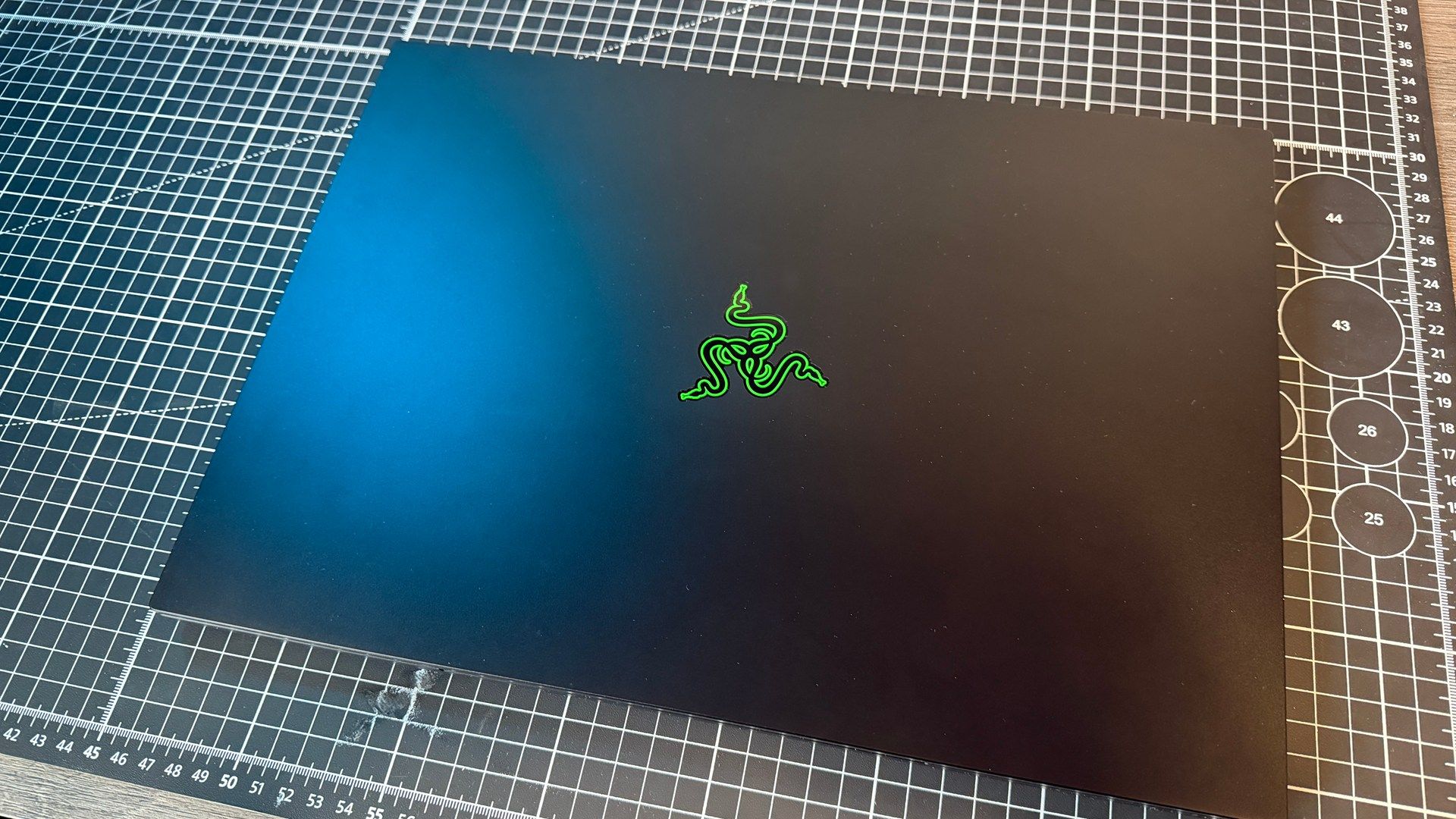
The only flaw, in my opinion, is the Razer logo on the back of the unit. By default, it’s Razer’s iconic hard-lit, green, three-headed snake which stands out a touch compared to the rest of the design.
From a hardware perspective, the kit is exemplary. Razer’s paired an outstandingly colorful OLED display with an RTX 5090, that’s fully unlocked with a chonky 175W TGP. The screen itself only comes in at 2560×1600 in a 16:10 aspect ratio, but it gives it a pixel density of around 189 PPI, which is about 37% denser than your standard 32-inch 4K affair. And that’s backed up with a 240Hz refresh rate and Vesa’s DisplayHDR TrueBlack 1000 certification too.
I’m a big fan of that pairing as well. Laptop makers often fall into a trap where they try to just cram as many pixels as possible into a product at this price tag. Marketing loves it because “number bigger” and “bigger numbers sell,” but it honestly demolishes overall frame rates when going for the 4K or 3K option, and I’d argue that you can’t really tell the difference between 190 PPI and 280 PPI anyway. Pairing the high-end RTX 5090 with 1600p gives you a far better, well-rounded experience across anything you throw at it, and allows you to take advantage of higher refresh rates.
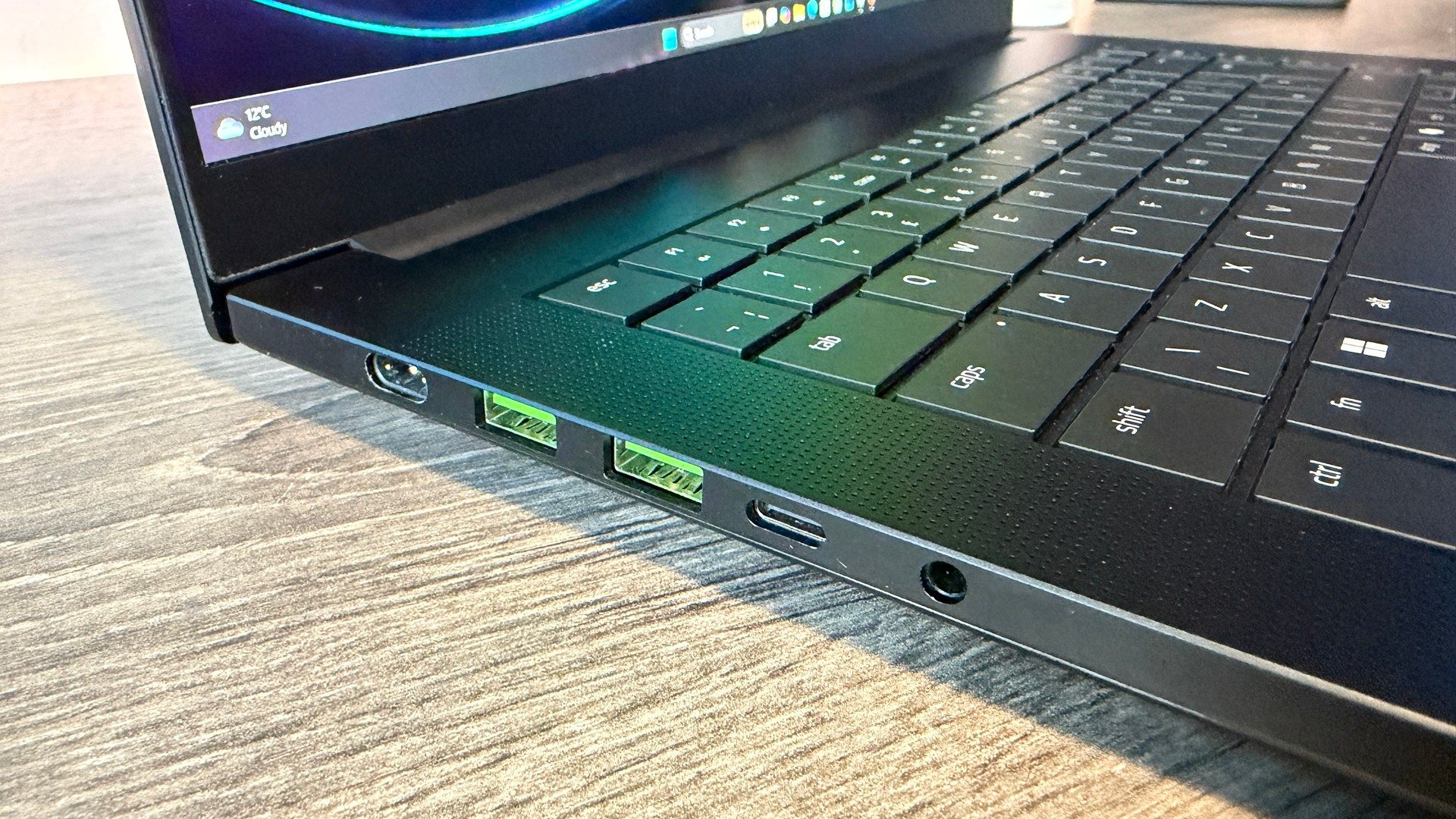
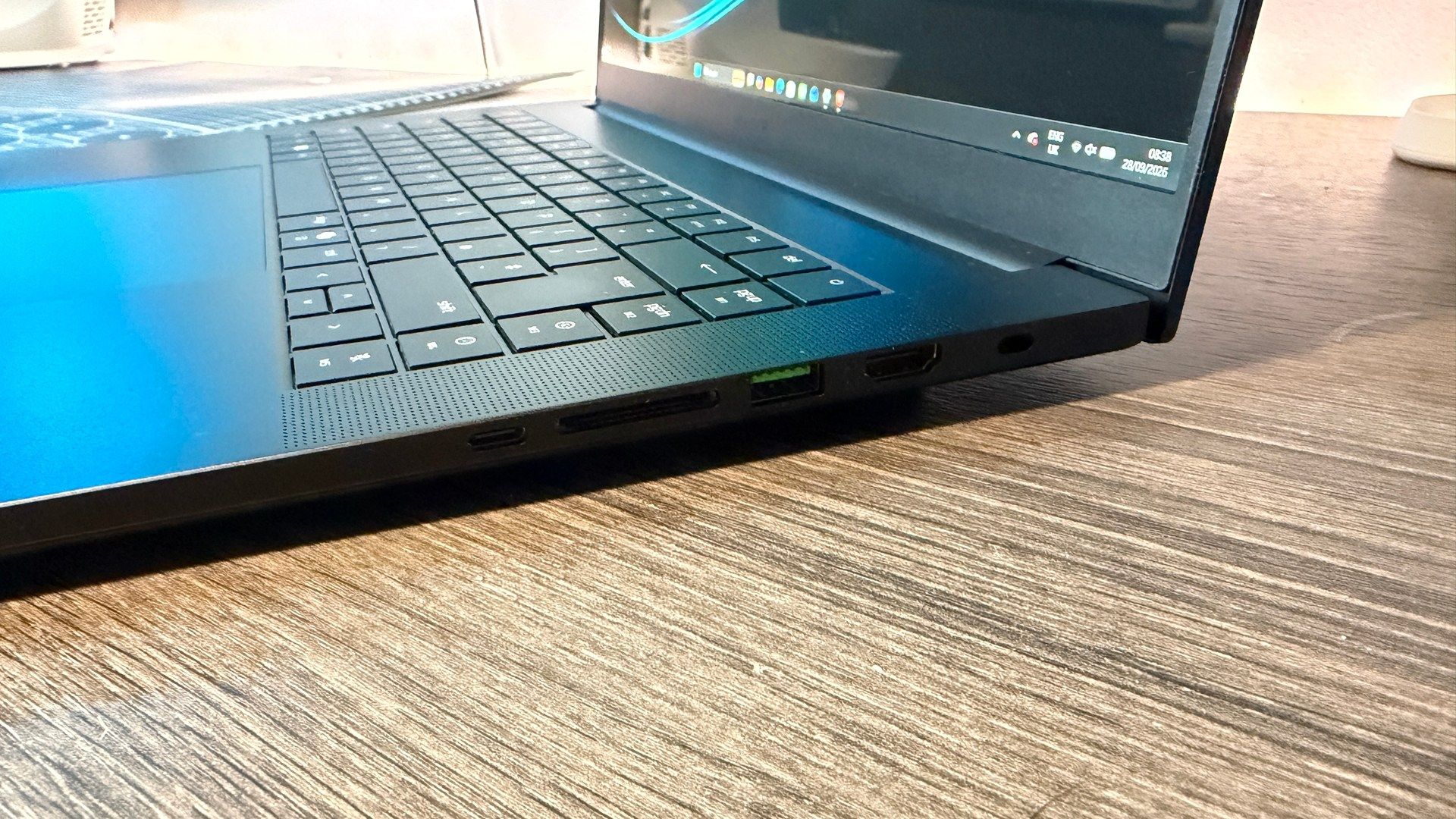
Port selection is overall pretty solid too. You’ve got Thunderbolt 5 and 4 here (both of which support power delivery), along with a healthy complement of USB-C ports, and even an SD card reader, if you’re heavy into the ol’ photography. There’s an HDMI 2.1 out as well, although sadly no dedicated Ethernet, but you do get Wi-Fi 7 and Bluetooth 6 thrown in as standard.
Also, one thing to bear in mind: given the form factor, RAM is soldered by design, so what you buy is what you get — there’s no possibility of upgrading this in the future.
Razer Blade 16 (2026) review: Performance
- Outstanding gaming performance
- Solid at computational tasks
- SSD could be better
Let’s address the elephant in the room first. SSD performance is OK, and just OK at that. The Blade 16 (2026) uses a Lexar NM790 PCIe 4.0 SSD either in a 1TB or 2TB config, depending on what you pick.
It’s a relatively affordable drive coming out of China, based on YMTC’s 232-layer TLC NAND flash, and a MaxioTech MAP1602A controller. There’s no DRAM cache on the thing, and it’s single-sided and more than reliable enough, but just don’t expect it to burst through benchmark results and computational tasks quite like something from SanDisk’s labs or the PCIe 5.0 league. Still, we should be thankful because if Razer had picked that, this thing could’ve cost twice as much.
3DMark: Fire Strike: 36,218; Steel Nomad: 5,911; Time Spy: 21,661
Geekbench 6.6: Multicore: 16,971; Single-core: 2,895
Cinebench 2024: Single Core: 128; Multi Core: 1,234
Crossmark: 2,098
Total War: Warhammer III: 1080p, Medium: 289.2fps
Total War: Warhammer III: 1800p, Ultra: 116.7
Battery Life (PC Mark Gaming): 1 hour and 41 minutes
In-game though, this thing is outstanding. I ran a plethora of benchmarks against it, including our standard suite which we’ve used for products like the Alienware 15 and other laptops, alongside just running it at full-tilt, on ultra presets at max resolution to really get a solid idea of how it performs.
At 2560×1600 this thing with its RTX 5090 just shatters expectations. Cyberpunk 2077 on the Ray Tracing: Ultra preset, no DLSS, no Multi Frame Gen (MFG) hit 35 fps. With DLSS set to Quality and MFG on, you’re seeing that figure jump up to 115.6 fps on the average.
Total War: Warhammer 3 saw 116 fps across its benchmark too. In our standard 1080p medium tests (which we do for consistency) results were off the charts: 290 fps in Total War, 310 in Cyberpunk, 166 in Final Fantasy XIV. These are genuinely impressive results.
The thing driving the bulk of that performance is the 175W TGP (that goes for the 5070 Ti and 5080 models too). It allows the chip to run at full tilt, with max clock speeds for the 5090 tapped out at 2,812 MHz, and it averaged 2,100 MHz under testing conditions, with an average temp of just 65C.
The CPU by comparison was a little toastier, at 93C when maxed out at its peak 4.9 GHz during the runs, with max GPU wattage coming in at 165W out of that 175W maximum. Nice.
Intel’s Core Ultra 9 doesn’t disappoint, and it scored a healthy 128 points in Cinebench’s single core test, the highest single core result I’ve seen for a laptop by some margin.
Razer Blade 16 (2026) review: Battery life
- 280W charger juices up quick
- Battery life solid given the spec
- Did not finish the video test
On the battery life front, perhaps unsurprisingly given the phenomenal spec pulling power from this thing, it didn’t last quite as long in PC Mark’s gaming test as you’d expect, but 81 minutes is still a comfortable time, and quite close to what we saw with the (admittedly far cheaper) Alienware 15 DA15265, trailing it by eight minutes.
Try as I might, however, I couldn’t get it to run the full PC Mark Video benchmark for any prolonged period without crashing. With a manual benchmark, utilising YouTube and a looped hour long video, it survived for about 3.5 hours before giving up the ghost (although do bear in mind that is with Wi-Fi enabled, which defers to our usual results).
The good news is that the power brick is exceptionally fast at charging the Razer Blade 16 (2026), perhaps unsurprisingly given it delivers 280W of juice.
Should I buy the Razer Blade 16 (2026)?
|
Attributes |
Notes |
Rating |
|---|---|---|
|
Value |
Razer’s Blade 16 does not represent good value for money. You’re paying for design, cooling and RAM above all else. But the performance the form factor are rare anywhere else, and that does command a premium. |
3 / 5 |
|
Design |
Aside from a missing Ethernet port, there’s little to moan about the Blade 16, with a healthy port selection, and an outstanding aesthetic tied with a beautiful design and incredible screen, it’s hard to fault it. |
5 / 5 |
|
Performance |
Gaming performance is exceptional and the CPU more than delivers, particularly when tied to that beautiful OLED display, the SSD could be better, but then the price tag would see a hit as a result. |
5 / 5 |
|
Battery life |
81 minutes in gaming and about 3.5 hours on video streaming. It’s enough, but you’ll want to keep the charger handy during longer streaming sessions. |
4 / 5 |
|
Final score |
Only let down by its high price, and the lack of an Ethernet port, there’s little to not love about this thing, if you’ve got the cash to buy it. |
4.5 / 5 |
Buy it if…
You’re looking for a laptop that blurs the lines between professional and gamer
With an incredible hardware spec, and performance that delivers not only in-game but in any professional app you throw its way, the Blade 16 is undoubtedly a brilliant laptop.View Deal
You love a crisp smooth OLED that looks great no matter what you throw at it
It’s just utterly stunning to look at and use, with enough pixel density to keep even the most eager of 4K enthusiasts happy. With exemplary colors and a 240 Hz refresh rate, there’s little to dislike about it.View Deal
Don’t buy it if…
You’re after good value for money
This ain’t it chief. At near five grand in the UK and US, and nine grand in Oz, it’s ridiculous money for a ridiculous spec. It’s good, but you’re paying mainly for design here, not the spec.View Deal
You just need a gosh darn Ethernet port
Seriously? All this money and not a single Ethernet port? On a gaming laptop? Tut tut Razer…View Deal
Razer Blade 16 (2026) review: Also Consider
Alienware 16 Area-51
Big bold and beautiful, the Alienware 16 shares a lot of the same ideology as Razer’s Blade 16, 2560 x 1600 screen, 240Hz refresh rate, RTX 5090, it’s all there, the only downsides? No HDR support, and the battery life isn’t quite as good. Still it’s a heck of a lot cheaper.
Read our full Alienware 16 Area-51 reviewView Deal
Razer Blade 18 (2026)
The Blade 16’s older brother, with a similar top-line spec sheet, but a far larger screen that justifies the 16:10 3840 x 2400 resolution. If you want a gaming laptop that feels like a gaming laptop, but with a bit more pizazz, and aren’t so worried about having the latest CPU, then the Blade 18, might just be the right pick for you.
Read our full Razer Blade 18 reviewView Deal
How I tested the Razer Blade 16 (2026)
- Tested in a variety of different locations
- Benchmarked across our usual suite + ultra presets at full res
- 11 years of experience benchmarking and testing all manner of expensive laptops
I’ve spent years testing and benchmarking some of the world’s most expensive laptops, from MSI’s ultrabooks, to Asus, to Alienware’s and even Razer’s so the Blade 16 isn’t new territory for me. I set it up as my daily driver and used it over a period of three weeks, to get to grips with it for my professional work and during relaxation time as well, and it delivered on all fronts.
As for testing, I benchmarked it in line with all of my other TechRadar laptop reviews, which focus on a medium 1920 x 1080 preset, to have a consistent baseline for everything we review.
I also tested it at Ultra on its native 2560 x 1600 resolution, to get a good understanding for how it’d be used, in its true config, then compared those results to my knowledge testing other high-end gaming laptops like this for PC Gamer, and other brands.
- First reviewed: September 2026
- Read more about how we test
“}]]
 Razer Blade 16 (2026) review: Ultimate spec, ultimate price tag, ultimate performance. Read More Latest from TechRadar US in Reviews