
[[{“value”:”
Having first been spotted in prototype form at the Lenzerheide World Cup all the way back in 2022, it feels like the new Specialized Demo downhill bike has been in development for an eternity. The Specialized R&D team certainly took its time, having spent the past four years building a variety of prototype frames in-house using CNC machined lugs and bonded carbon tubes, which were then put to the test under the likes of Loic Bruni, Finn Iles and Jordan Williams.
The eye-catching frame design took a dramatic turn in mid-2025 with a fresh layout that incorporated a secondary drive gear and chain. Later in the year a rather polished-looking full carbon frame turned up on the race circuit, indicating Specialized was inching closer to production.
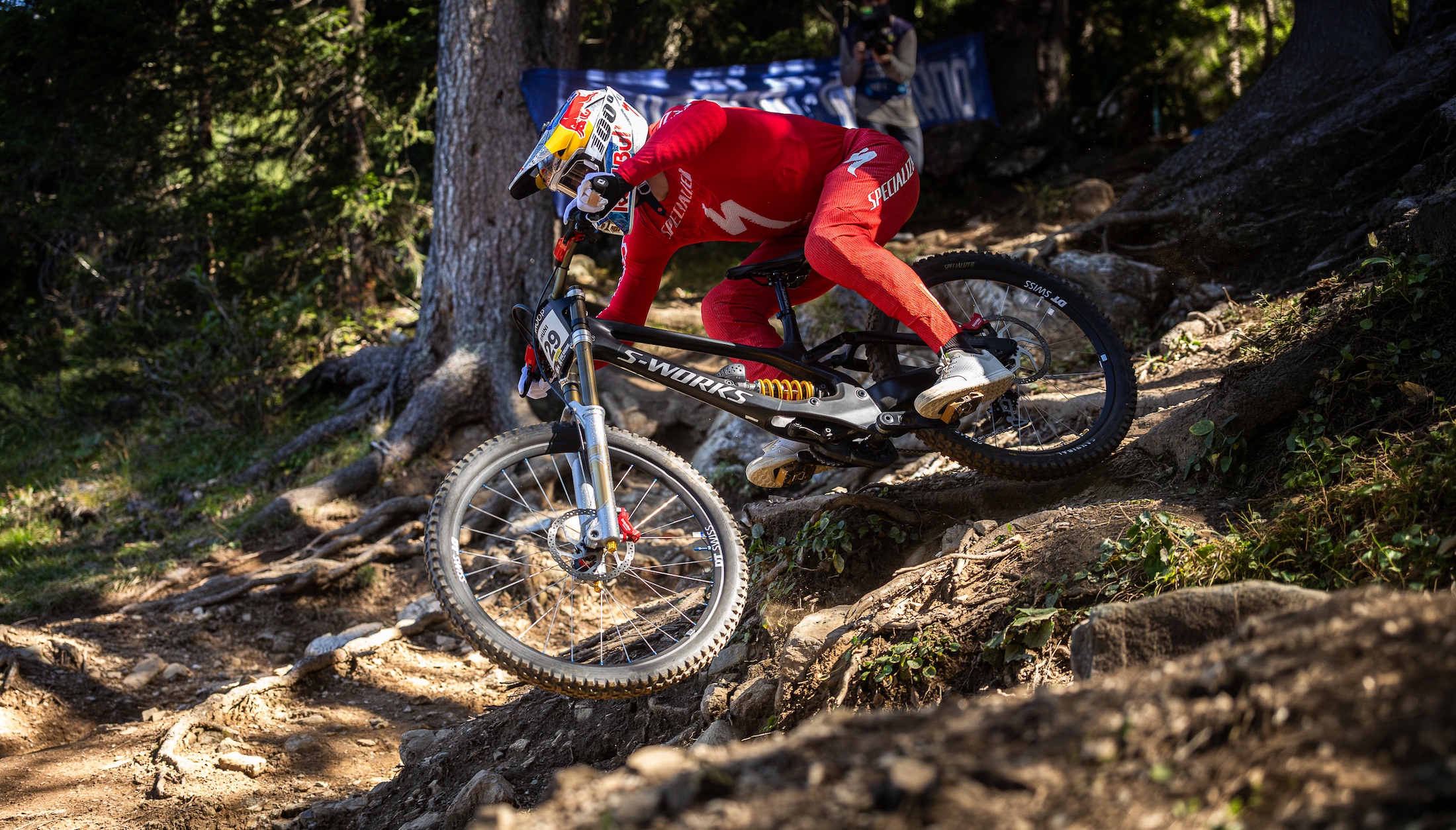
Now, in April of 2026, less than a fortnight to go before the first 2026 World Cup round in South Korea, Specialized is finally ready to unveil the new Demo 11. And boy, does it look incredible!
We don’t cover a lot of downhill bikes here at Flow, but this one has so many interesting things going on that we just had to nerd out on it. And it’s true that many brands, including Specialized, use their downhill race bikes to showcase new technologies that often trickle their way down the travel range into future trail and e-MTB models.
Could that happen with the Demo 11? Let’s take a closer look at this unique race bike and get our speculatin’ hats on…
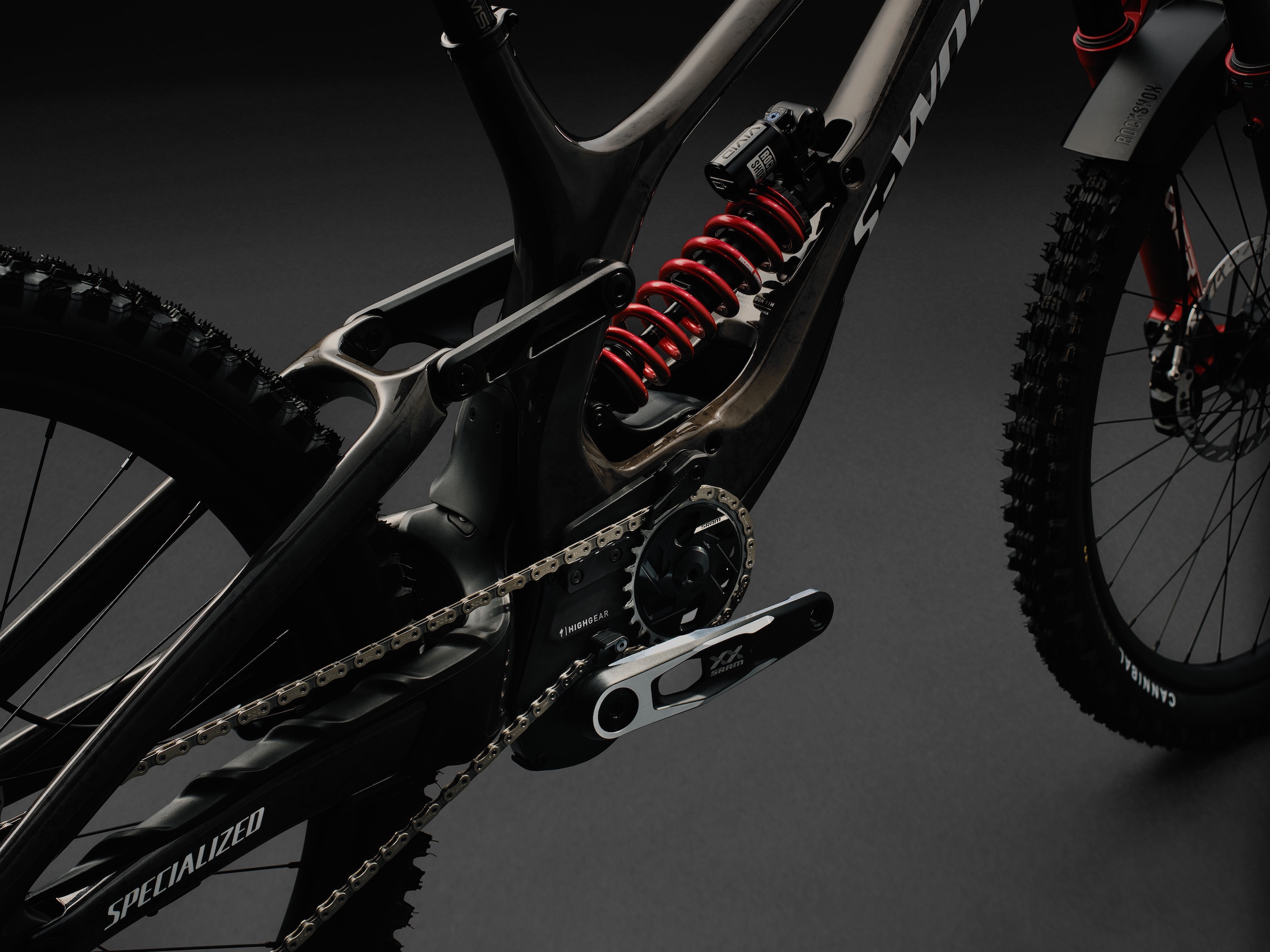
Specialized Demo 11 Overview
The new Specialized Demo is the 11th generation of the Californian brand’s flagship downhill race bike.
Unlike the previous version that was only offered in alloy, the new Demo 11 frame is manufactured exclusively using FACT 11m carbon fibre. It also moves to a dedicated mullet wheel configuration, so there’s no longer the option to fit a 29in rear wheel.
Suspension travel remains at 200mm front and rear, but the way it’s delivered out back is completely different.
OBB Suspension
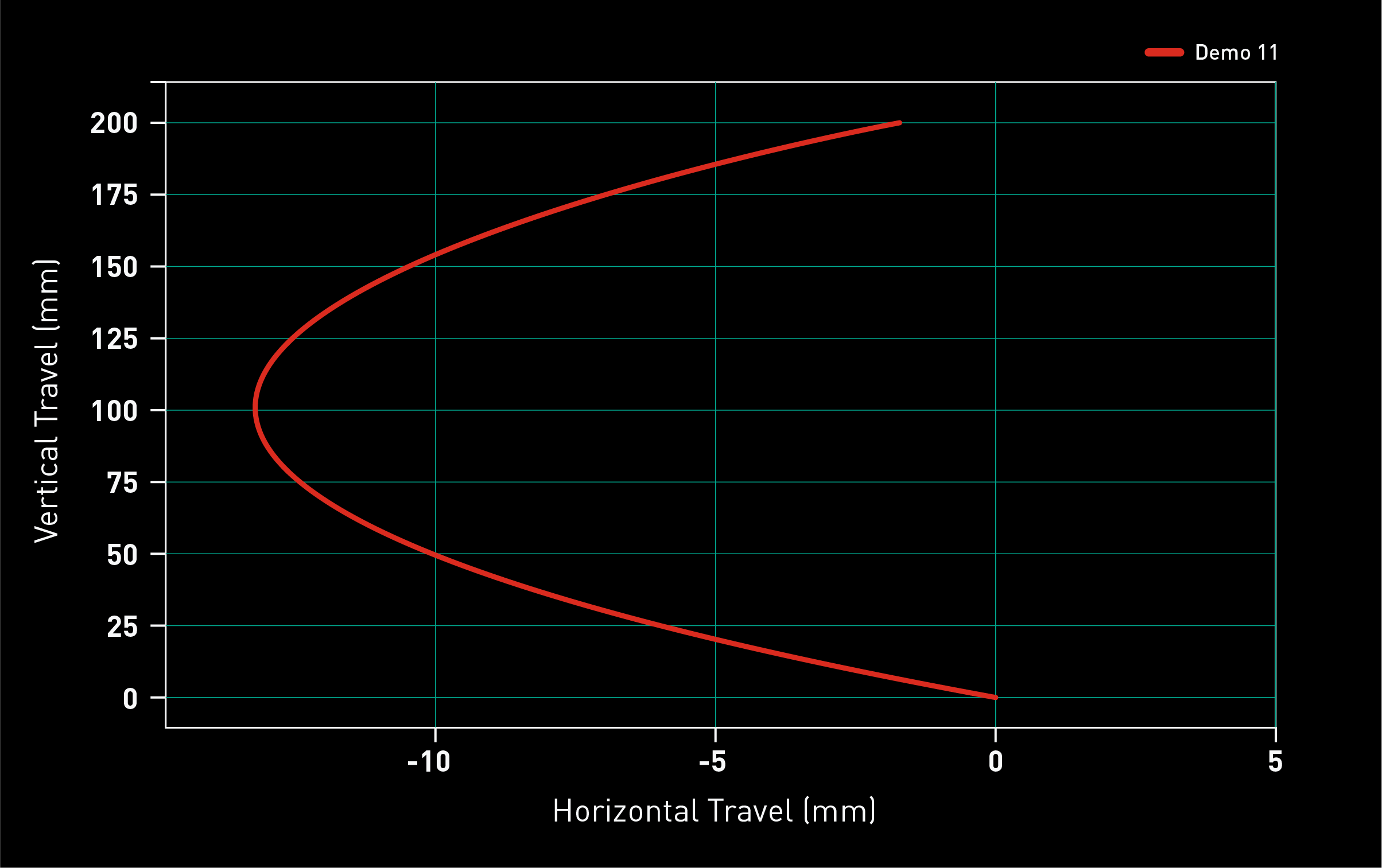
Specialized has taken its four-bar FSR suspension platform and elevated the main pivot to create a more rearward axle path. It’s not as far up as a traditional high-pivot suspension design, but it’s enough to send the axle about 13mm rearwards during the first half of the travel.
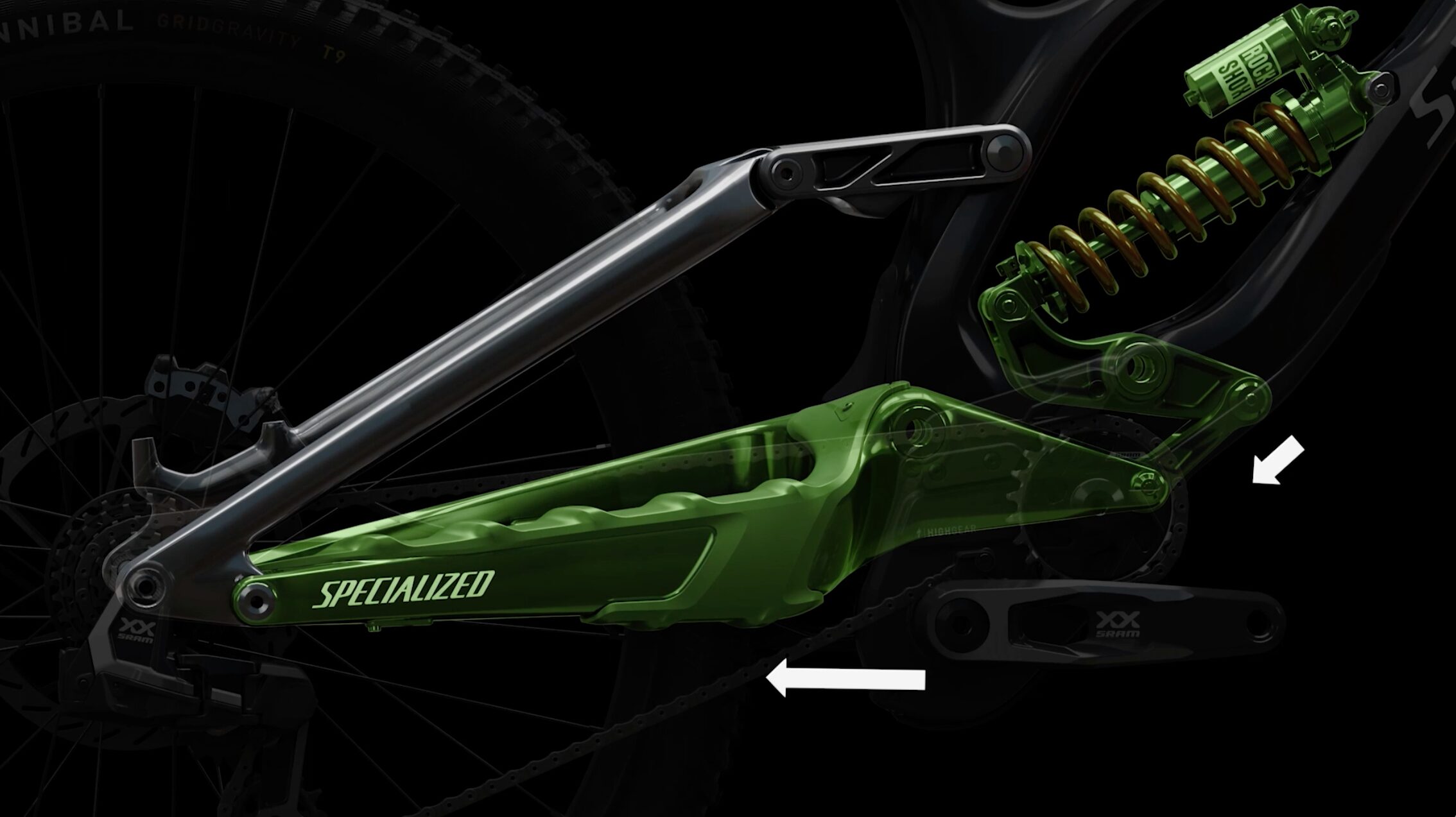
While it isn’t immediately clear from looking at the side profile, the enormous carbon swingarm actually extends well beyond the main pivot. The end attaches to a pull-rod linkage, which then drives the low-slung shock.
Specialized calls this design OBB (Over Bottom Bracket), which differs from the earlier Demo 11 prototype that utilised the UBB (Under Bottom Bracket) layout.
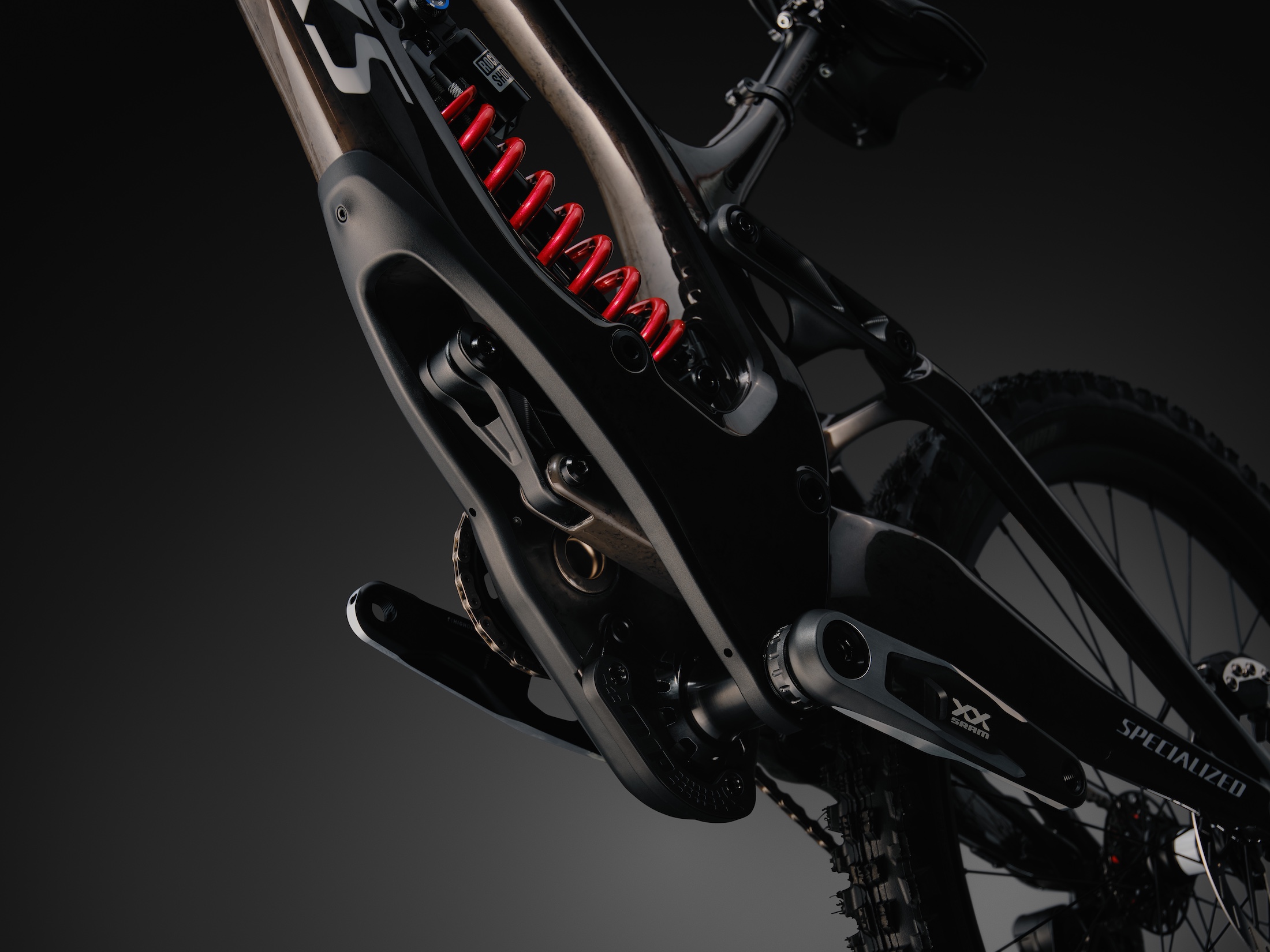
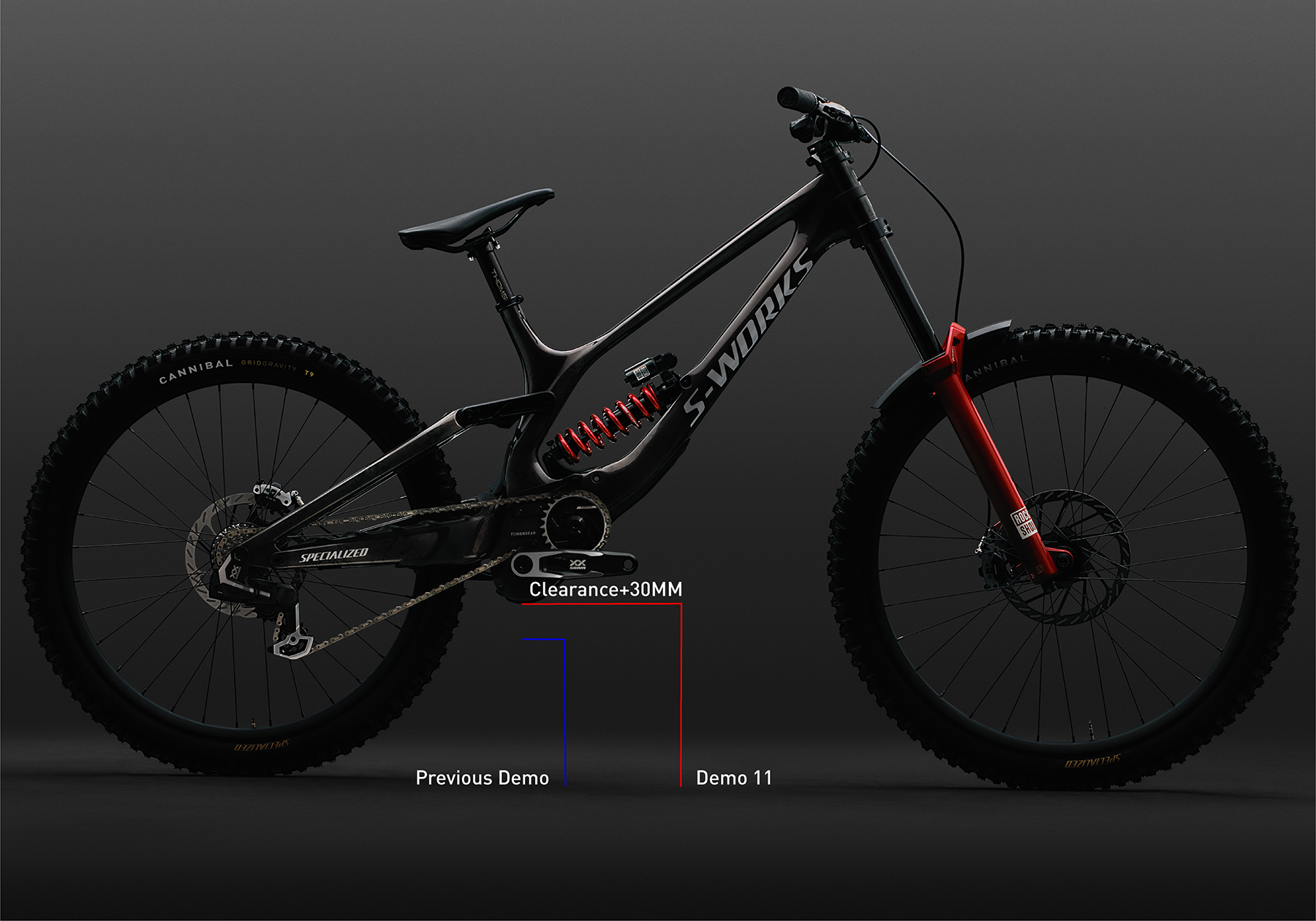
Although UBB had some advantages, Bruni and Iles found they were regularly smacking the linkage, which would get closer to the ground as the suspension compressed. OBB was developed as a way to shift those components higher up, increasing ground clearance and reducing the risk of snagging.
Specialized also claims that the OBB layout offers structural advantages, going so far as to refer to the Demo 11 as having a “self-aligning chassis”. It states that the pulling force on the linkage naturally makes it want to stay in-line. As riding loads increase, the chassis allegedly maintains better in-plane alignment than traditional suspension designs. Or at least, according to Specialized anyway.
HighGear Gearbox
With an elevated main pivot and the resulting change in rear centre length as the suspension compresses, the Demo required an idler pulley system to help manage chain growth.
Specialized’s answer? The HighGear gearbox.
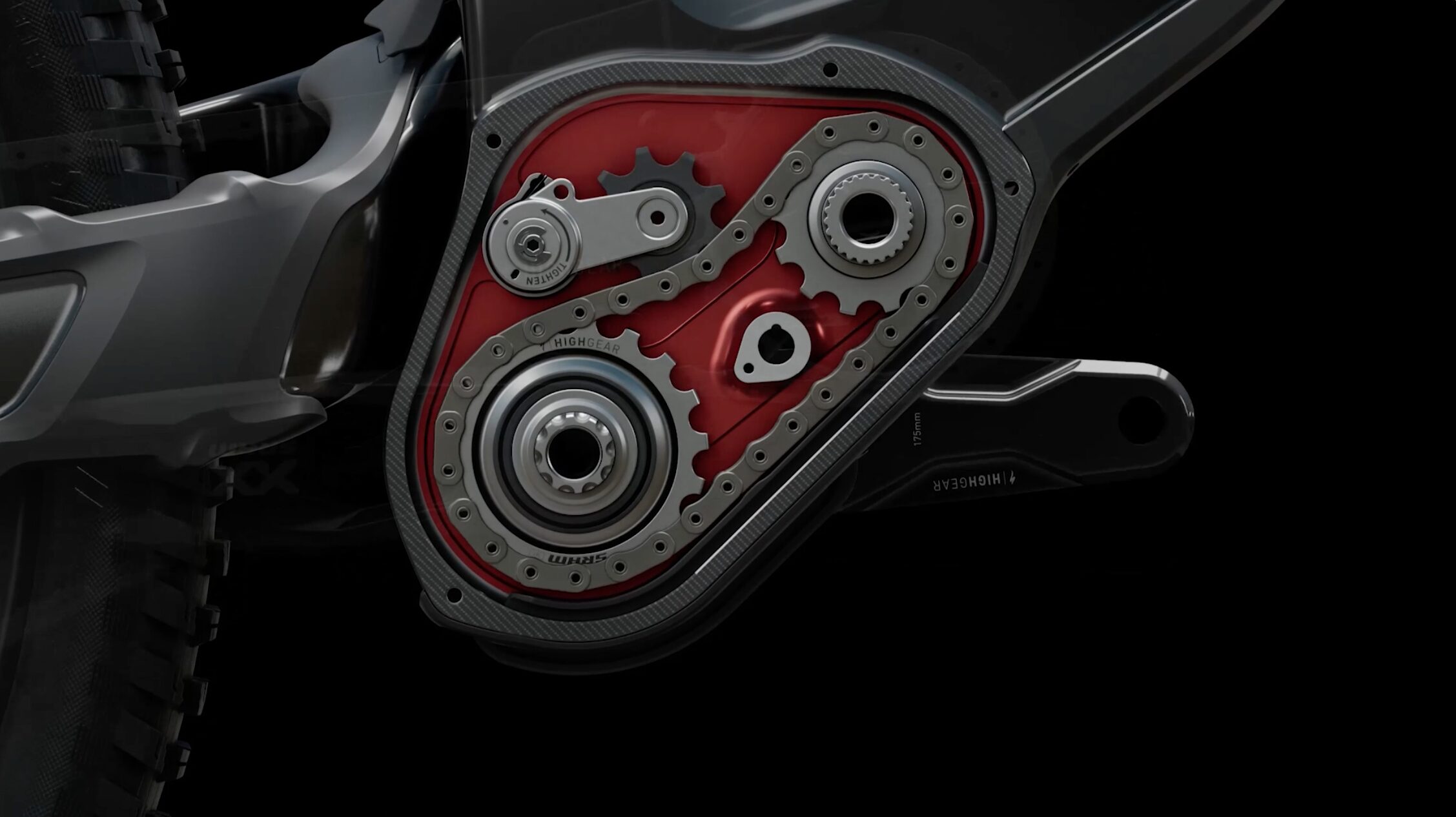
Developed in partnership with SRAM, it’s an elegant and compact solution that sees the crankset attaching to a small chainring hidden within the casing. A secondary chain drives the output gear using a jackshaft configuration and a small spring-loaded pulley for tension. An external chainring then routes the external chain to the rear cassette.
This gearbox design achieves several goals. Firstly, it reduces chain growth so that there is “virtually no pedal feedback” for the rider. Secondly, since the external chainring can be positioned much higher up, it increases ground clearance by 30mm compared to the previous Demo. Thirdly, the gearbox casing protects the main drive ring so that there’s zero chance of bending or breaking a tooth during a hard impact.
Specialized doesn’t make any mention of how the HighGear gearbox affects drivetrain efficiency, and it appears that a longer chain would be required due to the forward position of the external chainring. Even still, chain security looks to be pretty dialled with the upper and lower guides.
We should point out that Specialized isn’t the first brand to develop a bike that uses a secondary drive gear. The Pivot Phoenix is the most well-known example on the World Cup race circuit, with its dual-chain system touting similar benefits, albeit with an entirely naked approach that puts the additional chainrings and chain on full display.
And of course there are several race bikes that make use of an actual gearbox. The likes of Zerode, Gamux and Intense have all built frames around Pinion gearboxes and the Gates carbon belt drive system. In comparison, the Demo 11 still relies on a conventional chain, derailleur and cassette.
New Geometry Adjustments
Alongside the new OBB suspension design and HighGear gearbox, there are a number of interesting updates to the geometry of the Specialized Demo 11.
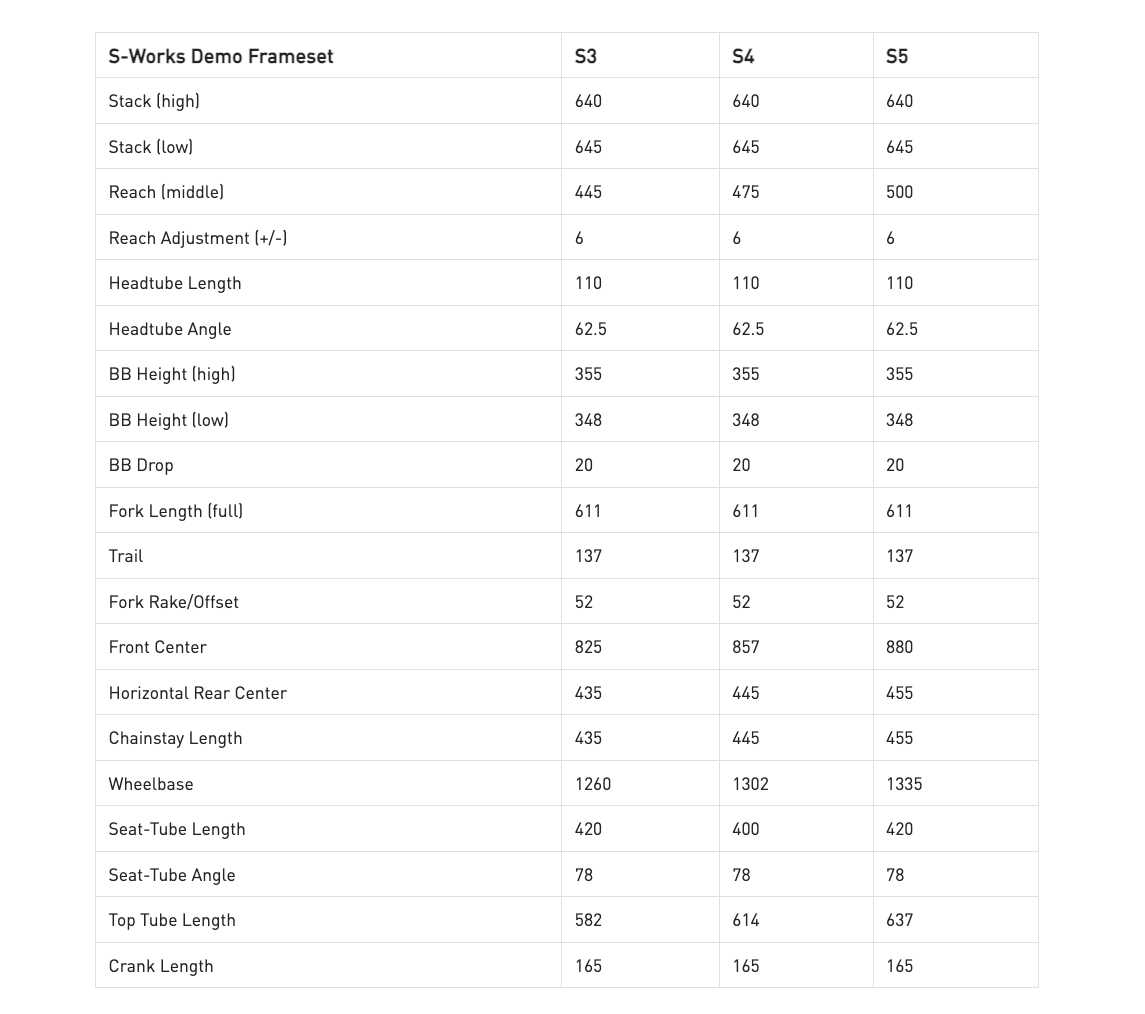
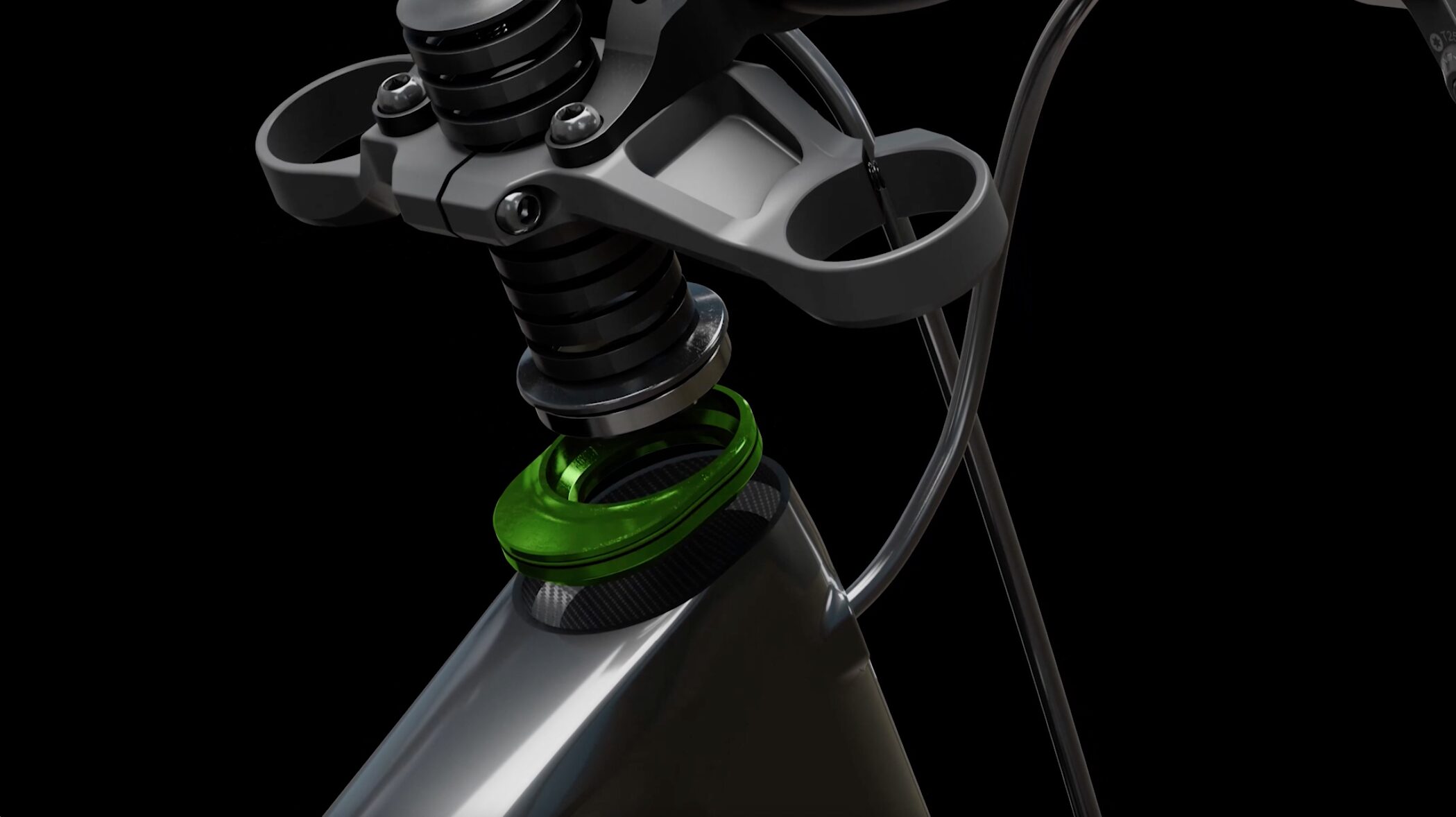
Modular headset cups provide adjustable reach, rather than an adjustable angle like you’ll find with other Specialized mountain bikes. Neutral cups come fitted as standard, though you can increase or decrease the reach by 6mm using a second set of offset cups. The design looks similar to what Giant uses on its latest Trance X and Glory DH bike, providing an effective solution for fine-tuning both the fit and front-centre balance.
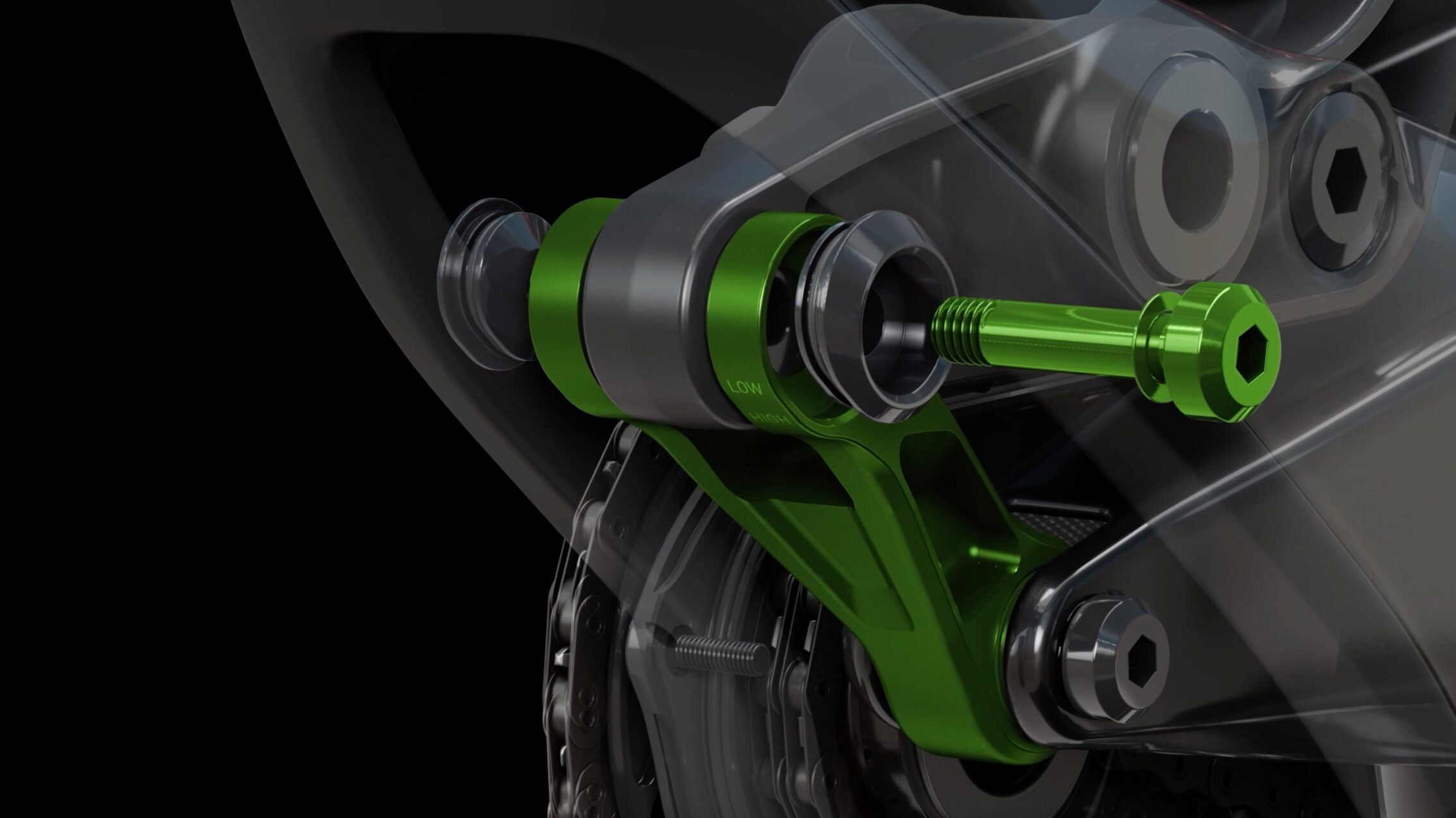
Further adjustability is provided by a high/low flip chip in the OBB linkage, which gives you 7mm of BB height adjustment.
Another update for the Demo 11 is the use of scaled rear centre sizing. This varies from 435-455mm across the three frame sizes, which is a significant range. However, unlike the previous Demo 10 that featured a flip chip in the chainstay pivot, you can’t adjust the rear centre length.
Specialized Demo 11 Price & Specifications
We have bad news if you were hoping the Specialized Demo 11 was going to be cheap. Here in Australia, you’ll only be able to purchase the S-Works Demo 11, which will sell for the incredible sum of $18,000 AUD. Pwoarr!
Overseas there is a Team model that features Öhlins suspension and custom DT Swiss wheels, though that won’t be available on our shores.
It will be possible to buy the S-Works frameset however, which includes the HighGear gearbox, crank arms and a RockShox Vivid Coil Ultimate shock for $8,900 AUD.
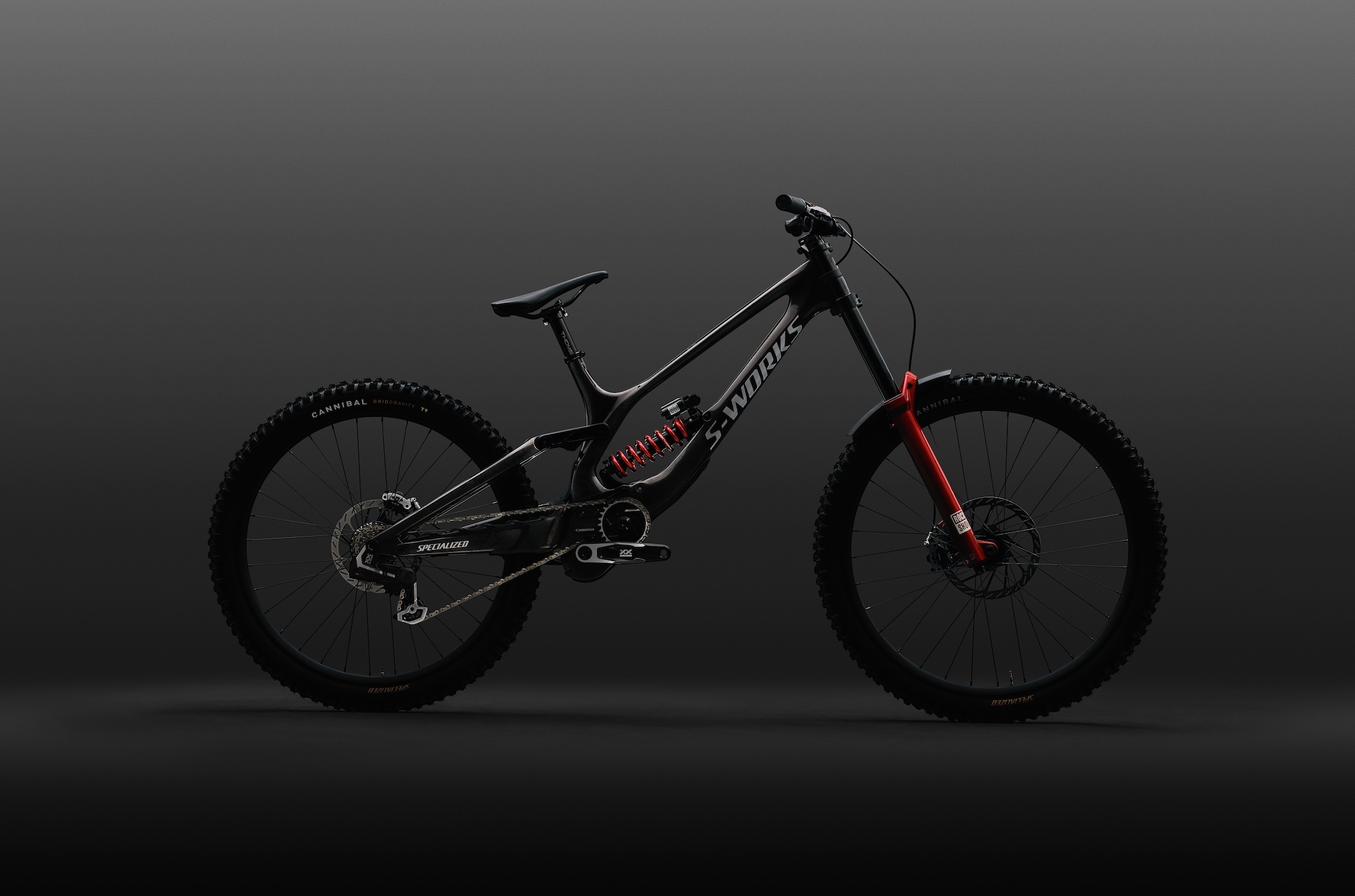
Specialized S-Works Demo 11
- Frame | FACT 11m Carbon Fibre, OBB Suspension Design, 200mm Travel
- Fork | RockShox Boxxer Ultimate, Charger 3.2 Damper, 200mm Travel
- Shock | RockShox Vivid Coil Ultimate, 250×75mm
- Wheels | DT Swiss 350 Hubs & Roval Traverse Gravity Alloy Rims
- Tyres | Specialized Cannibal Grid Gravity T9 29×2.4in Front & 27.5×2.4in Rear
- Drivetrain | SRAM XX DH Transmission 1×7 w/XX HighGear Crankset & 10-24T Cassette
- Brakes | SRAM Maven Ultimate B1, 220mm Front & 200mm Rear HS2 Rotors
- Handlebar | SRAM Descendent, 30mm Rise, 800mm Width
- Stem | SRAM Descendent DH, 50mm Length
- Grips | Deity Supracush, 34mm OD
- Seatpost | Thomson Elite
- Saddle | Specialized Henge DH, Hollow Ti Rails
- Claimed Weight | 19.03kg
- Price | $18,000 AUD
Specialized S-Works Demo 11 Frameset
- Frame | FACT 11m Carbon Fibre, OBB Suspension Design, 200mm Travel
- Shock | RockShox Vivid Coil Ultimate, 250×75mm
- Crankset | SRAM XX HighGear, 165mm Length
- Claimed Weight | TBC
- Price | $8,900 AUD
Flow’s Take
The Demo 11 is undoubtedly one of the most exciting race bikes to hit the market in recent years. However, we’re just as excited at the prospect of seeing this new tech filtering through to Specialized’s shorter travel bikes.
It’s no secret that the bike industry has been contracting since the Covid boom times. Brands are looking at ways to be more efficient, which includes sharing development costs across a tighter range of models. There has clearly been a huge amount of investment in the Demo R&D program, so it would make sense that Specialized wants to amortise that financial gamble across more than just one bike.
At the very least, we’d bet a couple of hazy IPAs that you’ll be seeing those reach-adjust headset cups on future trail and e-MTB models. And looking at the OBB suspension platform, it isn’t all that hard to imagine a mid-drive motor in place of the HighGear gearbox. Could we see a new Levo or Kenevo based around the OBB design? Maybe Specialized is working on something far more radical, like the Pinion MGU?
While we’re speculating, we should discuss the other big elephant in the room; the Enduro. The current model was released back in 2019, which is seven whole years ago — crikey! It is still a great bike, but it’s clearly been in need of an update for a while now.
Perhaps Specialized is laying the groundwork to build the OBB suspension platform and HighGear Gearbox into a 170mm travel all mountain bike? The benefits of reduced pedal kickback and increased ground clearance would surely translate, perhaps even more so for a bike being pedalled across rugged, alpine terrain. We’re not holding our breath, but it would be cool to see eh?
The post First Look | What clues does the new Specialized Demo 11 hold for future trail & e-MTB models? appeared first on Flow Mountain Bike.
“}]]
[[{“value”:”Having first been spotted in prototype form at the Lenzerheide World Cup all the way back in 2022, it feels like the new Specialized Demo downhill bike has been in development for an eternity. The Specialized R&D team certainly took its time, having spent the past four years building a variety of prototype frames in-house
The post First Look | What clues does the new Specialized Demo 11 hold for future trail & e-MTB models? appeared first on Flow Mountain Bike.”}]] Read More Flow Mountain Bike
#flowmtb #mtb