
[[{“value”:”
Developer ZA/UM’s new title Zero Parades: For Dead Spies has the unenviable task of following Disco Elysium, an award-winning role-playing game (RPG) widely praised for its unique voice and philosophical insight. It seemed like lighting in a bottle, something that likely could never be matched or replicated — even more so when most of the writers who worked on the game departed in a messy (and controversial) change in leadership.
Platform reviewed: PC
Available on: PC
Release date: May 21, 2026
Zero Parades looks and acts like Disco Elysium. It’s another text-heavy RPG where the rolling of dice determines the outcomes of most encounters, and you stumble your way through major events by making inspired, occasionally diabolical choices, and interacting with a bizarre cast of characters. Dig beneath the surface, however, and it’s not like Disco Elysium — in fact, in many ways it’s really not trying to be. This is a more grounded and ambitious experience that builds on its predecessor’s identity rather than trying to imitate it.
It seems less exciting at first, as the tone is more grounded, and it’s harder to feel connected to the less bombastic protagonist initially. However, it’s vastly more ambitious in scope and subject matter, and it makes small, but influential, improvements that raise the standard of what dice-driven RPGs like this can achieve.
I spy
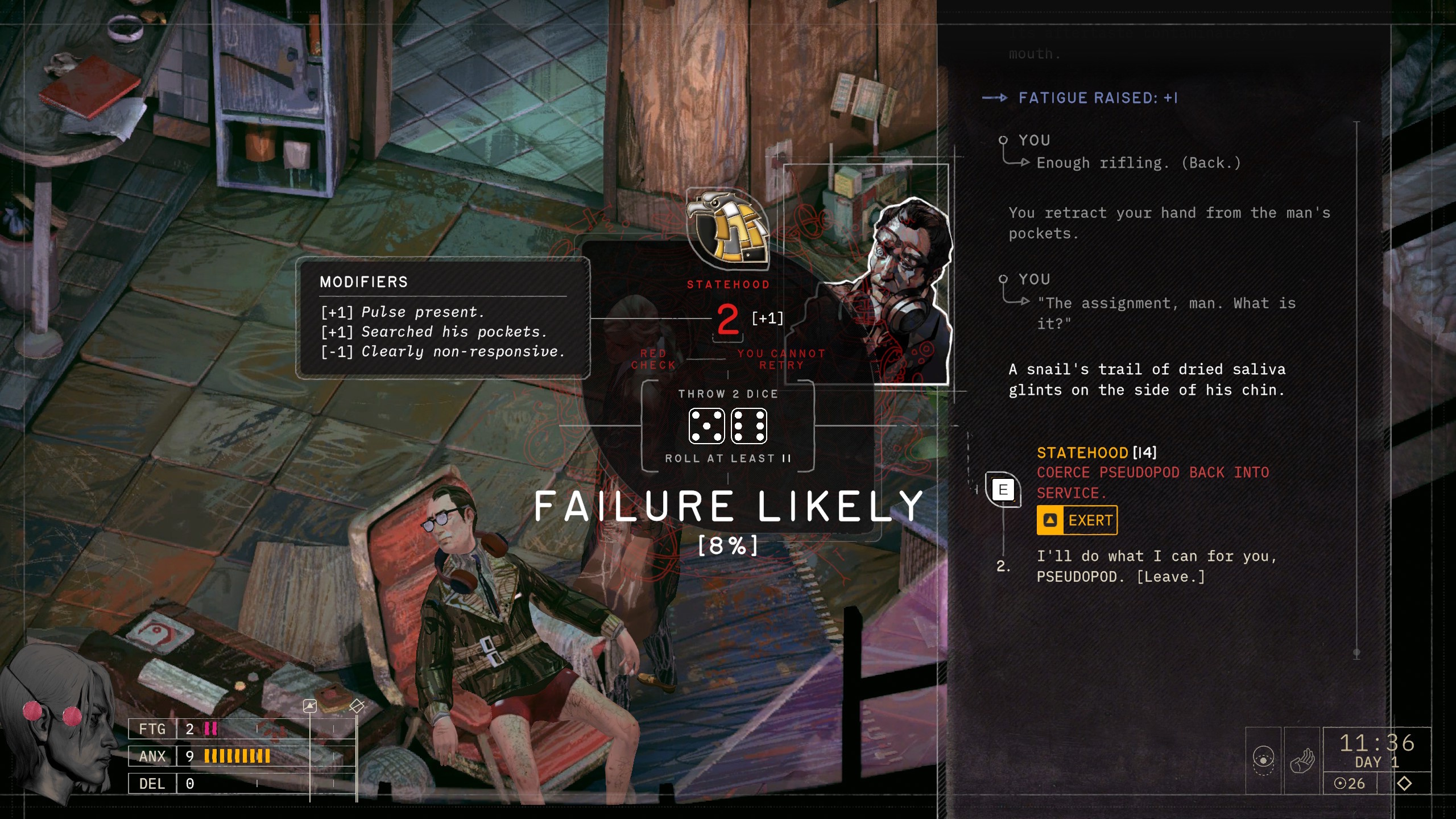
You are Hershel Wilk, a spy who wakes up in the coastal city of Portofiro after a particularly disturbing dissociative episode that’s left you not quite able to remember what just happened. Her angry handler suggests that whatever “it” was, it wasn’t very good, and your job is to try and uncover your mission and get it back on track.
Unlike Disco Elysium‘s amnesiac cop Harry DuBois, Hershel still knows who she is. Reality is less easy to grasp, though, and that’s partly because reality is complicated. It’s a messy tangle of international conspiracies, post-industrial fallout, bad faith actors manipulating innocent people, and an ever-widening gap between those who have means and those who don’t.
Zero Parades is Disco‘s ideological successor and a natural follow-up to that game’s conclusion: that the pursuit of capital and power infects everything, even unions and progressive movements. Zero Parades examines what happens when labor loses the class conflict, when work dries up and the bankers turn your once-thriving urban center into a tourist trap, and when the much-vaunted opportunities of the privileged world turn out to be unavailable for you. It’s the 2000s to Disco Elysium‘s 1970s, in other words.
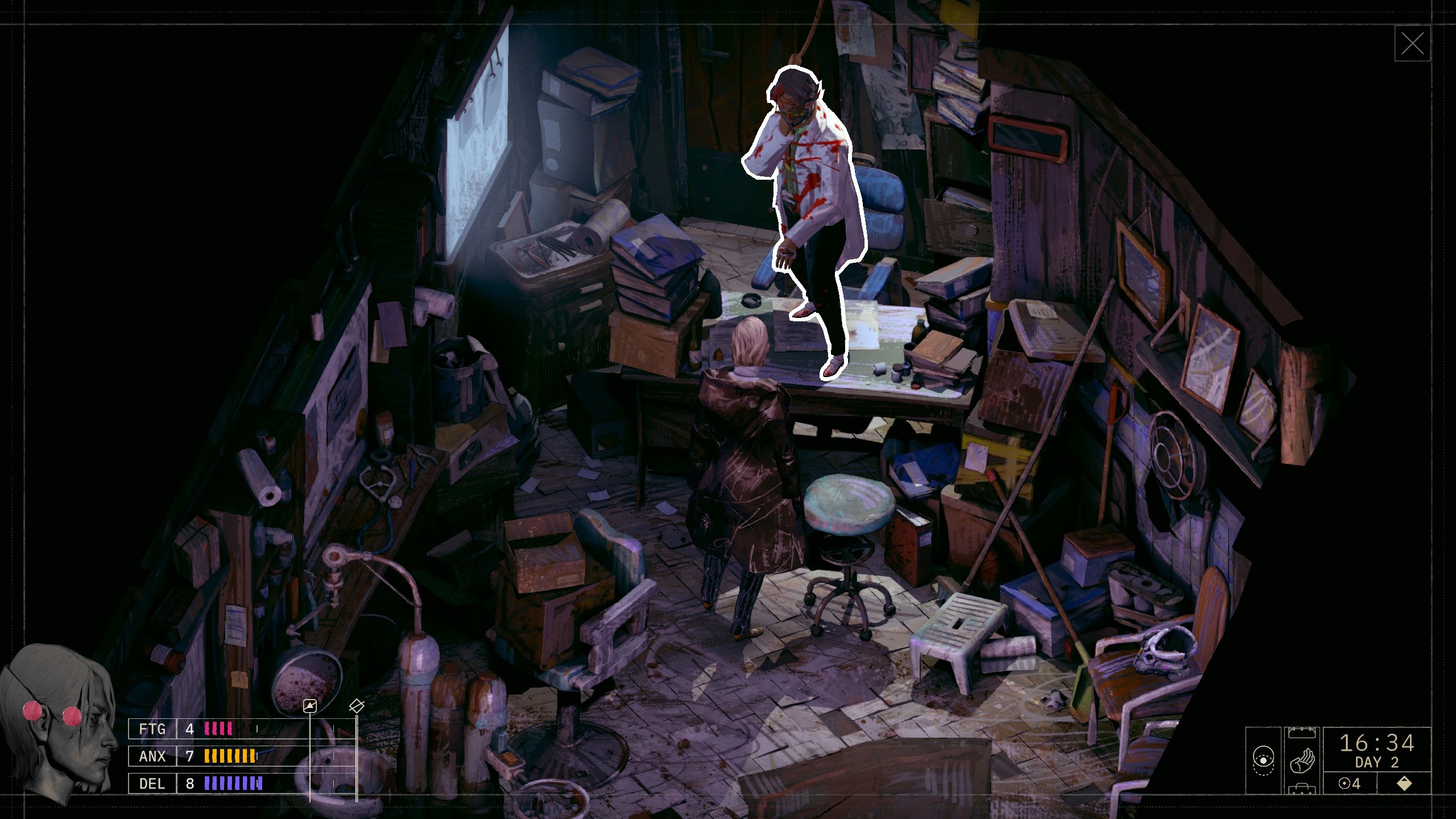
As in real life, class consciousness has faded in the world of Zero Parades. The angry embers of it still exist in those old enough to remember the days when change seemed possible if everyone worked together but they’re incapable of pushing back against the entrenched power of the monied classes (or to use the game’s favorite phrase, the techno-fascists) who police their morality, close down their places of gathering on technicalities, and threaten to take what few liberties they have left unless they adopt the culture of their imperialistic neighbors. Consumerism and dozens of fragmented ideologies, many of which are entirely unhinged, flood in to fill the gap left by the death of class identity.
Zero Parades is quieter than Disco Elysium. It puts fewer manifestos in its characters’ mouths, and it’s also generally more interested in showing how conditions shape people and societies than it is in making a specific statement. You’re trusted to come to your own conclusions based on what you see and how it aligns with your experience but it’s no less observant and incisive than its predecessor and just as adept at using a Marxist lens to examine the faults of government and society.
It takes a while to recognize that, though. In the early hours, Zero Parades seems far too disorganized. It lumps together gentrification, post-modern cynicism, gun control commentary, the disadvantages of the Global South, weaponized bureaucracy, critiques against globalism, and the outsized cultural influence of superpowers like the US with commentary on Peronism, dangerous and deluded talk show hosts, and a whole lot more.
You can spend a good five or six hours wandering around the city’s starting zones with a protagonist who feels more like a shadow than a human, picking up various pieces of seemingly disconnected history and personal trivia with no clue why it matters, if any of it does at all. It does, eventually, and Zero Parades deserves credit for how expertly it brings all of these disparate pieces together as the game progresses — even if it takes a long time to pay off.
Less easy to overlook is the off-putting use of commas. Zero Parades would benefit from another editing pass in the future, partly to correct some typos, but mostly to deal with the egregious number of comma splices, where a comma separates two complete ideas instead of a sentence. The script is bursting with them, and it’s incredibly distracting.
Skill issue
You might not be able to do anything about Zero Parades‘ grammar, but you can do something about how messed up the world is. Or try to, though your efforts cause mayhem as much as they help anyone. You have multiple ways to tackle almost every encounter, all of which are effective, even if they may not all be ethical.
That’s standard for this kind of RPG, but one of the most exciting things the game does is open new paths through failure. Normally in games like these, including Disco Elysium, if you fail a check or make the “wrong” choice, the consequence is either having an option removed or suffering some kind of negative effect. Zero Parades also makes you suffer negative effects, but through these you gain new ways to interact.
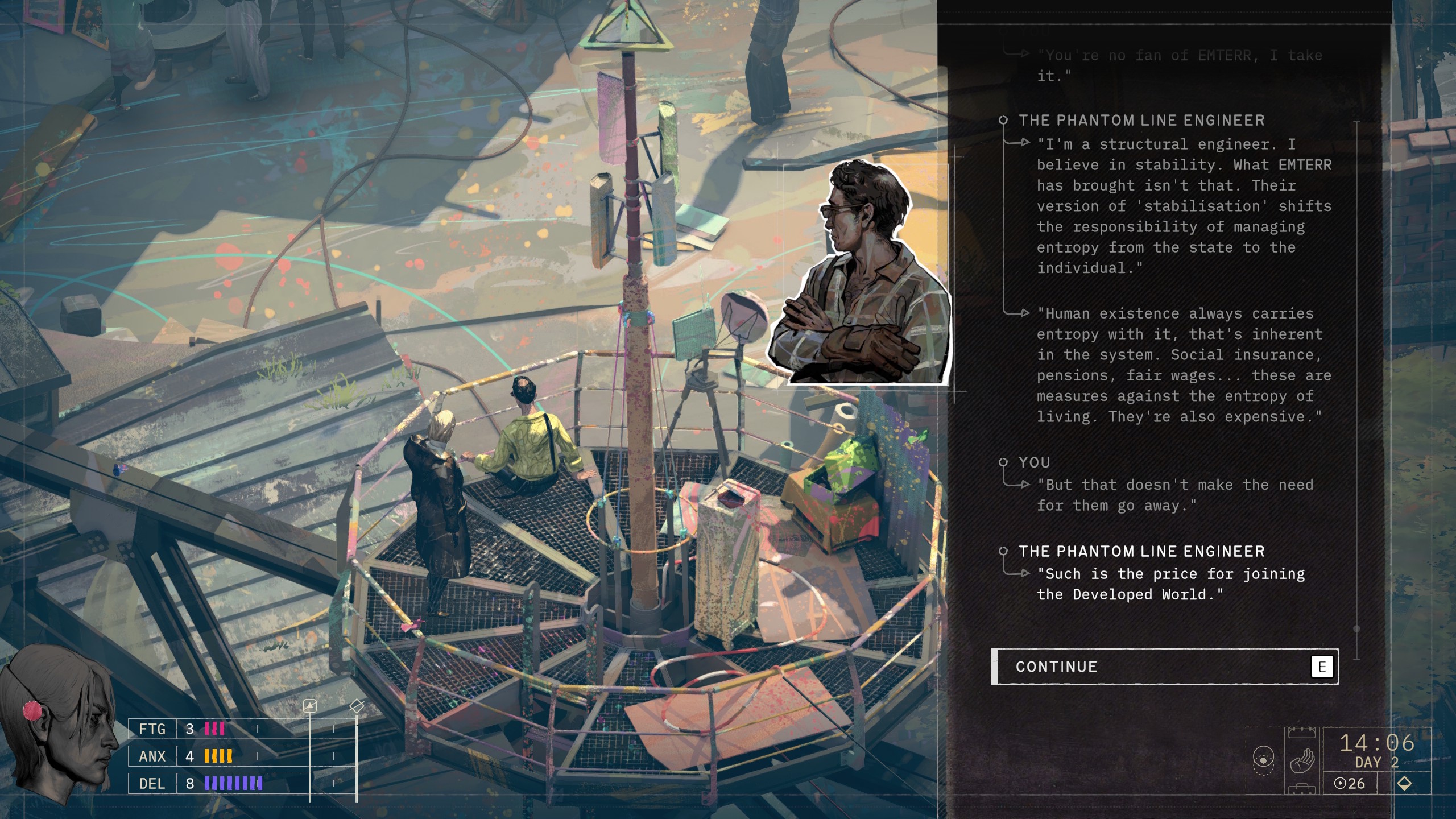
Zero Parades‘ strongest facet is its unflinching examination of modern society — who gets to wield power and influence in it, the struggle to find identity in what feels like an unmoored existence, and how capital frequently blocks paths to a fairer, more equitable society. It manages to weave together dozens of issues and viewpoints without losing its own distinct voice, and there’s nothing else like it in gaming at the moment.
The more dramatic ones happen when you fail active dice rolls like, for example, failing to match the nerve of a psychotic doctor who just drank a formaldehyde cocktail. You can still get what you want from him, but on his terms (in this case, prying teeth out of a teenager’s head with a crowbar), which leads to a whole new network of possibilities with their own permutations of outcomes.
However, there’s a decent number of passive checks — the ones that happen in the background without you seeing — that you can fail as well, and some of these have even longer-lasting effects. In one instance, I failed a personality-related check that kept Hershel from understanding the true motivations of someone she was speaking with. That naivete pushed Hershel into a completely different relationship with this person, giving her a disadvantage in future checks and opening an otherwise-blocked branch of interaction. This scenario wasn’t the only one of its kind, and it goes a long way toward making every encounter feel important.
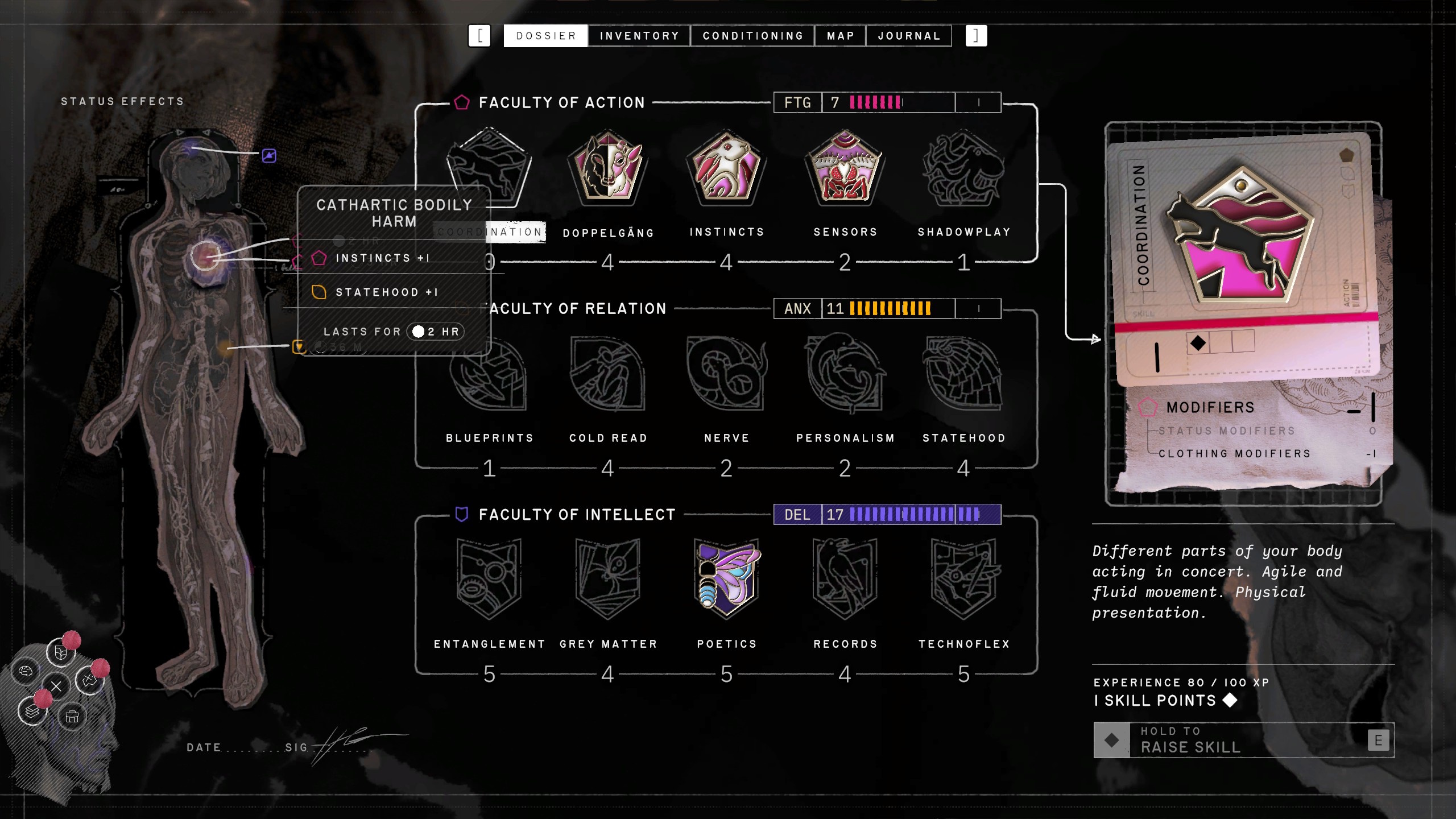
Hershel’s skills influence whether you’re likely to fail a check, and while they’re fewer in total compared to Disco Elysium, Zero Parades tends to do grander things with them. Skills like coordination have little value early in the game, but later, in tense situations where you need to make a quick escape or disarm an opponent, it’s an essential tool for survival.
Cold Read seems like it imitates some of Disco Elysium‘s observation skills, except getting an accurate read of a stranger often makes a vital difference in how conflicts with them progress. Zero Parades deftly scatters these more action-packed sequences throughout the game without straying too far from its genre roots, and they make good use of another new feature.
Mental health check
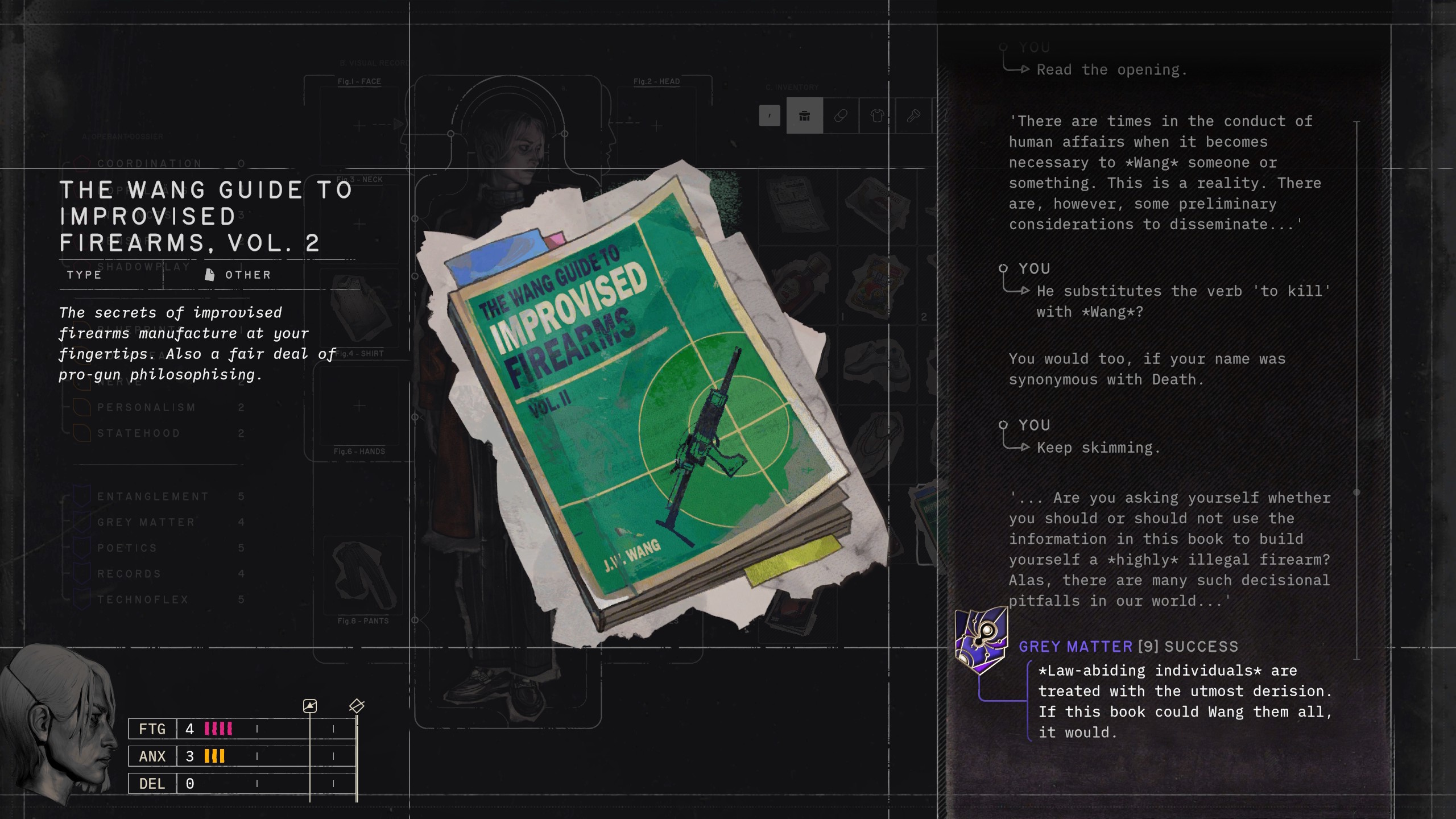
Where Harry had morale and health in Disco Elysium, Hershel has fatigue, anxiety, and delusion. These fluctuate based on your choices, circumstances, and certain items you wear or consume. Alcohol has benefits, for example, but increases delusion, while chugging coffee lowers fatigue and spikes anxiety. Alone, these seem inconsequential but conversations can quickly go off the rails and dredge up something from Hershel’s psyche to push her delusion toward dangerous levels.
Hershel suffers negative effects once these levels pass certain thresholds and, if they keep rising, loses a skill point in a related area. You can also exert yourself to raise chances of succeeding with certain roles at the cost of increasing your pressure levels. Managing these is straightforward in the early game, but as events escalate and quickly grow out of control, keeping Hershel healthy and still having a decent chance of passing important checks becomes much more complicated. It’s a perfect fit for a psychological drama, but it’s also an excellent way to make your choices feel like they matter in ways you don’t typically see in other RPGs
That’s less true for conditioning, Zero Parades‘ refined and expanded version of Disco Elysium‘s thought cabinet. Hershel can ponder several thoughts at once, about things like the futility (or aspirational nature) of credit debt and gain special bonuses. They start out quite tame, like getting +1 for a personality skill, but steadily become more complex and influence things like your interactions with specific people or groups. They also have violation criteria, where saying the “wrong” thing or purchasing certain items goes against the conditioning, removes your bonuses, potentially adds new ones, and gives you unique disadvantages in certain situations.
How these thoughts affect your actions is more interesting than what the system tries to say. Zero Parades is a game where Hershel can be whoever you think she should be, and freedom of choice is essential in that. Deciding not to smoke cigarettes for a few hours or not picking one kind of dialogue just to get a specific bonus doesn’t change who she ends up becoming, as most of the choices aren’t tied to important outcomes. Managing bonuses and consequences adds a welcome extra layer of strategy, but it feels gamified and disconnected from Zero Parades‘ themes.
Zero Parades aims high and only rarely misses. It’s confident enough in its message to leave you to figure it out for yourself, and the improvements to Disco Elysium‘s foundations make its roleplaying among the best in the genre. It just takes a bit of patience to get there.
Should I play Zero Parades: For Dead Spies?
Play it if…
You love well-written RPGs
Zero Parades might not have the sensuousness and excitement of its predecessor’s script, but it’s still wonderfully written and insightful.
You want your choices to matter
They will. Everything from how you interact with people to how you fail and how far off-the-rails you let Hershel go has an influence over certain aspects of how the story plays out. It just takes time to see the effects.
You enjoy figuring things out for yourself
This game is every bit as enigmatic as Disco Elysium, and while you’ll have clues pointing you toward what to do next, it very much expects you to poke around and find things out on your own.
Don’t play it if…
You hate text-heavy games with slow plots
There is a lot of reading in this game, and it takes a long time before things start to take on a shape that makes any sense.
Accessibility features
Zero Parades includes text size toggles and an option for dyslexic-friendly font. There’s also a suite of color options so you can change outline colors for characters and objects and another set of color options for dice checks and interface features.
How I reviewed Zero Parades: For Dead Spies
I played Zero Parades for more than 35 hours on PC (with an RTX 4080 Super GPU and Intel i9-14900F) using a Razer Viper mouse, SteelSeries Apex Pro Gen 3 wired keyboard, and Beyerdynamic DT990 headphones.
In that time I completed the main story once and multiple side quests, though there are many different outcomes I didn’t see and some quests I unknowingly locked myself out of based on my choices.
First reviewed March 2026
“}]]
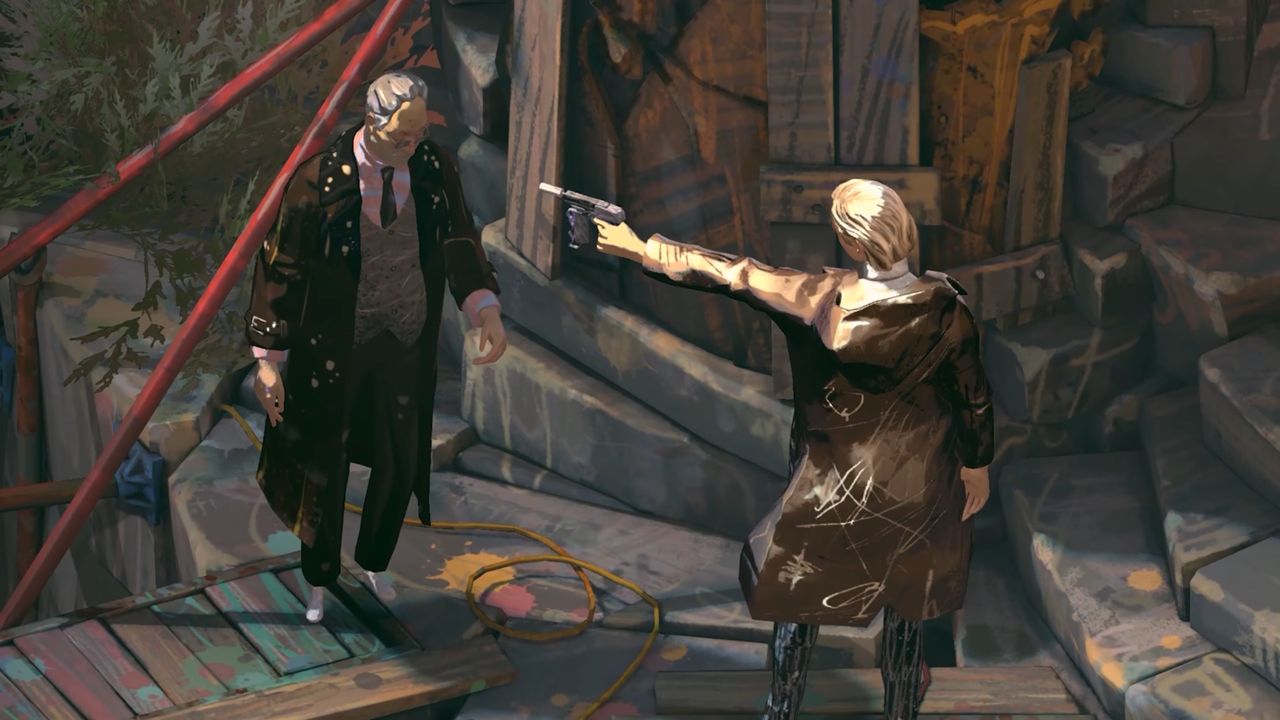 Zero Parades: For Dead Spies is an excellent Disco Elysium successor that still establishes its own identity. Read More Latest from TechRadar US in Reviews