
[[{“value”:”
Insta360 Mic Pro: one-minute review
The Insta360 Mic Pro is Insta360’s flagship wireless microphone system, and it enters the crowded small wireless mic sector with two features that its rivals (most notably DJI) simply can’t match: a customisable E-ink display on each transmitter, and a three-microphone array that uses digital signal processing (DSP) to simulate different polar pickup patterns.
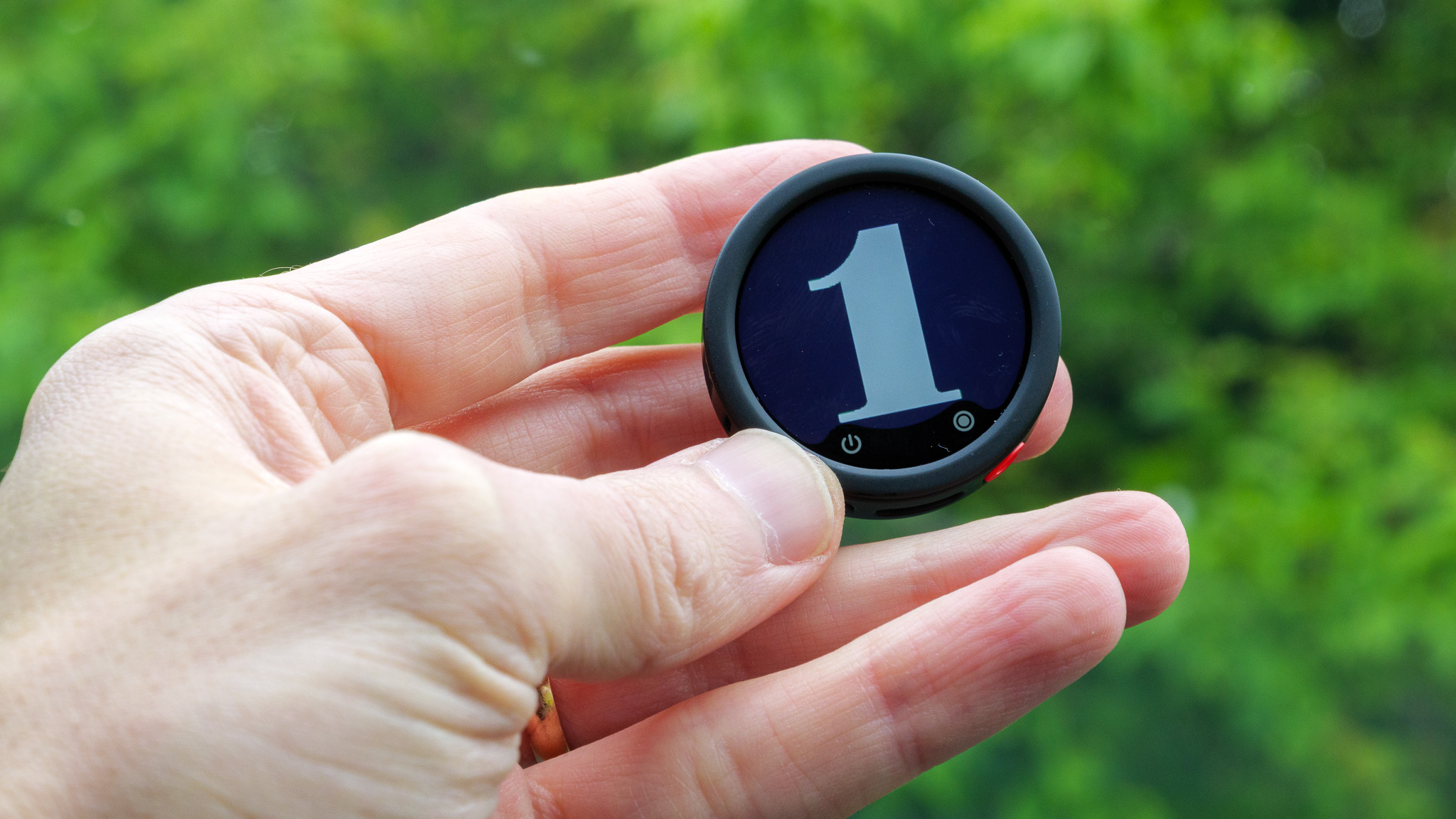
The E-ink screen is the more immediately striking of the two. Via the Insta360 app, you can push any image you like to the circular 1.22-inch, 6-colour display and it’ll stay there persistently, even when the transmitter is powered off. And unlike an OLED display, E-ink consumes power only when refreshing the image, not while showing it, which means it adds almost nothing to battery drain. It’s a clever and well-executed idea.
The selectable polar patterns are perhaps more interesting in theory than they proved in practice during my testing. The Mic Pro’s three-microphone array uses DSP to synthesise four distinct modes: omnidirectional, super-directional, cardioid and figure-8. These are not true multi-capsule configurations (they’re digitally constructed from omnidirectional inputs) but the differences are real. In everyday use, though, I found myself leaving the mic in omnidirectional mode most of the time. Where the polar patterns become more useful is when you mount the Mic Pro on a camera’s cold shoe and switch to cardioid or super-directional mode, turning it into a passable on-camera directional mic — something DJI’s Mic series doesn’t allow for.
Elsewhere, the Mic Pro’s spec sheet impresses: there’s 32-bit float internal recording, 32GB of onboard storage, NPU-powered AI noise cancellation, timecode sync, up to 400m wireless range, and impressive multi-channel flexibility with 4-to-1 and 2-to-4 configurations. That last one — distributing two transmitters to four receivers simultaneously — may be particularly valuable for multi-camera productions.
In my testing, the feature that impressed most was the noise cancellation. Tested against a running fan in my office, the Mic Pro’s Strong noise cancelling setting completely eliminated the background drone, easily outperforming the DJI Mic 3 in the same conditions. There are some minor design caveats worth noting, but the Mic Pro’s core audio credentials are excellent.
Insta360 Mic Pro: price and release date
- Launched May 19 2026
- Priced from $99.99 / £89 / AU$159.99 for single transmitter
- Available in three options
The Insta360 Mic Pro is available now in three configurations. The entry-level option (£89 / $99.99 / AU$159.99) gives you a single transmitter only, which makes sense if you’re buying into the Insta360 camera ecosystem and/or connecting directly via Bluetooth, or recording on the transmitter’s own internal storage. The middle-tier 1 TX + 1 RX bundle (£179 / $199.99 / AU$319.99) is the obvious choice for solo creators, while the full 2 TX + 1 RX kit (£279 / $329.99 / AU$529.99) adds a second transmitter and charging case for two-person setups.
For context, the DJI Mic 3, the Mic Pro’s closest competitor, currently retails at £269 for the 2 TX + 1 RX bundle, making the Insta360 £10 more for broadly comparable headline specs, though with genuinely different feature sets.
Insta360 Mic Pro: specs
|
Dimensions |
TX: 38 x 38 x 12.2mm / RX: 55.8 x 27.7 x 21mm |
|
Weight |
TX: 19.7g (without clip or magnet) / RX: 29.8g |
|
Range |
Up to 400m |
|
Connectivity |
RX: USB-C / Lightning, 3.5mm jack, headphones |
|
Bluetooth |
Yes |
|
Battery |
10 hours (transmitter), 11 hours (receiver), up to 30 hours with fully charged case |
|
Noise cancelling |
Two-level |
Insta360 Mic Pro: Design
- Transmitter’s E-ink display can be customized
- Clip or magnetic attachment
- Receiver features small OLED screen
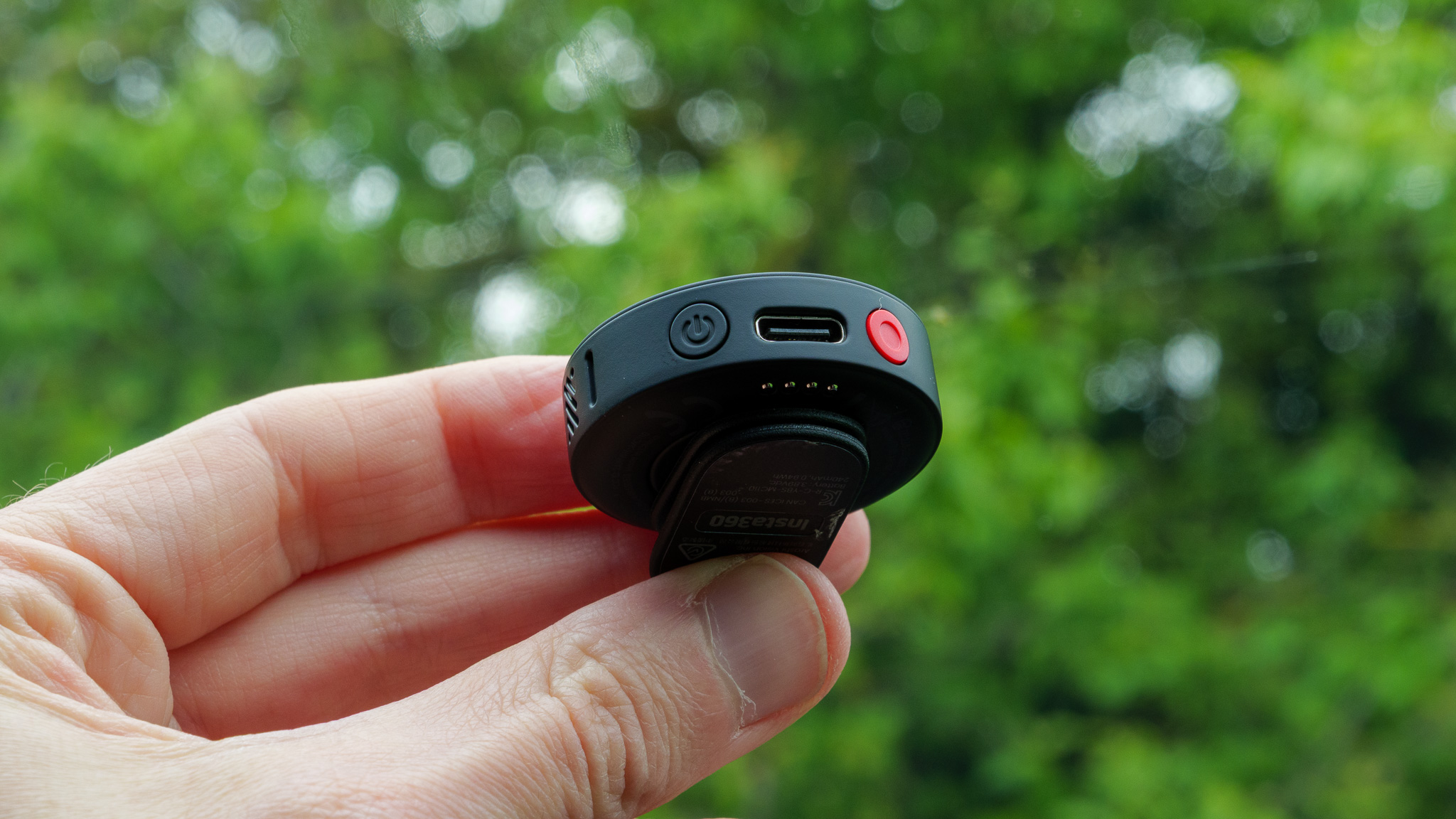
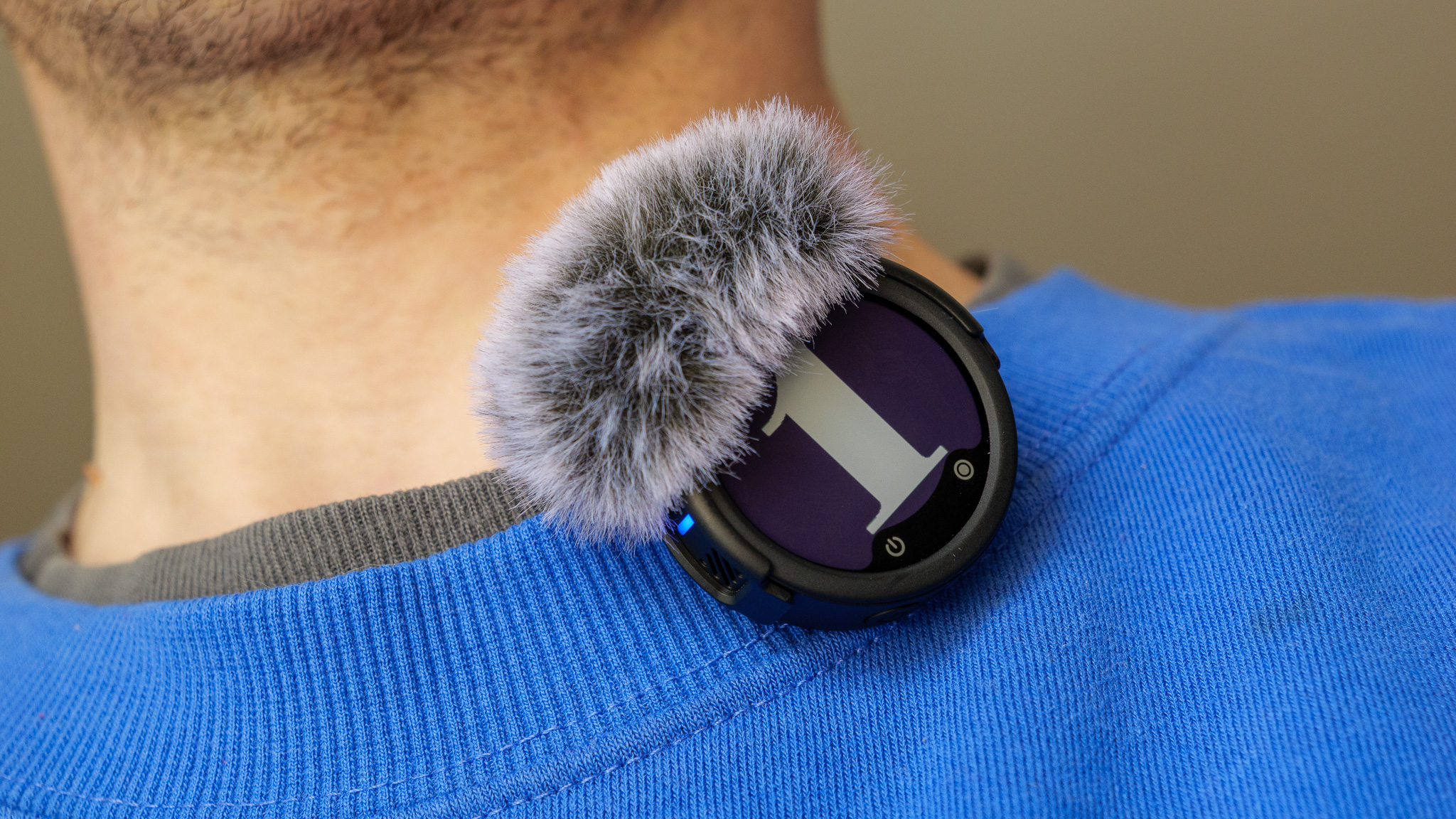
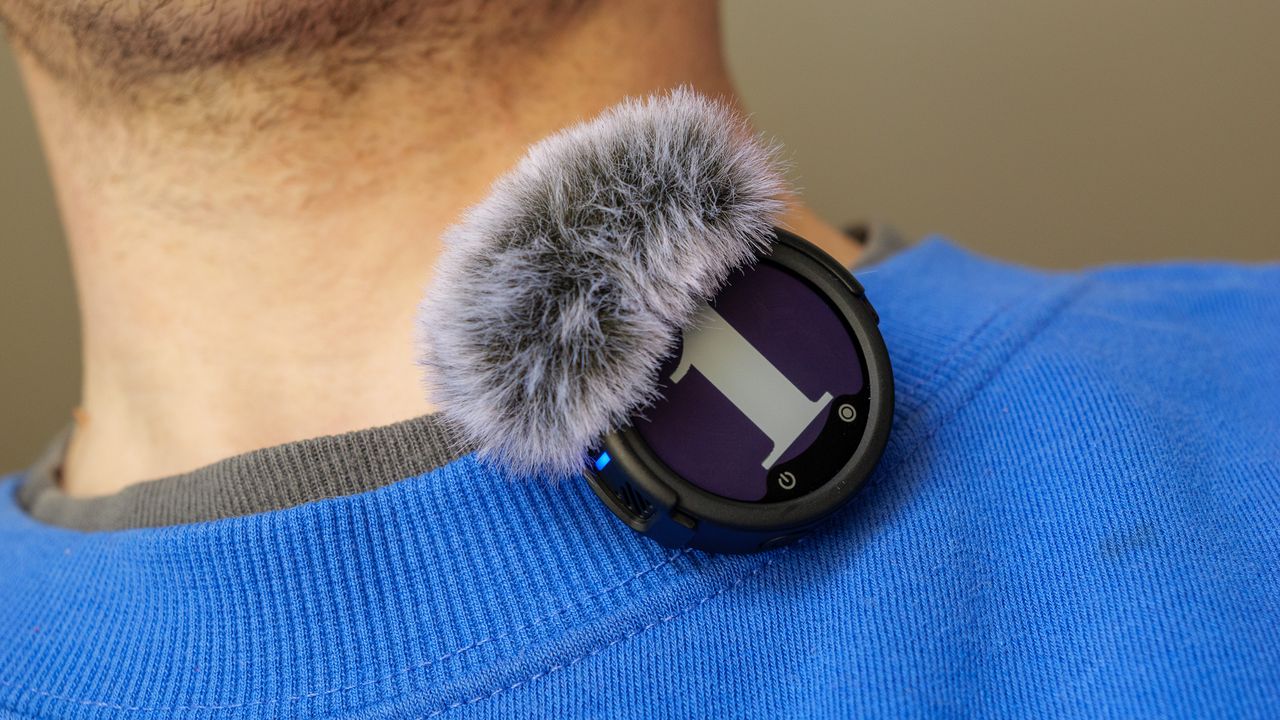
The Mic Pro transmitter is a small cylindrical puck 38mm in diameter and just 12.2mm tall with the E-ink display taking up one face entirely. It weighs 19.7g without its clip or button magnet attached, making it light enough to clip to a lapel without dragging on clothing.
That E-ink display is the first thing anyone will notice about the Mic Pro, and rightly so. At 1.22 inches with a 197 PPI resolution, it’s sharp enough to render logos and text cleanly, and its six-color capability means branded graphics translate well. The persistent display could be a practical boon for multi-mic setups where visual identification of TX units matters – and because E-ink draws power only during refresh, it barely contributes to battery use. It’s a well-thought-through implementation of a novel idea.
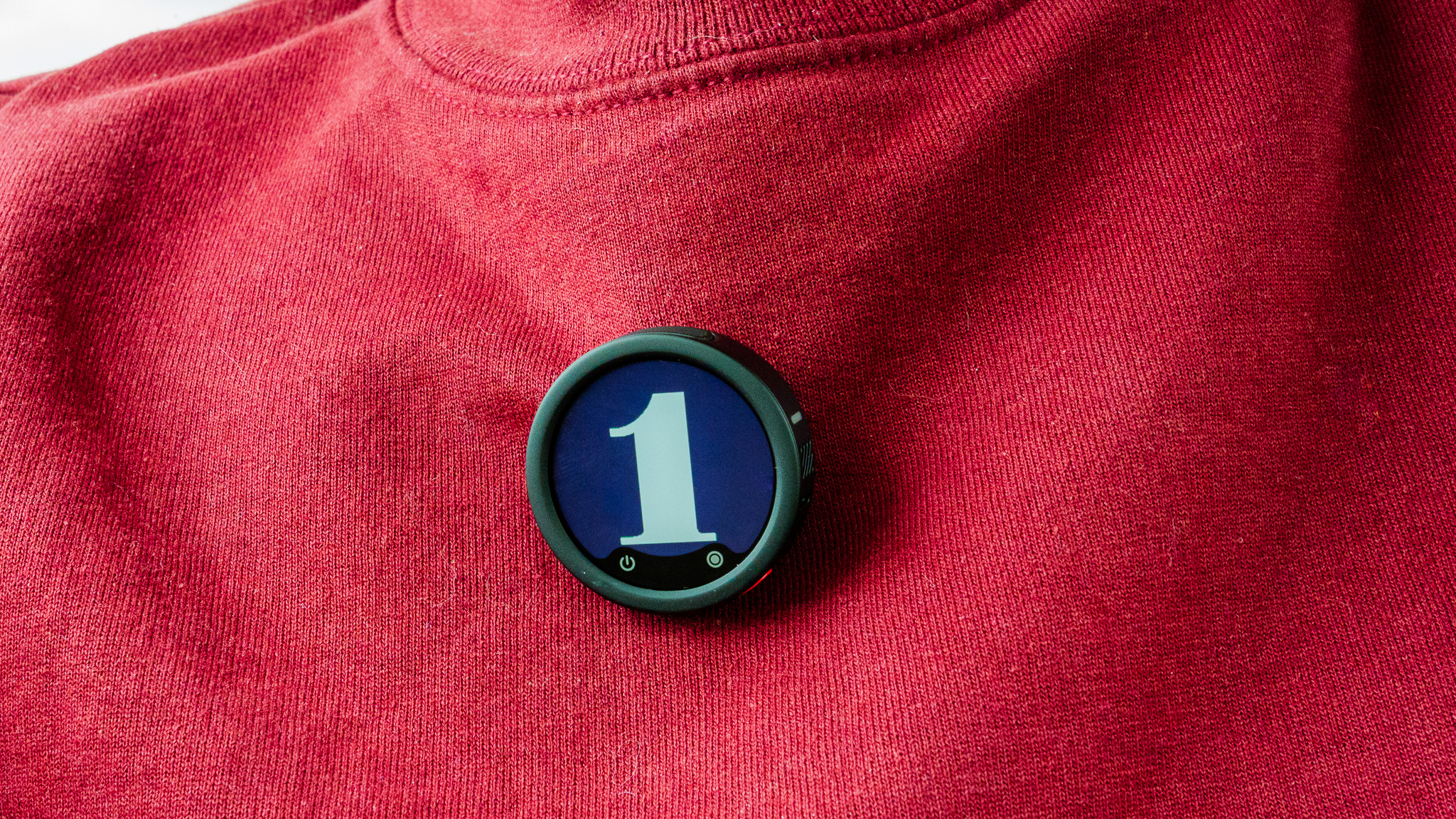
For mounting, the Mic Pro follows the now-familiar dual-approach used by DJI and others: a small clip for collars, caps and lapels, and a button magnet for direct attachment to thinner fabrics. The Mic Pro clip doubles as a cold shoe adapter that lets you mount the transmitter directly onto your mirrorless camera — effectively transforming it into an on-camera directional microphone when paired with the cardioid or super-directional pickup mode. As far as I’m aware, this isn’t something DJI’s Mic series supports, and it expands the Mic Pro’s versatility for run-and-gun filmmakers.
The receiver is a conventional rectangular unit with a cold shoe clip, USB-C and 3.5mm outputs, and a small display for monitoring levels and settings. It’s not especially compact by current standards (it will feel a little awkward when plugged into your smartphone, for instance), but it does the job.
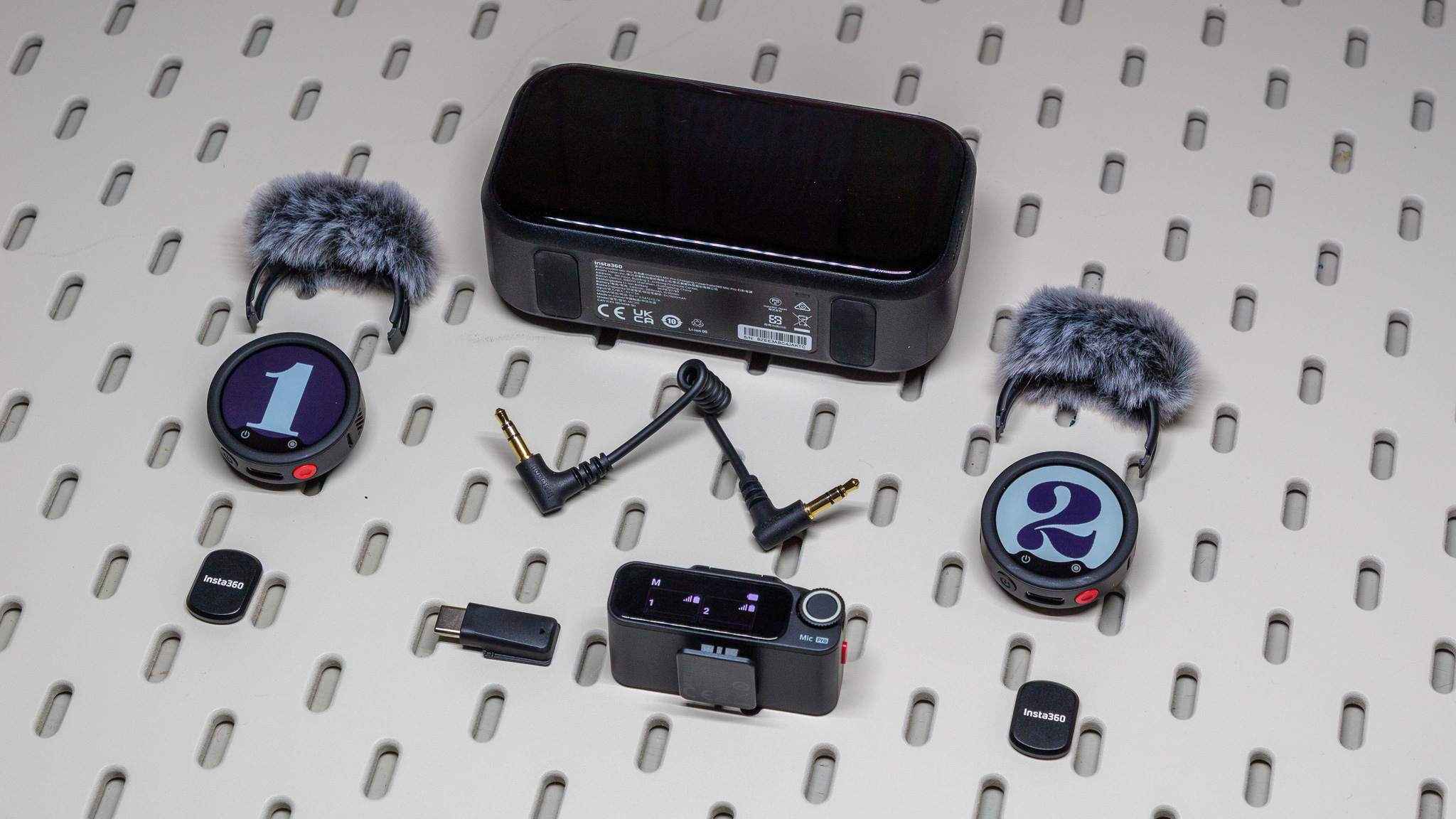
The charging case is where things get a little more mixed. It looks smart, with a transparent front panel that shows you what’s inside — two TX units, one RX, plus dedicated spaces for clips and magnets, and two smartphone adapters. My concern is a practical one: that transparent panel will attract fingerprints and may scuff with regular use. The hinged opening also took some getting used to; it’s not quite as smooth or intuitive as DJI’s case designs.
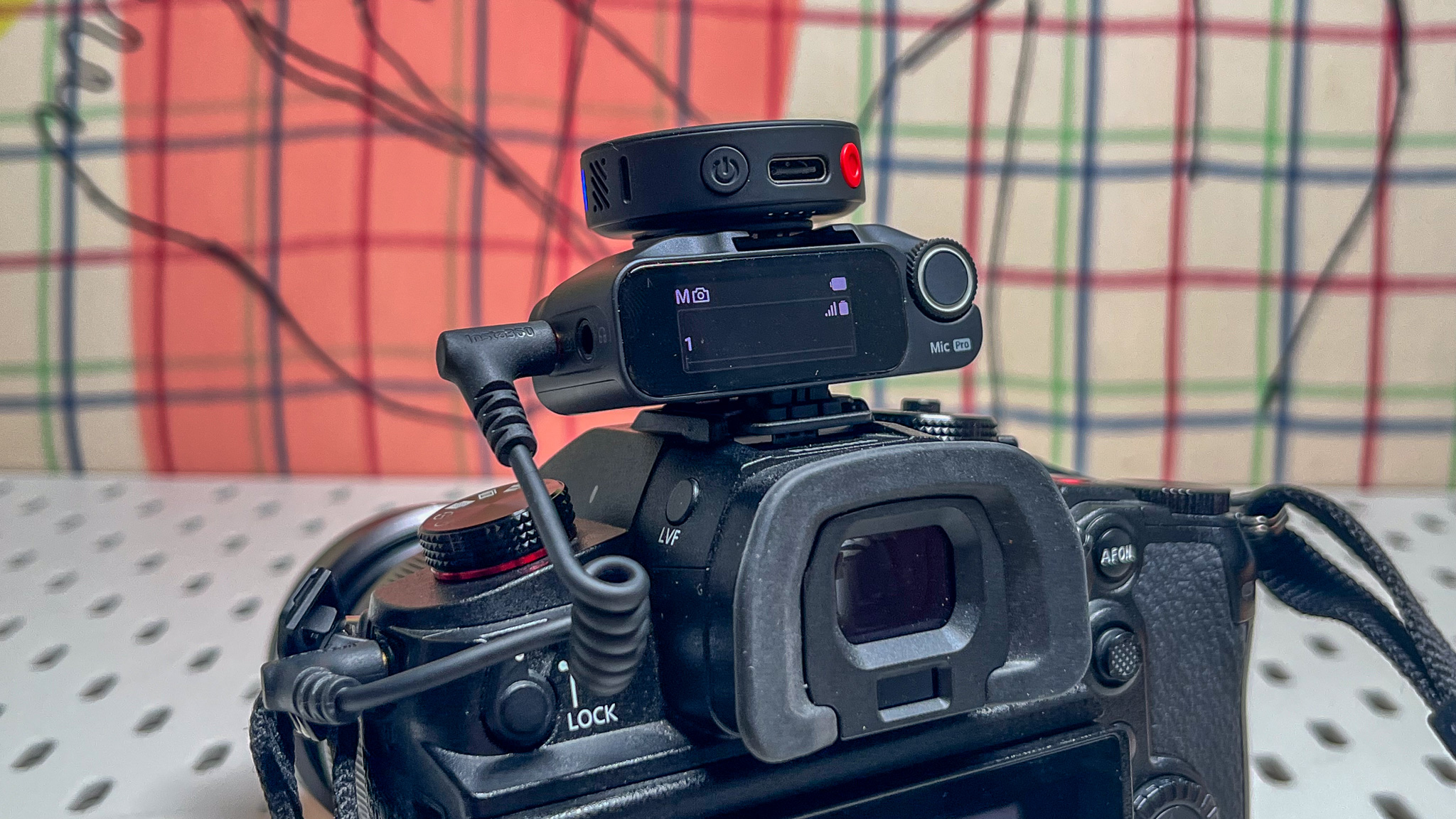
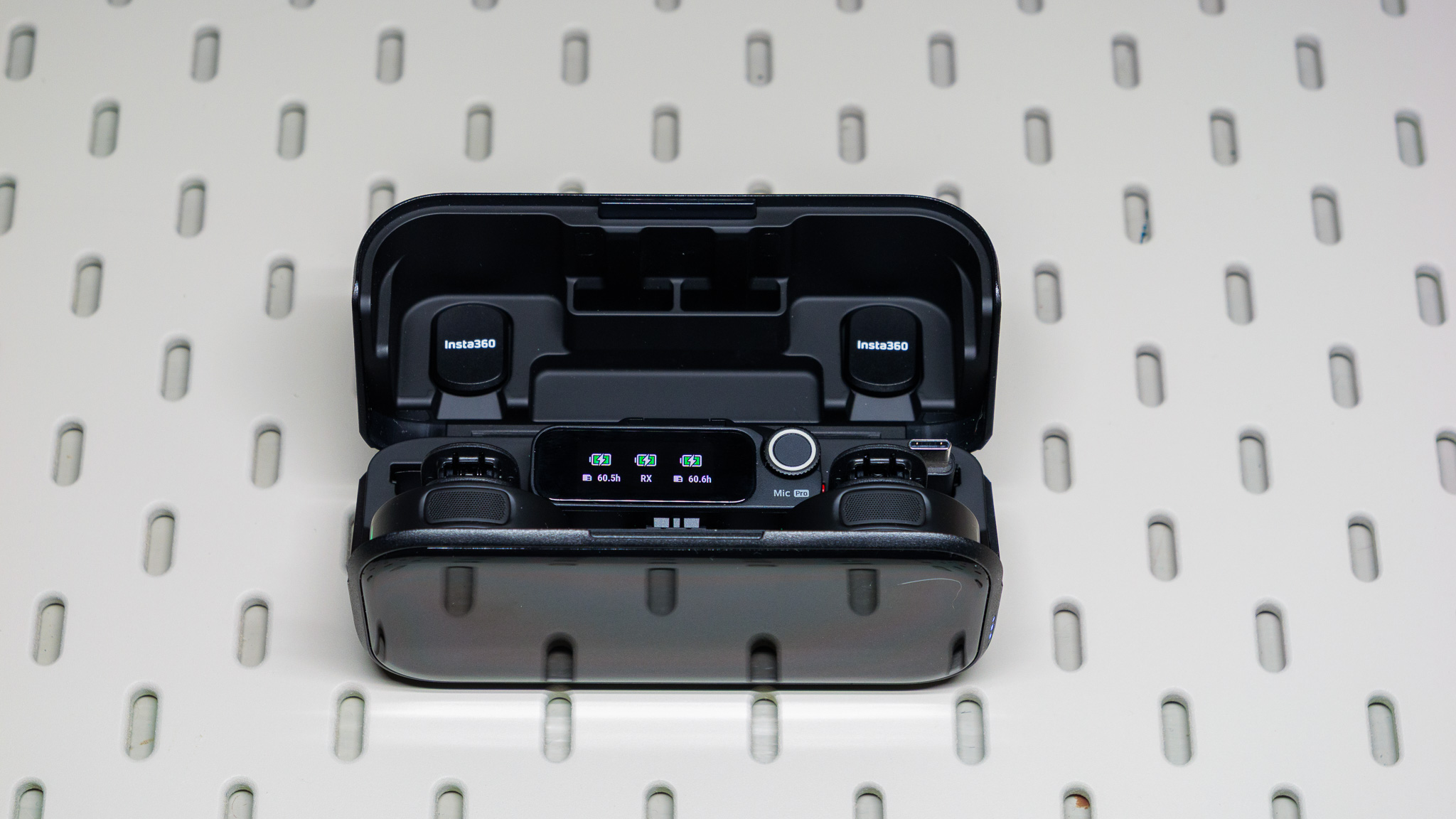
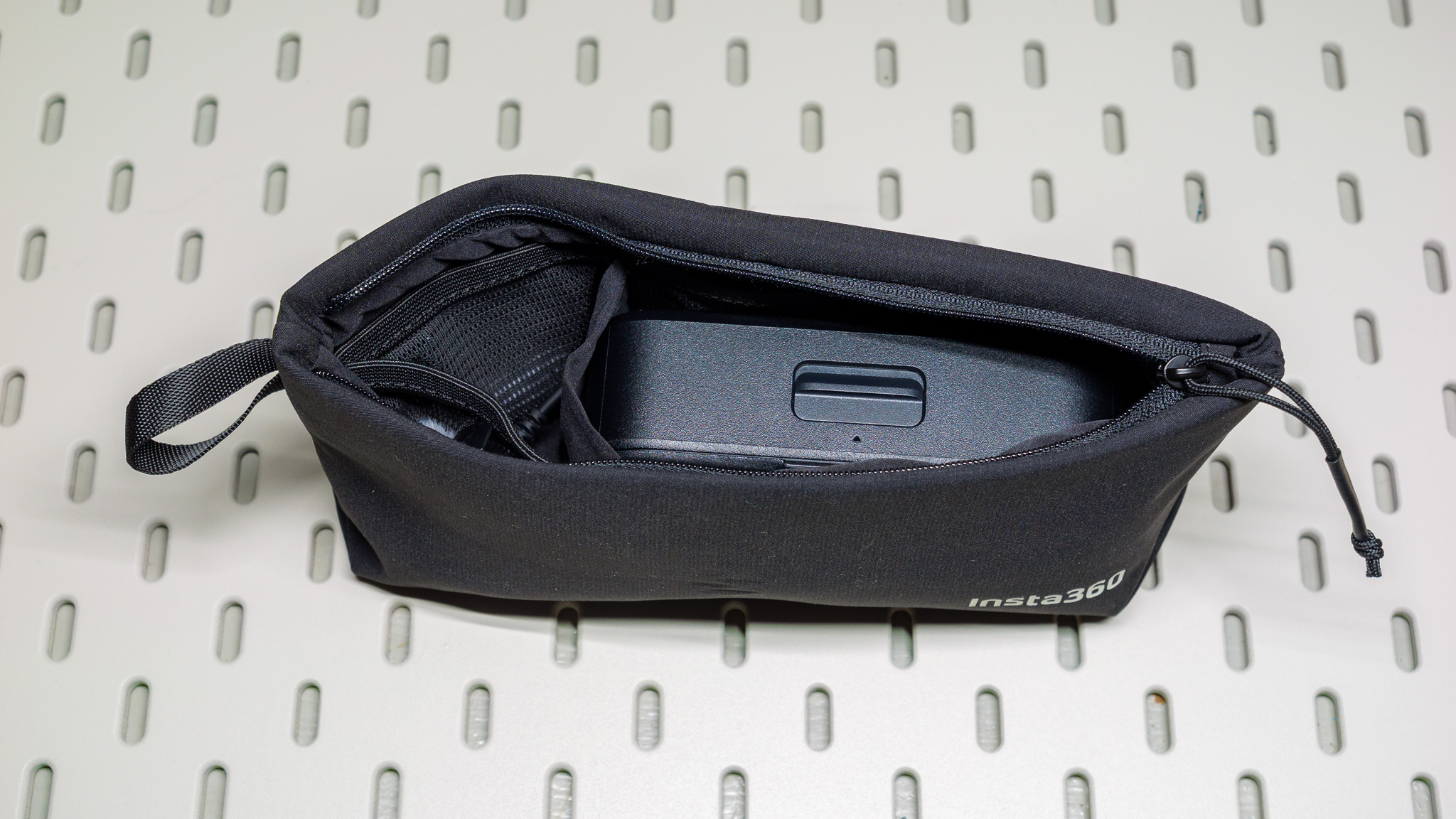
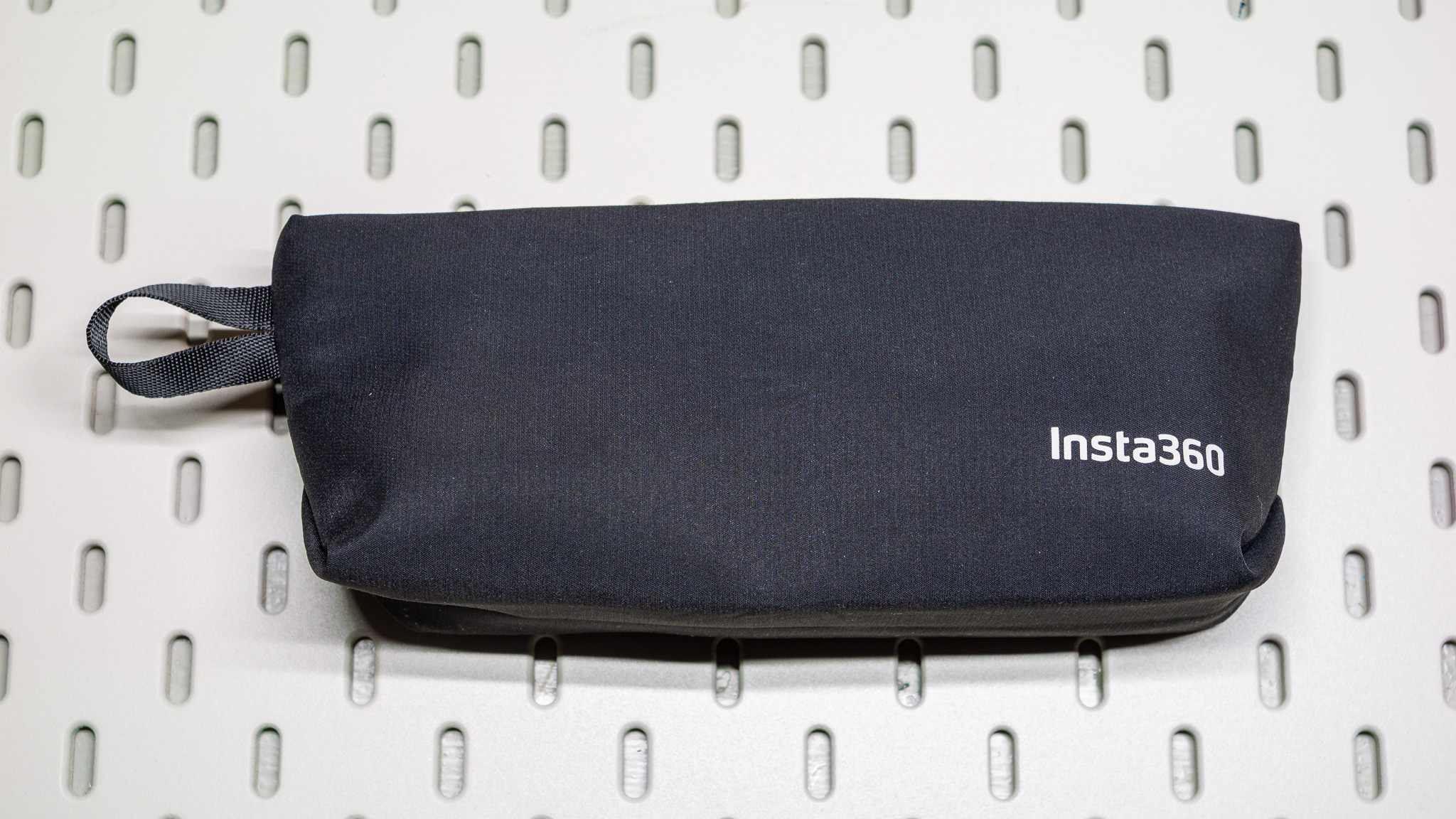
There are two other niggles worth mentioning. First, there’s no dedicated space in the charging case for the 3.5mm audio cable — a small but irritating omission. Second, the Mic Pro’s included windshields don’t fit inside the charging case either, which means they (like the audio cable) will need to go in the carrying pouch instead. DJI’s windshields fit neatly inside the Mic 3 and Mic Mini 2 cases, which is a design touch that makes a difference if you’re packing light.
On the subject of what’s in the box: as mentioned, a soft zip-up carry pouch is included, big enough to fit the charging case plus cables and windshields. It’s a welcome inclusion. Less welcome, for those like myself using older iPhones, is the absence of a Lightning adapter as standard — though with Apple’s transition to USB-C, it’s hard to be too surprised that Insta360 has made the Lightning plug an optional extra.
Insta360 Mic Pro: Performance
- 10 hours battery life (transmitter), 11 hours battery life (receiver)
- Up to 400m range
- Superb two-level noise reduction
The Mic Pro’s audio quality is superb. Recordings are clean and clear, with a 48kHz sampling frequency and 24-bit wireless transmission that’s standard for the class. 32-bit float recording is also supported but as always with these kind of mics, it applies only to internal onboard recordings, not to the live wireless signal.
That said, those internal recordings — stored on the transmitter’s 32GB onboard memory — could come in very useful for demanding content creators. 32-bit float means you can recover audio from unexpectedly loud events in post without clipping or distortion, and the available recording durations are generous: up to 44.8 hours of 32-bit mono, or 22.2 hours of 32-bit stereo. The stereo internal recording capability (available due to the transmitter’s three-mic array) is also a nice touch for recording ambient soundscapes and ASMR-style captures, and unique to the Mic Pro in this category.
The four selectable polar patterns — omnidirectional, super-directional, cardioid and figure-8 — are generated by combining the inputs from three microphone capsules using DSP rather than using discrete capsules for each mode, and I found the results to be good but not transformative. The differences between modes are audible, but in most recording scenarios omnidirectional will serve you perfectly well. Where pattern selection becomes most valuable is in cold shoe mounting: in super-directional or cardioid mode, the Mic Pro functions as a credible on-camera directional mic, giving you a single piece of hardware that covers both lavalier and shotgun mic duties. It could be very handy for solo creators looking to reduce the amount of kit they have to carry around.
The noise cancellation is where the Mic Pro most clearly distinguishes itself from the competition on audio quality, however. The system offers two levels — Weak and Strong — driven by an onboard NPU. In my testing with a fan running continuously in my office, the Strong setting completely eliminated the noise, with no audible trace remaining in the recording. I tested the DJI Mic 3 in the same conditions and found it less effective; the Mic Pro’s Strong mode outperformed it clearly. Weak mode also did a solid job, which is important because there are real-world situations in which Strong mode can’t be activated (such as when you’re recording without a receiver).
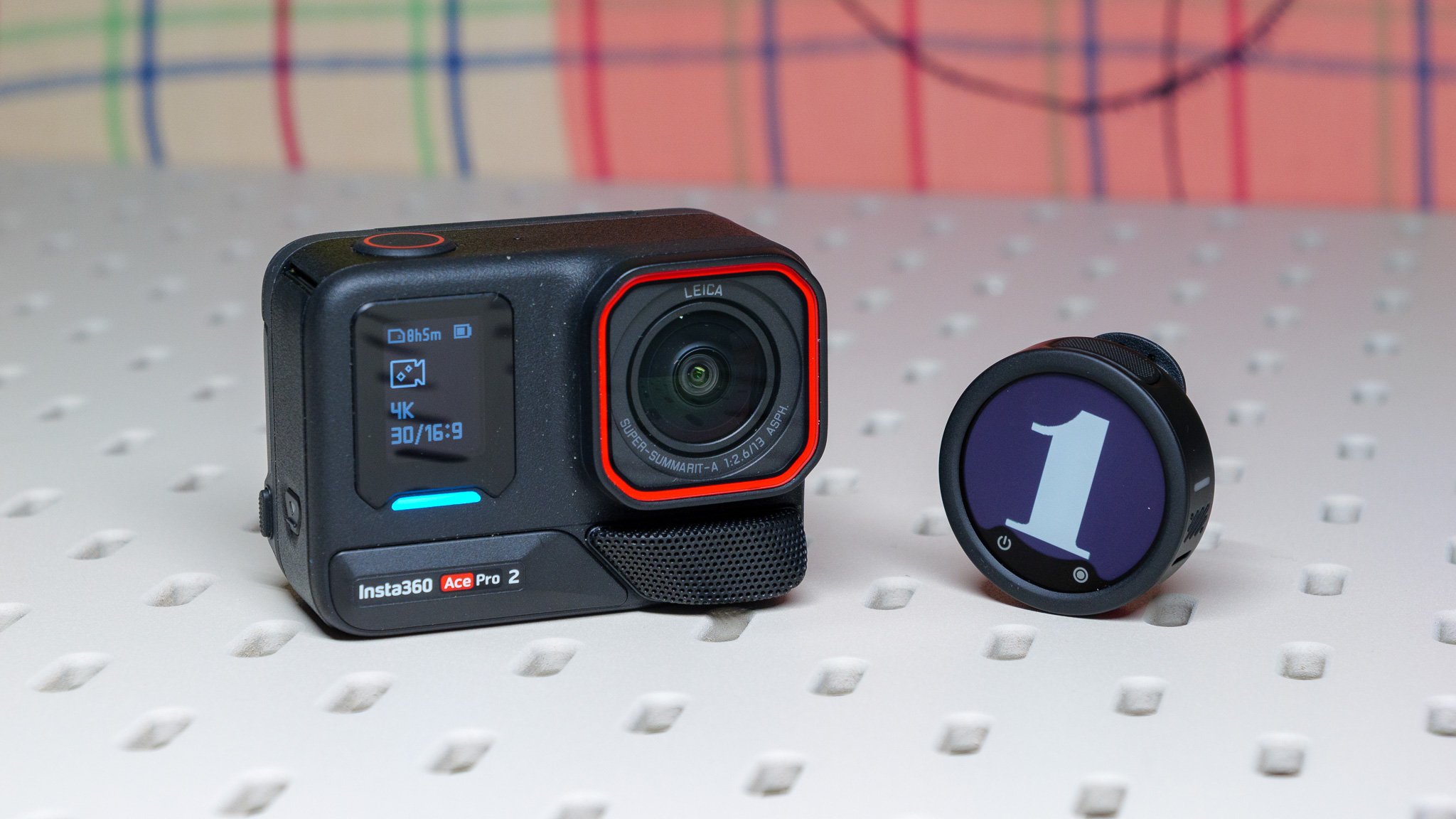
The Mic Pro can pair directly with Insta360 cameras including the X5, X4 Air, Ace Pro 2 and Go Ultra via Bluetooth, delivering 48kHz audio without a receiver. In theory, it’s a good way to cut down on complexity for anyone who owns a recent Insta360 camera. In practice, however, I found that when testing with an Ace Pro 2, I couldn’t access noise cancellation or adjust the Mic Pro’s settings (apart from gain) through the camera menu. It’s possible this will be addressed through firmware updates but at the time of writing, DJI’s OsmoAudio ecosystem integration feels considerably more complete and polished.
The maximum range from transmitter to receiver is quoted at 400m in open conditions, matching the DJI Mic 3, and the battery life of 10 hours for the transmitter and 11 hours for the receiver should see through a full shooting day with ease. A five-minute fast charge delivers 1.5 hours of additional use, too.
Should I buy the Insta360 Mic Pro?
Buy it if…
You need the best noise cancellation available
The Mic Pro’s Strong noise cancelling outperforms the DJI Mic 3 by a clear margin. If clean audio in noisy environments is your priority, this is the wireless mic to beat.
You want one mic that covers both lavalier and on-camera duties
The ability to mount the Mic Pro on a cold shoe and switch to a directional polar pattern gives it a multi-role capability DJI can’t match.
Don’t buy it if…
You’re not sure you’ll use the headline features
If you don’t need the E-ink display or polar patterns, the DJI Mic 3 offers comparable core performance at a similar price — and its ecosystem is more mature too.
Your windshields need to live in the charging case
A small but real inconvenience: the Mic Pro’s windshields don’t fit in the charging case, unlike DJI’s equivalents.
Insta360 Mic Pro: also consider
DJI Mic 3
Still the benchmark compact wireless mic for most creators, the Mic 3 offers comparable audio quality, 32-bit float internal recording and a more mature wireless ecosystem. At a similar price to the Mic Pro’s 2 TX + 1 RX kit, it’s the natural alternative if the Insta360’s headline features don’t appeal.
Read our DJI Mic 3 review
DJI Mic Mini 2
If you don’t need 32-bit float, multi-pattern recording or on-camera mounting, the Mic Mini 2 is a far more affordable entry point into quality wireless audio. At £89 / $199 for the full kit, it’s exceptional value.
Read our DJI Mic Mini 2 review
How I tested the Insta360 Mic Pro
- One week of testing indoors and outdoors
- Connected to Panasonic Lumix GH6 and Insta360 Ace Pro 2
- Tested indoors and outdoors
I’ve had plenty of time to test the Mic Pro in a range of scenarios and configurations: indoors and outdoors, in noisy and quiet environments and paired with the Panasonic Lumix GH6 mirrorless camera and the Insta360 Ace Pro 2 action camera. I’ve been able to test it clipped it to my clothes as well as mounted on the GH6 like a shotgun mic, and I was also able to compare its performance and noise cancelling capabilities directly with those of the DJI Mic 3.
- First reviewed: May 2026
- Read more about how we test
“}]]
 The Insta360 Mic Pro beats the DJI Mic 3 at noise cancelling, and has a couple of unique tricks up its sleeve to boot. Read More Latest from TechRadar US in Reviews