
[[{“value”:”
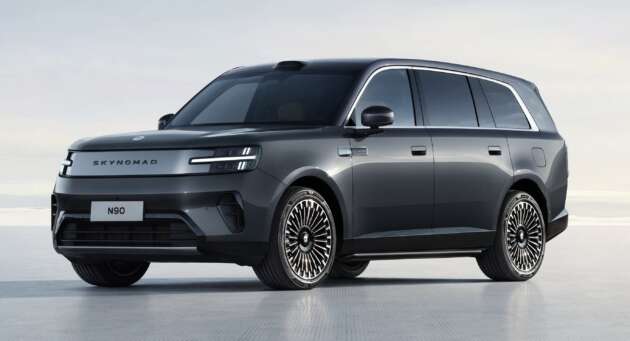
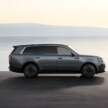
This is the Xiaomi SkyNomad N90. The first model in the series – previously known by the internal codename Kunlun N3, and now officially confirmed as the N90 – marks a significant departure for Xiaomi in two ways.
First, the design: where the SU7 and YU7 wear sleek, curvaceous sheet metal, the newly-released side profile shows a decidedly rugged, boxy silhouette with an all-new front-end treatment, plus a roof-mounted LiDAR unit visible in earlier spy shots.
Second, and more fundamentally, this is Xiaomi’s first vehicle that isn’t a pure EV. The N90 is an extended-range electric vehicle (EREV), pairing a 1.5 litre turbocharged petrol engine – which acts purely as a generator and never drives the wheels – with a large battery pack.
Earlier reports pointed to a capacity in excess of 70 kWh – larger than the 62.5 kWh pack in the base Tesla Model Y sold in China – with a claimed 400 to 500 km of electric-only running and a combined range of over 1,500 km. Sunwoda and CALB will reportedly supply the batteries on a 60/40 split.
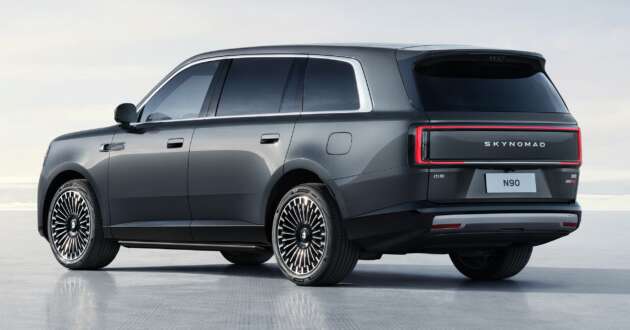
China’s ministry of industry and information technology (MIIT) – which approved Xiaomi to build EREVs at its Beijing plant on June 10 – published its latest new vehicle catalogue on July 10, and it lists not one but four SkyNomad variants: the N90 Max, N90 Max Camping Edition, and a smaller model called the N70, in standard and Max forms.
According to the filing, the N90 Max measures 5,285 mm long, 1,998 mm wide and 1,825 mm tall, with a 3,080 mm wheelbase and a 2,800 kg kerb weight, and will be offered in five- and seven-seat configurations. All four variants share the same range extender – a Dongan-built M15DRE 1.5 litre turbo four rated at 112 kW – and a 190 km/h top speed.
The N90 Max pairs a CALB ternary lithium battery with dual motors producing 210 kW at the rear and 100 kW up front. The Camping Edition – a five-seater classified as a “cultural life service vehicle” – stands 100 mm taller at 1,925 mm thanks to a pop-up roof with a roof-mounted bed board, and adds side cabinets, tent attachment points and an optional in-car projection kit and detachable table from the factory. The pop-up roof is only permitted for use while parked on non-public roads.
The N70, meanwhile, is a five-seater measuring 4,960 mm long, 1,998 mm wide and 1,785 mm tall with a 2,950 mm wheelbase – think Li Auto L6/L7 territory. The base version uses a Sunwoda LFP battery with a single 210 kW rear motor, while the N70 Max steps up to CALB ternary cells and the same 210 kW/100 kW dual-motor setup as the N90 Max.
Chinese media reports citing the filing indicate 52 kWh and 76 kWh battery options for the N70, good for a CLTC-rated EV range of up to around 380 km. A third model, a large five-seater tentatively dubbed the N80, has also been rumoured but does not appear in this filing.

| Specification | N90 Max | N90 Max Camping | N70 | N70 Max |
|---|---|---|---|---|
| Length | 5,285 mm | 5,285 mm | 4,960 mm | 4,960 mm |
| Height | 1,825 mm | 1,925 mm | 1,785 mm | 1,785 mm |
| Wheelbase | 3,080 mm | 3,080 mm | 2,950 mm | 2,950 mm |
| Kerb weight | 2,800 kg | 2,840 kg | TBC | TBC |
| Seats | 5 or 7 | 5 | 5 | 5 |
| Battery | CALB ternary | CALB ternary | Sunwoda LFP | CALB ternary |
| Motors | 210 kW rear + 100 kW front | 210 kW rear + 100 kW front | 210 kW rear | 210 kW rear + 100 kW front |
| Range extender | 1.5T generator, 112 kW | 1.5T generator, 112 kW | 1.5T generator, 112 kW | 1.5T generator, 112 kW |
| Top speed | 190 km/h | 190 km/h | 190 km/h | 190 km/h |
| Extras | – | Pop-up roof, bed board, cabinets, tent points | – | – |
The N90 sits squarely in the same class as the Li Auto L9 and Aito M9 – the two models whose makers accounted for seven of China’s top 10 best-selling extended-range SUVs in 2025.
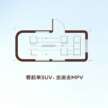
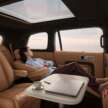
The headline act, however, is the interior. Xiaomi says the SkyNomad has been developed over three and a half years on an all-new platform called the Kunlun Architecture, built from the ground up starting in early 2023 specifically to enable a reconfigurable cabin. The flat floor and long-rail seating system allow the interior to be rearranged on the fly – the front seats can rotate to face rearwards, and a small floor-standing table can be deployed between the first and second rows to create a living room-style layout.

Xiaomi’s pitch is that when parked, the cabin can transform into a studio for one, a cafe for two, a meeting room for three, or a play area for the whole family – with teasers hinting at amenities such as a television, a games console and a coffee table. The seven-seater version is even said to feature a built-in rooftop tent, a clear nod to China’s booming outdoor camping trend. Lei said achieving this required the combination of AI, Xiaomi’s smart-device ecosystem and its manufacturing capabilities working together.
Pricing is expected to start from as low as 200,000 yuan (approximately RM118,300), which would undercut both the Li Auto L9 and Aito M9, priced from above 250,000 yuan (RM147,900) in China. Reservation inquiries for the N90 opened on Thursday, and Chinese media reports suggest a technology launch event at the end of July, with the market launch targeted for mid-to-late August – reportedly with over 10,000 units built and ready for immediate delivery.
The SkyNomad series is central to Xiaomi’s plan to deliver 550,000 vehicles this year, up around 34% from the roughly 410,000 units it managed in 2025. The company delivered 185,055 vehicles in the first half of 2026 – about a third of its annual target – meaning the new SUVs will need to do some heavy lifting in H2.
No word, of course, on any market beyond China for now – Xiaomi’s official global expansion for its EVs is only slated to begin in 2027. But with EREVs eligible under Malaysia’s current tax structure as hybrids rather than CBU EVs, and Chinese brands moving aggressively into the local market, this is one worth keeping an eye on.
What do you think of the Xiaomi SkyNomad and its transformable cabin concept – clever packaging or a gimmick? Share your thoughts in the comments.









The post Xiaomi SkyNomad revealed – N90 and N70 EREV SUVs with transformable cabins, priced from RM118k? appeared first on Paul Tan’s Automotive News.
“}]]
[[{“value”:”This is the Xiaomi SkyNomad N90. The first model in the series – previously known by the internal codename Kunlun N3, and now officially confirmed as the N90 – marks a significant departure for Xiaomi
The post Xiaomi SkyNomad revealed – N90 and N70 EREV SUVs with transformable cabins, priced from RM118k? appeared first on Paul Tan’s Automotive News.”}]] Read More Paul Tan’s Automotive News