
[[{“value”:”
Microsoft has extended Windows 10 support until October 2027, but it’s not out of kindness. New data suggests that customers are still rejecting Windows 11, even as the original extended support deadline approaches. According to HP, three in ten customers still use Windows 10, and that number remains significant.
Microsoft never discloses the market share of Windows or individual Windows versions, so you can’t say with 100% confidence how many people still use Windows 10.
There are third-party trackers, but they do not tell you the full picture. StatCounter is not always accurate, while Steam’s survey covers only gamers who choose to share their data.
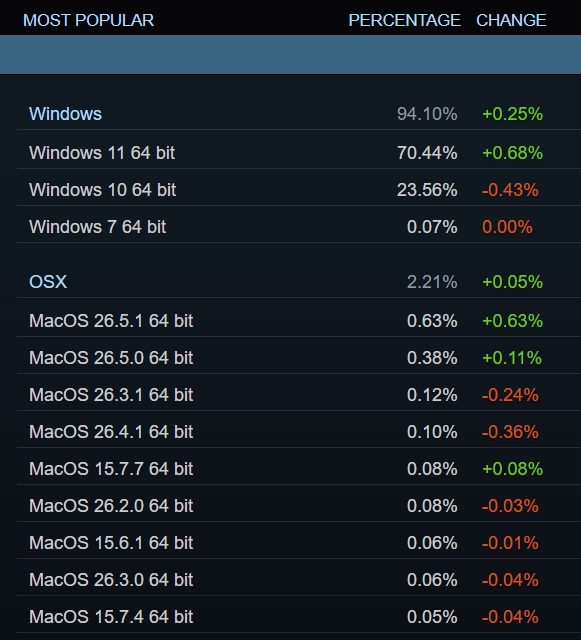
I wouldn’t take either figure at face value, but HP’s data is probably the closest we have to reality.
Karen L. Parkhill, Executive Vice President and Chief Financial Officer at HP, discussed the progress of Windows 11 while speaking to investors during the last week of May 2026. I spotted the following comment while digging through earnings calls from major PC manufacturers:
“We did see good growth in both EMEA and APJ this quarter. And some of that was driven by the expected tailwinds from Win 11. And I would say, at this point, we have roughly 30% of the installed base still on Windows 10,” Parkhill said.
HP says the Windows 11 refresh cycle has not slowed and is still driving PC sales in Asia and Europe.
HP is still seeing growth due to Windows 11
According to HP, growth is being driven by the Windows refresh and AI PC transition, with the company recording “double-digit growth” in “both consumer and commercial” Personal Systems.
“The Win 11 refresh that we’ve driven now in EMEA and APJ is now on par with North America,” Parkhill added.
HP expects its sales to improve because approximately 30% of the installed base still needs to be refreshed. This suggests that a significant number of PCs are still using Windows 10 and have not moved to Windows 11.
“One, still Windows 11, 30% of the installed base is still to be refreshed. So, that’s one tailwind, which we see as an opportunity in the short run,” Ketan Patel, President of HP’s Personal Systems business, said.
“But in both the short run and long run, as a lot of customers are moving workloads to the edge with the rising cost of accessing AI, that’s a great opportunity,” Patel added.
HP also made an interesting argument that Windows 11 growth was initially slow in Europe and Asia Pacific, but it now appears to be picking up. The company says demand for AI PCs and premium PCs is increasing.
“Across the three geographies, you see structural demand coming on AI PCs and premium PCs, largely because of the AI at the edge opportunity, which I called out before, and that remains strong even for Q3 and Q4,” Patel noted.
Windows 10 is now supported until October 2027, and I wouldn’t be surprised if it gets another extension
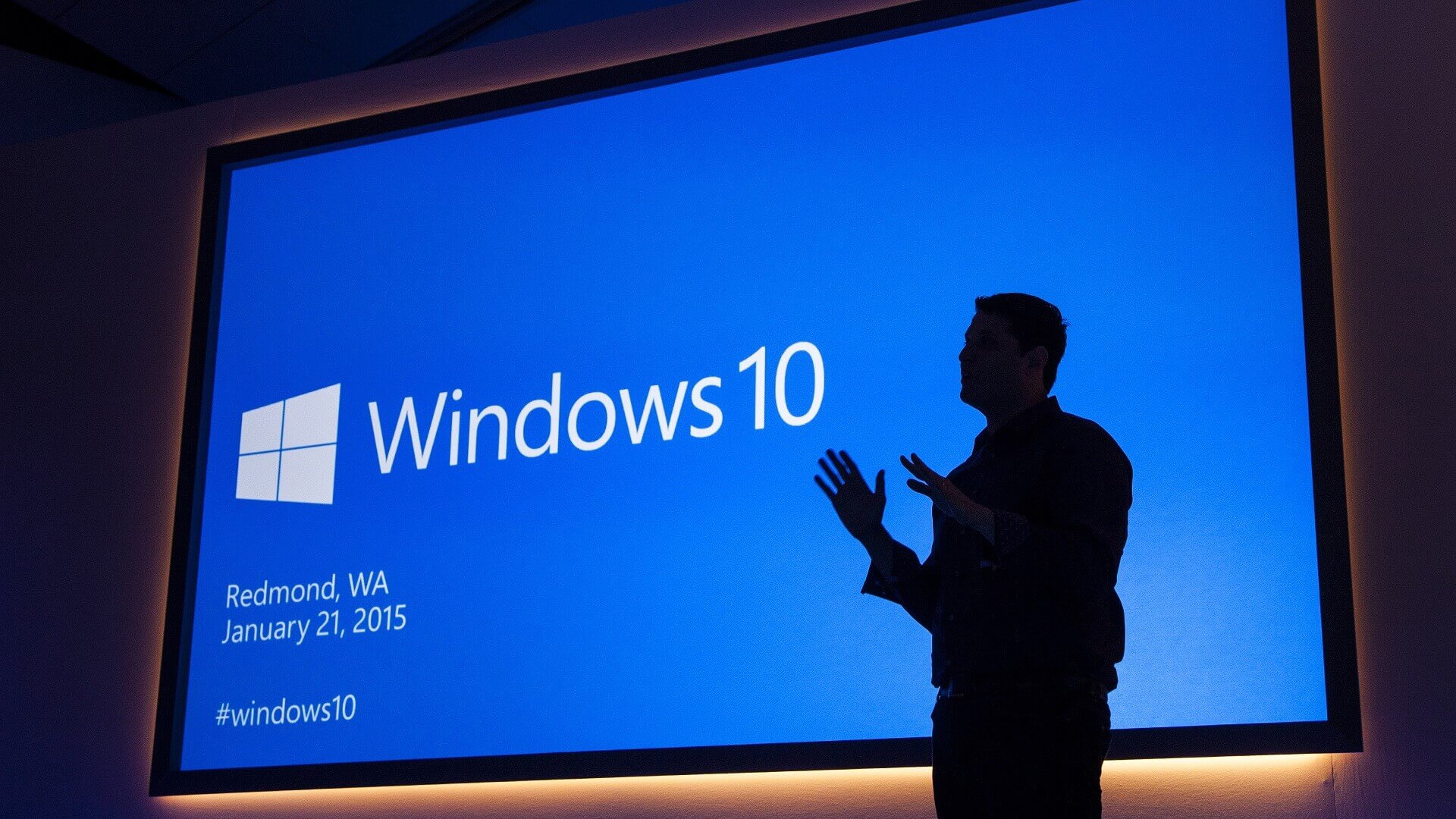
Windows 10 was originally released on July 29, 2015, and mainstream support ended on October 14, 2025. Microsoft later accepted that many consumers and enterprises were refusing to upgrade to Windows 11. As a result, support was extended for everyone until October 2026.
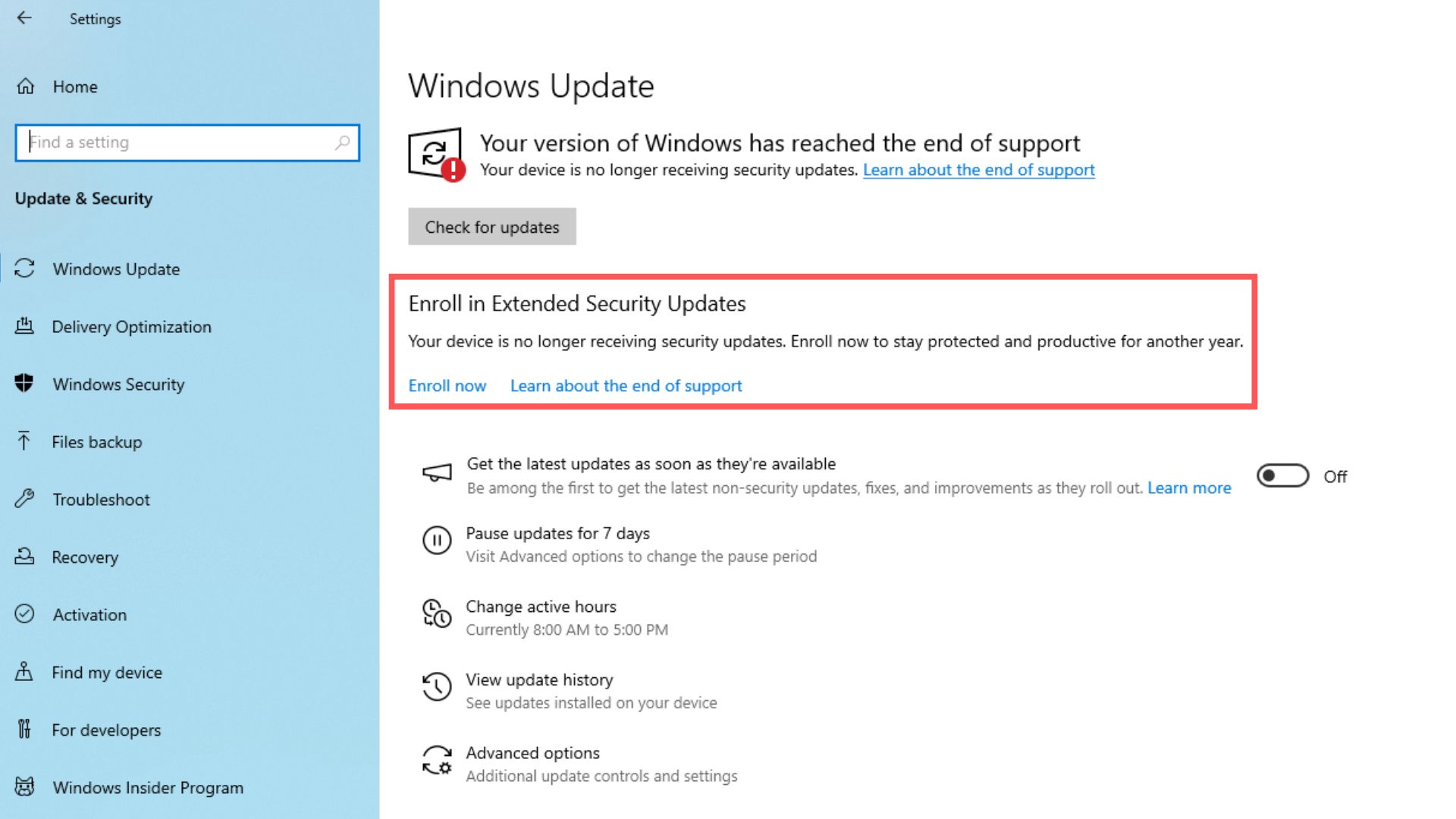
While enterprises need to pay and can receive support for up to three years, consumers were originally supposed to get only one year. That meant extended support was due to end in October 2026, approximately two months from today.
In a move that nobody expected, Microsoft confirmed that it is extending Windows 10 support for another year, which means support now ends on October 12, 2027.
“Windows 10 support has ended. You can enroll in ESU any time until the programme ends on 12 October, 2027,” Microsoft noted in a support document. “If you’re already enrolled, your coverage will automatically continue through that date—no action needed.”
In a statement, Microsoft later told us that it is extending support to help consumers transition to Windows 11 PCs, but it did not clarify whether October 2027 is the final cutoff date.
“This extension provides customers with more time to transition to a new Windows 11 PC while continuing to receive critical security updates,” Microsoft said.
Another year of monthly security updates is still a great deal for the millions of PCs running Windows 10, and Windows Latest found that the extension has already been applied to existing hardware.
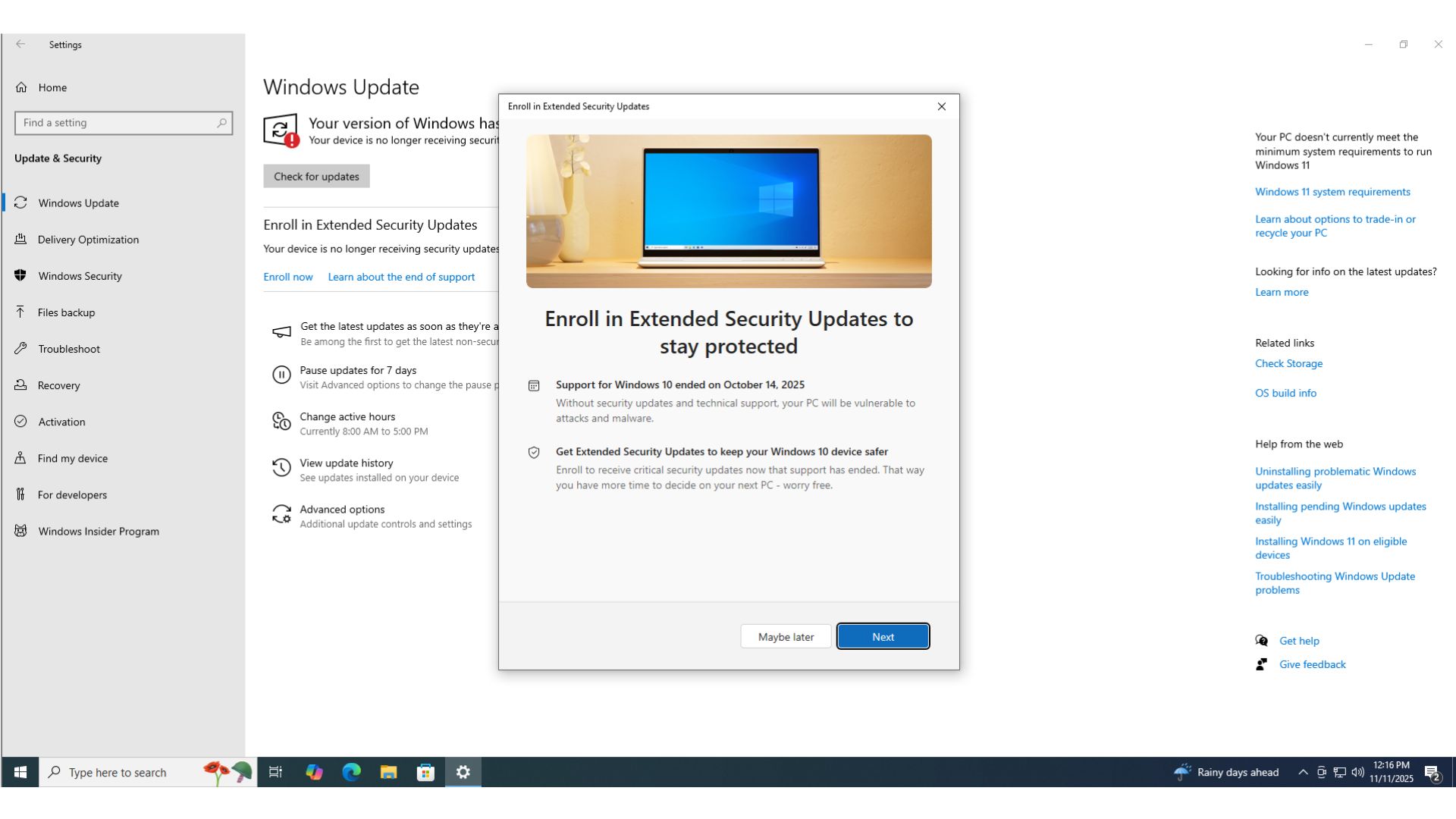
At this point, it is clear that Microsoft did not expect most of the remaining Windows 10 users to upgrade before October 2026, which likely explains why it decided to extend support again. HP’s data also supports this.
This time, the extra year could actually give Windows 11 enough time to win over more holdouts.
Windows 11 has been on the back burner, but that’s no longer the case. Microsoft’s leadership has confirmed that it will focus on the fundamentals, with CEO Satya Nadella stating during an earnings call that the company wants to win back Windows “fans.” It was a rare acknowledgment from Microsoft.
What about you? Are you still on Windows 10 or have you moved to Windows 11? Let me know in the comments below.
The post HP admits 30% of PCs still run Windows 10, rejecting Windows 11, and it’s why Microsoft caved on support appeared first on Windows Latest
“}]]
[[{“value”:”New data suggests that customers are still rejecting Windows 11, even as the original extended support deadline approaches.
The post HP admits 30% of PCs still run Windows 10, rejecting Windows 11, and it’s why Microsoft caved on support appeared first on Windows Latest”}]] Read More Windows Latest