I tested the DJI Osmo Pocket 4P for a whole month — here’s why adding a second portrait lens to a vlogging camera is as big of a game changer as it was for phones
Share

[[{“value”:”

DJI Osmo Pocket 4P: One-minute review

The Pocket 4P marks a big moment in DJI’s hugely popular series of compact vlogging cameras, being the first model with two lenses, even if Insta360 stole its thunder with the Luna Ultra, which it released in June.

I’ve already reviewed the single-lens Pocket 4, and it’s a brilliant handheld 4K camera. The ‘P’ version is largely identical but for its dual-lens array and a ‘refined’ 1-inch sensor that’s equipped with LOFIC tech, plus a new D-Log 2 color profile.

For the most part, you can discover all you need to know about the Pocket 4P’s design and performance in my Pocket 4 review. In this write-up, I’ll focus on the new features of the bulkier model, and the real difference they make.

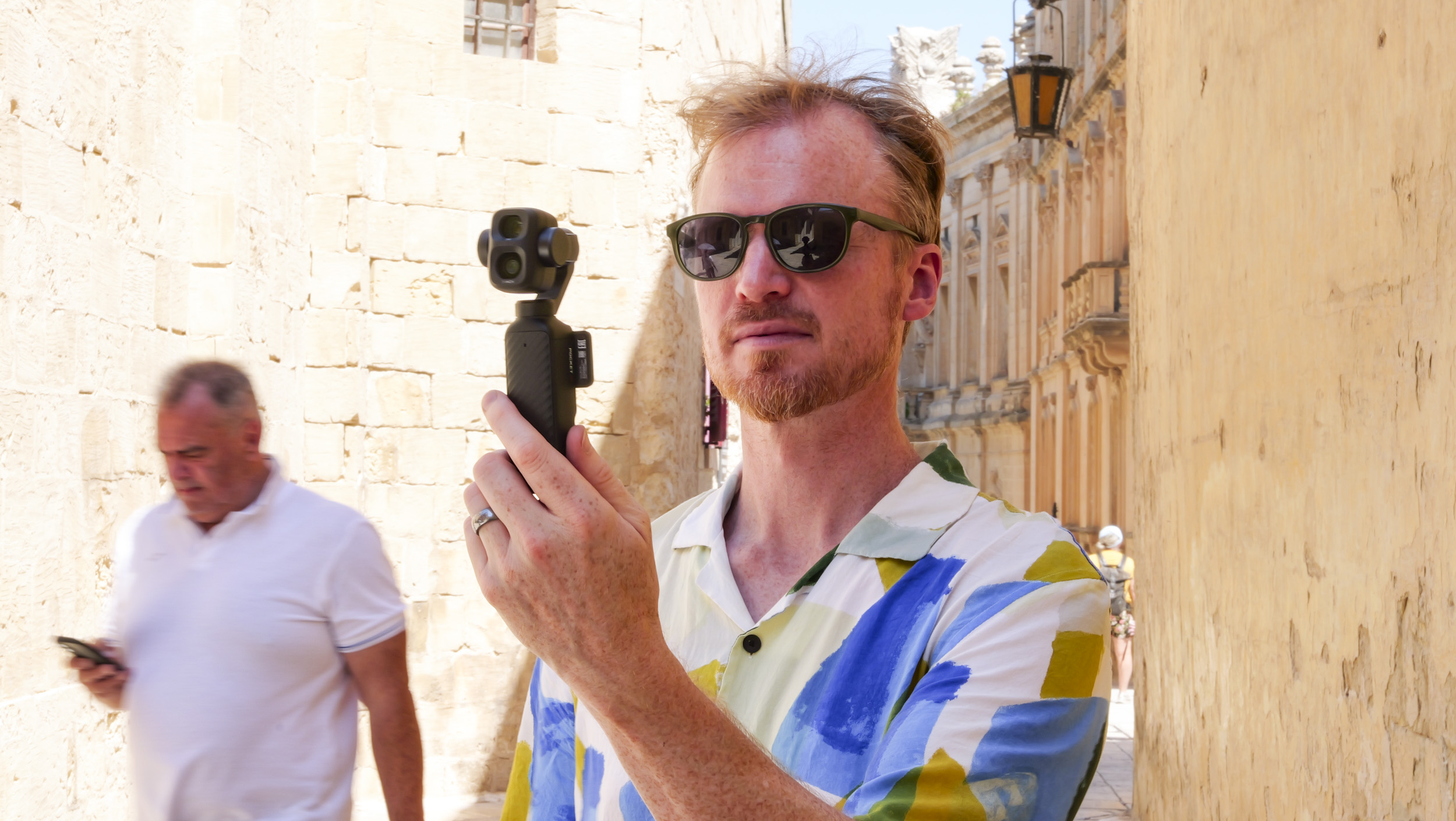
And I can say this right now: now that I’ve tried the Pocket 4P, it’ll be hard for me to return to single-lens models like the Pocket 4. That additional 3x telephoto lens unleashes a wide variety of shooting options to complement the highly capable ultra-wide main camera. On-the-go sequences with DJI’s superb subject tracking in play, for example, can be particularly dynamic. It really is like having two cameras in one tiny device.
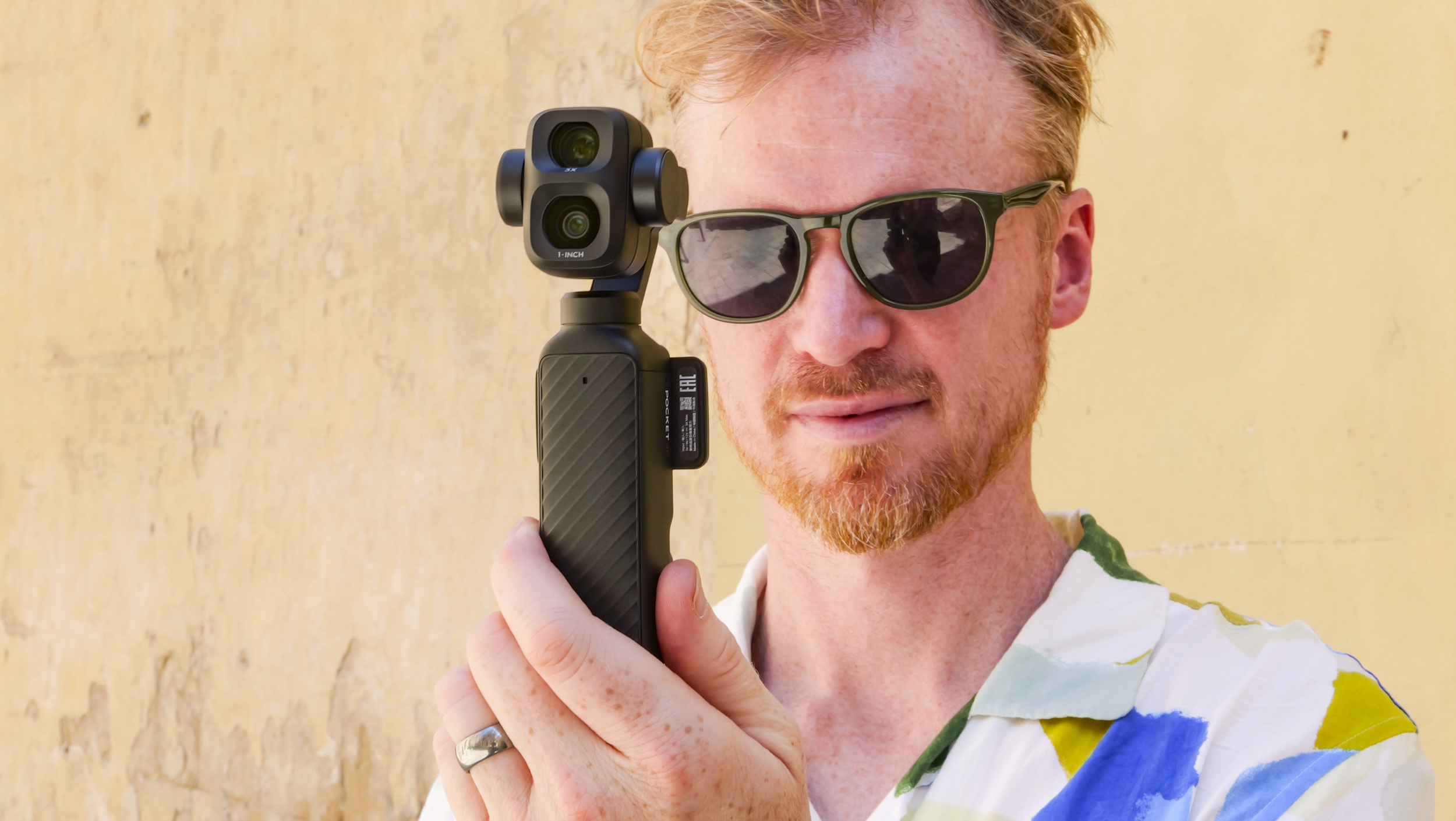
Man in bright summer shirt and shades, in an old town on a sunny day, holding the DJI Osmo Pocket 4P vlogging camera

Two lenses means twice the camera (Image credit: Tim Coleman)

That being said, there is an inevitable design compromise: twin lenses make for a bulkier camera unit, with inexplicably no protective housing currently available, and a top-heavy design. If you already own a Pocket, and are wondering if the new Pocket 4P is worth it, or if it’s worth jumping ship from DJI to the Insta360 Luna Ultra, check out my Pocket 4 vs Luna Ultra article.

For me, the first-generation Luna Ultra is a compelling alternative with its 8K video and detachable module, but I can also tell that the Pocket 4P is a fourth-generation product — it feels more polished overall. It has neat accessories of its own, too, such as the magnetic fill light and remote module. As such, DJI’s dual-lens Pocket 4P is now my top compact vlogging-camera pick.

DJI Osmo Pocket 4P: price and release date

  • Announced on May 14 2026 at Cannes Film Festival, available from July 30
  • Available in black or white versions, priced from £529 / AU$959. No US availability at launch
  • Variety of bundles available, including a Vlog Combo kit for £605 / AU$1,099
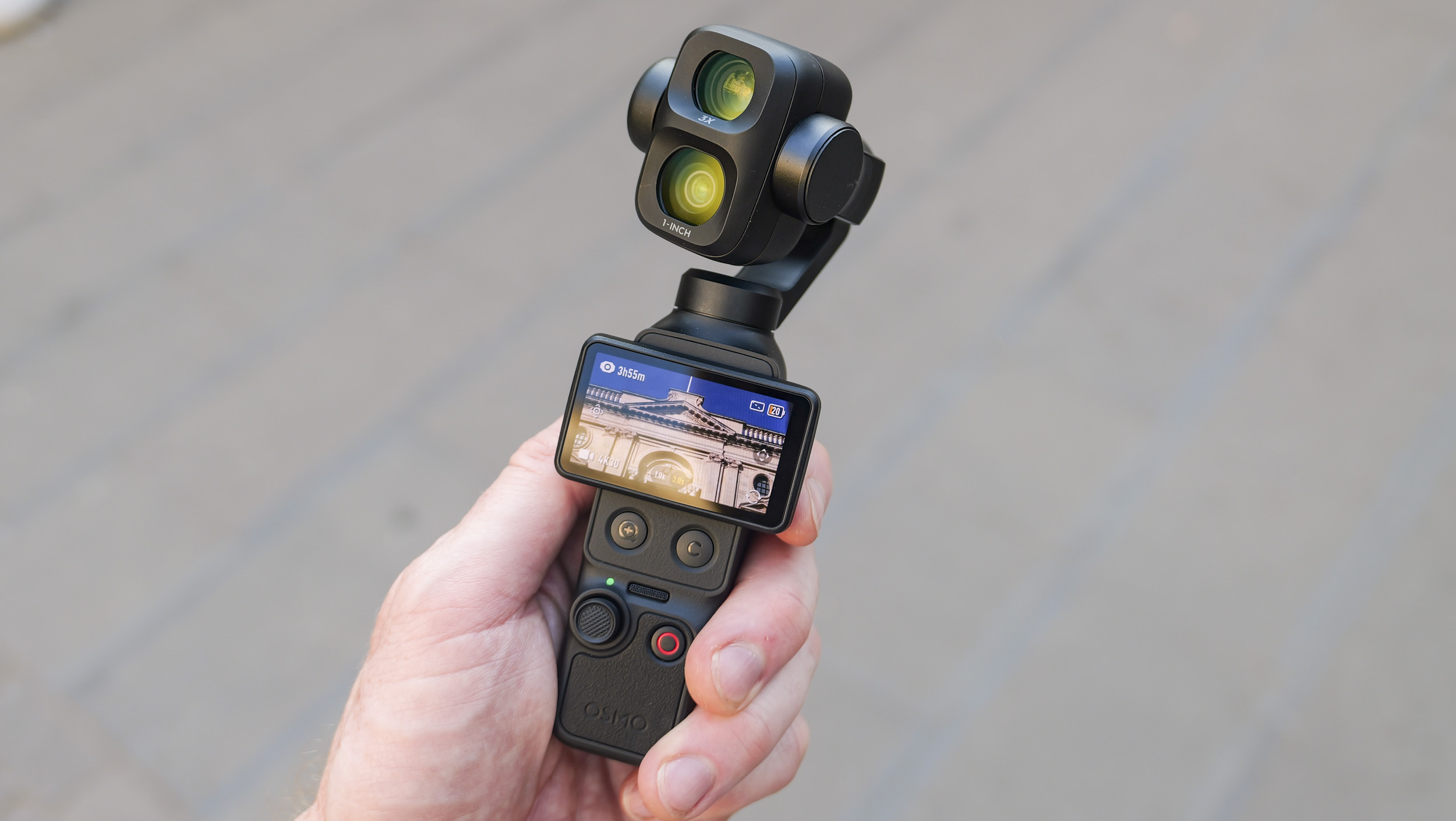
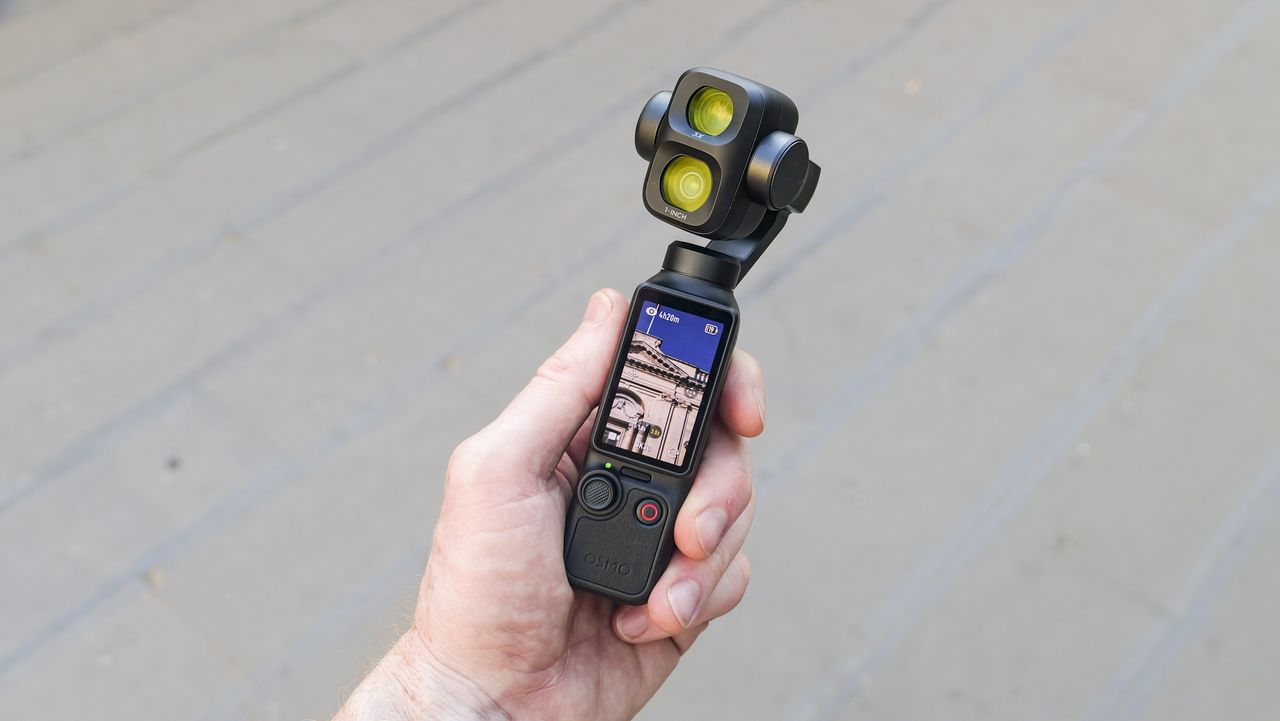
DJI Osmo Pocket 4P vlogging camera in a person's hand in a city street, screen rotated horizontal

With twin sensors / lenses, the Pocket 4P’s mark-up over the single-lens Pocket 4 is justified. The ‘P’ version is excellent value. (Image credit: Tim Coleman)

Despite essentially having no competition in markets such as drones and, previously, gimbal vlogging cameras, DJI has always priced its products competitively. It usually undercuts rivals where actual alternatives exist, too, such as GoPro and Insta360 action cameras.

Insta360 outright said it wasn’t going to compete on price, but rather on features when speaking about its Luna Ultra, and that has turned out to be the case. Where the Luna Ultra starts at $770 / £650 / AU$1,230, the Pocket 4P comes in at £529 / AU$959 — though it’s not available in the US at launch. Meanwhile, the single-lens Pocket 4 costs from £429 / AU$749.

Considering that the Pocket 4P has the extra camera with its own sensor, that price increase over the Pocket 4 feels completely justified, and in my book the Pocket 4P is excellent value, especially when you consider the quality of the 4K video footage it’s able to produce.

The Pocket 4P is available in Black or White versions, and there are bundles available. The Vlog Combo, for example, includes the DJI Mic 2 Mini wireless mic, remote controller, fill light, tripod stand and tripod grip, and costs £605 / AU$1,099 — that’s the bundle I’d go for.

  • Price score: 5/5

DJI Osmo Pocket 4P: specs

DJI Osmo Pocket 4P specs

Lens(es):

20mm f/2.0 (1-inch sensor), 60mm f/1.8 (1/1.28-inch sensor)

Video:

4K and 1080p up to 60fps, plus slow motion up to 240fps

Photo:

Up to 9.4MP in RAW & JPEG, up to 37MP in SuperPhoto mode

Storage:

107GB internal, microSD card slot

Battery:

1,545mAh, up to 3.5 hours Full HD record time

Charger type:

USB-C / optional fast PD charger

Weight:

8.1oz / 230g

Dimensions:

159.5 x 63.3 x 33.5mm (L x W x H)

DJI Osmo Pocket 4P: Design

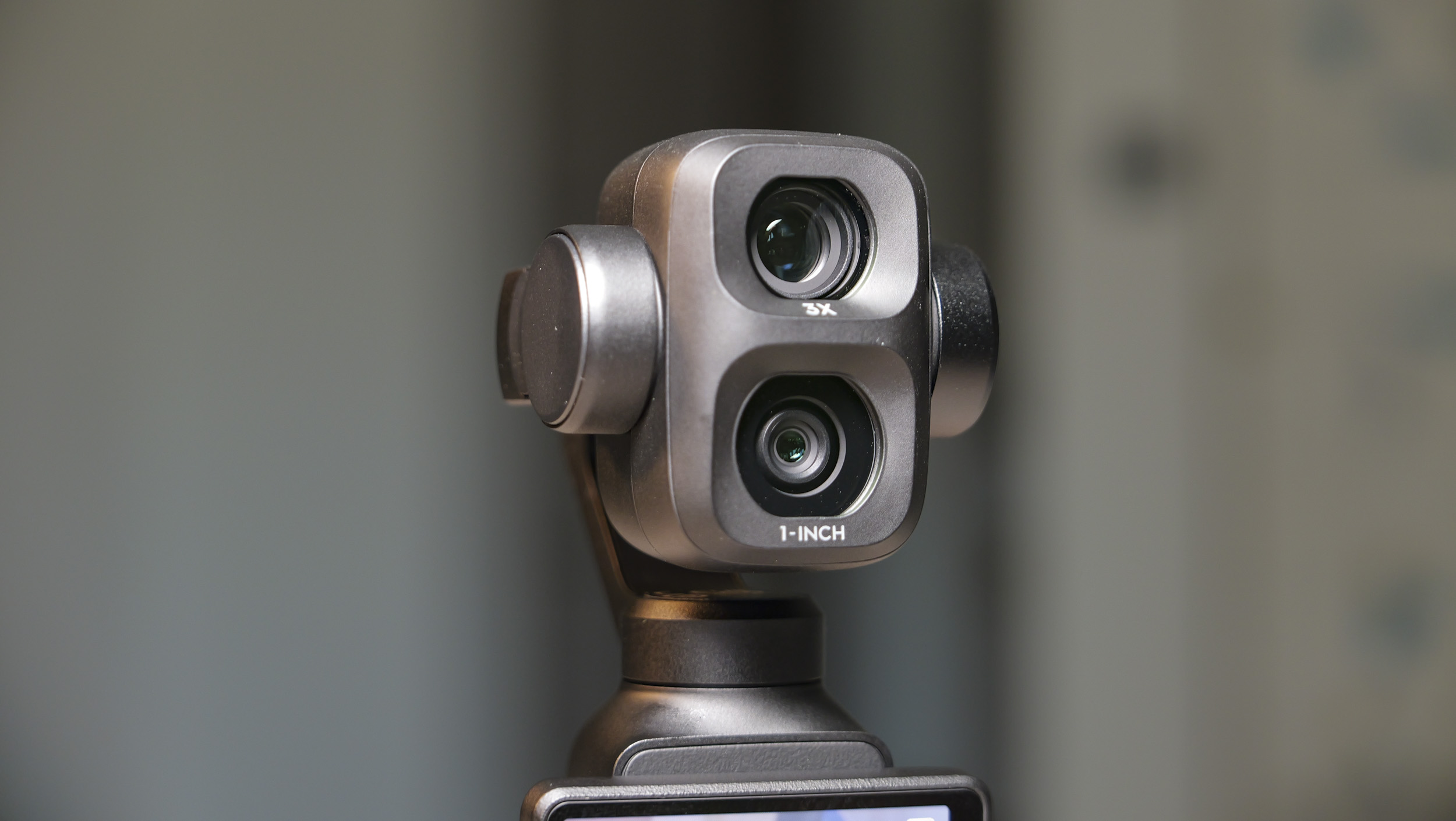
  • Dual 20mm f/2.0 and 60mm f/1.8 lenses
  • Otherwise the same design as the Pocket 4, with rotating screen and gimbal-mounted camera
  • USB-C charging and 107GB of internal storage in addition to micro SD
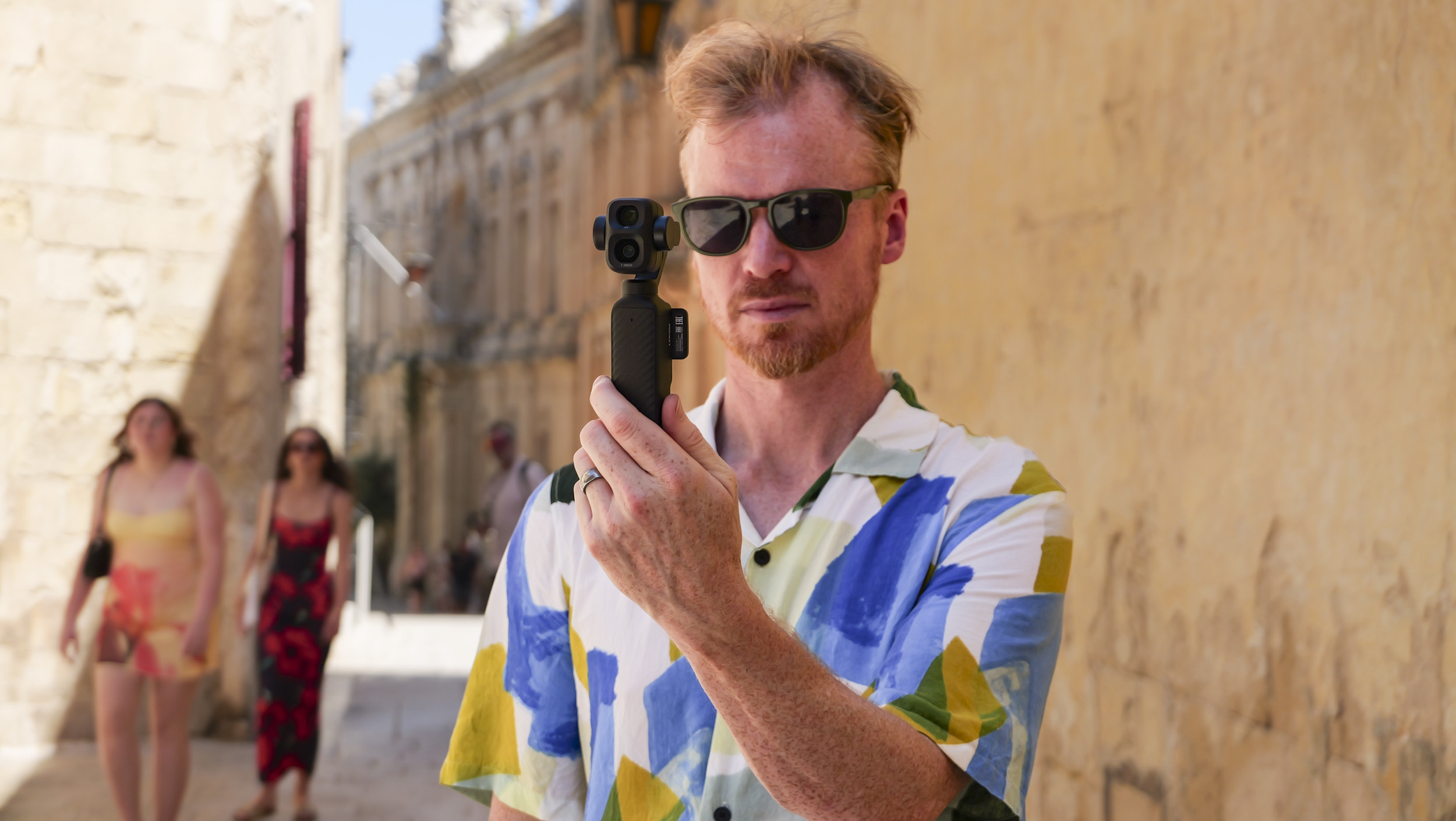
Man in bright summer short and shades, in an old town on a sunny day, holding the DJI Osmo Pocket 4P vlogging camera

(Image credit: Tim Coleman)

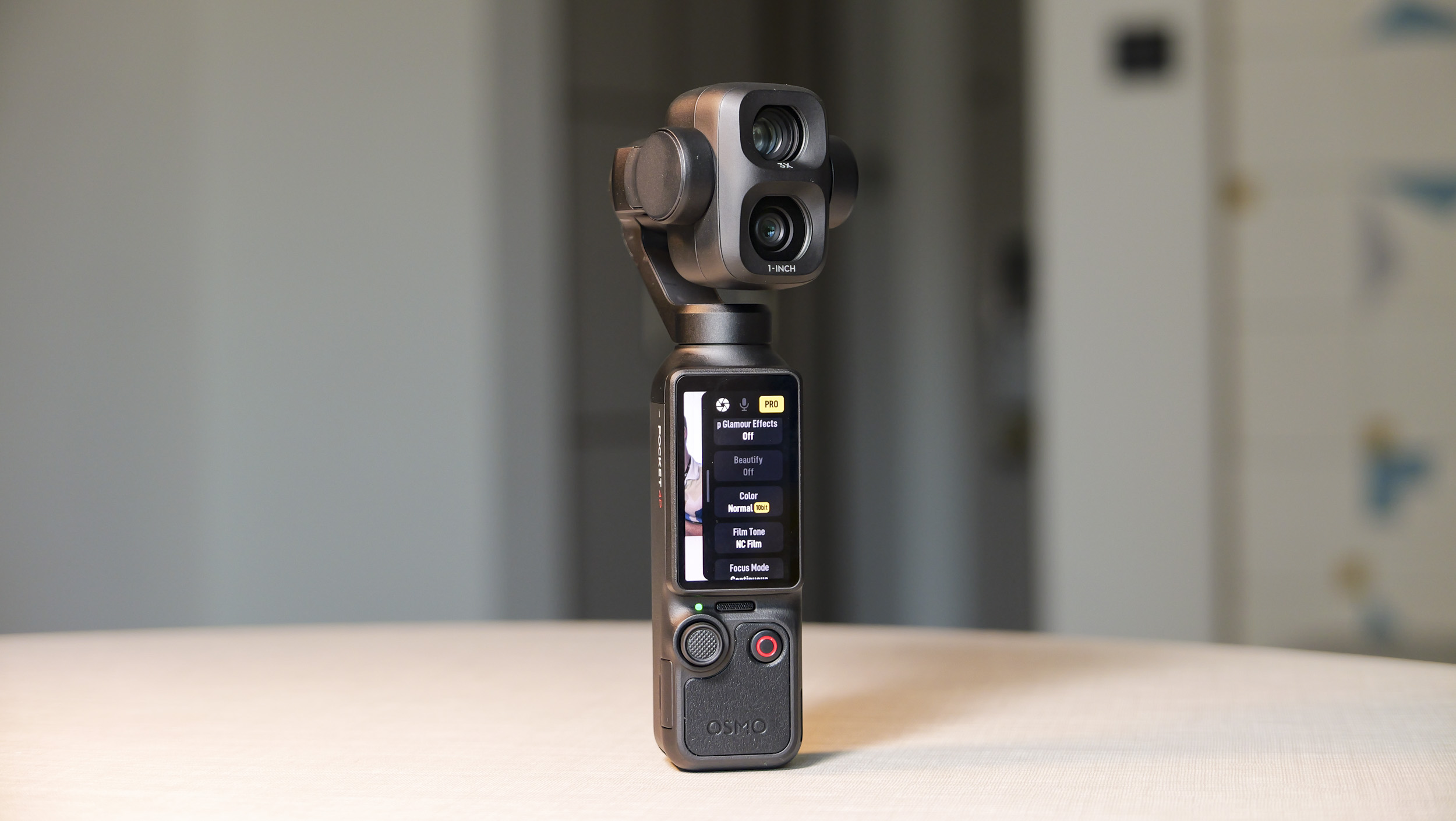
Save for the bulkier dual-camera system and a total weight of 8.1oz / 230g, the Pocket 4P’s design is identical to the Pocket 4; it’s extremely compact, features a 2-inch touchscreen which rotates 90 degrees between vertical and horizontal formats, and a customizable five-button array, with a joystick that controls gimbal movement or zoom.

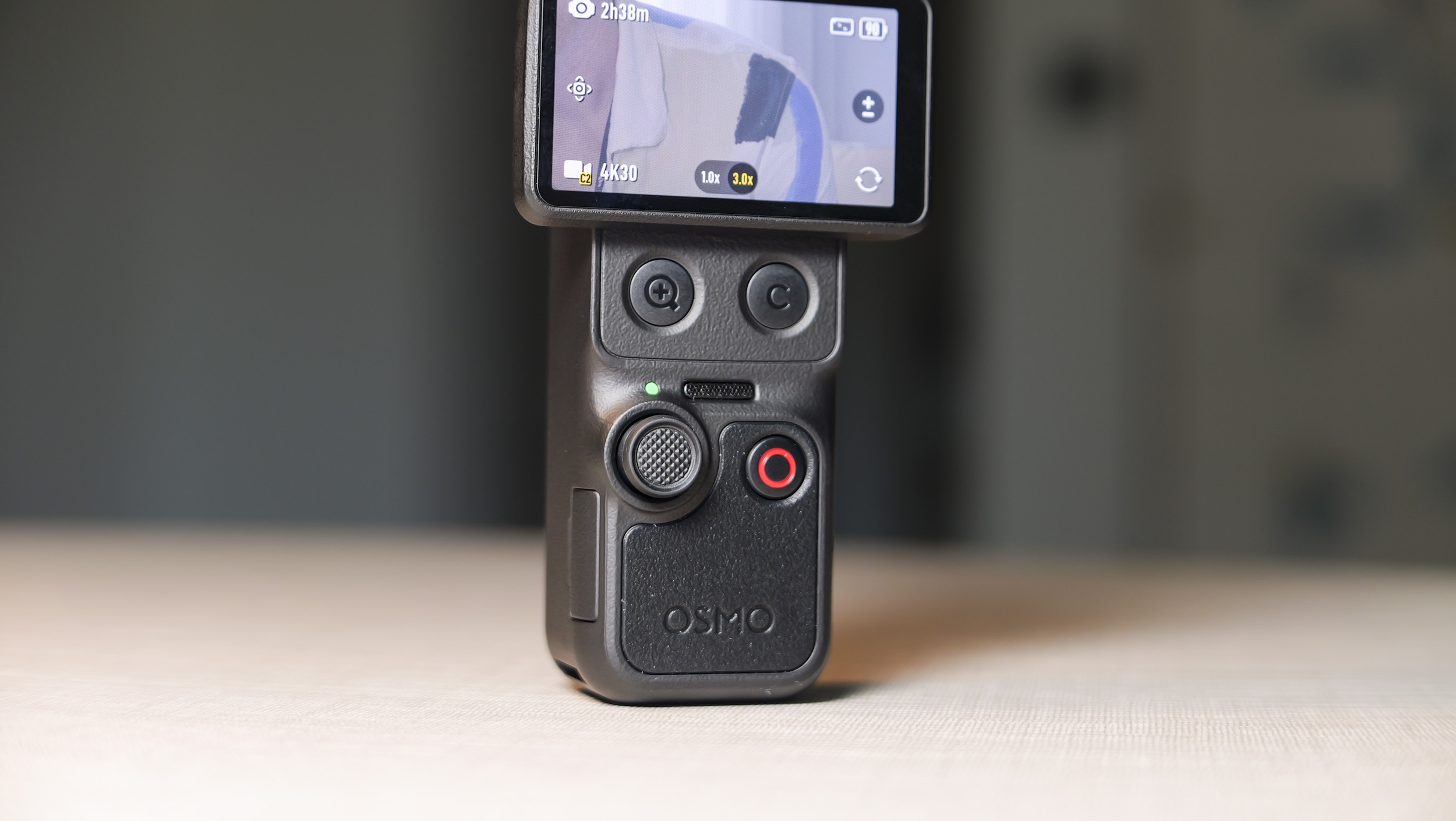
The extra two buttons, revealed when the screen is rotated to horizontal, help speed up access to various settings. For example, the C button can be assigned for direct access to two custom profiles — handy if you regularly switch between, say, color settings such as D-Log and shooting modes such as slow motion.

It certainly pays dividends to spend time customizing the camera to suit how you use it, so that you’re not fussing with settings when you’re out and about.

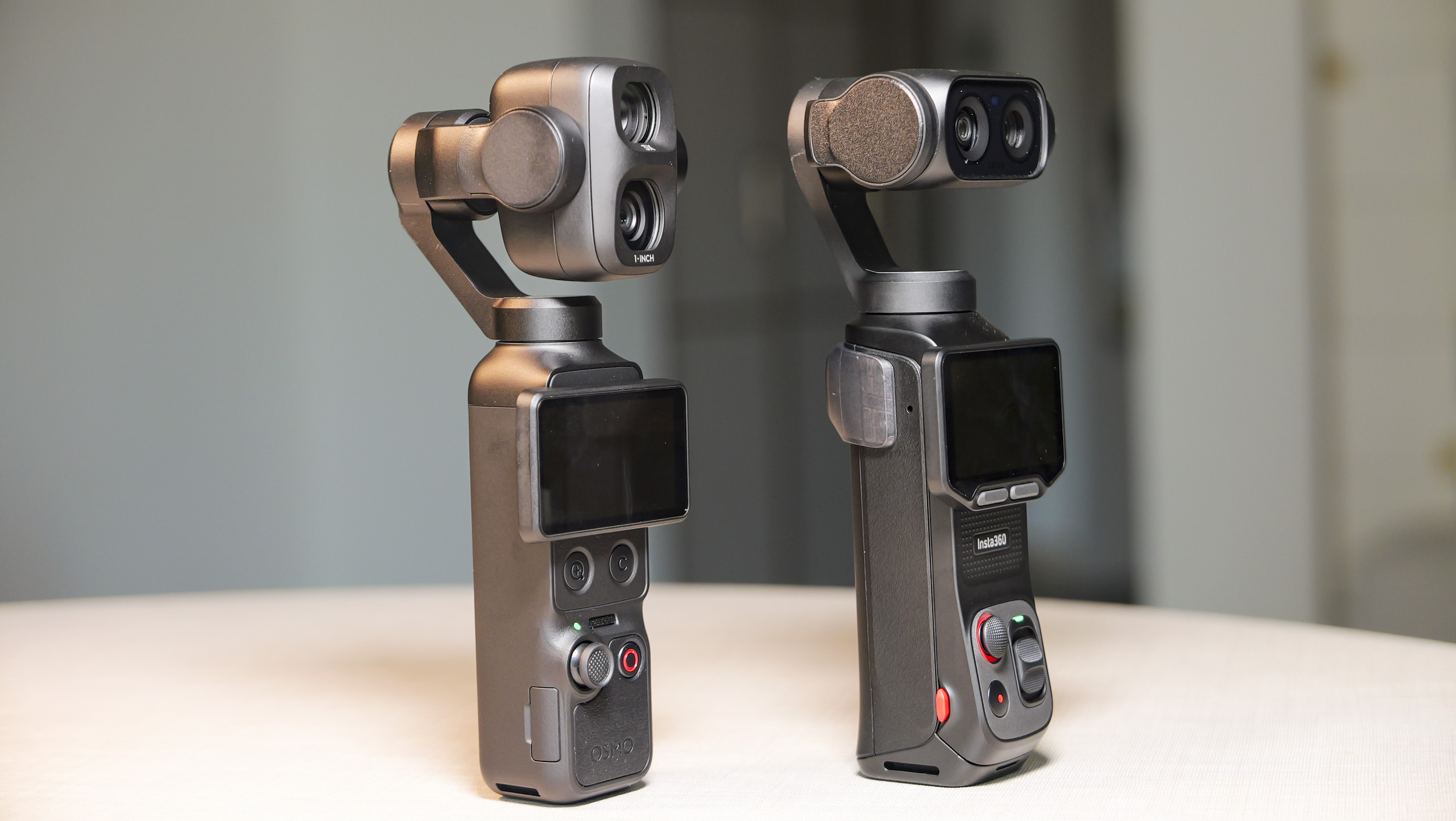
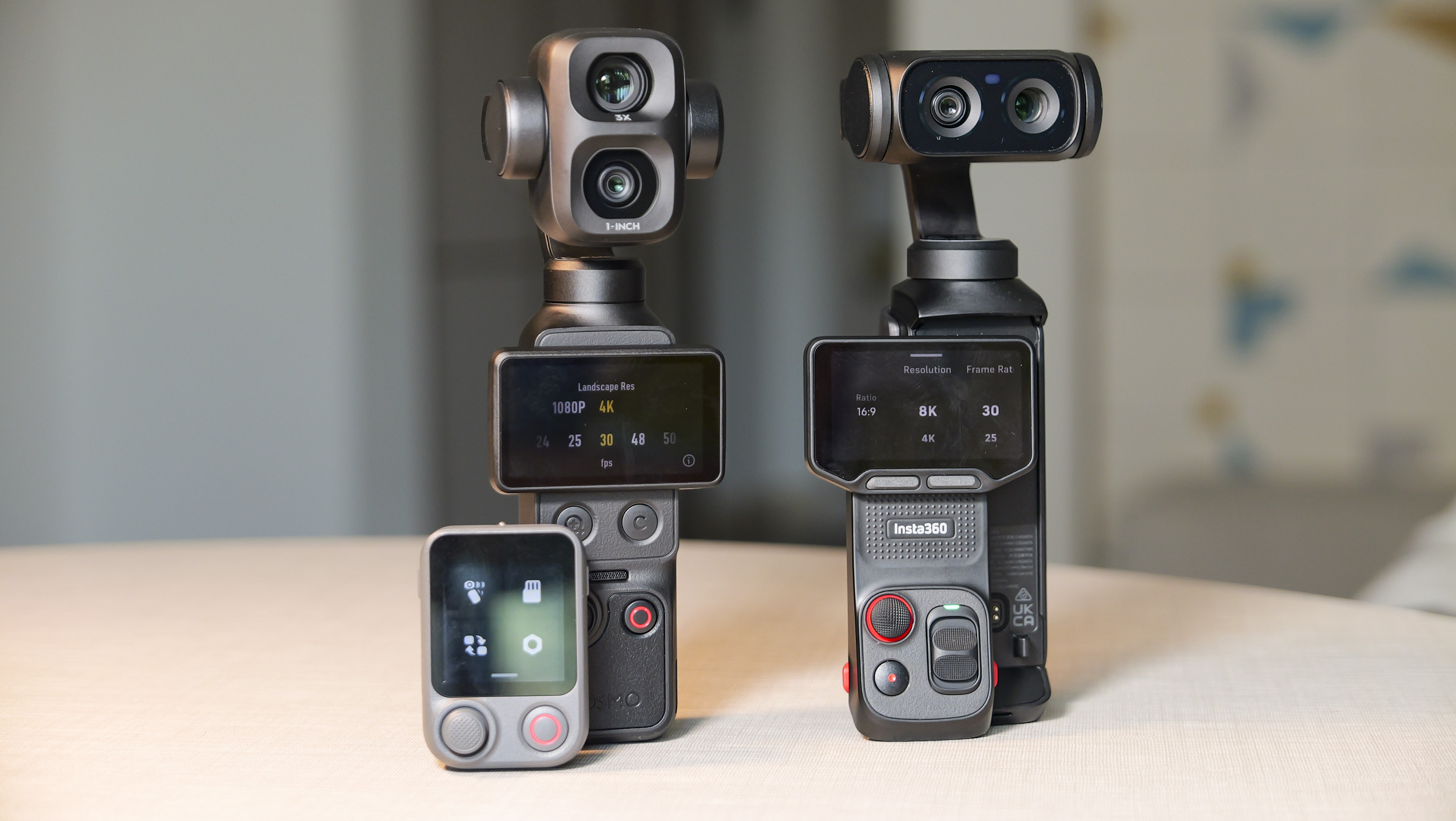
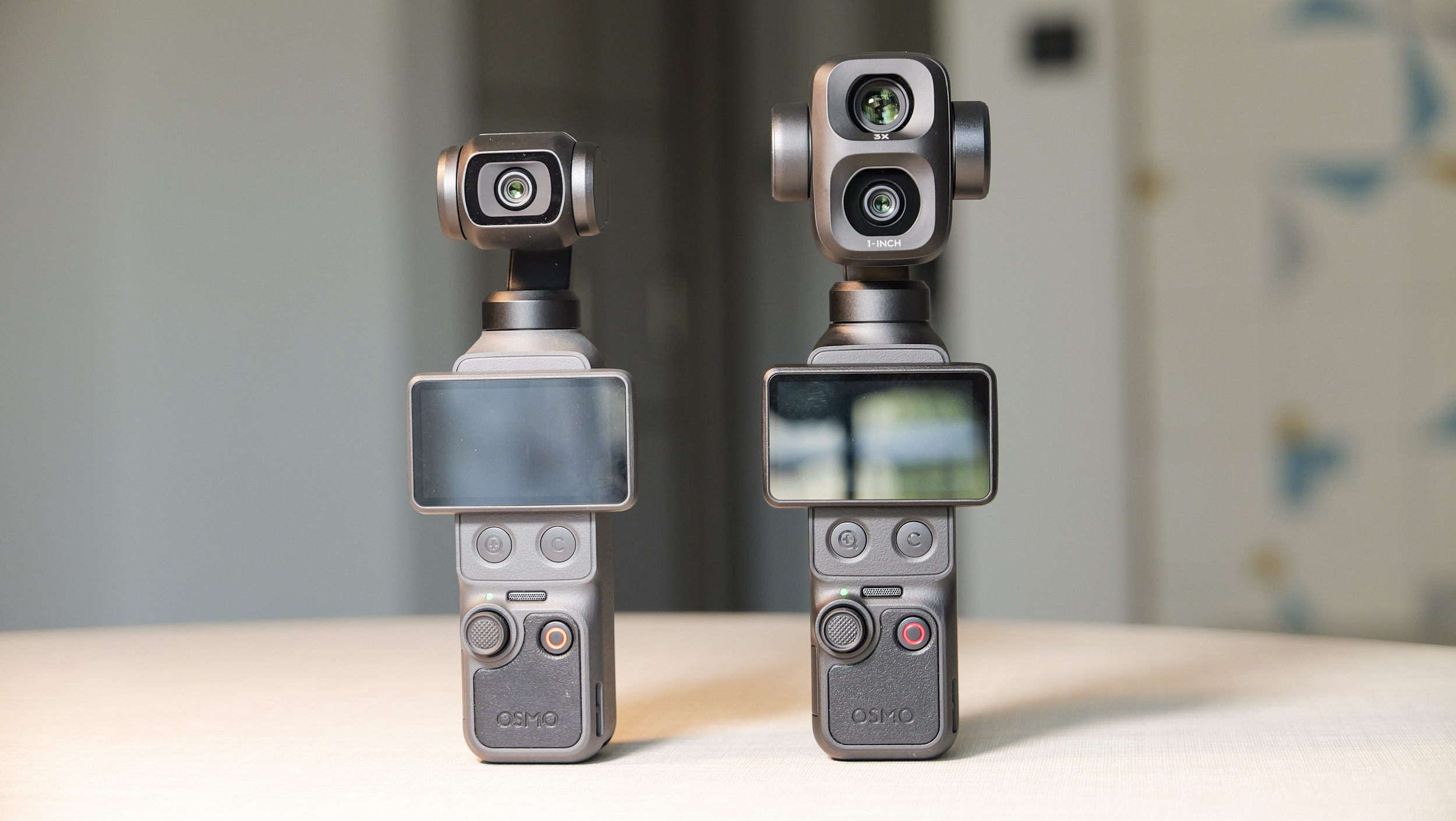
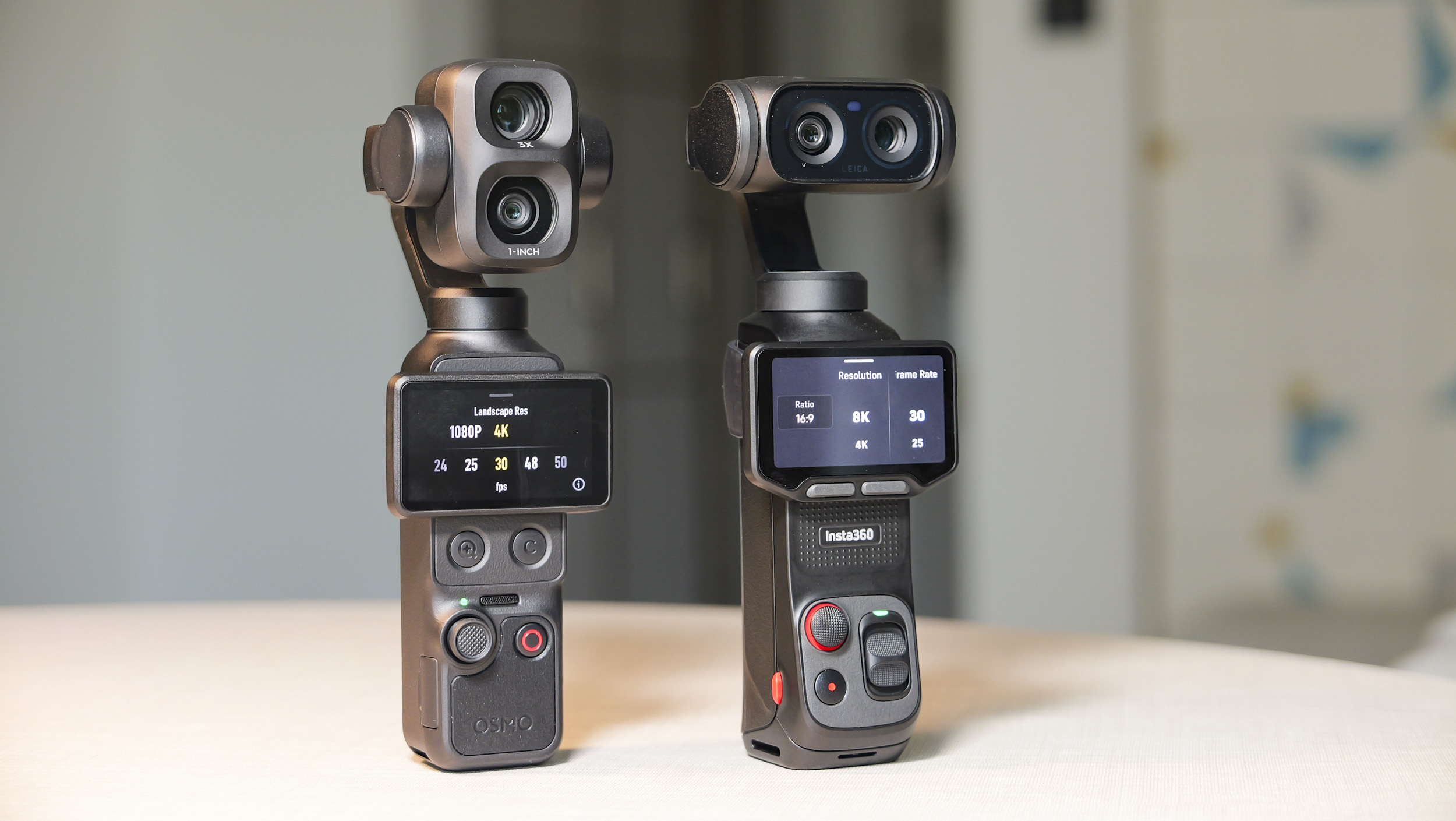
For me, the single-lens Pocket 4 feels perfectly balanced, and it’s notably smaller than Insta360’s Luna cameras. The 4P, however, somewhat sacrifices that advantage on the alter of dual-camera versatility — it’s a little top-heavy, and I found it more comfortable to use with a tripod grip and mini tripod attached. The Luna Ultra feels more balanced because its handle is bulkier (see the Pocket 4 / 4P / Luna Ultra comparison photos, below).

Gimbal movement still feels smooth, and the shots steady and smooth, despite the extra weight of the cameras.
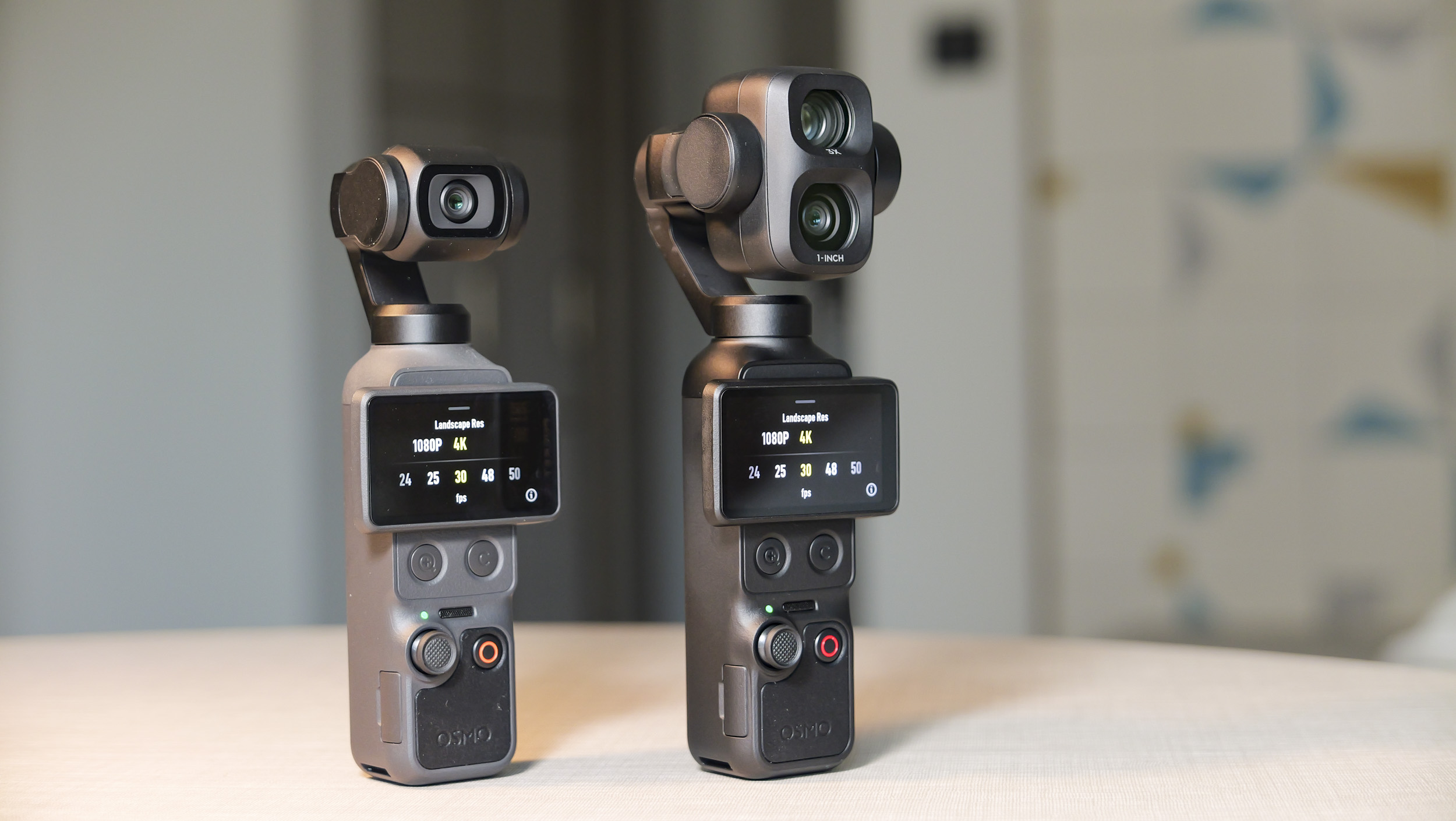
DJI Osmo Pocket 4P vlogging camera on a white desk in modern room, alongside the DJI Osmo Pocket 4
DJI Pocket 4 (left), DJI Pocket 4P (right)Tim Coleman
DJI Osmo Pocket 4P vlogging camera on a white desk in modern room, alongside the DJI Osmo Pocket 4
DJI Pocket 4 (left), DJI Pocket 4P (right)Tim Coleman
DJI Osmo Pocket 4P vlogging camera on a white desk in modern room, alongside the Insta360 Luna Ultra
DJI Pocket 4P (left), Insta360 Luna Ultra (right)Tim Coleman
DJI Osmo Pocket 4P vlogging camera on a white desk in modern room, alongside the Insta360 Luna Ultra
DJI Pocket 4P (left), Insta360 Luna Ultra (right)Tim Coleman
DJI Osmo Pocket 4P vlogging camera on a white desk in modern room, alongside the Insta360 Luna Ultra
DJI Pocket 4P (left), Insta360 Luna Ultra (right)Tim Coleman

At launch there’s no hard-shell protective case for the Pocket 4P, as there is for the Pocket 3, nor a slimline gimbal protector, like you get with the Pocket 4. This means the bulkier camera module remains somewhat unprotected, which is something DJI needs to be rectify ASAP.

There are also no dedicated ND filter kits from DJI at launch, though I fully expect that situation to change very soon through third parties (it might even have done so by the time you read this).

As with the Pocket 4, there’s the fill-light accessory, which attaches magnetically to the gimbal’s arm and is powered by the camera, and which lets you choose between three brightness levels and three color temperatures.

The light won’t make much of a difference to your images in bright daylight, but in low light and for indoors, it’s game changing for vlogging. I found the warm setting at the medium brightness level was a sweet spot for the times I wanted to use the light.

DJI Osmo Pocket 4P vlogging camera on a white desk in modern room
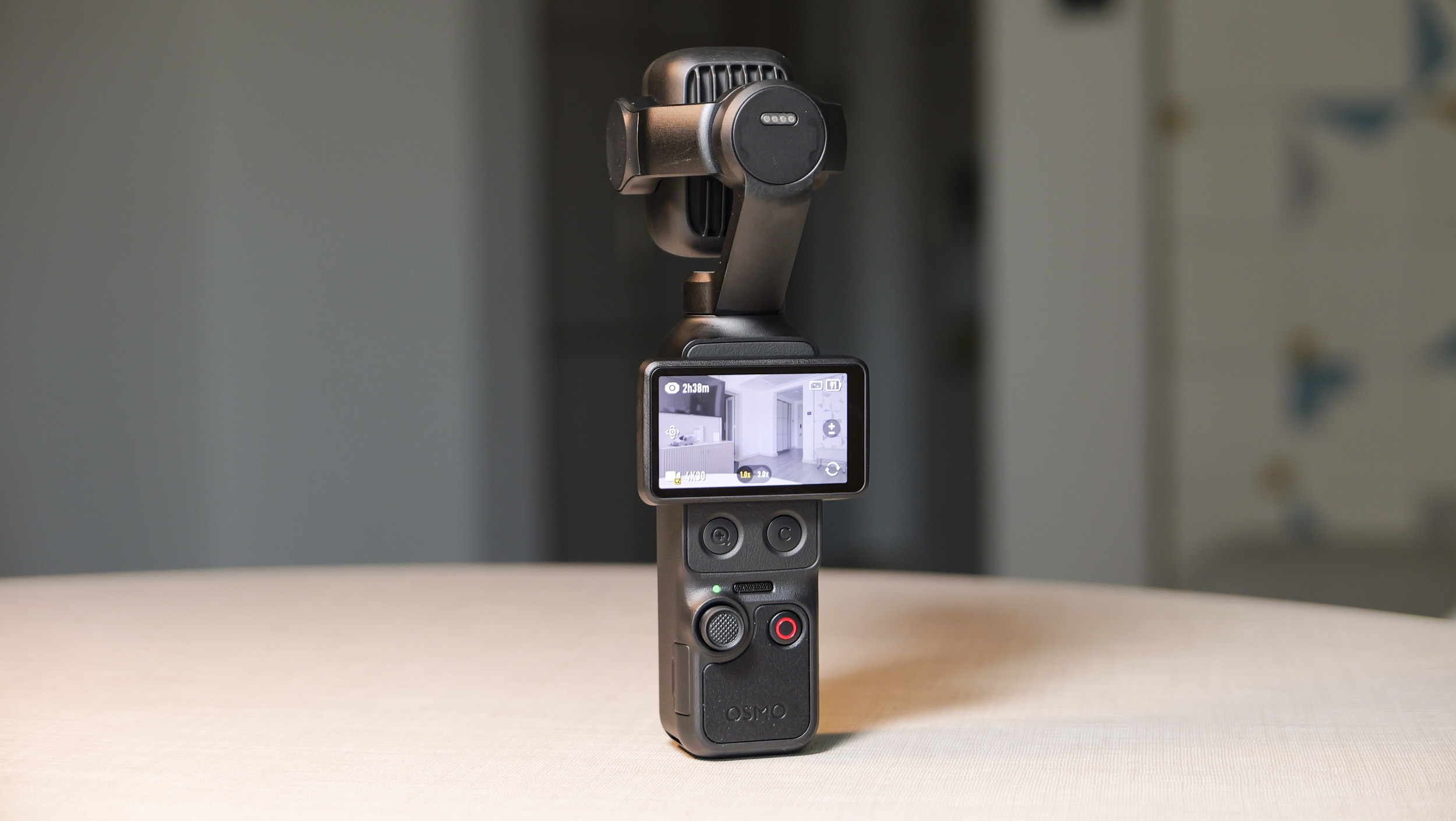
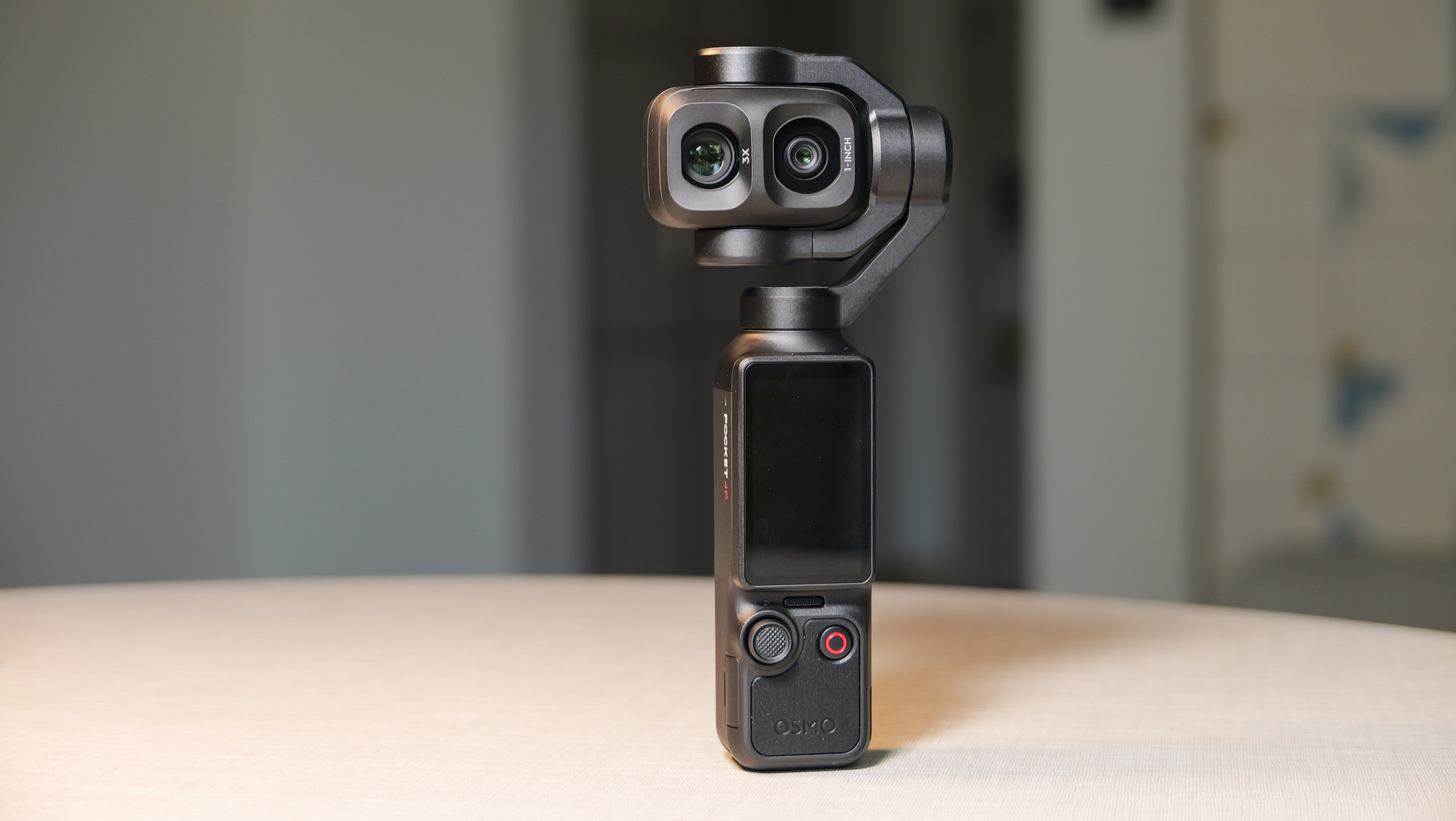
The Pocket 4P turned off, where its lenses sit out horizontallyTim Coleman
DJI Osmo Pocket 4P vlogging camera on a white desk in modern room
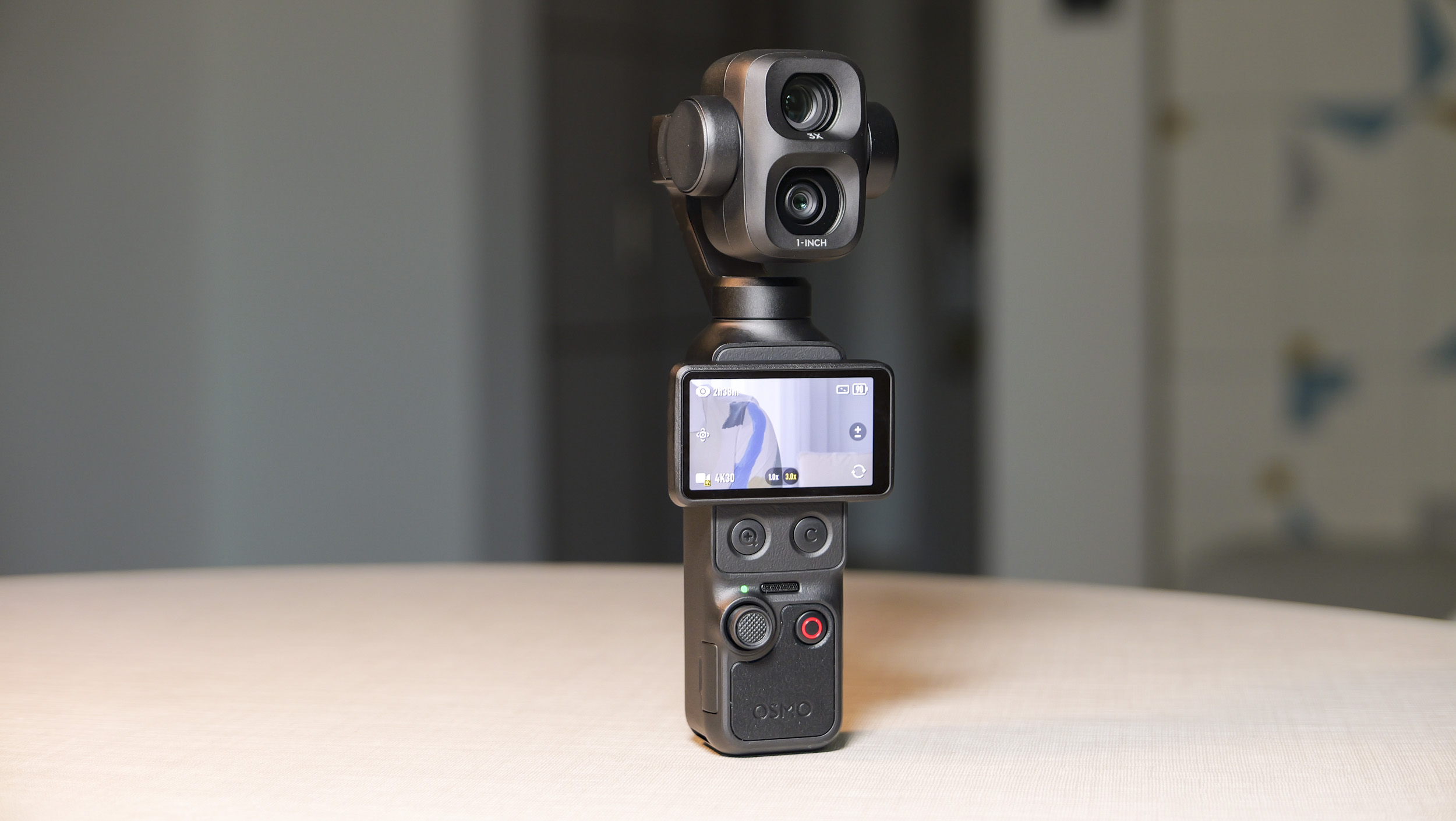
And turned on, the lenses sit verticallyTim Coleman
Close up of the DJI Osmo Pocket 4P vlogging camera's dual lenses
The main 1-inch ultra-wide 20mm f/2.0 camera (bottom), and the new 3x telephoto f/1.8 camera (top)Tim Coleman
DJI Osmo Pocket 4P vlogging camera on a white desk in modern room
The screen rotates 90-degrees between vertical and horizontal formats. When shooting vertically, two control buttons are hidden by the screenTim Coleman
Close up of the DJI Osmo Pocket 4P vlogging camera's controls
But they are revealed in horiztonal formatTim Coleman
DJI Osmo Pocket 4P vlogging camera on a white desk in modern room
Note the top gimbal arm is magnetic and accepts a fill light accessory, which is powered by the camera and has three brightness settings, and three color temperature settingsTim Coleman

Then there’s the tiny remote control, borrowed from the Osmo Mobile 8P. This easily connects to the Pocket 4P over Bluetooth, and can be used to remotely view and control the camera. It’s a neat answer to Insta360’s modular controller in its Luna cameras, though the DJI module doesn’t feature a built-in mic, as Insta360’s does.

For occasions when you’re taking hands-free shots with the Pocket 4P rested on a surface or support, the remote controller is super-handy. The controls are slightly stripped back versus the camera’s control layout, but the key controls, such as touch subject-tracking, record, and gimbal movement / zoom are there.

  • Design score: 4.5/5

DJI Osmo Pocket 4: Performance

  • Improved subject tracking
  • 107GB of built-in memory added
  • Higher-capacity battery extends record times

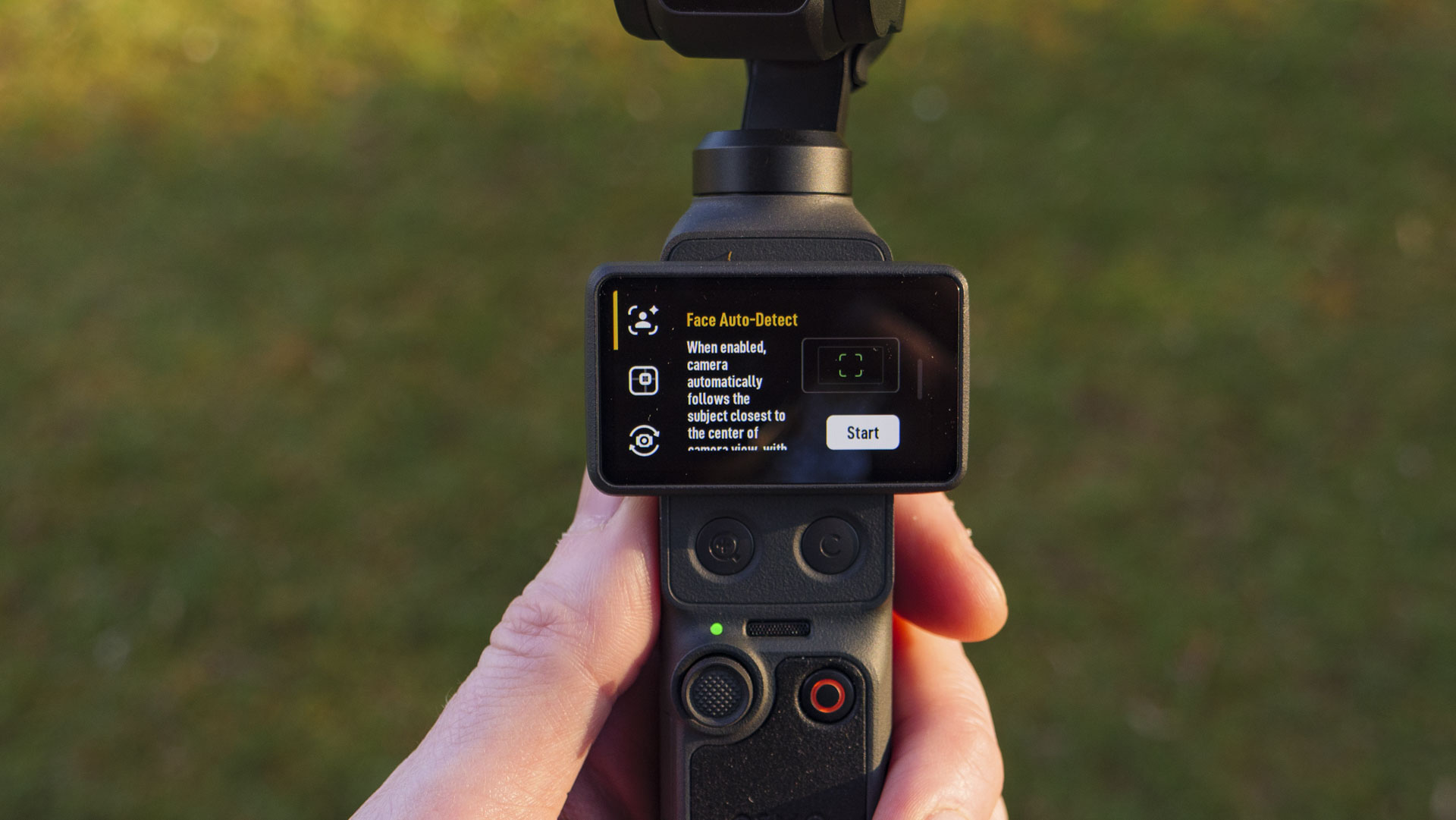
A major feature in Pocket cameras is subject-tracking autofocus. You really don’t want to be messing around moving the gimbal manually with the joystick, which can be fiddly and jerky. Thankfully, subject tracking, the latest version of which DJI calls ‘ActiveTrack 7.0’, is super-reliable — you double-tap on the subject, and the camera does the rest. For me, it performs slightly better than Insta360 Luna’s tracking, even if it does at times feel like its ‘keeping up’ with fast-moving subjects rather than keeping them central.

Battery life is solid, though you will notice it drop quicker with certain modes, such as 4K 60fps video recording, hyperlapse, and slow-motion 240fps. The camera also gets pretty warm pretty quickly when using these modes, though I’ve not had it overheat and shut down during my testing.

Closeup of the DJI Osmo Pocket 4 vlogging camera's rear screen
Future / Tim Coleman
Man in bright summer short and shades, in an old town on a sunny day, holding the DJI Osmo Pocket 4P vlogging camera
Tim Coleman

With compact vlogging cameras such as the Pocket series, the battery is non-removable, so you are relying on that USB-C rechargeable internal unit. I found myself conscious of having to charge the camera on heavy use days — that’s life with a Pocket. There is, however, an optional battery grip available to extend shot life.

In addition to a microSD card slot, DJI includes a generous 107GB of built-in storage. That’s enough for a lot of 4K clips, even when utilizing the maximum 200Mbps bit rate.

Recording internally, you’ll need to transfer files either over Wi-Fi or wired USB-C. Thankfully, there’s next-gen Wi-Fi 6 and USB 3.1 support on board, delivering fast transfer speeds and making for an efficient workflow on the move.

As with other Pockets, the 4P can get a little warm when you’re using its more power-hungry features, such as 4K 60fps and hyperlapse. I’ve not had any overheating issues to the point where the camera shuts down, but I was aware of the camera warming up while holding it.

  • Performance score: 5/5

DJI Osmo Pocket 4: Image and video quality

  • 1-inch sensor ultra-wide camera, and a new 3x telephoto, up to 12x zoom
  • D-Log2 profile with up 17EV dynamic range
  • Low-light further boosts the improved 14 stops dynamic range

There is one minor difference between the Pocket 4P and Pocket 4’s ultra-wide 20mm f/2.0 camera: the ‘refined’ 1-inch sensor, which unleashes a new log color profile, D-Log 2.

DJI says the refined sensor features LOFIC tech — which in simple terms is like super HDR, only it works in real time, which differs to HDR. I first came across the term LOFIC when reviewing the Oppo Find X9 Ultra phone.

The fruit of LOFIC and D-Log 2 is an expanded 17 stops of dynamic range, while the regular Log profile has around 14 stops. D-Log 2 is only available with the ultra-wide camera because it’s linked to the sensor tech, whereas the new 3x telephoto camera uses a separate 1/1.28-inch sensor.

D-Log 2 also isn’t available in every shooting mode, such as Slow Motion 240fps, although like the Pocket 4, that 10x slo-mo is available in 4K, or up to 200fps when using the 3x telephoto camera.

I’ve shot the same clips in D-Log 2, D-Log and ‘Normal’ color profiles (all 10-bit) to make quality comparisons, especially regarding dynamic range, and to see how easy it is to grade the footage for a consistent look. I’ve also shot using some of the built-in color profiles, such as ‘NC film’ and ‘Movie’.

The level of detail that the Pocket 4P is able to hold, especially in D-Log 2, is majorly impressive, especially for such a small and affordable camera. For me, outright 4K image quality is where DJI has the edge over Insta360, and most leading smartphones.

Is D-Log2 enough reason to upgrade from the Pocket 4? Not for me, but there is a more compelling reason: the second camera. The 60mm f/1.8 telephoto optic is essentially a 3x portrait lens, with a pleasant shallow depth of field for upper-body vlogging and shooting closeup details. It’s limited to D-Log or Normal color profiles, but the overall quality is really, really nice, and the footage gives a totally different perspective to the ultra-wide camera’s.

Where that 3x lens really shines is when it’s coupled with some of the Pocket 4P’s major features, such as active tracking. With the tighter perspective, creative camera movements tracking a subject on the move can look particularly dynamic, especially where there are other objects in the foreground.

The zoom capabilities are further extended — where the Pocket 4 was limited to a 2x lossless zoom and 4x digital zoom, the Pocket 4P again has the 2x lossless zoom with the ultra-wide lens, plus 6x lossless with the telephoto lens and up to a 12x digital zoom.

The quality of that 12x zoom is okay at a pinch, but if quality is your main concern, I wouldn’t go beyond the 6x setting.

I don’t like the way the heavier dual-camera setup impacts how the camera feels in the hand, but it’s a game-changing feature for this type of camera, and for me it now feels impossible to return to the single-lens format.

The Luna Ultra goes one step further for resolution, with 8K video recording. Personally, I’m happy with a camera that is limited to 4K recording, but whose quality at this resolution, especially regarding dynamic range and color, is more pleasing on the eye. That’s the Pocket 4P.

  • Image and video quality score: 5/5

DJI Osmo Pocket 4P: testing scorecard

DJI Osmo Pocket 4P

Attributes

Notes

Rating

Price

Pricier than the Pocket 4 but cheaper than the Luna Ultra. You’re getting a lot of camera for your money

5/5

Design

The dual lenses are a success, but in otherwise keeping the same body design, the Pocket 4P feels top-heavy

4.5/5

Performance

Industry-leading image stabilization and subject tracking, decent battery life and generous internal storage

5/5

Image and video quality

Yes it’s ‘only’ 4K, but the Pocket 4P can shoot gorgeous footage up to that resolution, especially with the second lens

5/5

Should I buy the DJI Osmo Pocket 4P?

Buy it if…

You want more from your Pocket
The dual lenses are a revelation, broadening the kind of shots you can make versus the single-lens models that are restricted to an ultra-wide field of view.

You want the most polished and feature-rich compact vlogging camera
Sure, the Luna Ultra comes with innovative features, but the Pocket 4P has its own unique tricks, and overall it feels like the more polished camera.

Don’t buy it if…

You don’t need the second lens
Many people have happily been vlogging with a single-lens Pocket camera for years. If you only need that ultra-wide angle, it’s wiser to stick with the Pocket 3 or opt for the Pocket 4 instead — they’re physically smaller, and cost less.

You want the smallest possible Pocket
The dual-camera setup wins for versatility, but it does result in a bulkier, top-heavy design when compared to the regular Pocket 4.

DJI Osmo Pocket 4P: also consider

DJI Osmo Pocket 4

Don’t need the second lens? You’ll save a packet by opting for the Pocket 4 instead, which otherwise has essentially the same features, and get a more streamlined camera, with a neat gimbal protector to boot.

Read our in-depth DJI Osmo Pocket 4 review

Insta360 Luna Ultra

Love the sound of dual lenses in a compact vlogging camera? The Luna Ultra is a compelling and strikingly similar alternative, but with 8K video recording and a neat detachable module which comprises the screen, key control and built-in mic. The Luna Ultra arguably wins on innovation, but the Pocket 4P wins by being more polished. The Luna Ultra is pricier than the 4P, too.

Read our in-depth Insta360 Luna Ultra review

How I tested the DJI Osmo Pocket 4P

Man in bright summer short and shades, in an old town on a sunny day, holding the DJI Osmo Pocket 4P vlogging camera

(Image credit: Tim Coleman)
  • DJI loaned me the Pocket 4P Vlog Combo kit for a couple of months ahead of the July 30 release
  • I shot plenty of 4K footage with the various color profiles, and used the various accessories
  • I compared it to the single-lens Pocket 4 and dual-lens Insta360 Luna Ultra

I used the DJI Pocket 4P for almost two months ahead of my review embargo, during which time I regularly shot 4K video using the 20mm and 60mm lenses, the various frame rates up to 240fps, and the range of color profiles, including the new D-Log2. I tried the various shooting modes too, such as hyperlapse, and took photos in the regular and SuperPhoto modes.

In the Vlog Combo kit was a DJI Mini 2 Mini, remote module and fill light, and I tested both those accessories. I generally recorded onto the camera’s internal memory, transferred files through USB-C and checked transfer times, ran the camera battery down, and checked recharge times using the supplied USB-C cable.

During my review period I also had the Pocket 4, enabling me to assess the key differences between the single- and dual-lens models. I also had the rival Insta360 Luna Ultra, again allowing me to make direct comparisons.

“}]] 

 The Pocket 4P is DJI’s first dual-lens compact vlogging camera, adding a 3x telephoto lens to what is otherwise the same product as the polished Pocket 4. It’s pricier, but much more versatile. Read More Latest from TechRadar US in Reviews 

I tested the DJI Osmo Pocket 4P for a whole month — here’s why adding a second portrait lens to a vlogging camera is as big of a game changer as it was for phones
Share

[[{“value”:”

DJI Osmo Pocket 4P: One-minute review

The Pocket 4P marks a big moment in DJI’s hugely popular series of compact vlogging cameras, being the first model with two lenses, even if Insta360 stole its thunder with the Luna Ultra, which it released in June.

I’ve already reviewed the single-lens Pocket 4, and it’s a brilliant handheld 4K camera. The ‘P’ version is largely identical but for its dual-lens array and a ‘refined’ 1-inch sensor that’s equipped with LOFIC tech, plus a new D-Log 2 color profile.

For the most part, you can discover all you need to know about the Pocket 4P’s design and performance in my Pocket 4 review. In this write-up, I’ll focus on the new features of the bulkier model, and the real difference they make.

And I can say this right now: now that I’ve tried the Pocket 4P, it’ll be hard for me to return to single-lens models like the Pocket 4. That additional 3x telephoto lens unleashes a wide variety of shooting options to complement the highly capable ultra-wide main camera. On-the-go sequences with DJI’s superb subject tracking in play, for example, can be particularly dynamic. It really is like having two cameras in one tiny device.

Man in bright summer shirt and shades, in an old town on a sunny day, holding the DJI Osmo Pocket 4P vlogging camera

Two lenses means twice the camera (Image credit: Tim Coleman)

That being said, there is an inevitable design compromise: twin lenses make for a bulkier camera unit, with inexplicably no protective housing currently available, and a top-heavy design. If you already own a Pocket, and are wondering if the new Pocket 4P is worth it, or if it’s worth jumping ship from DJI to the Insta360 Luna Ultra, check out my Pocket 4 vs Luna Ultra article.

For me, the first-generation Luna Ultra is a compelling alternative with its 8K video and detachable module, but I can also tell that the Pocket 4P is a fourth-generation product — it feels more polished overall. It has neat accessories of its own, too, such as the magnetic fill light and remote module. As such, DJI’s dual-lens Pocket 4P is now my top compact vlogging-camera pick.

DJI Osmo Pocket 4P: price and release date

  • Announced on May 14 2026 at Cannes Film Festival, available from July 30
  • Available in black or white versions, priced from £529 / AU$959. No US availability at launch
  • Variety of bundles available, including a Vlog Combo kit for £605 / AU$1,099

DJI Osmo Pocket 4P vlogging camera in a person's hand in a city street, screen rotated horizontal

With twin sensors / lenses, the Pocket 4P’s mark-up over the single-lens Pocket 4 is justified. The ‘P’ version is excellent value. (Image credit: Tim Coleman)

Despite essentially having no competition in markets such as drones and, previously, gimbal vlogging cameras, DJI has always priced its products competitively. It usually undercuts rivals where actual alternatives exist, too, such as GoPro and Insta360 action cameras.

Insta360 outright said it wasn’t going to compete on price, but rather on features when speaking about its Luna Ultra, and that has turned out to be the case. Where the Luna Ultra starts at $770 / £650 / AU$1,230, the Pocket 4P comes in at £529 / AU$959 — though it’s not available in the US at launch. Meanwhile, the single-lens Pocket 4 costs from £429 / AU$749.

Considering that the Pocket 4P has the extra camera with its own sensor, that price increase over the Pocket 4 feels completely justified, and in my book the Pocket 4P is excellent value, especially when you consider the quality of the 4K video footage it’s able to produce.

The Pocket 4P is available in Black or White versions, and there are bundles available. The Vlog Combo, for example, includes the DJI Mic 2 Mini wireless mic, remote controller, fill light, tripod stand and tripod grip, and costs £605 / AU$1,099 — that’s the bundle I’d go for.

  • Price score: 5/5

DJI Osmo Pocket 4P: specs

DJI Osmo Pocket 4P specs

Lens(es):

20mm f/2.0 (1-inch sensor), 60mm f/1.8 (1/1.28-inch sensor)

Video:

4K and 1080p up to 60fps, plus slow motion up to 240fps

Photo:

Up to 9.4MP in RAW & JPEG, up to 37MP in SuperPhoto mode

Storage:

107GB internal, microSD card slot

Battery:

1,545mAh, up to 3.5 hours Full HD record time

Charger type:

USB-C / optional fast PD charger

Weight:

8.1oz / 230g

Dimensions:

159.5 x 63.3 x 33.5mm (L x W x H)

DJI Osmo Pocket 4P: Design

  • Dual 20mm f/2.0 and 60mm f/1.8 lenses
  • Otherwise the same design as the Pocket 4, with rotating screen and gimbal-mounted camera
  • USB-C charging and 107GB of internal storage in addition to micro SD

Man in bright summer short and shades, in an old town on a sunny day, holding the DJI Osmo Pocket 4P vlogging camera

(Image credit: Tim Coleman)

Save for the bulkier dual-camera system and a total weight of 8.1oz / 230g, the Pocket 4P’s design is identical to the Pocket 4; it’s extremely compact, features a 2-inch touchscreen which rotates 90 degrees between vertical and horizontal formats, and a customizable five-button array, with a joystick that controls gimbal movement or zoom.

The extra two buttons, revealed when the screen is rotated to horizontal, help speed up access to various settings. For example, the C button can be assigned for direct access to two custom profiles — handy if you regularly switch between, say, color settings such as D-Log and shooting modes such as slow motion.

It certainly pays dividends to spend time customizing the camera to suit how you use it, so that you’re not fussing with settings when you’re out and about.

For me, the single-lens Pocket 4 feels perfectly balanced, and it’s notably smaller than Insta360’s Luna cameras. The 4P, however, somewhat sacrifices that advantage on the alter of dual-camera versatility — it’s a little top-heavy, and I found it more comfortable to use with a tripod grip and mini tripod attached. The Luna Ultra feels more balanced because its handle is bulkier (see the Pocket 4 / 4P / Luna Ultra comparison photos, below).

Gimbal movement still feels smooth, and the shots steady and smooth, despite the extra weight of the cameras.
DJI Osmo Pocket 4P vlogging camera on a white desk in modern room, alongside the DJI Osmo Pocket 4
DJI Pocket 4 (left), DJI Pocket 4P (right)Tim Coleman
DJI Osmo Pocket 4P vlogging camera on a white desk in modern room, alongside the DJI Osmo Pocket 4
DJI Pocket 4 (left), DJI Pocket 4P (right)Tim Coleman
DJI Osmo Pocket 4P vlogging camera on a white desk in modern room, alongside the Insta360 Luna Ultra
DJI Pocket 4P (left), Insta360 Luna Ultra (right)Tim Coleman
DJI Osmo Pocket 4P vlogging camera on a white desk in modern room, alongside the Insta360 Luna Ultra
DJI Pocket 4P (left), Insta360 Luna Ultra (right)Tim Coleman
DJI Osmo Pocket 4P vlogging camera on a white desk in modern room, alongside the Insta360 Luna Ultra
DJI Pocket 4P (left), Insta360 Luna Ultra (right)Tim Coleman

At launch there’s no hard-shell protective case for the Pocket 4P, as there is for the Pocket 3, nor a slimline gimbal protector, like you get with the Pocket 4. This means the bulkier camera module remains somewhat unprotected, which is something DJI needs to be rectify ASAP.

There are also no dedicated ND filter kits from DJI at launch, though I fully expect that situation to change very soon through third parties (it might even have done so by the time you read this).

As with the Pocket 4, there’s the fill-light accessory, which attaches magnetically to the gimbal’s arm and is powered by the camera, and which lets you choose between three brightness levels and three color temperatures.

The light won’t make much of a difference to your images in bright daylight, but in low light and for indoors, it’s game changing for vlogging. I found the warm setting at the medium brightness level was a sweet spot for the times I wanted to use the light.
DJI Osmo Pocket 4P vlogging camera on a white desk in modern room
The Pocket 4P turned off, where its lenses sit out horizontallyTim Coleman
DJI Osmo Pocket 4P vlogging camera on a white desk in modern room
And turned on, the lenses sit verticallyTim Coleman
Close up of the DJI Osmo Pocket 4P vlogging camera's dual lenses
The main 1-inch ultra-wide 20mm f/2.0 camera (bottom), and the new 3x telephoto f/1.8 camera (top)Tim Coleman
DJI Osmo Pocket 4P vlogging camera on a white desk in modern room
The screen rotates 90-degrees between vertical and horizontal formats. When shooting vertically, two control buttons are hidden by the screenTim Coleman
Close up of the DJI Osmo Pocket 4P vlogging camera's controls
But they are revealed in horiztonal formatTim Coleman
DJI Osmo Pocket 4P vlogging camera on a white desk in modern room
Note the top gimbal arm is magnetic and accepts a fill light accessory, which is powered by the camera and has three brightness settings, and three color temperature settingsTim Coleman

Then there’s the tiny remote control, borrowed from the Osmo Mobile 8P. This easily connects to the Pocket 4P over Bluetooth, and can be used to remotely view and control the camera. It’s a neat answer to Insta360’s modular controller in its Luna cameras, though the DJI module doesn’t feature a built-in mic, as Insta360’s does.

For occasions when you’re taking hands-free shots with the Pocket 4P rested on a surface or support, the remote controller is super-handy. The controls are slightly stripped back versus the camera’s control layout, but the key controls, such as touch subject-tracking, record, and gimbal movement / zoom are there.

  • Design score: 4.5/5

DJI Osmo Pocket 4: Performance

  • Improved subject tracking
  • 107GB of built-in memory added
  • Higher-capacity battery extends record times

A major feature in Pocket cameras is subject-tracking autofocus. You really don’t want to be messing around moving the gimbal manually with the joystick, which can be fiddly and jerky. Thankfully, subject tracking, the latest version of which DJI calls ‘ActiveTrack 7.0’, is super-reliable — you double-tap on the subject, and the camera does the rest. For me, it performs slightly better than Insta360 Luna’s tracking, even if it does at times feel like its ‘keeping up’ with fast-moving subjects rather than keeping them central.

Battery life is solid, though you will notice it drop quicker with certain modes, such as 4K 60fps video recording, hyperlapse, and slow-motion 240fps. The camera also gets pretty warm pretty quickly when using these modes, though I’ve not had it overheat and shut down during my testing.
Closeup of the DJI Osmo Pocket 4 vlogging camera's rear screen
Future / Tim Coleman
Man in bright summer short and shades, in an old town on a sunny day, holding the DJI Osmo Pocket 4P vlogging camera
Tim Coleman

With compact vlogging cameras such as the Pocket series, the battery is non-removable, so you are relying on that USB-C rechargeable internal unit. I found myself conscious of having to charge the camera on heavy use days — that’s life with a Pocket. There is, however, an optional battery grip available to extend shot life.

In addition to a microSD card slot, DJI includes a generous 107GB of built-in storage. That’s enough for a lot of 4K clips, even when utilizing the maximum 200Mbps bit rate.

Recording internally, you’ll need to transfer files either over Wi-Fi or wired USB-C. Thankfully, there’s next-gen Wi-Fi 6 and USB 3.1 support on board, delivering fast transfer speeds and making for an efficient workflow on the move.

As with other Pockets, the 4P can get a little warm when you’re using its more power-hungry features, such as 4K 60fps and hyperlapse. I’ve not had any overheating issues to the point where the camera shuts down, but I was aware of the camera warming up while holding it.

  • Performance score: 5/5

DJI Osmo Pocket 4: Image and video quality

  • 1-inch sensor ultra-wide camera, and a new 3x telephoto, up to 12x zoom
  • D-Log2 profile with up 17EV dynamic range
  • Low-light further boosts the improved 14 stops dynamic range

There is one minor difference between the Pocket 4P and Pocket 4’s ultra-wide 20mm f/2.0 camera: the ‘refined’ 1-inch sensor, which unleashes a new log color profile, D-Log 2.

DJI says the refined sensor features LOFIC tech — which in simple terms is like super HDR, only it works in real time, which differs to HDR. I first came across the term LOFIC when reviewing the Oppo Find X9 Ultra phone.

The fruit of LOFIC and D-Log 2 is an expanded 17 stops of dynamic range, while the regular Log profile has around 14 stops. D-Log 2 is only available with the ultra-wide camera because it’s linked to the sensor tech, whereas the new 3x telephoto camera uses a separate 1/1.28-inch sensor.

D-Log 2 also isn’t available in every shooting mode, such as Slow Motion 240fps, although like the Pocket 4, that 10x slo-mo is available in 4K, or up to 200fps when using the 3x telephoto camera.

I’ve shot the same clips in D-Log 2, D-Log and ‘Normal’ color profiles (all 10-bit) to make quality comparisons, especially regarding dynamic range, and to see how easy it is to grade the footage for a consistent look. I’ve also shot using some of the built-in color profiles, such as ‘NC film’ and ‘Movie’.

The level of detail that the Pocket 4P is able to hold, especially in D-Log 2, is majorly impressive, especially for such a small and affordable camera. For me, outright 4K image quality is where DJI has the edge over Insta360, and most leading smartphones.

Is D-Log2 enough reason to upgrade from the Pocket 4? Not for me, but there is a more compelling reason: the second camera. The 60mm f/1.8 telephoto optic is essentially a 3x portrait lens, with a pleasant shallow depth of field for upper-body vlogging and shooting closeup details. It’s limited to D-Log or Normal color profiles, but the overall quality is really, really nice, and the footage gives a totally different perspective to the ultra-wide camera’s.

Where that 3x lens really shines is when it’s coupled with some of the Pocket 4P’s major features, such as active tracking. With the tighter perspective, creative camera movements tracking a subject on the move can look particularly dynamic, especially where there are other objects in the foreground.

The zoom capabilities are further extended — where the Pocket 4 was limited to a 2x lossless zoom and 4x digital zoom, the Pocket 4P again has the 2x lossless zoom with the ultra-wide lens, plus 6x lossless with the telephoto lens and up to a 12x digital zoom.

The quality of that 12x zoom is okay at a pinch, but if quality is your main concern, I wouldn’t go beyond the 6x setting.

I don’t like the way the heavier dual-camera setup impacts how the camera feels in the hand, but it’s a game-changing feature for this type of camera, and for me it now feels impossible to return to the single-lens format.

The Luna Ultra goes one step further for resolution, with 8K video recording. Personally, I’m happy with a camera that is limited to 4K recording, but whose quality at this resolution, especially regarding dynamic range and color, is more pleasing on the eye. That’s the Pocket 4P.

  • Image and video quality score: 5/5

DJI Osmo Pocket 4P: testing scorecard

DJI Osmo Pocket 4P

Attributes

Notes

Rating

Price

Pricier than the Pocket 4 but cheaper than the Luna Ultra. You’re getting a lot of camera for your money

5/5

Design

The dual lenses are a success, but in otherwise keeping the same body design, the Pocket 4P feels top-heavy

4.5/5

Performance

Industry-leading image stabilization and subject tracking, decent battery life and generous internal storage

5/5

Image and video quality

Yes it’s ‘only’ 4K, but the Pocket 4P can shoot gorgeous footage up to that resolution, especially with the second lens

5/5

Should I buy the DJI Osmo Pocket 4P?

Buy it if…

You want more from your Pocket
The dual lenses are a revelation, broadening the kind of shots you can make versus the single-lens models that are restricted to an ultra-wide field of view.

You want the most polished and feature-rich compact vlogging camera
Sure, the Luna Ultra comes with innovative features, but the Pocket 4P has its own unique tricks, and overall it feels like the more polished camera.

Don’t buy it if…

You don’t need the second lens
Many people have happily been vlogging with a single-lens Pocket camera for years. If you only need that ultra-wide angle, it’s wiser to stick with the Pocket 3 or opt for the Pocket 4 instead — they’re physically smaller, and cost less.

You want the smallest possible Pocket
The dual-camera setup wins for versatility, but it does result in a bulkier, top-heavy design when compared to the regular Pocket 4.

DJI Osmo Pocket 4P: also consider
DJI Osmo Pocket 4

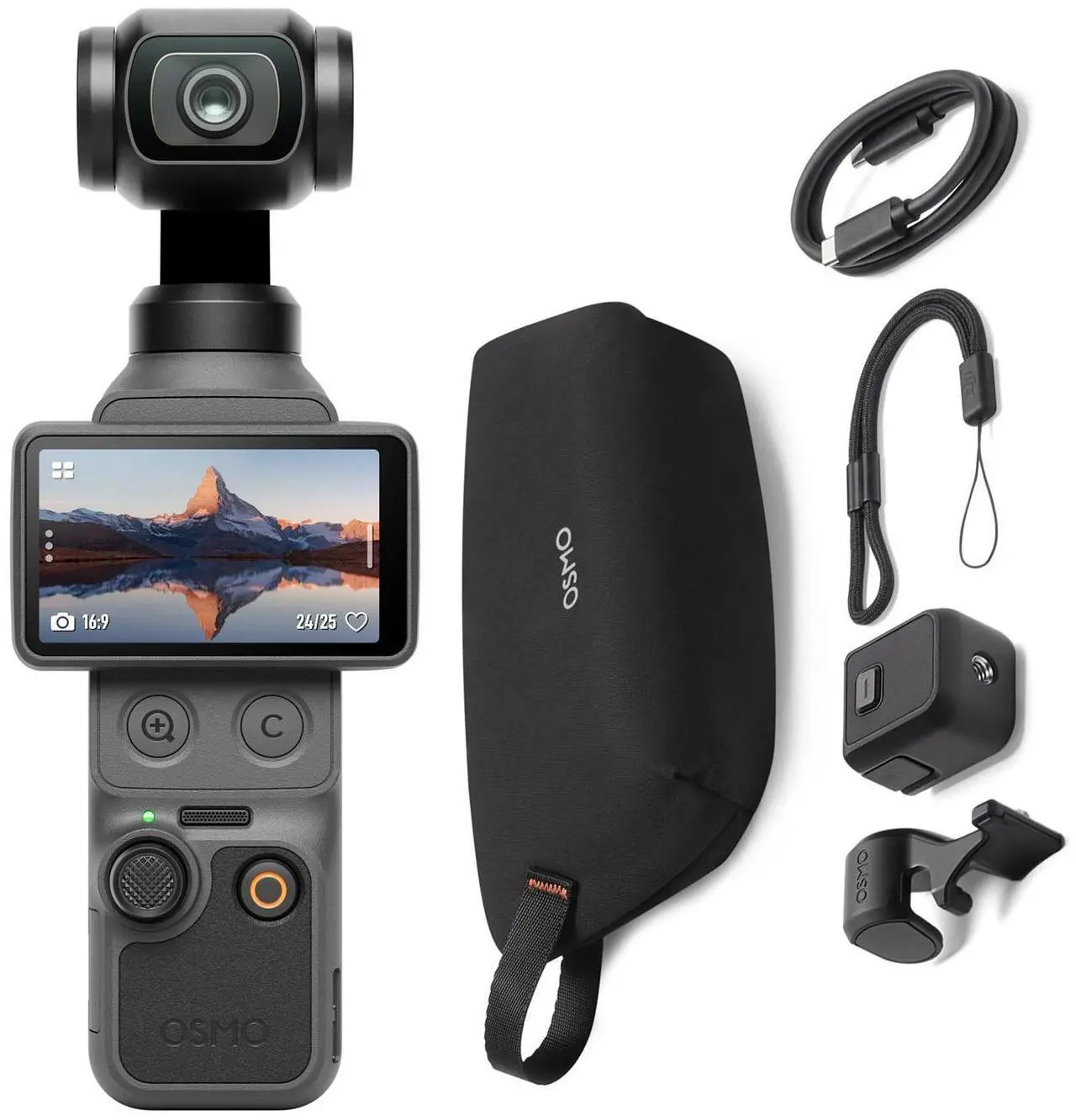
Don’t need the second lens? You’ll save a packet by opting for the Pocket 4 instead, which otherwise has essentially the same features, and get a more streamlined camera, with a neat gimbal protector to boot.

Read our in-depth DJI Osmo Pocket 4 review
Insta360 Luna Ultra

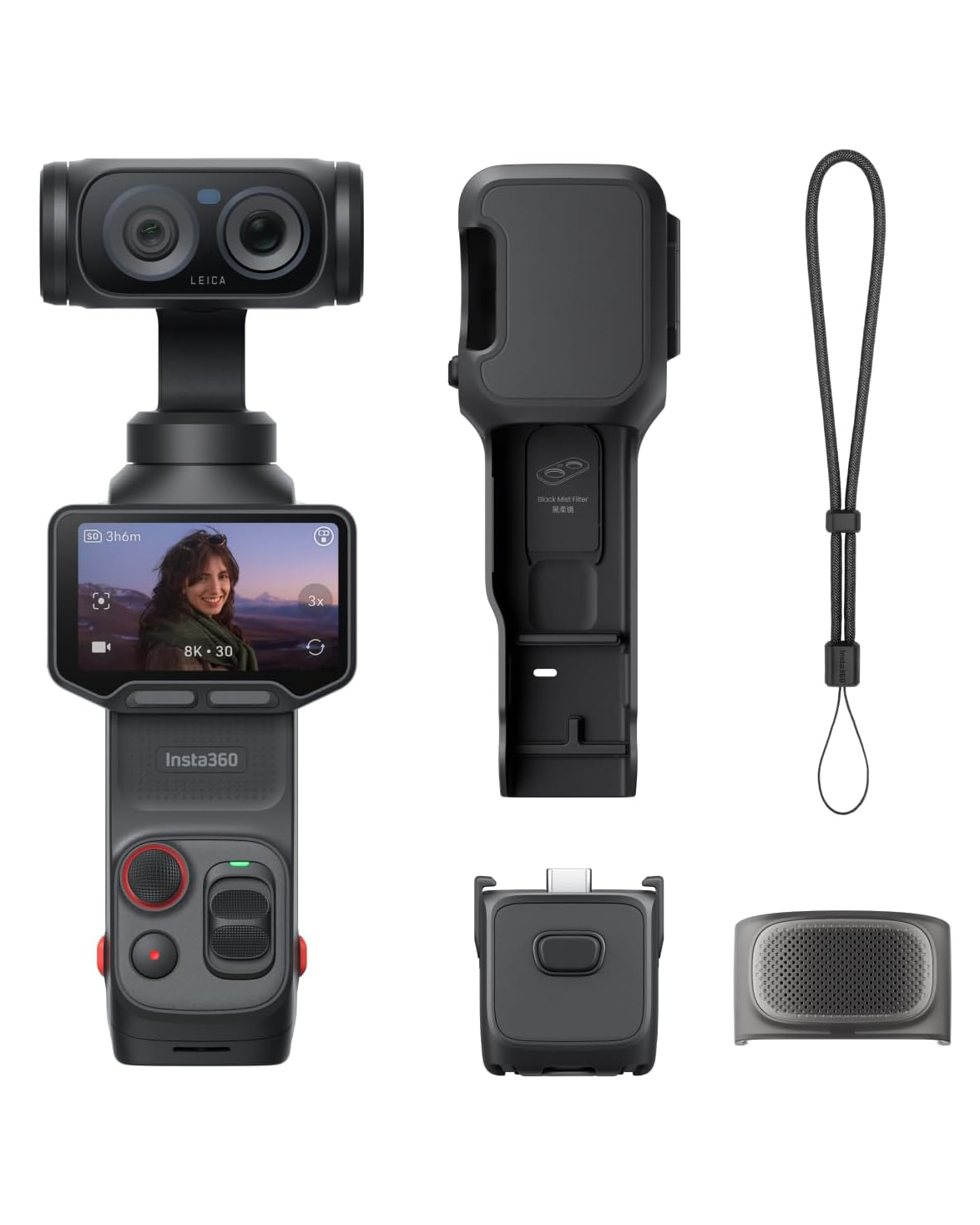
Love the sound of dual lenses in a compact vlogging camera? The Luna Ultra is a compelling and strikingly similar alternative, but with 8K video recording and a neat detachable module which comprises the screen, key control and built-in mic. The Luna Ultra arguably wins on innovation, but the Pocket 4P wins by being more polished. The Luna Ultra is pricier than the 4P, too.

Read our in-depth Insta360 Luna Ultra review

How I tested the DJI Osmo Pocket 4P
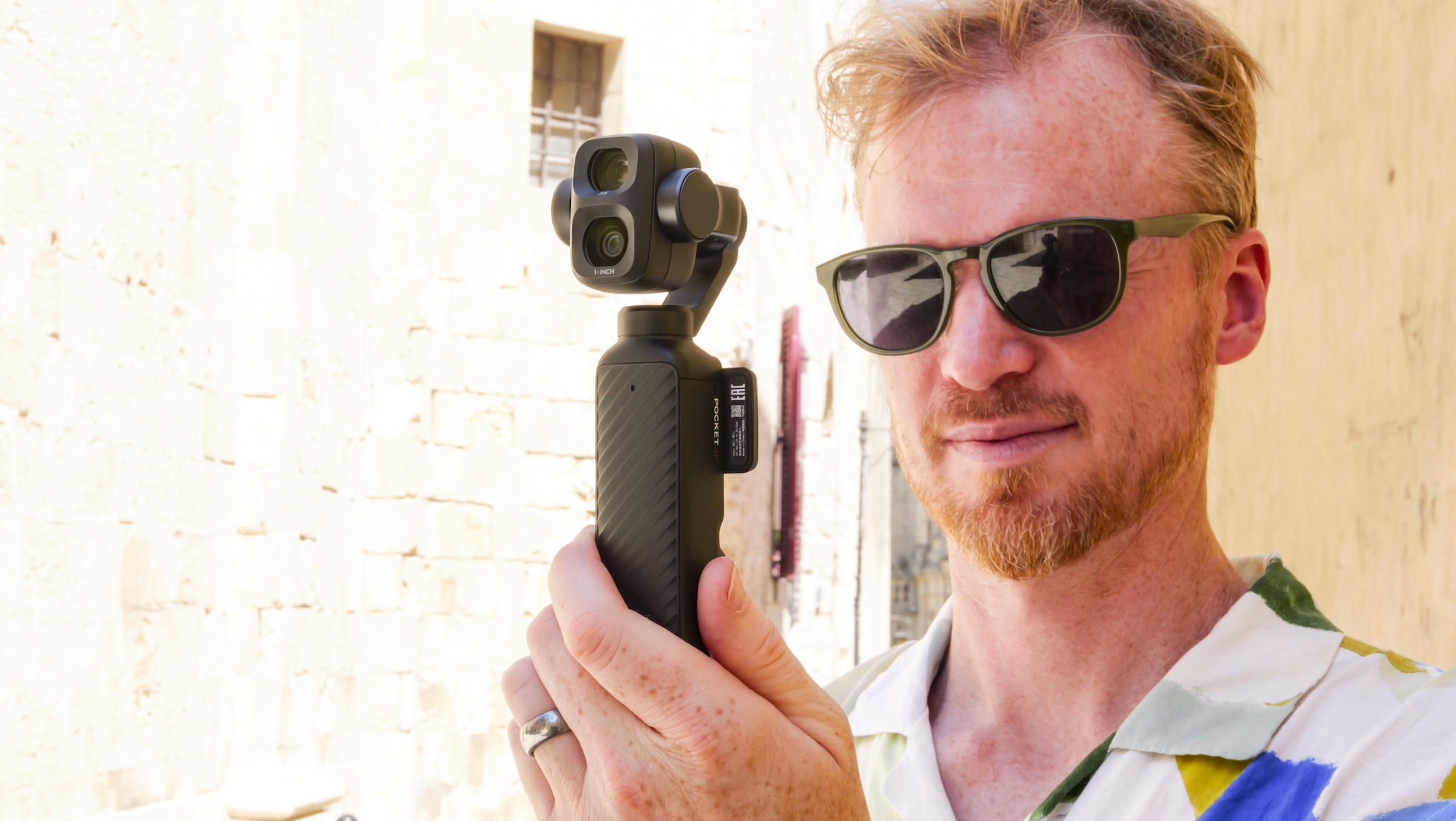
Man in bright summer short and shades, in an old town on a sunny day, holding the DJI Osmo Pocket 4P vlogging camera

(Image credit: Tim Coleman)
  • DJI loaned me the Pocket 4P Vlog Combo kit for a couple of months ahead of the July 30 release
  • I shot plenty of 4K footage with the various color profiles, and used the various accessories
  • I compared it to the single-lens Pocket 4 and dual-lens Insta360 Luna Ultra

I used the DJI Pocket 4P for almost two months ahead of my review embargo, during which time I regularly shot 4K video using the 20mm and 60mm lenses, the various frame rates up to 240fps, and the range of color profiles, including the new D-Log2. I tried the various shooting modes too, such as hyperlapse, and took photos in the regular and SuperPhoto modes.

In the Vlog Combo kit was a DJI Mini 2 Mini, remote module and fill light, and I tested both those accessories. I generally recorded onto the camera’s internal memory, transferred files through USB-C and checked transfer times, ran the camera battery down, and checked recharge times using the supplied USB-C cable.

During my review period I also had the Pocket 4, enabling me to assess the key differences between the single- and dual-lens models. I also had the rival Insta360 Luna Ultra, again allowing me to make direct comparisons.

“}]] 

 The Pocket 4P is DJI’s first dual-lens compact vlogging camera, adding a 3x telephoto lens to what is otherwise the same product as the polished Pocket 4. It’s pricier, but much more versatile. Read More Latest from TechRadar US in Reviews 

By ali

Leave a Reply