
[[{“value”:”
There will be no Red Bull Hardline Tasmania in 2027, but the team behind Maydena Bike Park aren’t standing idle. Instead, they’ve created Beyond Gravity, a new event set to run on February 26-27, that could become the highest-paying DH race ever, with a minimum prize pool of $190,000 AUD.
Beyond Gravity won’t simply be Hardline with a new logo. The course is set for a major redesign, and the whole thing is structured around a broadcast model that gives athletes a direct share of the event’s revenue. And that’s just the headline act. The race will sit at the centre of a seven-day mountain bike festival featuring racing, live music, podcasts, activations and plenty more.
So, what exactly is the team in Maydena planning, and can they pull off what is undoubtedly an ambitious new chapter for downhill racing? Read on for all the details.
Related:
- Flow Destination Hub | Maydena Bike Park
- Best Mountain Bike Trails in Tasmania | Where to Ride on the Apple Isle
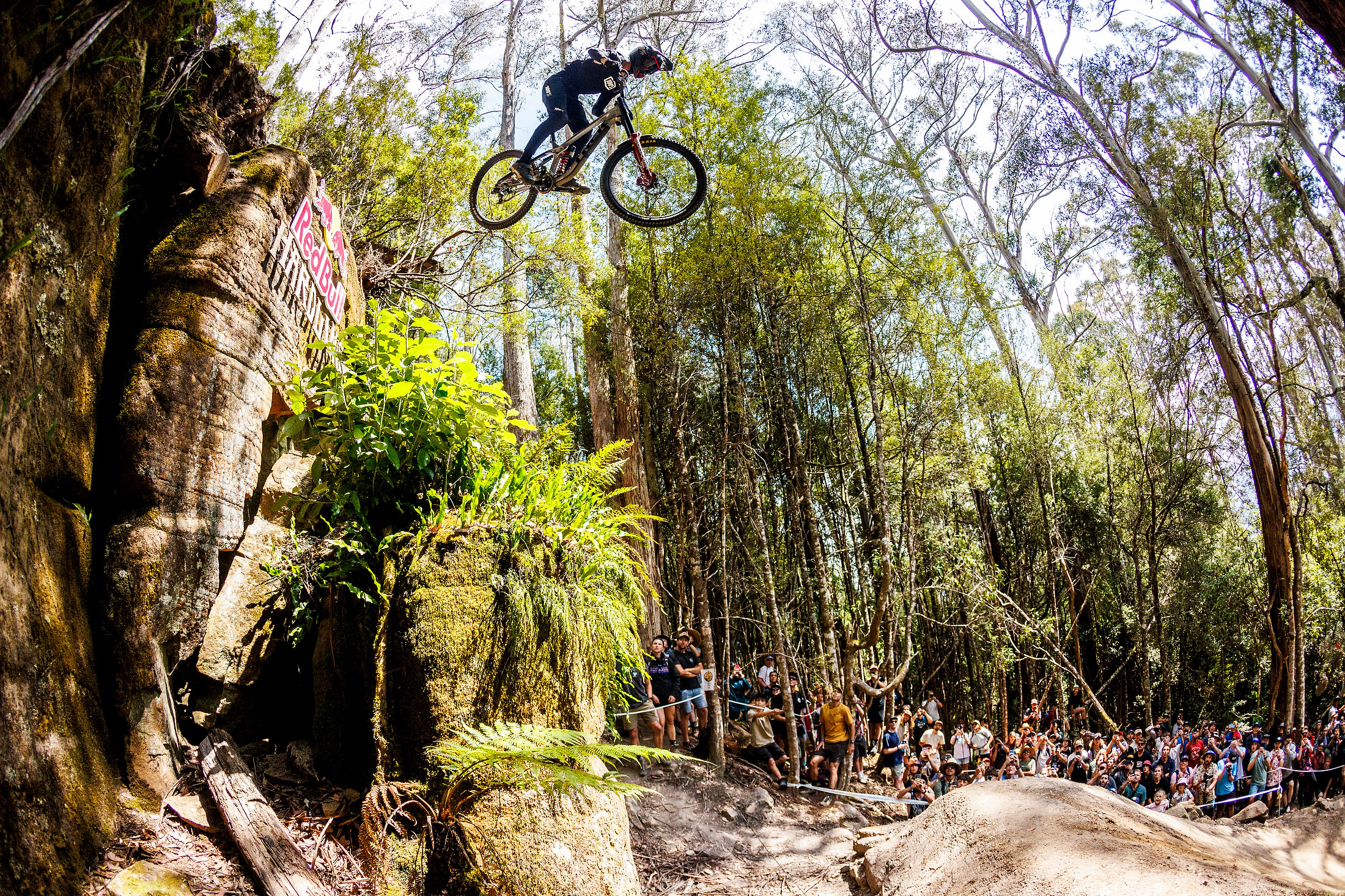
Hardline Tasmania’s replacement | What is Beyond Gravity?
Beyond Gravity is a brand-new downhill MTB event created by Maydena Bike Park and Elevation Events.
The headline talking point is, of course, the prize money. Beyond Gravity is promising riders a 30% share of the broadcast revenue, with a $190,000 AUD minimum prize purse. Every invited rider is also guaranteed a minimum payment of $5,000 AUD, regardless of where they finish. There’s a lot more to the prize structure, which we’ll break down in detail below.
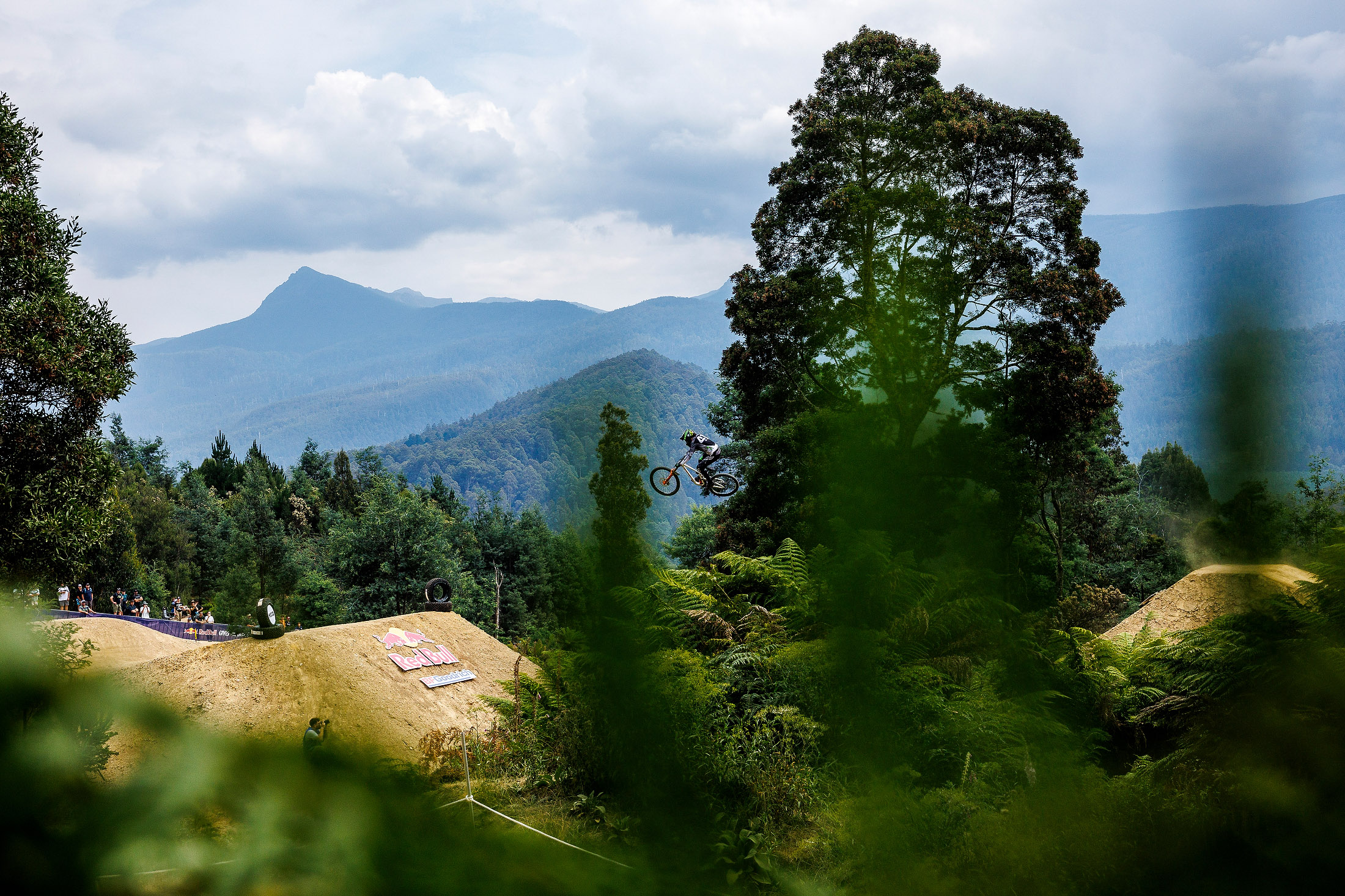
Set for February 26 (seeding)–27 (finals), 2027, Beyond Gravity will be held on an adapted version of the course previously used for Hardline. However, the track is being positioned as a proper downhill race course, rather than an event built around ginormous features. The aim is to differentiate it from the mix of downhill and freeride that has become synonymous with the Hardline format.
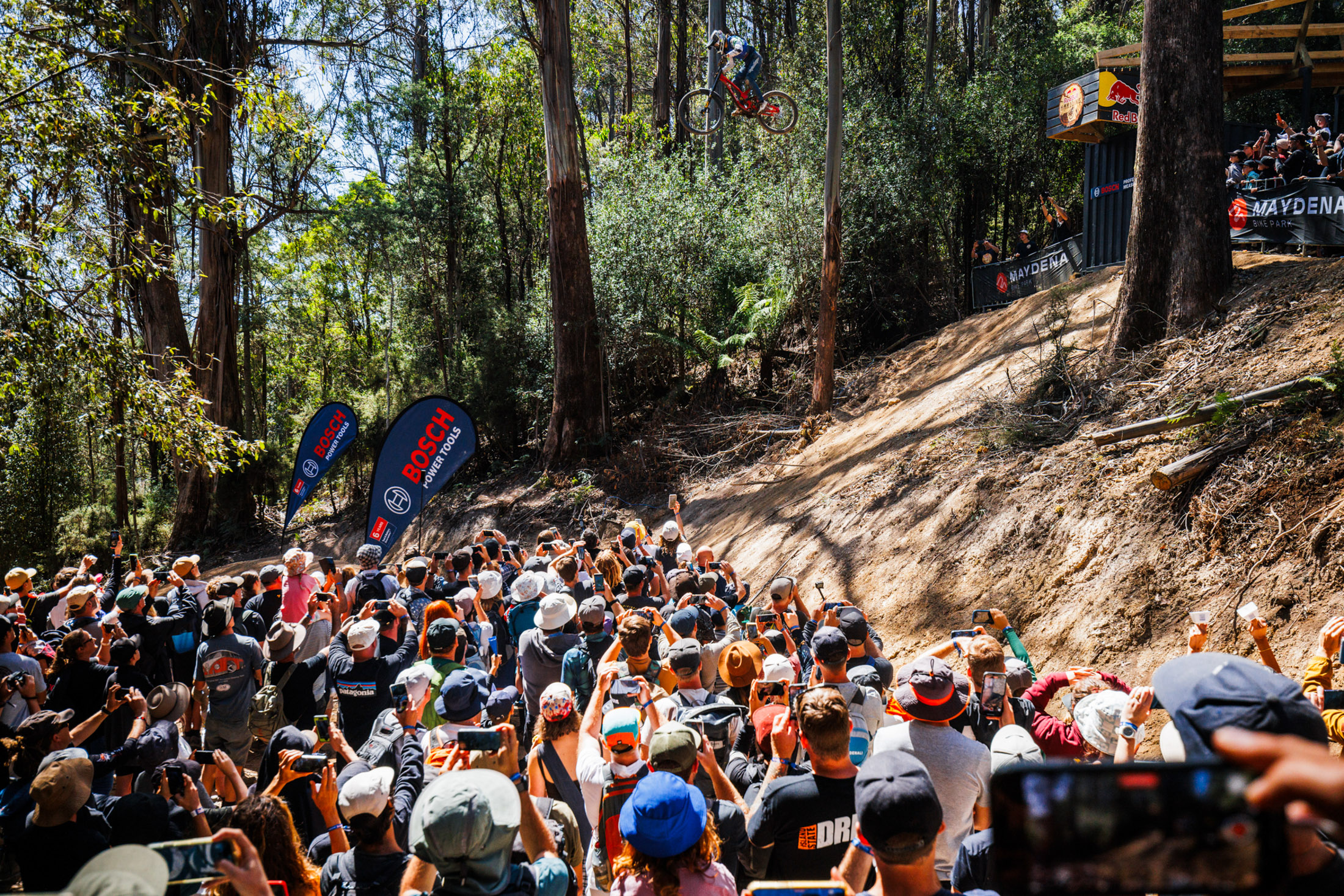
How does the prize money work?
Rider compensation and prize money are hot topics of discussion, and Beyond Gravity is built around a unique system, not just for the size of the prize purse, but also the way it will be distributed across the entire field.
Here are the key points from what the Beyond Gravity team has announced so far:
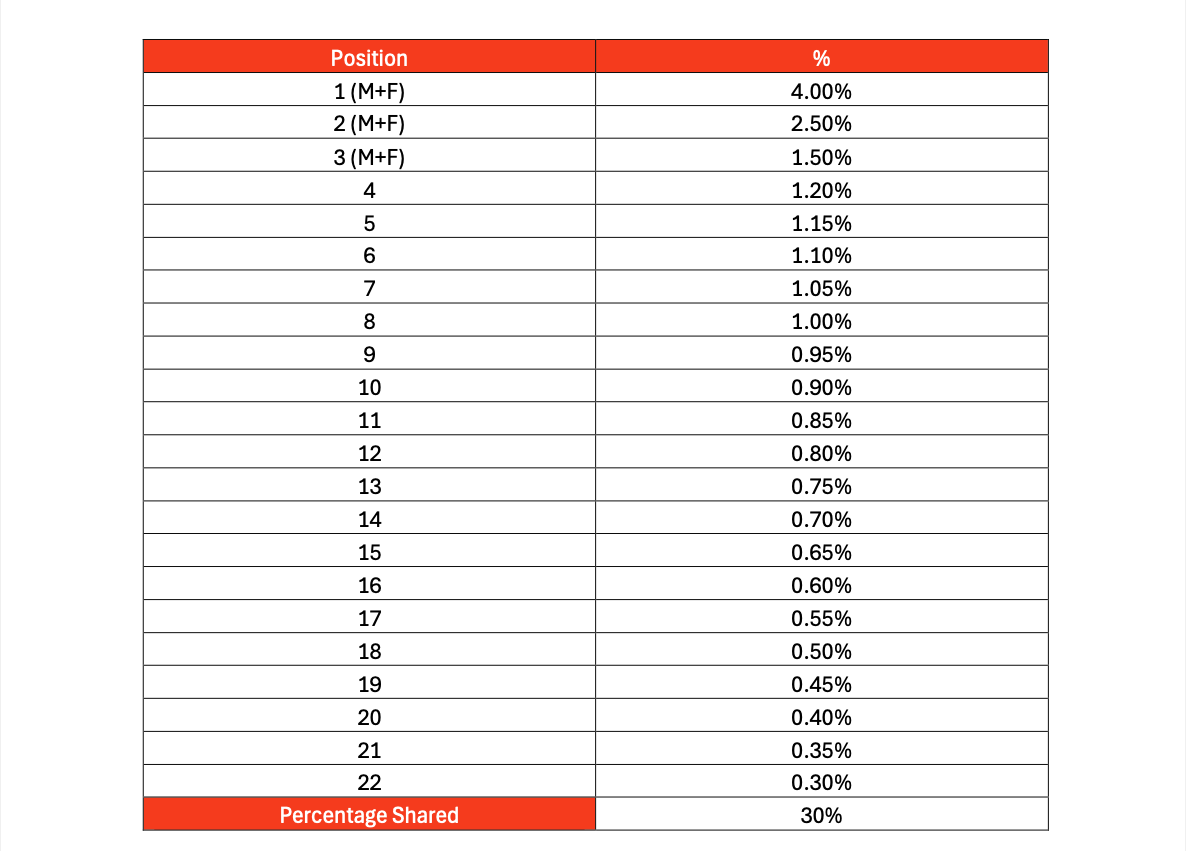
- Riders will collectively receive 30% of the broadcast revenue, with individual percentages determined by finishing position.
- $25,000 AUD guaranteed minimum for 1st
- $15,000 AUD guaranteed minimum for 2nd
- $10,000 AUD guaranteed minimum for 3rd
- $5,000 AUD minimum payment for 25th
- $190,000 AUD guaranteed minimum total prize pool
- If the broadcast reaches 150,000 viewers, the projected prize pool jumps to around $800,000 AUD, with an estimated $100,000+ AUD for both the male and female winners.
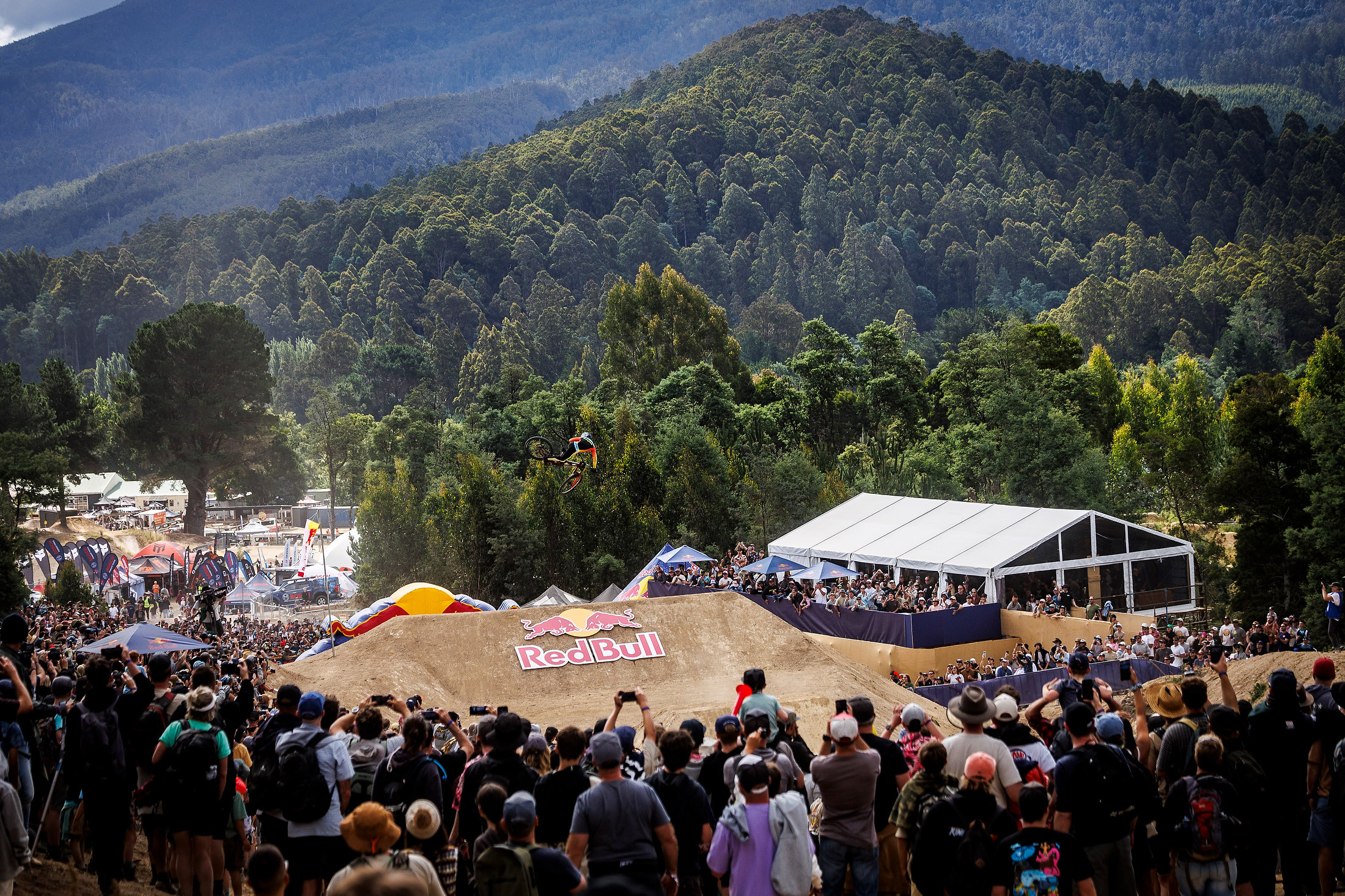
The key factor here is broadcast viewership. Beyond Gravity will be a pay-per-view event, with fans paying a one-time fee to watch the broadcast. So the more people who tune in, the more money there is to distribute to the athletes.
If Beyond Gravity hits its target of 150,000 viewers, the organisers project the total prize pool could climb to around $800,000 AUD, putting more than $100,000 AUD in the hands of both the male and female winners.
So how does the payout actually work? The 30% of broadcast revenue allocated to riders is split according to finishing position. The top three male and female riders will receive the top rates, while the remainder are placed in the general event results on a gender-neutral basis, which is why it only goes to 22 places for 25 riders.
What will it cost and how can you watch Beyond Gravity?
Early bird pricing will start at $14.95 AUD and will be available until 30 days before the event. The price will then increase, although the final figure has yet to be announced.
There will also be a more affordable option for those who don’t need to watch the racing live. A replay will be released approximately one hour after the live event, with pricing for that option still to be announced.
Beyond Gravity has also emphasised that significant resources are being put into the broadcast production. The aim is to deliver high-quality race coverage, with around 40 cameras positioned across the course. Beyond the racing itself, the production team is planning extensive pre- and post-race coverage, building hype around the event while telling the riders’ stories as the week unfolds. According to Elevation Events, the pre-race coverage will be free to watch.
For those who want to experience the action in person, ticketing information for the race itself and the wider seven-day festival is expected to be announced in early October.
Who is racing?
The rider list is yet to be published, but Beyond Gravity has already teased that multiple world champions, world cup winners and Red Bull Hardline-winning athletes are confirmed. The field will be revealed across three athlete announcement waves:
- Wave 1 | September 16, 2026
- Wave 2 | September 23, 2026
- Wave 3 | September 30, 2026

Alongside the established stars, there will also be an interesting underdog story playing out throughout the week. Five local Wild Card athletes will take part in practice alongside the invited riders, right up until seeding. If one of the main riders is unable to participate in seeding, they will be replaced by an Aussie Wild Card.
Flow’s Take | What does this mean for top-level racing?
With the UCI dropping Enduro World Cup racing, Hardline continues to gain momentum, and Beyond Gravity is now entering the picture. It feels like we could be on the verge of a significant change in how professional racers structure their seasons.
Money talks, and if more events like this start popping up, could we see riders begin to prioritise races outside the traditional UCI World Cup circuit? Or could this ultimately force the UCI to change the series and increase its prize money?
This isn’t without precedent. Back in the 1990s and early 2000s, the NORBA (National Off-Road Bicycle Association) Series offered significant prize money and attracted major non-endemic sponsors. The series was big enough that some teams would reportedly skip World Cup rounds to attend NORBA races. That seems unimaginable in today’s DH landscape. Still, events like Beyond Gravity could potentially bring that dynamic back if the prize money, exposure and prestige continue to grow around non-UCI-sanctioned events.
To put into perspective just how different the financial proposition of Beyond Gravity could be, in 2024 Red Bull Hardline in Wales paid £12,000 (approx. $22,579.20 AUD) for the win, while a UCI Downhill World Cup victory pays €3,750 (approx. $6,063.99 AUD).

If everything goes to plan, Beyond Gravity offers a substantial ROI for the riders selected to participate. Of course, Red Bull Rampage still sits at the top of the mountain when it comes to prize money, with the winner taking home $100,000 USD. It’s important to note that Rampage isn’t a DH race; it’s the pinnacle of freeride mountain biking and operates under a different format.
An interesting landscape is developing for professional mountain biking, and we’re excited to see where all of this goes. While it appears Hardline has left Australia, our vibrant MTB culture is still set to make its mark on the global calendar with Beyond Gravity.
Where can you find out more about Beyond Gravity?
At the time of writing, the Beyond Gravity website has not yet been launched. As soon as it is and more information comes to light, we’ll update this article.

Photos: Beyond Gravity / Maydena Bike Park
The post Beyond Gravity | Maydena’s new DH race will offer a minimum $190,000 AUD prize purse appeared first on Flow Mountain Bike.
“}]]
[[{“value”:”There will be no Red Bull Hardline Tasmania in 2027, but the team behind Maydena Bike Park aren’t standing idle. Instead, they’ve created Beyond Gravity, a new event set to run on February 26-27, that could become the highest-paying DH race ever, with a minimum prize pool of $190,000 AUD. Beyond Gravity won’t simply be
The post Beyond Gravity | Maydena’s new DH race will offer a minimum $190,000 AUD prize purse appeared first on Flow Mountain Bike.”}]] Read More Flow Mountain Bike
#flowmtb #mtb