
[[{“value”:”
It’s a big news day in the drop bar world today, as SRAM launches newly overhauled Force and Rival groupsets in both road and XPLR variants. While we’ve been steadily broadening our focus here at Flow to encompass more gravel content, we’re not quite racing crits just yet, so we’re focusing on the updated XPLR gear – read on for the full rundown.
When SRAM released the updated Red XPLR just nine months ago, it set a new direction for the brand’s gravel groupsets, establishing them as a distinct range, separate from their road-focused counterparts.
Previous groupsets bearing the XPLR tag had featured a wider range of cassettes and derailleur cages with single chainrings to match, but were otherwise essentially the same as the 2x road kit. So when Red XPLR introduced a dedicated 1×13 layout, adapting but not borrowing the T-type architecture of its newest mountain bike groups, it drew a clear line in the sand.
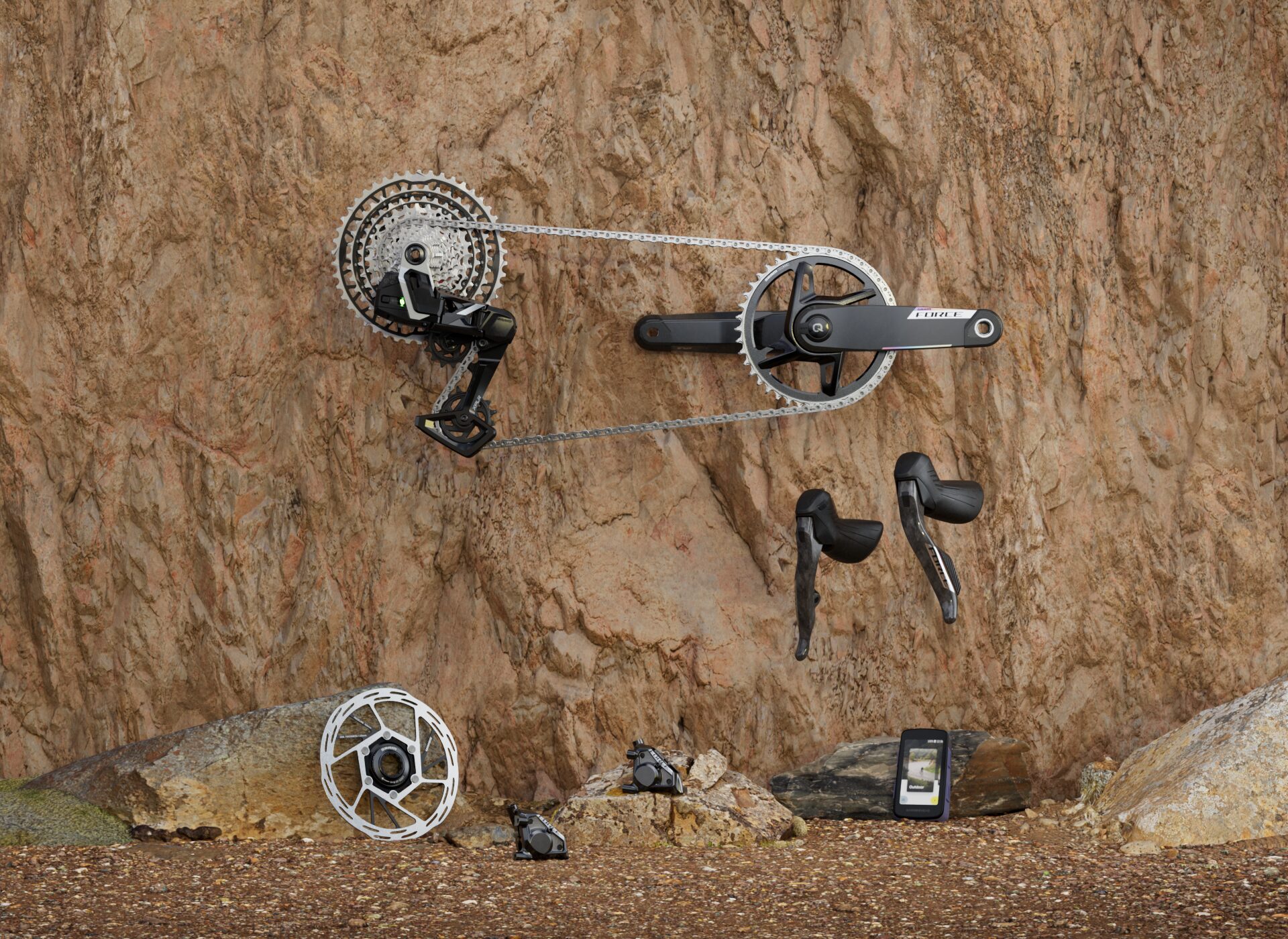
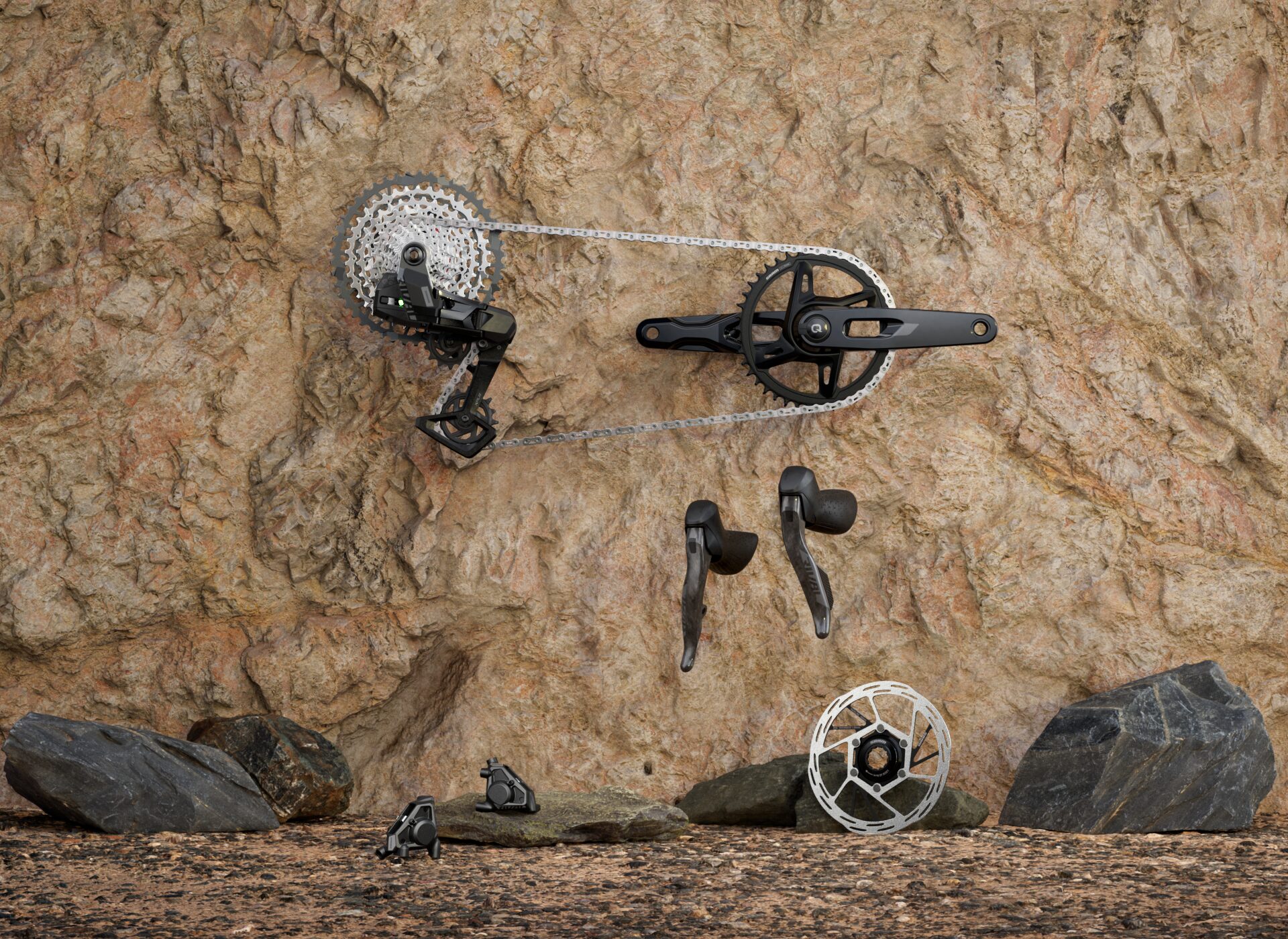
The new Force and Rival groupsets see this updated tech trickle down to more consumer-friendly price points, most notably the redesigned shifter architecture and, for the XPLR variants, 13-speed cassettes and “full mount” derailleurs.
Updated ergonomics for shifting and braking
The new Force and Rival groupsets feature the highly regarded ergonomic E1 shift-brake assembly design, introduced with SRAM Red in May last year. The shifter is common between the road and XPLR variants.
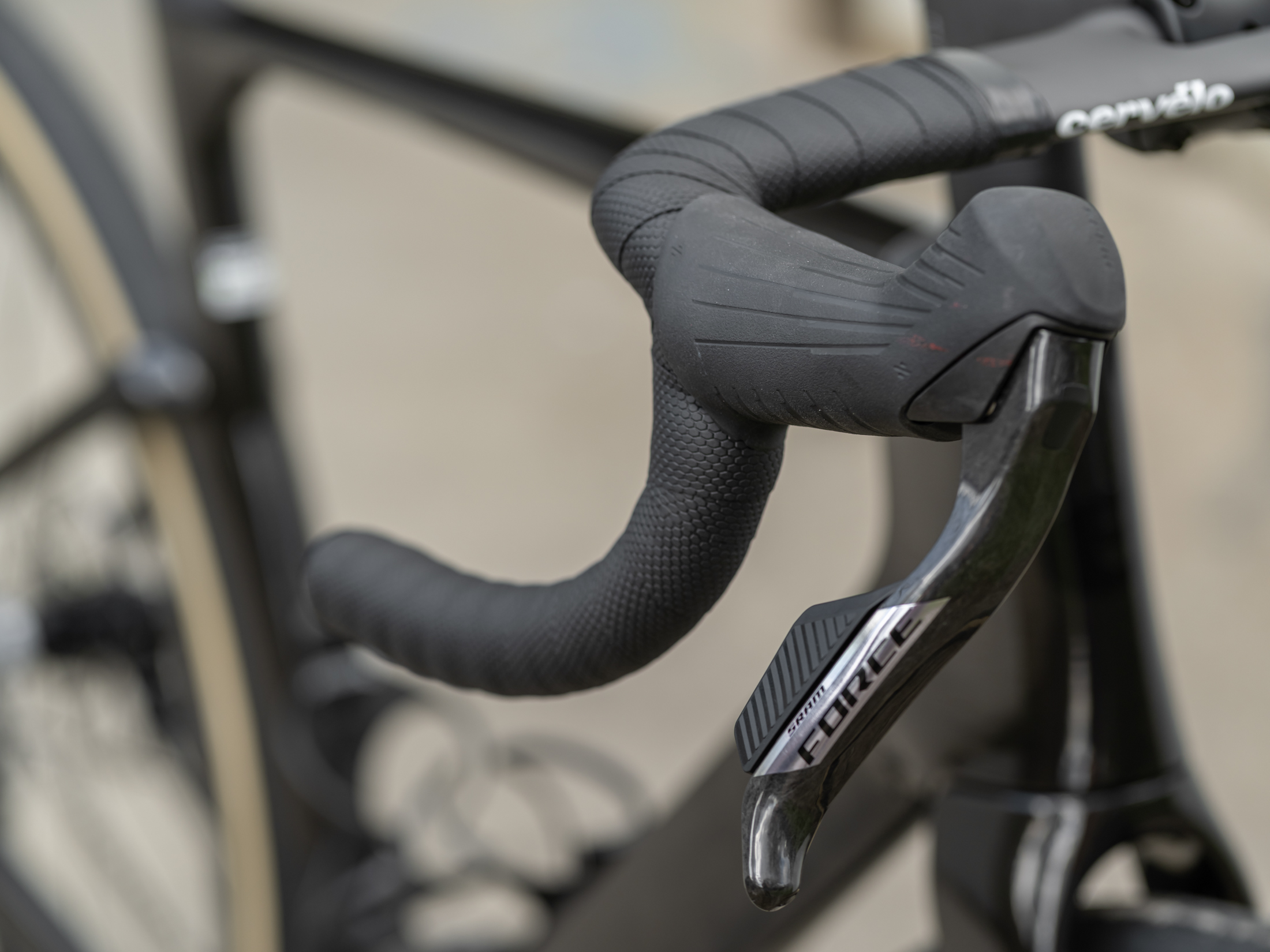
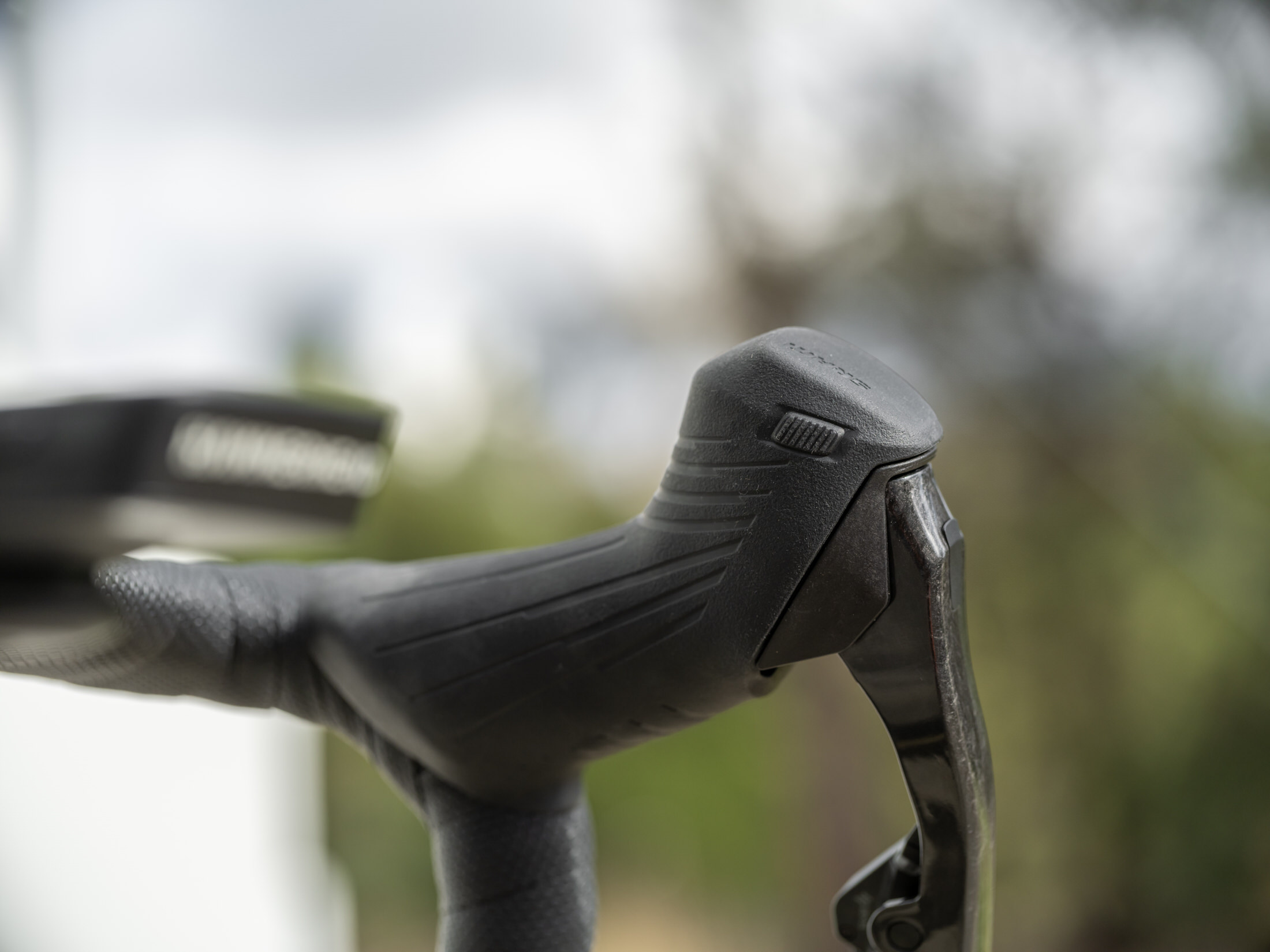
Compared to the outgoing D2 shifter, the E1 shape introduces a more sculpted shifter body and less pronounced pommel, with a distinctly curved and flared carbon lever blade. Both Force and Rival levers will benefit from the full ergonomic upgrade, including the external reach adjustment, which makes the new lever design work for hands of all sizes and dexterity levels.
The lever redesign also makes braking easier. When the E1 shifter launched with Red last year, SRAM claimed an 80% reduction in force required when braking from the hoods, and a 33% reduction in the drops (where leverage is naturally higher anyway).
At the time, SRAM noted that the braking redesign was inspired by a desire to replicate the “natural and powerful” feeling of mountain bike one-finger braking on a drop bar.
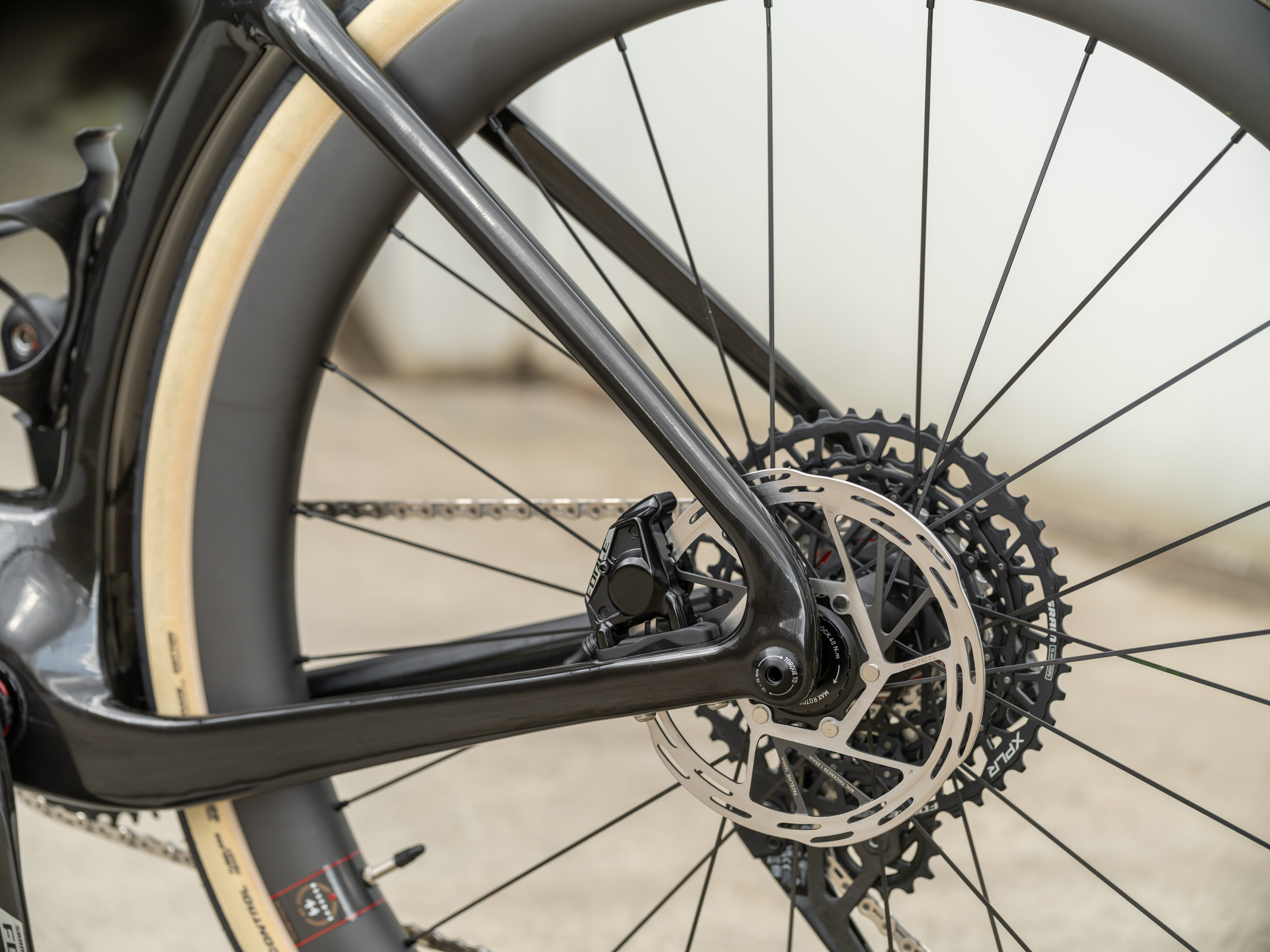
That is achieved by redesigning the master cylinder, and moving the brake lever pivot, which yields a couple of associated improvements. Paired with a new, stiffer caliper and updated Paceline rotors, the E1 shifter makes single-finger braking from the hoods much easier and more reliable, due to the reduced force required. It also reduces pinching your other fingers behind the lever which is both uncomfortable, and can interrupt lever travel and undermine braking.
The new Force and Rival lever bodies also carry across the 7º rise that creates a smooth, low-pressure transition from bar top to hood, with the hood covers incorporating clever indicator markers to make getting the correct alignment foolproof.
The new Force shifter also gets the “Bonus Buttons” on the insides of the pommel, which can be configured as extra shift buttons, or to control a Hammerhead Karoo, Garmin or Wahoo computer without having to take a hand off the bars.
Force XPLR claimed weights and pricing (AUD)
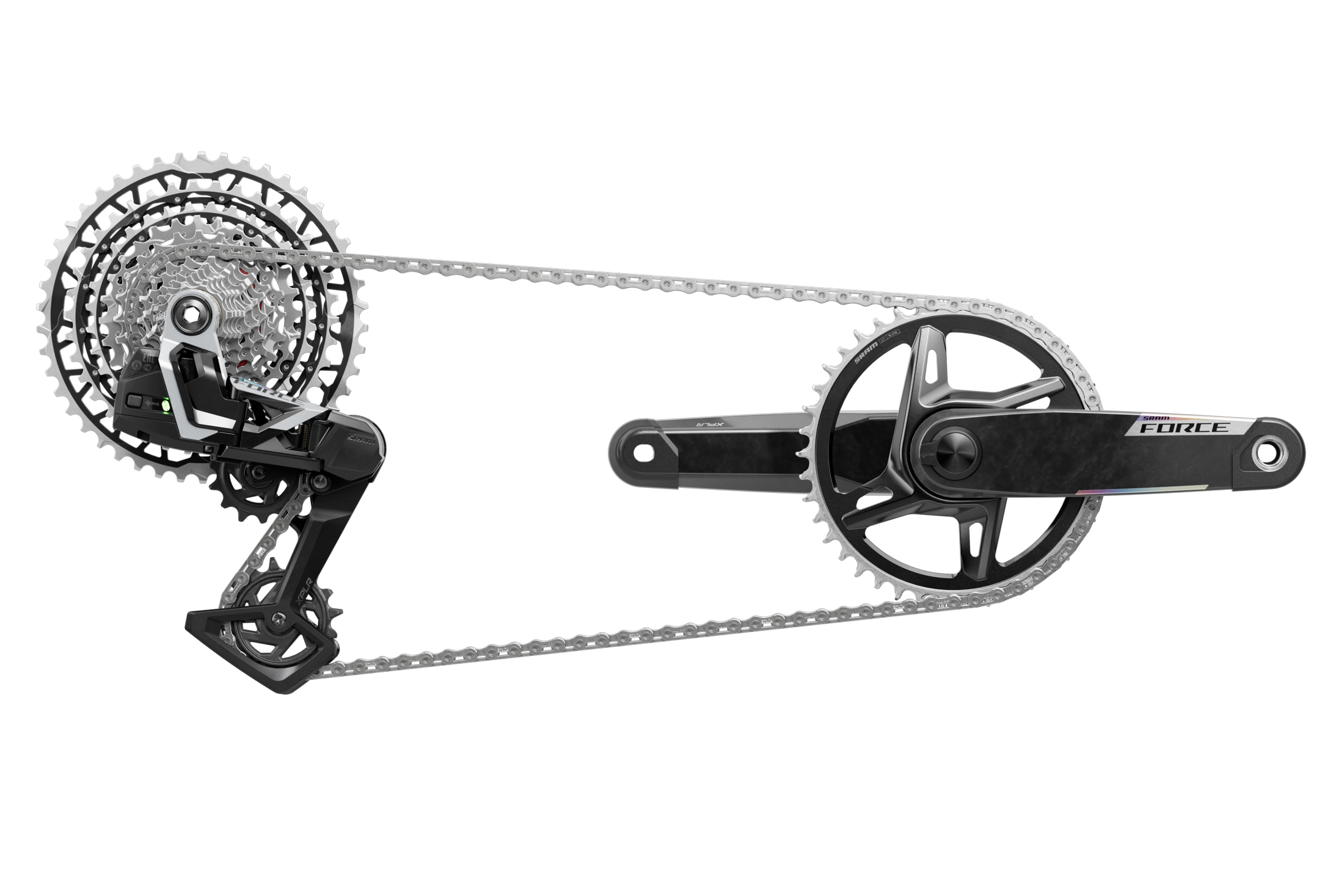
- Shift-brake assembly | 720g, $1200 (pair L&R inc. hoses, callipers, fittings)
- Rotors | 289g, $190 (pair, 160mm)
- Rear derailleur | 418g, $740
- Battery | 24g, $101
- Crankset (inc. chainring) | 568g, $810 / 530g, $480 without power meter
- Bottom bracket | 76g, $70
- Cassette | 346g, $475
- Chain | 244g, $95 (114 links), $130 in purple
- Complete groupset | 2,685g, $3705 / 2,648g, $3375 without power meter (inc. AXS charger)
Rival XPLR claimed weights and pricing (AUD)
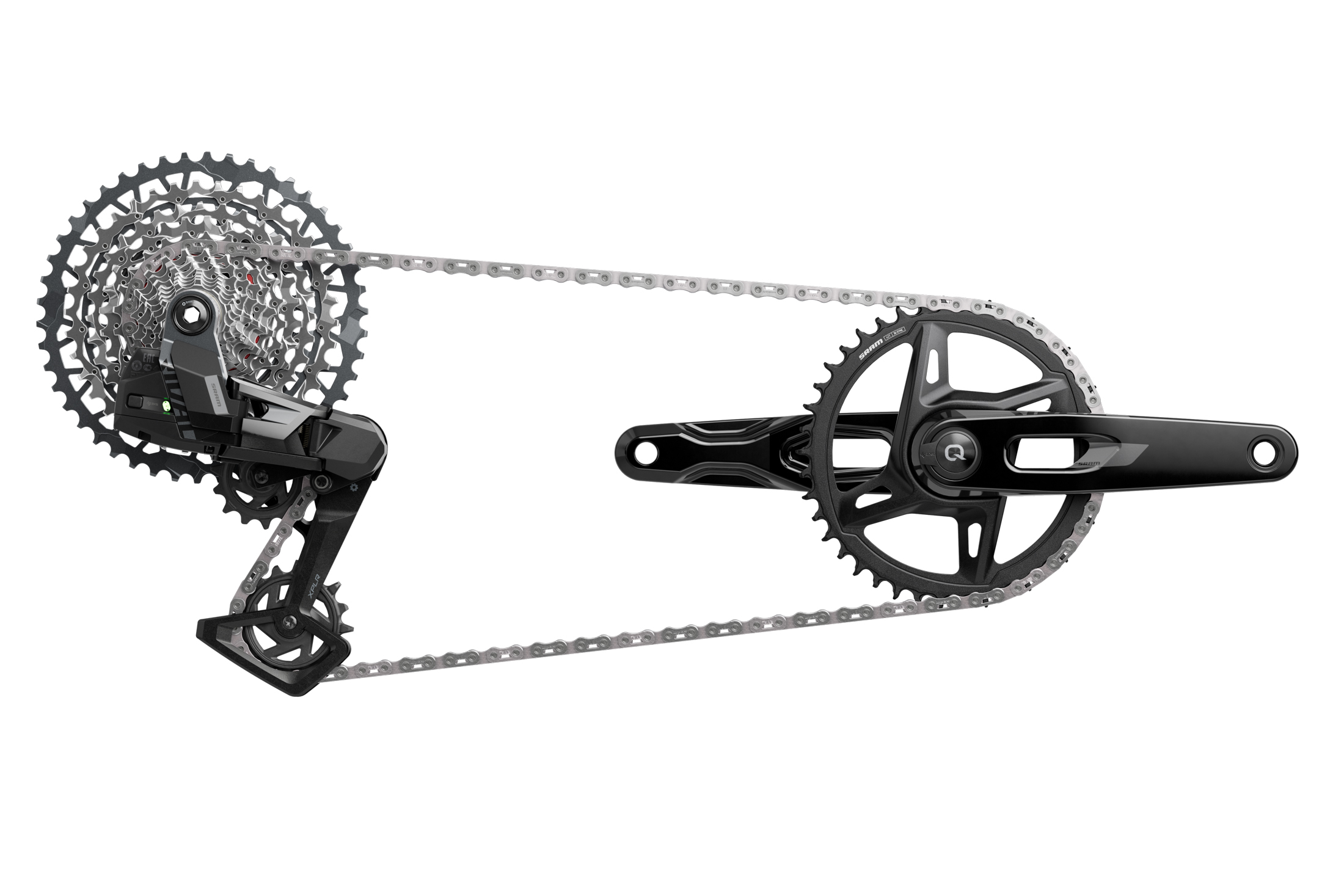
- Shift-brake assembly | 746g, $880 (pair L&R inc. hoses, callipers, fittings)
- Rotors | 289g, $190 (pair, 160mm)
- Rear derailleur | 435g, $560
- Battery | 24g, $101
- Crankset (inc. chainring) | 760g, $515 / 722g, $230 without power meter
- Bottom bracket | 76g, $70
- Cassette | 383g, $335
- Chain | 248g, $70 (114 links)
- Complete groupset | 2,961g, $2740 / 2,923g, $2455 without power meter (inc. AXS charger)
Full mount derailleurs for precision and reliability
Like Red XPLR, the new Force and Rival groupsets utilise SRAM’s full-mount derailleur design, first introduced with the T-type mountain bike groupsets.
That means the XPLR groupsets continue to be compatible only with frames that feature SRAMS Universal Derailleur Hanger (UDH), which, when removed, enables installation of the full mount derailleurs. UDH compatibility is becoming progressively more common on gravel frames, but it is a limitation of note, especially if you are hoping to refresh the old whip with a new groupset.
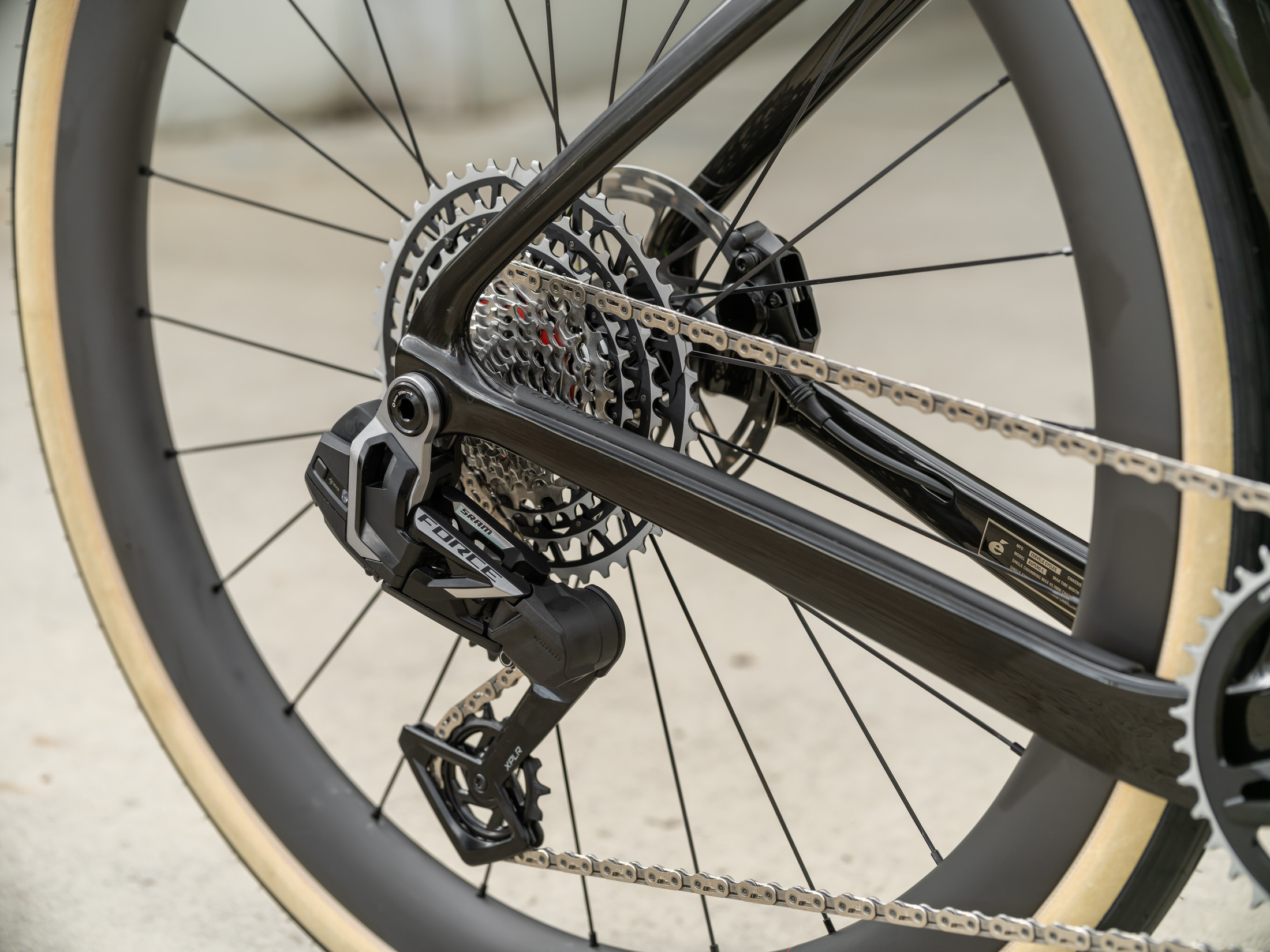
The trade-off, however, is the fast, precise, and reliable shifting that comes with centring the derailleur mount to the hub axle, eliminating the variability of hanger alignment. That means no need for limit or b-tension adjustments, and also enabled SRAM to prioritise shift speed in developing the new XPLR derailleurs, as with Red before them.
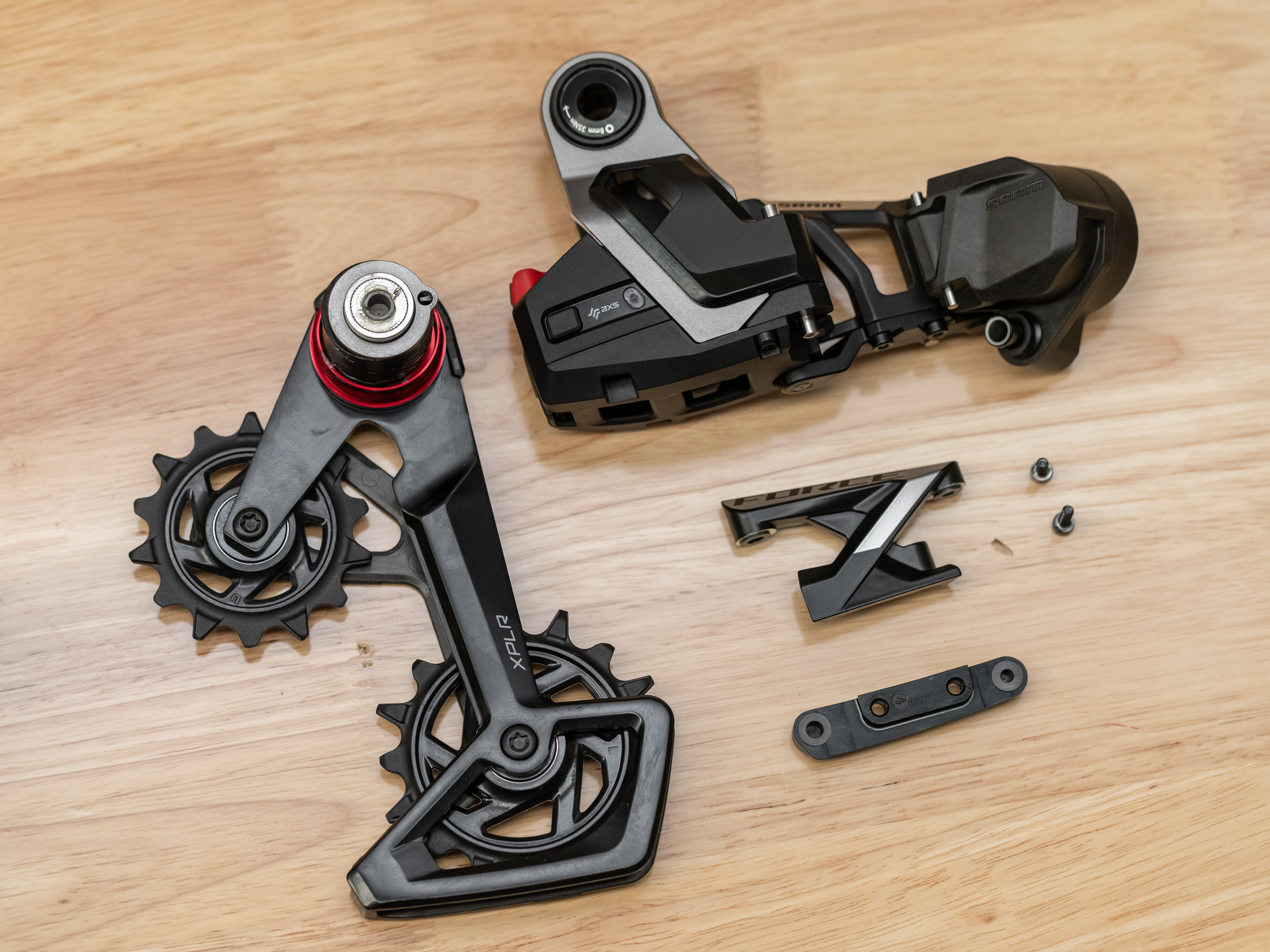
The new XPLR derailleurs also get SRAM’s integrated cage lock to make wheel replacement easy, and the gravel-specific straight parallelogram and spring clutch for chain security. It’s a system that has been proven in some of the world’s hardest gravel races, as well as on the cobbles of the Spring Classics.
The XPLR derailleurs are also user-serviceable, with the mounting assembly, outer link, cage, damper, pulley assembly, battery latch, and skid plate all replaceable.
New cranksets and cassettes for power, range, and efficiency
With the updated shift-brake unit and derailleur designs taking care of the controls, the new XPLR drivetrain takes care of transmitting (and measuring!) power from your legs to the rear wheel.
Both Force and Rival get new dedicated XPLR cranks (replacing the previous “wide” nomenclature), with a 1×13-specific 47.5mm chainline, and are available in lengths from 160-175mm. The XPLR cranks are compatible with chainstays of 415mm or greater — for bikes with a 405-415mm chainstay, the road-width cranks with 45mm chainline can be used instead.
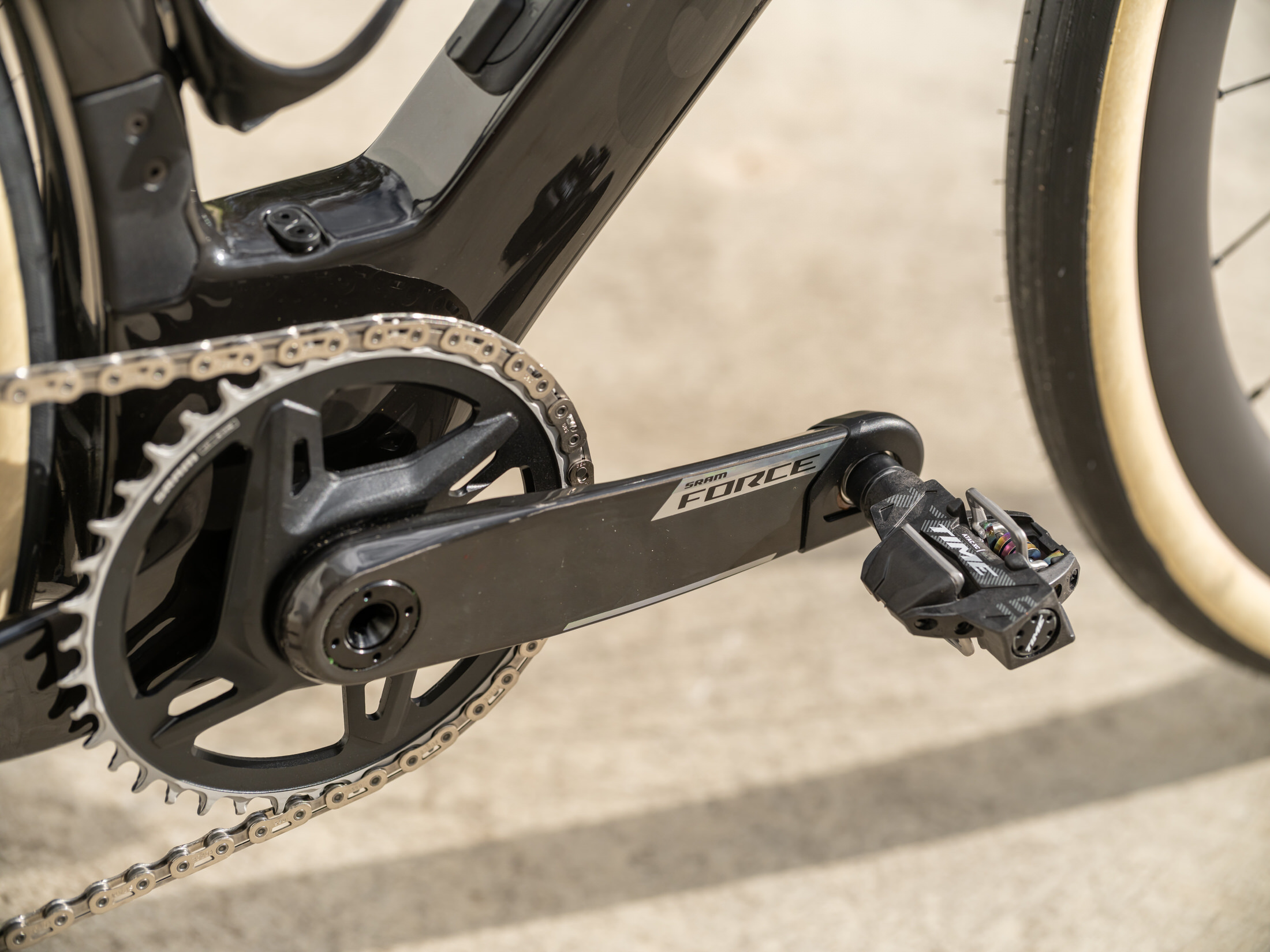
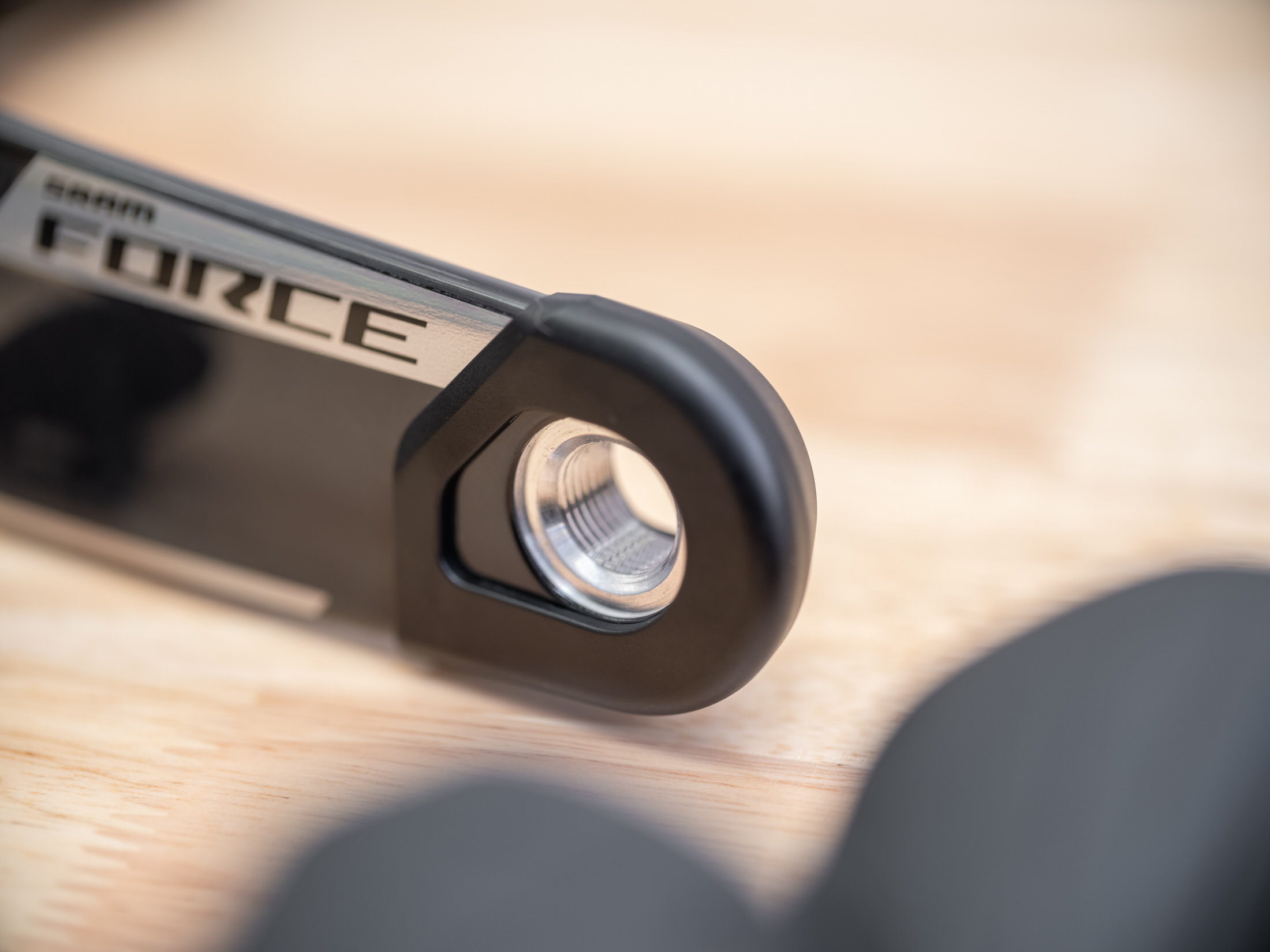
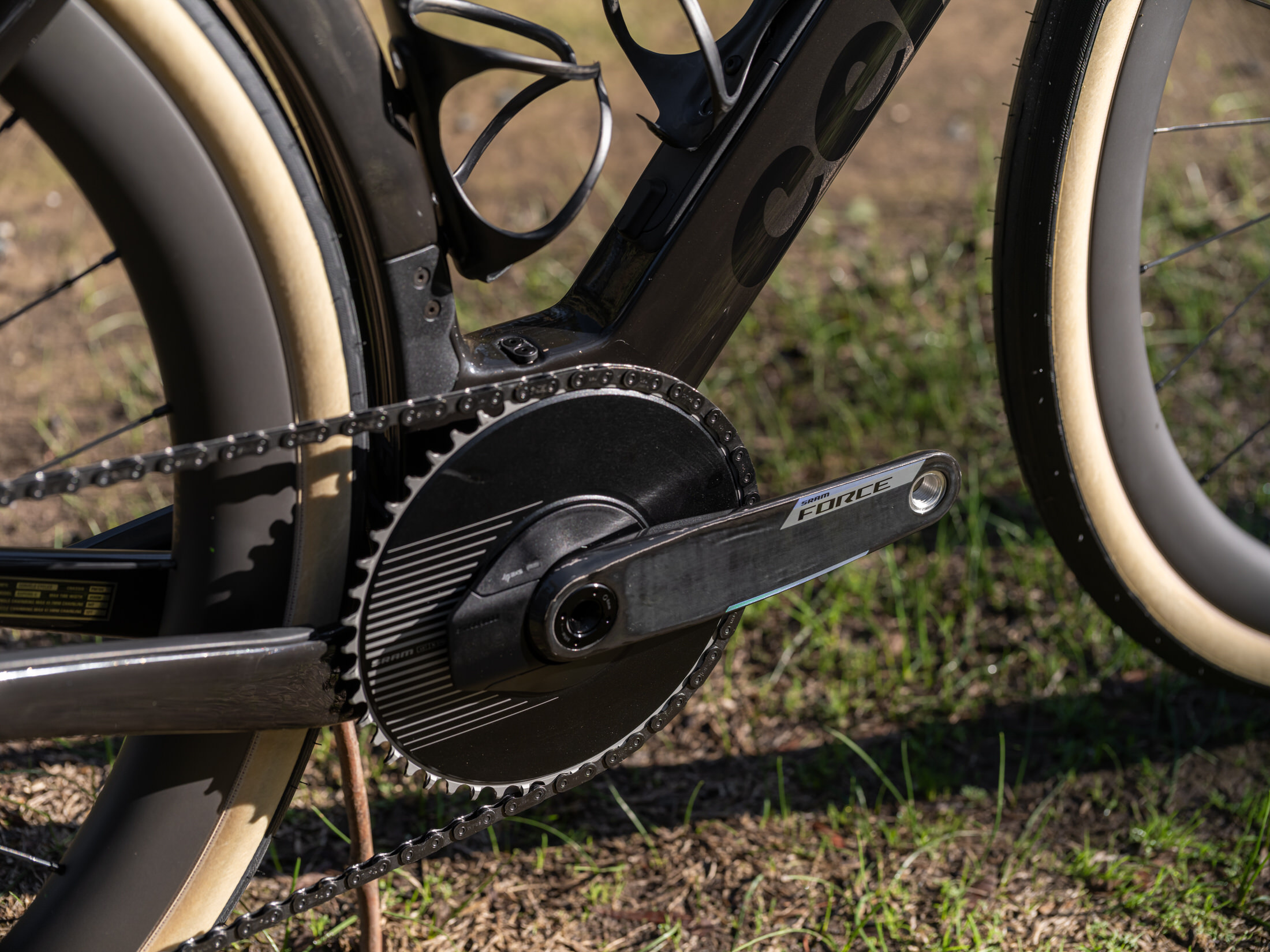
The Force crank is a new, sculpted carbon affair, and is claimed to save 192g over its aluminium Rival counterpart. The Force XPLR crank also now includes crank boots to protect the carbon crank ends from damage due to pedal strike in rough terrain.
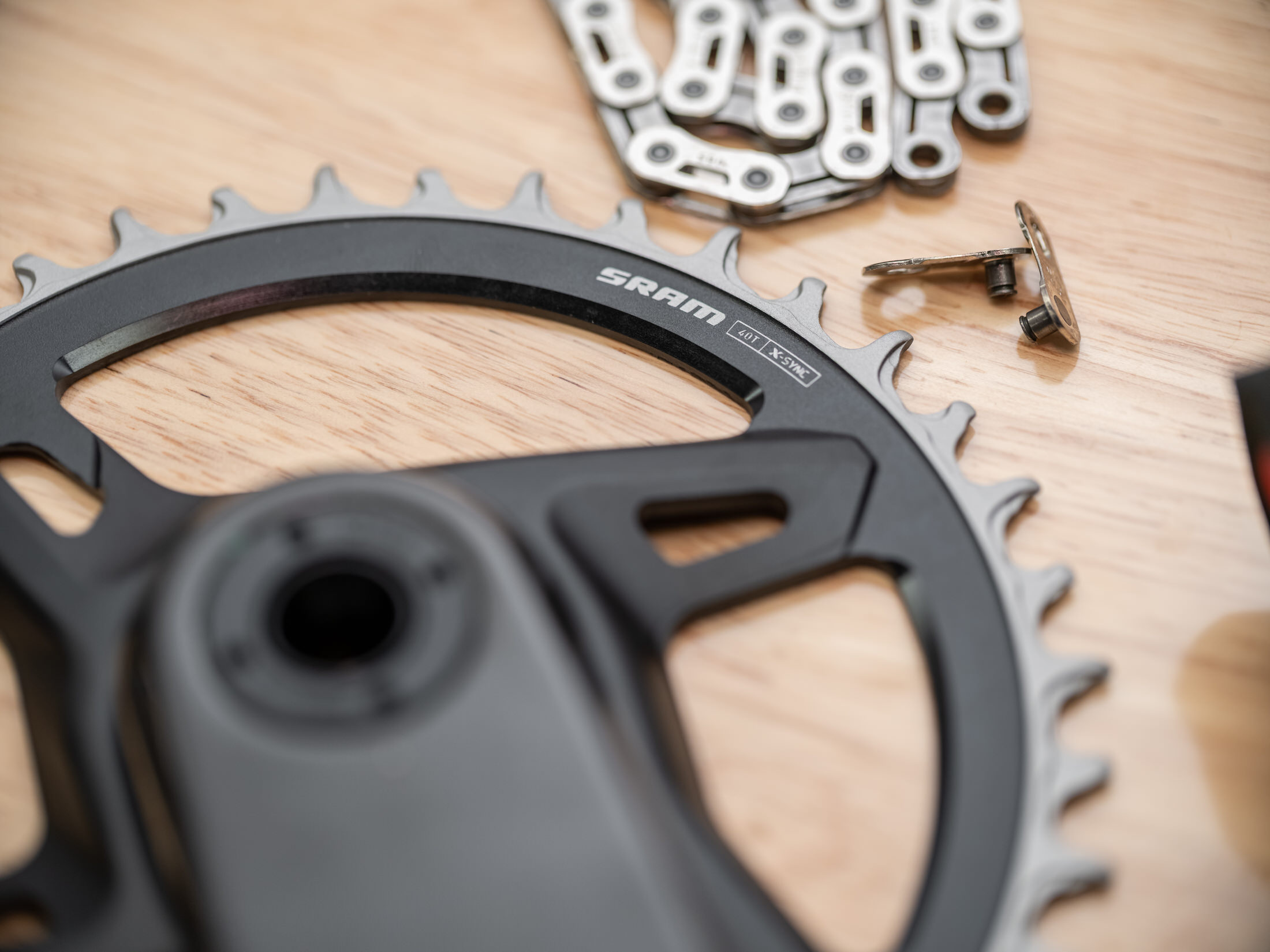
Both cranks make use of lightweight direct-mount X-Sync chainrings, and have the option of an integrated spindle power meter, or to be paired with SRAM’s aero 1x chainrings with spider power meter.
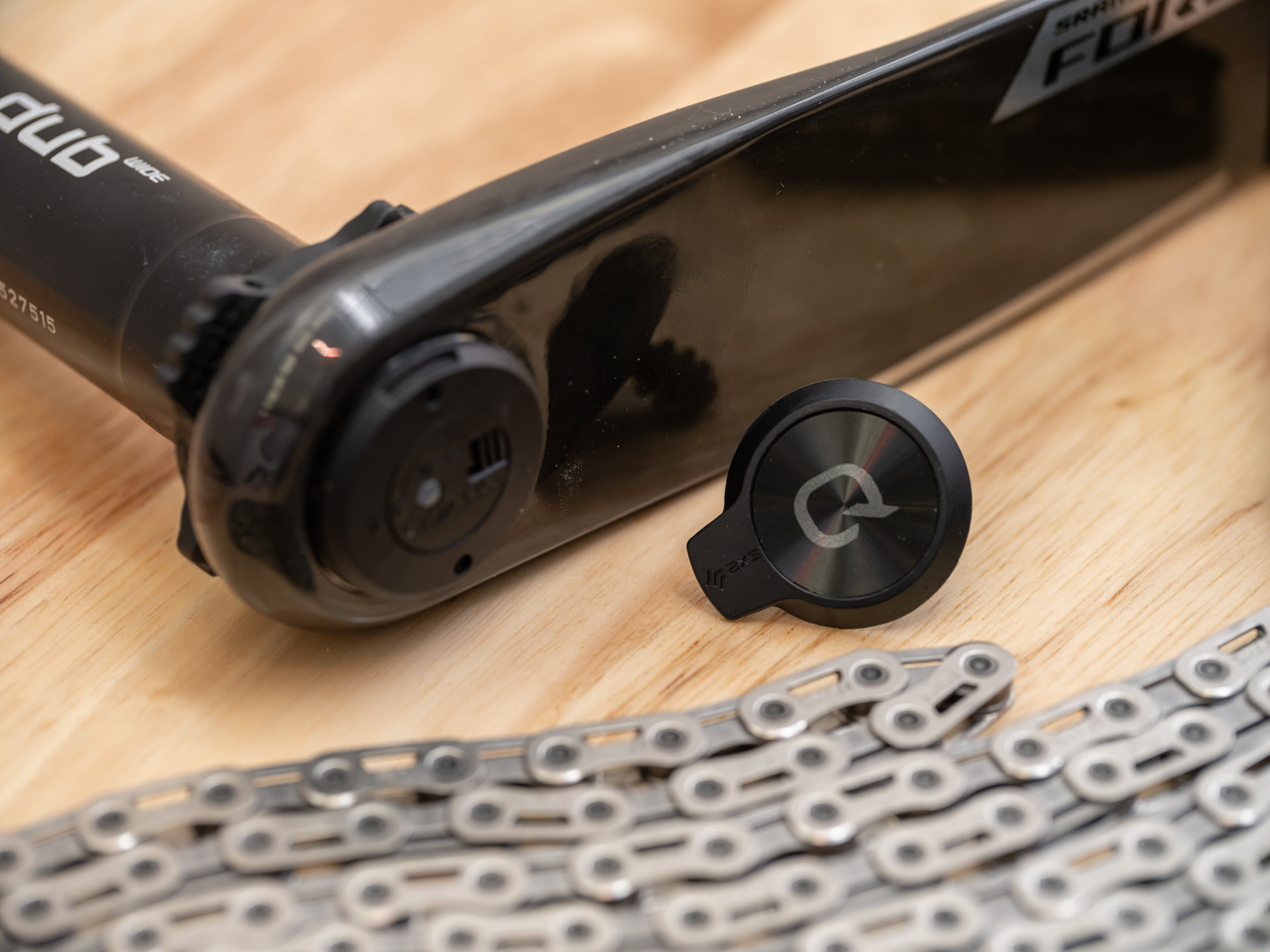
Out back are two new 13-speed, 10-46 tooth XDR-compatible cassettes, delivering 460% range while retaining small, single-tooth steps between the highest gears to help avoid that sensation of being stuck between gears.
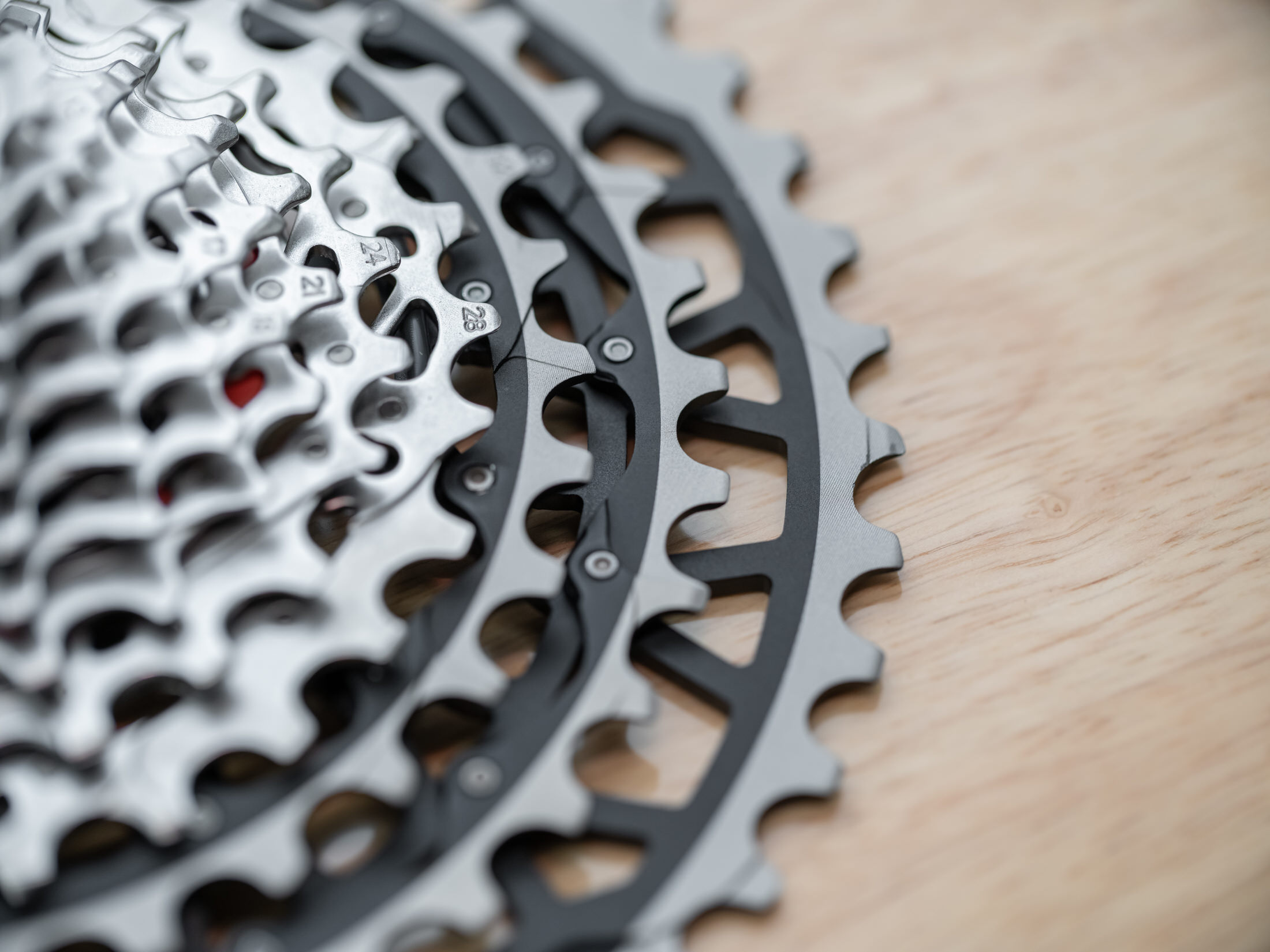
The Force cassette features 3 aluminium cogs to shed weight, saving 37g over the Rival cassette with its single aluminium 46t gear. Both cassettes are claimed to be just under 30g lighter than their D2 predecessors, despite the addition of an extra 13th gear, and the jump from a 44 to a 46-tooth big cog.
Connecting crank to cassette, the XPLR groupsets are compatible with any 12 or 13-speed SRAM flattop road chain, though they are not compatible with 12-speed Eagle mountain bike chains.
There is also now a purple ano Force chain, for no discernible reasons other than a) it provides an opportunity for SRAM to make Prince puns (purple chain, purple chain), and b) why not?
Cross-compatibility
One challenge that SRAM’s commitment to 1x groupsets for gravel has raised in the past, and that the XPLR groups still haven’t quite fully addressed, is range. While the 460% range of a 10-46t cassette is massive, chainring choice still dictates where it gets used.
What that means in practice (simplistically) is that to get a low-range climbing gear (especially in excess of a 1:1 ratio), you also have to sacrifice top-end speed. Where a 2x groupset has the benefit of a small chainring option for climbing, paired with a larger ring for speed, with 1x, you need to hedge your bets in the sweet spot.
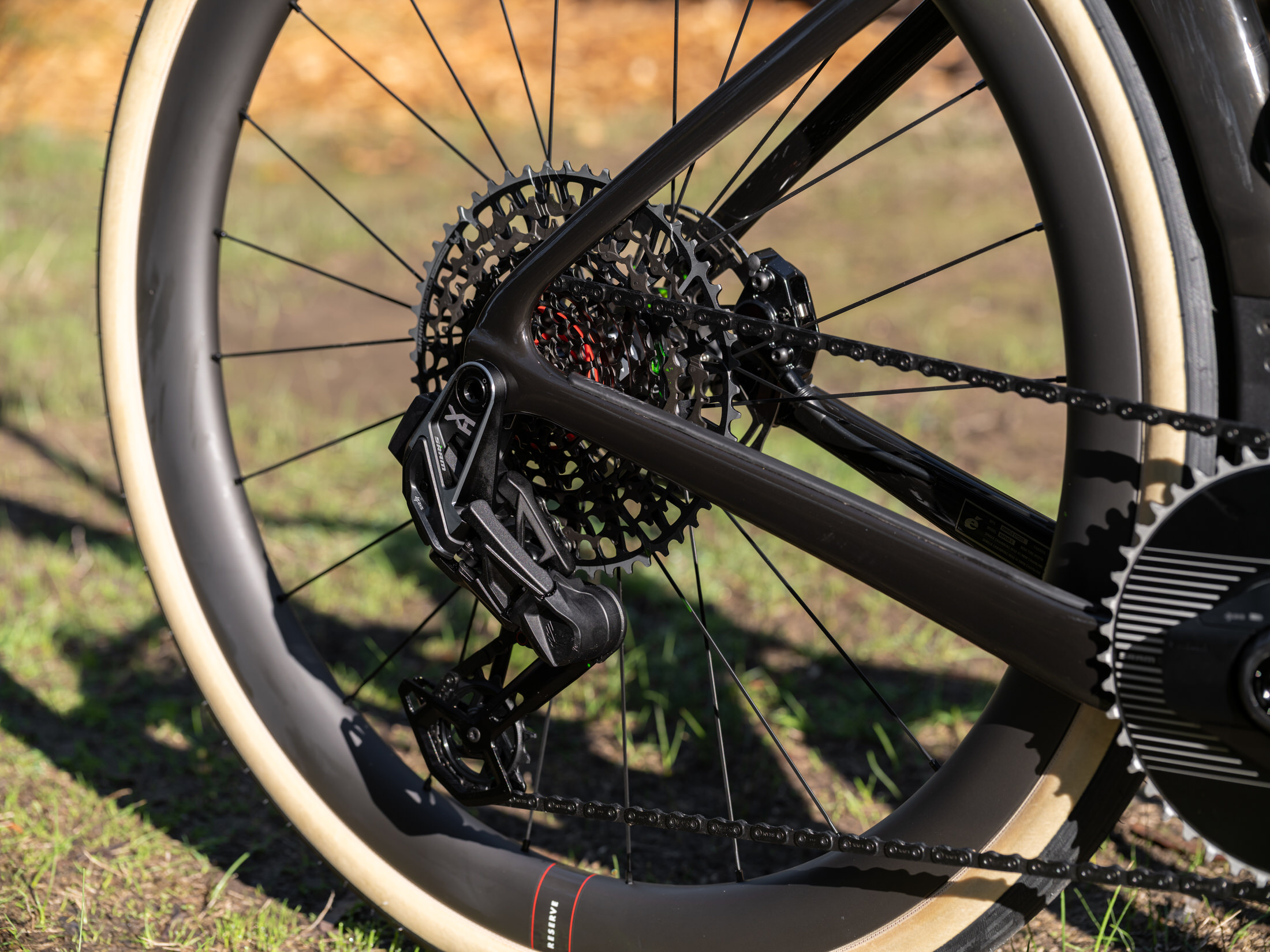
The universal cross-compatibility of SRAM’s AXS shifters means that this can be overcome by swapping out the XPLR derailleur, cassette and chain, in favour of their 12-speed Eagle counterparts. Pairing a larger, 46+ tooth chainring with a 10-52 tooth cassette gives even greater range, allowing for a higher ratio at the top end while retaining a low climbing gear.
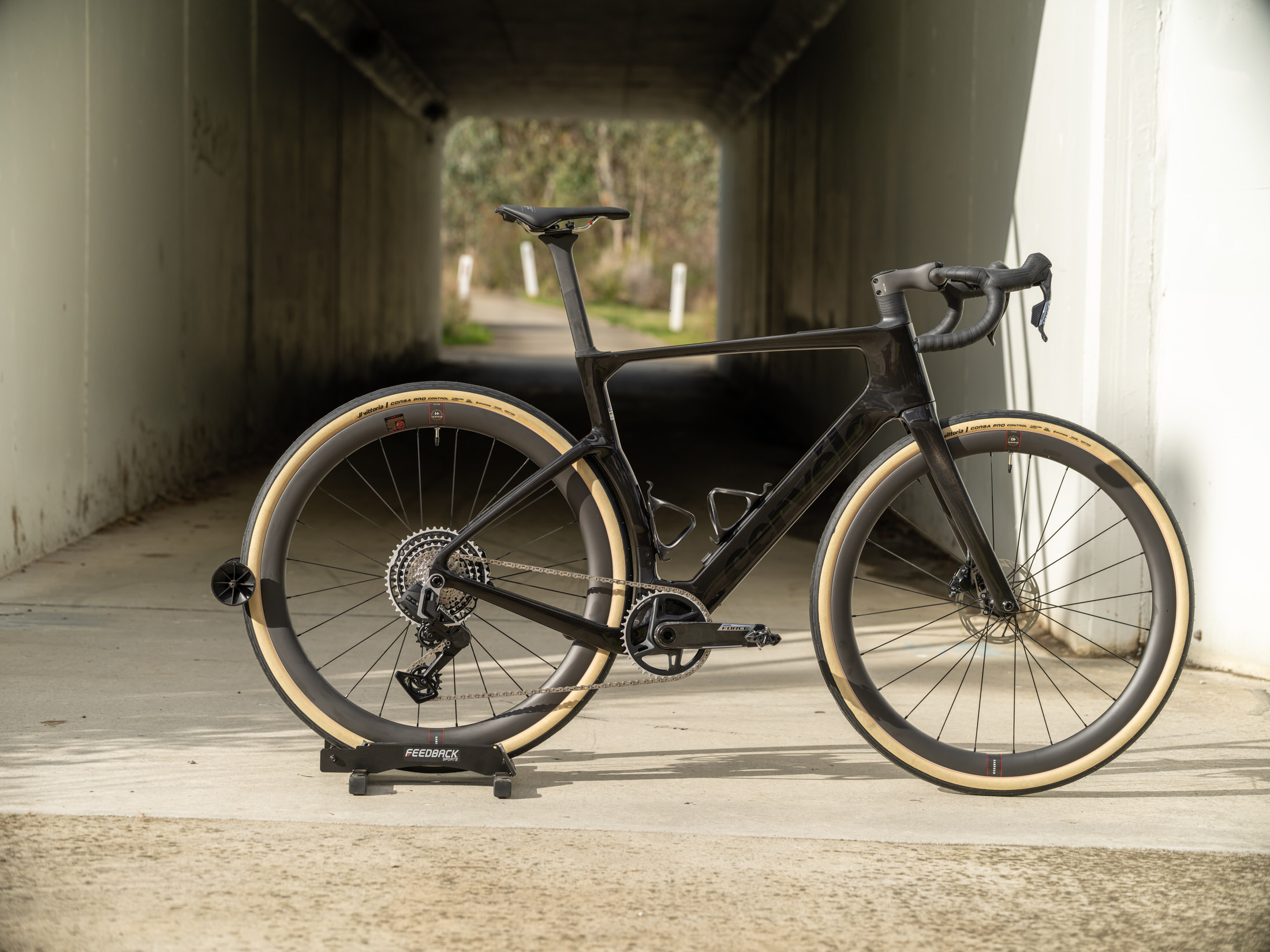
To be clear, for those of us who aren’t expecting to sprint for the finish of a gravel race after climbing 2500+ vertical metres, this is not really likely to be a deal breaker. But for elite and professional racers, it can be — Cervelo even specs their new Aspero 5 gravel race bike in this format for the reasons above.
The wrap-up
So that’s the lowdown on the new Force and Rival XPLR groupsets from SRAM. We’ve got a Force group in which we’ve popped on Cervelo’s new Aspero 5 aero gravel frame (also launching today), and we’ll be putting both through their paces in the coming months. Stay tuned to get our verdict on real-life performance once we’ve spent some more time with both!
The post First Look | SRAM Releases New Force and Rival XPLR Groupsets appeared first on Flow Mountain Bike.
“}]]
[[{“value”:”It’s a big news day in the drop bar world today, as SRAM launches newly overhauled Force and Rival groupsets in both road and XPLR variants. While we’ve been steadily broadening our focus here at Flow to encompass more gravel content, we’re not quite racing crits just yet, so we’re focusing on the updated XPLR
The post First Look | SRAM Releases New Force and Rival XPLR Groupsets appeared first on Flow Mountain Bike.”}]] Read More Flow Mountain Bike
#flowmtb #mtb